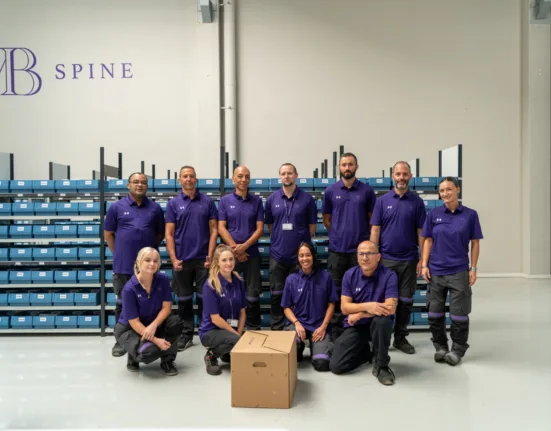
Stereotaxis, Inc. has completed its acquisition of French vascular robotics developer Robocath, bringing together two different approaches to controlling medical devices during minimally invasive endovascular procedures. Robocath will be integrated into the United States-based surgical robotics company, which plans to combine its magnetic navigation technology with Robocath’s mechanically controlled platforms for interventional cardiology, neurointerventions and eventually electrophysiology.
The transaction closes less than three months after the companies announced their definitive agreement. Under the original structure, Stereotaxis agreed to provide upfront consideration valued at $20 million through cash, shares or a combination of the two, with up to another $25 million linked to regulatory and commercial milestones. The contingent amount includes $10 million tied to United States Food and Drug Administration clearance of certain next-generation Robocath devices and as much as $15 million linked to specified commercial sales achievements.
The acquisition is strategically larger than Robocath’s current revenue contribution. Stereotaxis expects the acquired business to generate approximately $2 million of revenue during its first year after completion and reach breakeven by the third year, but the more consequential objective is to create a broader robotic ecosystem capable of manipulating multiple instruments across several endovascular specialties.
Why does Stereotaxis need Robocath when it already has a cardiac robotics platform?
Stereotaxis has traditionally specialised in robotic magnetic navigation, a technology that uses computer-controlled magnetic fields to guide specially designed catheters through the heart and vascular system. Its systems are used primarily in electrophysiology laboratories for cardiac mapping and ablation procedures involving heart rhythm disorders.
The technology provides precise control of the distal catheter tip inside the patient. Robocath approaches vascular robotics from another direction. Its systems mechanically manipulate guidewires, balloons, stents and other interventional devices from a robotic control station, allowing physicians to perform parts of a procedure while positioned away from the operating table and radiation source.
The two systems therefore address different stages of an intervention. Stereotaxis provides navigation at the tip of a compatible magnetic device, while Robocath supplies bedside control of the instruments and equipment required to complete an interventional procedure.
Stereotaxis believes combining those capabilities could create a more comprehensive robotic workflow. Instead of using automation for only one catheter or one segment of treatment, physicians could eventually control navigation, device movement, imaging integration and procedural information through a connected robotic environment.
The acquisition also reduces Stereotaxis’ dependence on electrophysiology as its main clinical market. Robocath gives it a more direct route into coronary interventions and neurovascular procedures, where physicians routinely manoeuvre several guidewires, catheters and implants through complex blood vessels.
How could magnetic navigation and mechanical robotics work together inside one procedure?
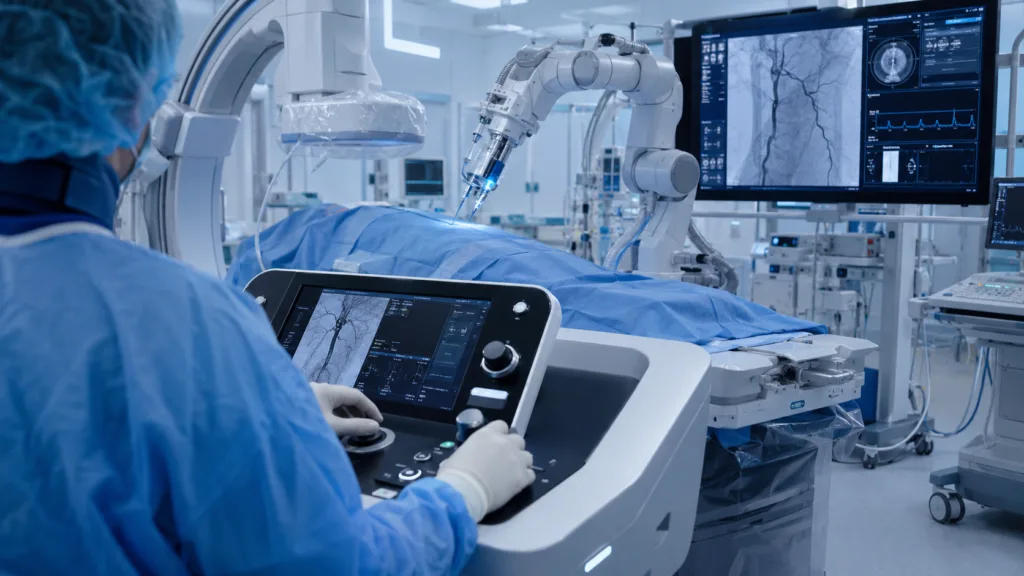
Robocath’s next-generation system is being designed to manipulate as many as five interventional devices simultaneously. That capability is important because complex vascular procedures rarely depend on one instrument alone. A physician may need to manage a guiding catheter, guidewire, balloon, stent-delivery system and an imaging or measurement device during the same case.
The Robocath platform could manage those instruments at the bedside, while Stereotaxis’ magnetic technology provides precise navigation of a compatible catheter or guide through tortuous anatomy. The combined approach could allow robotic control across a larger portion of the procedure rather than limiting automation to one movement.
Stereotaxis plans to incorporate hardware and software associated with GenesisX, Synchrony and SynX into future Robocath systems. The integration is expected to support operating-room connectivity, procedural automation and remote operation, although the timing and regulatory pathway for a fully integrated commercial product have not been disclosed.
This concept remains partly developmental. The acquisition creates ownership of the technologies and teams needed to build the platform, but it does not mean hospitals can immediately purchase one unified system for every procedure described by the companies.
Engineering integration will require compatible control interfaces, safety architecture, imaging connections, cybersecurity protections and emergency manual-override processes. Any major changes affecting device control or intended use may also require new regulatory submissions.
What does Robocath bring from the existing R-One+ commercial platform?
Robocath’s flagship R-One+ platform is designed for robotic-assisted percutaneous coronary interventions, procedures used to restore blood flow through narrowed or blocked coronary arteries. The company’s technology allows the operator to control compatible interventional devices from a protected workstation rather than standing directly beside the patient throughout the intervention.
At the time the acquisition agreement was announced, Robocath had 15 commercial R-One+ systems installed globally. Its first-generation technology had obtained European CE certification and authorization from China’s National Medical Products Administration, giving the company an established regulatory and commercial base outside the United States.
Robocath has also been expanding in China through Cathbot, its joint venture with MicroPort MedBot. Five hospitals in Shanghai adopted the R-One platform during 2025, and an R-One+ installation was subsequently completed at Kwong Wah Hospital in Hong Kong.
The installed base is still modest compared with conventional interventional equipment markets, but it provides clinical users, service experience and real-world operating feedback. Stereotaxis is not acquiring only an early prototype. It gains a marketed platform, a specialised engineering team and technology that has already been used in coronary procedures across several regions.
Robocath’s next-generation system could be more valuable than the current installed base if it broadens the range and complexity of procedures that can be completed robotically. The company finished enrolment in a first-in-human study of that platform in May 2026 after launching the study earlier in the year.
Could the acquisition accelerate remote cardiovascular and stroke procedures?
Remote intervention is one of the most ambitious parts of the combined strategy. Robocath has previously demonstrated a robotic coronary angioplasty performed between Beijing and Urumqi, approximately 1,700 miles apart, using a fifth-generation mobile network connection.
A remote-capable robotic platform could allow an experienced specialist at a major medical centre to operate equipment located in a hospital that lacks the same level of interventional expertise. The potential value is particularly significant for time-sensitive emergencies such as heart attacks and strokes, where delays in reaching a skilled treatment centre can affect patient outcomes.
Stereotaxis has also invested in telerobotic concepts and digital operating-room connectivity. The acquisition creates a stronger technical base for remote procedures because Robocath’s platform controls several of the physical instruments used during vascular interventions, while Stereotaxis contributes navigational precision and digital integration.
The clinical promise should not be confused with near-term routine adoption. Remote interventional procedures require dependable low-latency connectivity, redundant safety systems, trained personnel beside the patient and clear responsibility when technical problems occur.
Hospitals would also need protocols for patient selection, emergency conversion to manual intervention, cybersecurity and cross-jurisdiction medical licensing. Regulators may require extensive evidence before allowing widespread remote use, particularly in emergency neurovascular or coronary treatment.
The acquisition makes the vision more technically plausible, but its commercial realization will depend on infrastructure and healthcare-system readiness as much as robotic engineering.
Why are neurointerventions a strategically important expansion area?
Stereotaxis’ established commercial identity is closely linked to electrophysiology. Robocath adds a development route into procedures involving the brain and neck vasculature, including carotid interventions and potentially treatments for certain stroke-related conditions.
Robocath has already assessed its R-One system in carotid artery stenting. A prospective study involving patients with carotid web lesions reported an 86 percent technical success rate without intraprocedural complications, offering early evidence that a coronary-focused robotic platform may be adapted for selected neurovascular procedures.
Neurointerventions place demanding requirements on device navigation. Blood vessels supplying the brain can be narrow and tortuous, while procedural errors may have severe consequences. Greater movement precision and the ability to standardise certain actions could make robotics attractive, provided the technology remains responsive enough for specialists to manage rapidly changing situations.
This is not yet a mature commercial franchise for either company. Expanding into neurovascular care will require suitable robotic instruments, clinical evidence and regulatory approvals specific to the intended procedures.
The opportunity is nevertheless strategically meaningful. It gives Stereotaxis a path into a second major endovascular specialty and creates the possibility of using a common robotic architecture across electrophysiology, coronary intervention and neurointervention.
How does the payment structure divide risk between Stereotaxis and Robocath’s former owners?
The agreement’s mix of upfront consideration and earnouts limits the amount Stereotaxis must provide before Robocath’s next-generation programme reaches important regulatory and commercial goals.
The $20 million upfront valuation compensates Robocath shareholders for the company’s current technology, intellectual property, development team and commercial operations. The additional $25 million becomes payable only if specified outcomes are achieved.
The regulatory component aligns part of the purchase price with United States Food and Drug Administration authorization. This matters because the United States is likely to be a central market for any next-generation interventional robot, but Robocath’s current system does not yet have the same commercial position there that it has in parts of Europe and China.
The commercial milestones create another performance filter. A regulatory clearance confirms that a product may be marketed, but it does not establish that hospitals will purchase systems, clinicians will use them or recurring procedure revenue will develop.
Using shares for part of the consideration can conserve cash, although it may dilute existing investors. Stereotaxis said the original upfront share consideration would be calculated using a value of $2 per common share, subject to adjustments associated with debt, working capital, interim financing and other closing items.
The structure therefore protects liquidity to some degree, but it does not remove integration and development costs. Stereotaxis must fund the acquired workforce, regulatory programmes, product development and commercial expansion before the transaction reaches its projected breakeven point.
Can Stereotaxis comfortably finance Robocath’s integration and product development?
Stereotaxis ended the first quarter of 2026 with $14.6 million in cash and equivalents and no debt. First-quarter revenue declined to $6.3 million from $7.5 million a year earlier, while its net loss was $5.9 million and negative free cash flow reached $3.5 million.
Those figures show why the form of consideration matters. An acquisition requiring the entire upfront amount in cash would have placed considerable pressure on the balance sheet. The ability to use equity provides flexibility, although investors must weigh the resulting dilution.
Management expects full-year 2026 revenue to exceed $40 million, supported by manufacturing increases and the commercial rollout of newer products such as the GenesisX system and MAGiC cardiac ablation catheter. It has also indicated that Robocath can be integrated without substantial additional investor dilution.
That confidence will be tested by execution. Stereotaxis is simultaneously increasing production, launching newly cleared products, transitioning away from its historical reliance on Johnson & Johnson catheters and integrating an international acquisition.
Robocath’s expected first-year revenue of approximately $2 million will not transform the financial profile immediately. The deal’s value depends on whether the acquired technology creates higher system sales, recurring disposable revenue and access to new clinical markets over several years.
Why has Stereotaxis targeted breakeven only by the third year after acquisition?
Medical robotics businesses often require substantial spending before installations create dependable recurring revenue. Hospitals must evaluate the technology, allocate capital budgets, redesign procedural spaces, train personnel and establish enough case volume to justify continued use.
Robocath’s next-generation system also requires further development and regulatory work. Stereotaxis intends to pursue submissions in the United States and Europe within approximately two years of the original deal announcement. Product-development expenses will therefore precede meaningful sales from the combined platform.
The third-year breakeven target implies that management expects near-term integration and development costs before commercial and operational synergies begin to offset them.
Commercial synergies may include using Stereotaxis’ existing hospital relationships to introduce Robocath systems, particularly at centres already interested in advanced cardiac robotics. Robocath’s presence in Europe and China could similarly provide additional routes for Stereotaxis products.
Operational savings may arise from shared regulatory, engineering, service and commercial infrastructure. However, aggressive cost-cutting could weaken the acquisition if it disrupts the specialised team responsible for Robocath’s intellectual property and next-generation development.
The more important objective is not reducing Robocath’s expenses quickly. It is converting the combined technology into a differentiated product that hospitals are willing to purchase and use regularly.
What are the main integration risks after the Robocath transaction has closed?
The first risk is technical integration. Magnetic navigation and mechanical device control use different hardware, software and safety principles. Developing one seamless interface may require more engineering work than expected.
The second is regulatory timing. The transaction’s earnout structure highlights United States clearance as a major value-creating event, but regulators could request additional testing, human-factors work or clinical evidence.
Commercial adoption represents a third risk. Surgical and vascular robots require substantial hospital investment, and purchasing decisions may be delayed by capital-budget pressure, reimbursement uncertainty or insufficient evidence of improved clinical and economic outcomes.
Stereotaxis must also manage geographic complexity. Robocath is headquartered in Rouen, France, while Stereotaxis operates from the United States and serves hospitals across Europe, Asia and other regions. Product support, quality systems and development priorities must remain coordinated across those operations.
Competition is another consideration. Larger medical-technology companies have greater financial resources, wider sales networks and established relationships in interventional cardiology and neurovascular care. The combined company will need to show that its robotic architecture offers benefits that justify capital costs and workflow changes.
What does the stock market response suggest about investor confidence in the acquisition?
Stereotaxis shares closed at $1.70 on July 10, down 2.3 percent during the session after finishing at $1.74 on the acquisition announcement date. The stock ended approximately 5 percent below its July 2 close and about 6 percent below its June 10 closing price.
The shares remain close to the lower end of their 52-week range of approximately $1.59 to $3.59, giving Stereotaxis a market capitalization of roughly $166 million.
The muted response suggests investors are not assigning immediate commercial value to the transaction’s completion. That does not necessarily mean the market views the strategic rationale negatively. It indicates that investors want evidence of regulatory progress, installations, revenue growth and disciplined cash management.
The use of equity consideration and the possibility of future milestone shares may also weigh on sentiment because existing shareholders face potential dilution. At the same time, the earnout structure reduces the risk of paying the full acquisition value before Robocath achieves defined results.
Stereotaxis is still valued as a loss-making small-cap medtech company with significant execution requirements. The Robocath acquisition expands its opportunity, but it also adds another development programme and operating organisation to a business already managing several product launches.
Which milestones will show whether the Robocath acquisition is working?
The next-generation Robocath system will provide the clearest early test. Stereotaxis must convert initial human experience into a defined product configuration, complete clinical and engineering validation, and prepare regulatory submissions in the United States and Europe.
Progress toward United States Food and Drug Administration clearance will be particularly visible because a regulatory milestone is embedded in the purchase consideration. The timing and design of the submission will indicate how quickly Stereotaxis can move from acquisition completion to measurable product progress.
Commercial indicators will include additional R-One+ installations, use of Stereotaxis’ sales network, recurring procedure volumes and expansion beyond the existing European and Chinese footprint.
Investors will also watch whether Robocath remains on track to contribute around $2 million of first-year revenue and whether the combined operation can approach breakeven within three years without materially increasing cash burn.
Longer term, the decisive milestone will be a genuinely integrated procedure. A combined system that uses magnetic distal-tip navigation, Robocath’s multi-device control and Stereotaxis’ digital operating-room technology would validate the central logic of the acquisition.
Completing the transaction gives Stereotaxis ownership of the people, intellectual property and commercial foundation needed to pursue that goal. It does not yet prove that fully robotic endovascular intervention can become a scalable hospital business.
The acquisition’s success will depend on whether Stereotaxis can transform complementary technologies into a practical system that improves procedural precision, physician safety and access to specialist care without creating excessive cost or complexity. That work begins now that Robocath is no longer a prospective partner, but part of the same medical robotics company.