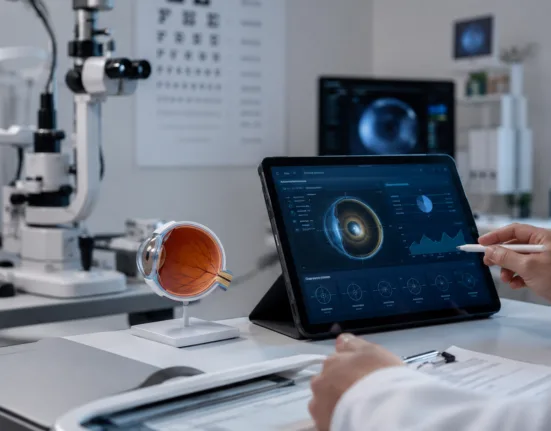
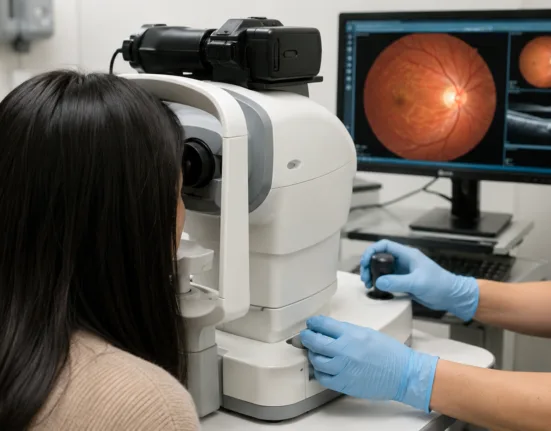
Smile Brands has begun rolling out Pearl Radiographic AI across a significant number of affiliated dental offices after completing an initial pilot of the dental artificial intelligence platform. The commercial deployment places Pearl’s FDA-cleared dental radiograph analysis technology inside a large U.S. dental support organisation, where the main test is no longer whether AI can detect image findings, but whether it can improve consistency, chairside communication and treatment decision support at scale.
Why Smile Brands’ Pearl rollout matters more as a clinical standardisation test than a software deployment
The more important signal in this rollout is not simply that another dental organisation is adopting artificial intelligence. It is that Smile Brands is trying to operationalise diagnostic consistency across a large and distributed care network, where variation in radiograph interpretation, patient communication and case presentation can influence both clinical pathways and business performance. For dental support organisations, the same imaging data can exist across hundreds of locations, but the clinical value depends on how reliably that data is interpreted and explained.
That is where Pearl’s Radiographic AI platform becomes strategically relevant. Dental radiographs are among the most common diagnostic inputs in general dentistry, but interpretation can vary by clinician experience, image quality, case complexity and time pressure during appointments. AI-assisted detection is designed to create an additional visual layer that helps clinicians identify suspected findings and present them more clearly to patients. The promise is not replacement of professional judgment, but a more standardised second-reader workflow that can reduce ambiguity and make conversations more evidence-led.
The risk is that standardisation can be easier to describe than to achieve. Dental AI tools must fit into daily imaging workflows without slowing appointments, creating alert fatigue or encouraging clinicians to over-rely on software outputs. Large dental support organisations also face a governance challenge. They must ensure that AI-supported findings are used consistently across offices while preserving the treating clinician’s responsibility for diagnosis and treatment planning. That balance will determine whether the Smile Brands rollout becomes a meaningful clinical infrastructure project or another digital tool with uneven utilisation.
How Pearl’s FDA-cleared dental AI position changes the adoption calculus for large DSOs
Pearl benefits from a regulatory position that matters in dental AI procurement. Its Second Opinion platform has received FDA clearance for computer-assisted detection in dental radiographs, and later clearance activity has broadened the company’s radiologic AI footprint into additional imaging contexts. That regulatory history gives enterprise buyers a clearer procurement basis than they would have with unregulated image interpretation tools, particularly when deployment involves patient-facing visual evidence and clinical workflow integration.
For Smile Brands, FDA clearance does not automatically prove real-world impact across its network, but it does reduce one major adoption barrier. Procurement teams, clinical leaders and risk managers are more likely to support deployment when a device has a defined intended use, documented performance testing and a regulatory framework. In dental support organisations, technology decisions must satisfy both clinicians and business operators. A platform must be credible enough for providers, usable enough for staff and measurable enough for leadership.
However, FDA clearance also creates boundaries. Pearl’s AI should be understood as a clinical aid rather than a stand-alone diagnostic authority. The relevant question is whether it improves detection support, communication and calibration when used by trained dental professionals, not whether it can independently decide treatment. This distinction will matter as dental AI becomes more visible to patients. If practices frame AI outputs as visual support for clinician review, adoption can strengthen trust. If AI is perceived as an automated sales trigger, the same technology could create skepticism.
What the rollout reveals about the commercial pressure on dental AI platforms
The Smile Brands deployment comes as dental AI platforms are moving beyond early adopter clinics and into enterprise dental networks. Competitors including Overjet, VideaHealth and Denti.AI have also built FDA-cleared or regulated dental imaging tools around disease detection, charting, radiograph interpretation and workflow intelligence. This means Pearl is not operating in an empty category. The competitive race is shifting from who has a clever algorithm to who can prove enterprise fit, clinician adoption and measurable operational outcomes.
That shift is important because dental AI purchasing is becoming more sophisticated. Early product narratives often focused on detection accuracy, missed lesions and visual overlays. Enterprise buyers now want broader answers. They want to know how AI affects case acceptance, hygiene recall, treatment planning consistency, provider onboarding, documentation quality and insurance workflows. The platforms that win large deployments are likely to be those that connect diagnostic support with practice-level intelligence without creating compliance or usability friction.
Smile Brands’ early observation of improved diagnosis presentation and higher same-day treatment acceptance is commercially meaningful, but it also raises the bar for proof. Same-day treatment acceptance can reflect better patient understanding, but it can also be affected by case mix, provider behaviour, office-level incentives and appointment flow. The unresolved question is whether those gains persist across offices, providers and patient populations once the pilot environment gives way to routine deployment. For Pearl, durable adoption will require evidence that the platform improves consistency without becoming just another visual sales aid.
Why patient trust may become the most sensitive metric in dental AI adoption
The patient-facing nature of dental AI makes this rollout different from many back-office health technology deployments. In dentistry, radiographs are often shown directly to patients during treatment discussions. An AI overlay that highlights suspected findings can make abstract clinical language easier to understand. That can help patients see why a clinician is recommending treatment, especially for conditions that are not painful yet or are difficult to interpret on a grayscale image.
This is where AI could have real commercial and clinical utility. Dental practices often struggle with the gap between professional diagnosis and patient acceptance. A clinician may identify early pathology, but the patient may delay care if the need is not visually clear. If AI-generated annotations make findings easier to explain, the technology can support earlier intervention and more transparent communication. For a large dental support organisation, even modest improvements in treatment understanding can compound across a broad office base.
The risk is that patient trust is fragile. AI visuals can feel authoritative, and patients may not understand the difference between a suspected finding and a confirmed diagnosis. Clinicians will need to explain AI outputs carefully, especially when findings are borderline or require clinical correlation. The strongest implementation model will treat Pearl as an aid to communication and review, not as a substitute for clinical judgment. If patients feel AI is being used to pressure treatment decisions, the trust advantage could reverse quickly.
How the Smile Brands deployment could influence clinical calibration across distributed dental networks
One of the most underappreciated advantages of dental AI in large networks is calibration. A dental support organisation may have hundreds or thousands of clinicians working across different offices, brands and local patient populations. Even with strong training and protocols, interpretation patterns can differ. AI-supported radiograph review gives leadership a potential mechanism to identify trends, compare patterns and support more consistent clinical decision-making over time.
For Smile Brands, this could make Pearl more than a chairside diagnostic tool. The platform may become part of a wider clinical quality infrastructure, helping affiliated practices review how findings are presented, how treatment plans are formed and where additional training may be needed. This matters because dental support organisations are under constant pressure to prove that scale does not dilute care quality. If AI helps reduce variation while supporting provider autonomy, it could strengthen the clinical case for scaled dental models.
Still, calibration introduces governance questions. Practices must decide how AI outputs are reviewed, how discrepancies between clinicians and software are handled, and how performance data is used. If clinicians believe AI metrics are being used primarily for productivity surveillance, adoption could suffer. If the data is positioned as a learning and quality improvement layer, acceptance is more likely. The technology may be advanced, but the implementation challenge is deeply human.
What clinicians and industry observers will watch as Pearl moves from pilot to full deployment
The next phase will likely be judged on utilisation, consistency and durability rather than announcement momentum. Clinicians will want to know whether Pearl’s workflow is fast enough for routine use, whether its findings are clinically useful across common case types and whether it improves patient conversations without adding unnecessary complexity. Dental support organisation leaders will look for evidence of standardised documentation, better treatment presentation, smoother onboarding and measurable improvements across locations.
Industry observers will also watch how Smile Brands handles rollout governance. Training, clinician feedback loops and quality assurance protocols will matter as much as the software itself. Dental AI tools can produce value only when providers trust them, staff understand them and patients see them as part of better care rather than a mysterious algorithmic layer. The difference between a successful rollout and a disappointing one may come down to change management, not detection performance alone.
For Pearl, the Smile Brands agreement adds a high-visibility enterprise adoption marker in a crowded dental AI market. It strengthens the argument that dental AI is moving from niche innovation into mainstream practice infrastructure. However, it also exposes Pearl to enterprise-level expectations. Large deployments bring operational complexity, integration demands and greater scrutiny around outcomes. The company now has to show that its technology can scale not only technically, but behaviourally and clinically.
Why dental AI’s next battle will be won through workflow evidence, not algorithm claims alone
The Smile Brands rollout reflects a broader maturation of dental AI. The category is moving from a novelty phase, where FDA clearance and visual overlays created excitement, to an evidence phase, where buyers ask whether these platforms improve care delivery in measurable and repeatable ways. In this phase, the strongest platforms will not necessarily be those with the longest feature list. They will be the ones that clinicians use consistently, patients understand easily and enterprise networks can manage safely.
Pearl’s opportunity is to make radiographic AI feel native to dental care rather than bolted onto it. If the platform helps providers communicate findings more clearly, reduces interpretive variation and supports earlier clinical action, the Smile Brands rollout could become an important proof point for dental AI adoption across large practice networks. If outcomes are inconsistent, or if clinician engagement fades after implementation, the rollout may instead underscore how hard it is to convert regulated AI software into daily clinical behaviour.
The strategic takeaway is clear. Dental AI is no longer just a technology story. It is becoming an operating model story for scaled dentistry. Smile Brands is betting that Pearl can help convert radiographs into a more consistent, transparent and system-wide clinical asset. The next question is whether that promise can survive the messy realities of real-world dental practice, where trust, workflow and clinician judgment still decide whether artificial intelligence becomes infrastructure or just another screen in the operatory.