Becton, Dickinson and Company has entered a strategic partnership with Wellstar Health System to improve hospital medication delivery using BD Pyxis Pro medication dispensing technologies, BD Alaris Infusion Systems and AI-enabled BD Incada analytics. The collaboration will connect medication dispensing, infusion workflows and electronic medical record interoperability across Wellstar’s hospitals and care facilities, placing the agreement at the intersection of medication safety, clinical workflow automation and hospital pharmacy digitisation.
Why BD and Wellstar’s medication delivery partnership matters for hospital safety and workflow redesign
The BD and Wellstar partnership is not simply a technology refresh inside a hospital network. It reflects a broader shift in which medication management is moving from a set of separate pharmacy, nursing and infusion tasks into a connected operational layer that hospital executives can monitor, analyse and improve in real time. That distinction matters because medication delivery remains one of the most operationally complex areas of hospital care, involving ordering, dispensing, verification, administration, infusion monitoring, inventory control and documentation.
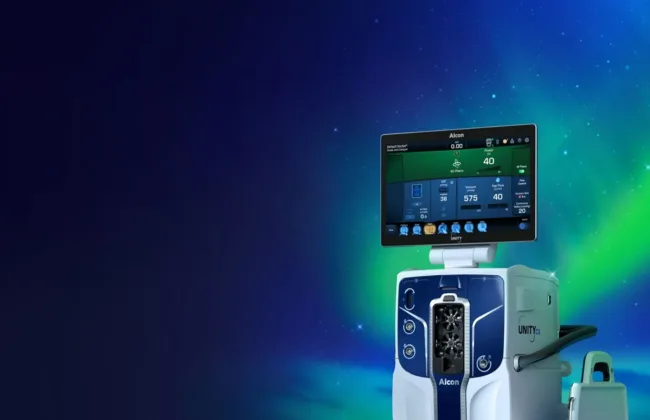
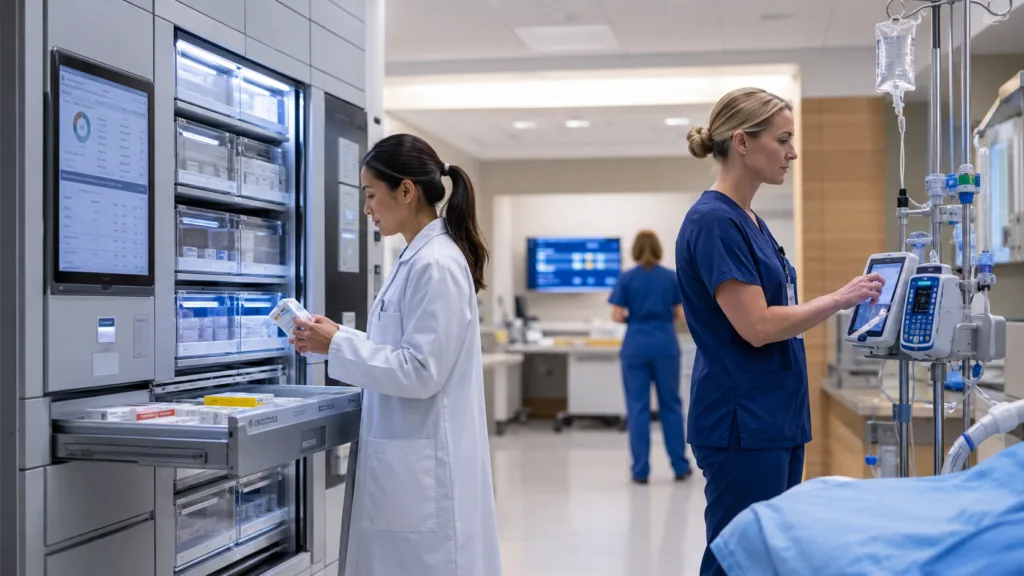
The core change is the link between BD Pyxis Pro medication dispensing technologies and BD Alaris Infusion Systems. In traditional hospital environments, dispensing cabinets, infusion pumps and electronic medical records often function as adjacent systems rather than a fully integrated workflow. That creates room for delays, manual reconciliation, fragmented inventory visibility and avoidable documentation burden. By connecting dispensing and infusion with EMR interoperability, Wellstar is trying to make medication delivery more traceable from pharmacy to bedside.
The commercial significance for Becton, Dickinson and Company is equally clear. Medication management is already a major medtech battleground because hospitals are under pressure to reduce adverse drug events, improve pharmacy productivity, control drug waste and support nurses who are stretched across higher-acuity care settings. BD is positioning its medication management portfolio not as a collection of hardware assets, but as a connected platform that can generate workflow intelligence. The risk is that hospitals may welcome the concept of integration while still struggling with implementation complexity, staff training, data governance and interoperability across legacy IT environments.
How AI-enabled medication inventory visibility could change hospital pharmacy operations
The AI layer in the BD-Wellstar collaboration is most relevant in medication inventory management, where BD Pyxis Pro Dispensing Solution with Analytics in BD Incada is designed to give Wellstar enterprise-wide visibility into medication availability, usage patterns and waste. This is an important operational step because hospital pharmacy teams are often asked to improve efficiency without gaining a full, real-time view of demand across facilities, nursing units and care pathways.
Natural-language querying and dashboards could make pharmacy analytics more usable for clinical and operational teams that do not have time to build complex reports manually. If implemented well, this could help identify stockout risks, slow-moving inventory, high-waste medication categories and workload bottlenecks. For large integrated systems such as Wellstar Health System, the value is not just in knowing what is in one dispensing cabinet, but in understanding how medication movement behaves across the entire care network.
However, AI in this setting should not be confused with autonomous clinical decision-making. The practical value lies in operational intelligence, not replacing clinicians or pharmacists. Hospitals will still need strong governance around data quality, dashboard interpretation, alert design and accountability. A poorly configured analytics system can produce noise, while a well-integrated one can help clinical teams act earlier. That is why the unresolved question is not whether AI can detect patterns, but whether hospitals can turn those patterns into safer and more efficient workflows without increasing cognitive burden.
What EMR interoperability changes for nurses, pharmacists and infusion safety
BD Alaris EMR interoperability is central to the partnership because infusion administration is one of the highest-stakes points in hospital medication delivery. Barcode scanning that allows infusion orders to move from the electronic medical record to the infusion system, with infusion status returning to the EMR, can reduce manual entry and improve documentation continuity. That is a meaningful improvement in a care environment where nurses often operate under time pressure and where transcription or programming gaps can create safety concerns.
For clinicians, the value is workflow simplification. When medication orders, infusion programming and administration records are better connected, the hospital can reduce duplicate work and improve visibility into whether an ordered medication has been started, paused, completed or delayed. For pharmacy teams and care managers, that status feedback can also support more accurate medication tracking and faster intervention when therapy is interrupted.
The limitation is that interoperability depends on disciplined deployment. Hospitals must align medication libraries, barcode workflows, EMR configuration, pump settings, pharmacy verification processes and staff behaviour. A connected platform can reduce risk only if the surrounding workflow is equally reliable. Industry observers tracking hospital automation would likely view the BD-Wellstar deployment as a test of operational execution as much as a technology partnership.
Why connected medication management is becoming a competitive frontier for medtech companies
For Becton, Dickinson and Company, the Wellstar agreement strengthens its position in a medtech segment where hospitals increasingly want integrated ecosystems rather than isolated devices. Medication dispensing cabinets, infusion systems and analytics platforms are becoming stickier when they operate together, especially for multi-hospital systems that want standardised workflows across facilities. That makes medication management an attractive strategic category because it touches pharmacy, nursing, informatics, patient safety and hospital finance at the same time.
The competitive question is whether BD can convert product breadth into measurable health system value. Hospitals are likely to ask whether connected medication management can reduce medication waste, improve labour efficiency, lower error risk, shorten documentation cycles and support compliance. The more those benefits can be quantified, the stronger BD’s case becomes in procurement discussions.
Still, the hospital buying environment remains difficult. Capital budgets are constrained, IT teams are overloaded, and health systems are cautious about adding technology that requires extensive change management. The Wellstar partnership may therefore be less about a single commercial win and more about creating a reference model for how large health systems can modernise medication delivery without fragmenting clinical workflows further.
What the partnership reveals about hospital AI adoption beyond diagnostics and imaging
Much of the healthcare AI debate has focused on diagnostics, imaging, ambient documentation and clinical decision support. The BD-Wellstar collaboration points to a different AI adoption path, one rooted in operational infrastructure. Medication inventory intelligence, workflow analytics and connected device data may be less glamorous than diagnostic AI, but they can have immediate relevance for hospital efficiency and safety.
That matters because hospitals are more likely to adopt AI where the use case is tied to measurable operational pain. Medication availability, waste reduction, labour optimisation and infusion documentation are concrete problems. They affect patient care, staff workload and cost control. If AI can improve visibility in those areas without forcing clinicians into another disconnected software interface, adoption may be easier than in more clinically sensitive use cases.
The caution is that operational AI still carries risk. Data must be accurate, dashboards must be interpretable, and recommendations must fit real clinical workflows. Hospitals also need to guard against assuming that visibility alone creates improvement. Seeing a medication bottleneck is useful, but resolving it may require staffing changes, pharmacy process redesign, formulary review or nursing workflow adjustments. Technology can surface the issue, but leadership still has to fix it.
How investors may read BD’s medication management push after recent share pressure
For investors watching Becton, Dickinson and Company, the Wellstar partnership supports the view that BD is leaning into higher-value connected care and medication management platforms. Becton, Dickinson and Company shares last traded at $149.43 on May 8, 2026, giving the medical technology group a market capitalization of roughly $41.17 billion. The stock’s recent pressure suggests that investors remain cautious on execution, growth durability and margin resilience despite the strategic relevance of its hospital technology portfolio.
The sentiment read-through is mixed but constructive. On one side, hospital medication management is a defensible category with long replacement cycles, high workflow integration and cross-functional relevance. On the other side, medtech investors are increasingly demanding evidence that platform strategies translate into revenue acceleration, recurring analytics value and stronger customer retention. A partnership with a major integrated health system such as Wellstar helps the narrative, but it does not automatically answer the monetisation question.
For BD, the next investor focus will likely be whether these types of partnerships deepen customer relationships beyond hardware placement. If analytics, EMR interoperability and enterprise visibility become core purchasing criteria, BD may be able to defend its medication management franchise more effectively. If hospitals view the technology mainly as incremental automation, the financial upside could be slower and more tied to replacement cycles.
What clinicians, regulators and hospital leaders are likely to watch next
Clinicians will likely focus on whether the connected medication management system reduces friction at the bedside. The strongest technology deployments in hospitals are the ones that make safe action easier rather than adding another layer of clicks, prompts or alerts. For nurses, pharmacists and informatics teams, the test will be whether BD Pyxis Pro, BD Alaris Infusion Systems and BD Incada analytics improve reliability without overwhelming daily practice.
Regulatory and safety observers may watch how medication delivery systems handle traceability, documentation, data integrity and post-implementation monitoring. As hospital medication workflows become more connected, the accountability chain also becomes more data-rich. That can support quality improvement, but it also requires health systems to define who acts on alerts, who validates analytics outputs and how workflow changes are reviewed.
The bigger industry question is whether BD and Wellstar can demonstrate outcomes beyond implementation. Hospitals do not need more technology for its own sake. They need fewer preventable medication delays, better inventory discipline, lower waste, stronger documentation and more time for clinicians to focus on patients. If the BD-Wellstar partnership can show that connected medication management delivers those outcomes at scale, it could become a more persuasive template for hospital automation across the United States.