What this changes for ACL treatment standards and the long-term outlook for knee health
The United States Food and Drug Administration has granted 510(k) clearance to Miach Orthopaedics, Inc. for an updated label on its BEAR Implant, reflecting a significantly reduced risk of post-traumatic osteoarthritis (PTOA) compared to traditional anterior cruciate ligament (ACL) reconstruction using hamstring tendon autograft. The clearance is based on six-year pooled data from the BEAR I and II studies, marking the first time a sports medicine device has been permitted to include a claim of long-term osteoarthritis risk reduction.
This update not only distinguishes the BEAR Implant in a crowded orthopedic device market but also reframes how success in ACL treatment is clinically and commercially evaluated. In doing so, it introduces a new set of performance expectations for surgeons, insurers, and patients beyond the historical priority of short-term recovery timelines.
Why this sets a precedent in long-term musculoskeletal device labeling
Post-traumatic osteoarthritis has long been viewed as an unfortunate but inevitable downstream consequence of ACL injury and reconstruction. Standard care—typically tendon graft-based reconstruction—addresses mechanical knee stability but does not prevent the degenerative joint changes that can evolve silently over years. The FDA’s approval of a PTOA risk reduction claim on the BEAR Implant label breaks new ground by formally recognizing a long-term, chronic disease endpoint in orthopedic device evaluation.
Regulatory watchers note that this milestone could open the door for future orthopedic and regenerative devices to pursue long-term disease modification claims. It also provides a model for how six-year clinical data, even from modestly sized trials, can be marshaled into durable regulatory advantage if the outcome is clearly linked to unmet needs and chronic disease burdens.
In sports medicine, few interventions have historically demonstrated impact beyond the two- to three-year mark. The FDA’s decision thus elevates the bar for what constitutes meaningful, durable benefit in ligament repair—especially in younger patients.
What makes this claim clinically and economically relevant
According to published studies, symptomatic PTOA develops in up to 50 percent of patients who undergo ACL reconstruction, often within a decade. These patients may require chronic pain management, repeated imaging, steroid injections, and eventually, total knee arthroplasty. While younger patients typically tolerate ACL injuries better in the short term, they are paradoxically more likely to live long enough to experience PTOA.
The label update acknowledges that patients aged 14 and older treated with ACL reconstruction had six times the rate of radiographically confirmed PTOA compared to those treated with the BEAR Implant. The statistical gap—27.7 percent in favor of BEAR, with p=0.002—strengthens the argument that PTOA risk should not merely be an incidental concern but a pivotal factor in surgical decision-making.
Industry analysts believe this clarity will influence both shared decision-making in clinics and value-based payment models. As private insurers and national health systems increasingly consider downstream costs in reimbursement frameworks, interventions that reduce the future need for joint replacement or chronic care could receive preferential coverage treatment.
How the BEAR Implant differs mechanistically from reconstruction grafts
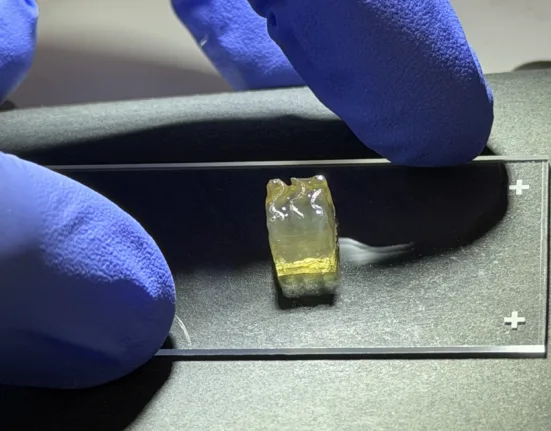
The BEAR (Bridge-Enhanced ACL Restoration) Implant is designed to facilitate native ligament healing rather than mechanically replacing the ACL with a tendon graft. It comprises a bioengineered collagen scaffold that is surgically placed between the torn ends of the ligament, activated with the patient’s blood, and gradually resorbed as the tissue heals.
Traditional ACL reconstruction, by contrast, involves harvesting a healthy tendon from another part of the leg or using a cadaveric donor tendon. This process creates additional surgical trauma, sacrifices tissue from another part of the body, and replaces rather than repairs the original ligament structure.
Clinicians tracking biologic repair in musculoskeletal medicine suggest that preserving the ACL’s proprioceptive and vascular structures may be a critical factor in reducing long-term joint degeneration. While reconstruction focuses on restoring mechanical function, biologic restoration aims to maintain the joint’s native biomechanical integrity—a factor that may mitigate the cascade of cartilage breakdown and inflammation that underpins PTOA.
Where adoption challenges could still slow momentum
Despite the strong data and FDA clearance, widespread adoption of the BEAR Implant faces real-world obstacles. First, not all ACL tears are anatomically suitable for BEAR. The procedure requires an intact ACL stump on the tibial side and adequate epiphyseal bone for tunnel placement, which may not be available in complex or chronic injury cases.
Second, surgeon training and familiarity remain limited. Reconstruction is a deeply embedded surgical standard, taught in most orthopedic residency programs and supported by decades of procedural optimization. By contrast, BEAR requires specific procedural expertise and comes with a learning curve that may deter high-volume sports surgeons unless institutional support is strong.
Third, reimbursement alignment is still evolving. Although FDA approval of the PTOA risk reduction claim strengthens Miach Orthopaedics’ case for broader payer coverage, commercial insurers and government payers may be slow to revise coding and coverage policies. Until reimbursement pathways stabilize, out-of-pocket costs or authorization hurdles could deter adoption.
Finally, long-term data on functional performance, such as return-to-sport rates and graft rupture comparisons, while promising, remain less well-publicized than the PTOA benefit. Some clinicians may await real-world registries or larger scale studies before shifting surgical preferences.
What this means for public health and sports medicine guidelines
The inclusion of osteoarthritis risk in a sports medicine device label reflects a broader shift in how joint injuries are understood from a life-course health perspective. For adolescents, student athletes, and active young adults, the opportunity to reduce chronic degenerative risk decades in advance reframes the ethical and clinical rationale behind early intervention strategies.
Guidelines from sports medicine associations, including the American Orthopaedic Society for Sports Medicine (AOSSM), have traditionally emphasized mechanical repair, early rehabilitation, and safe return to play. With the emergence of biologic ACL restoration as a validated pathway, future guidelines may need to incorporate joint health preservation as a formal outcome alongside traditional metrics.
In school sports and pediatric orthopedics, the potential for long-term benefit may resonate particularly well. Since total knee replacements are rarely considered before age 50 due to longevity limitations, the prevention of PTOA takes on added urgency in younger populations.
How Miach Orthopaedics may use this milestone to expand its footprint
As a privately held medical device company, Miach Orthopaedics now holds a differentiated commercial asset with FDA-sanctioned claims that few competitors can match in the biologic orthopedic repair space. The company may use this as a platform to explore several strategic paths:
Label expansion into younger pediatric populations or into patients with partial ACL injuries.
Clinical trials in high-demand populations, such as elite athletes or military personnel, to validate performance under stress.
Geographic expansion into Europe or Asia-Pacific markets, where aging populations and high sports injury incidence may offer strong demand.
Partnerships or acquisition interest from larger orthopedic firms seeking innovation-led portfolio growth.
Some analysts also expect Miach Orthopaedics to invest in real-world evidence collection and long-term registries to further validate the durability and functional performance of the BEAR procedure outside controlled trials.
What this could signal for the future of regenerative orthopedics
The BEAR Implant’s label change could mark a turning point not just for ACL surgery, but for the future of biologic joint repair as a commercial category. As regulators become more open to long-term disease endpoints like osteoarthritis, regenerative technologies in hips, shoulders, and spinal discs may begin pursuing similar label strategies.
In this light, the FDA’s move may be viewed not just as a product-specific endorsement but as a regulatory green light for musculoskeletal innovation that moves beyond structural repair to systemic protection. Whether that unlocks new reimbursement models, accelerates biorepair innovation, or reshapes clinical practice will depend on how the next wave of data, education, and market behavior unfolds.