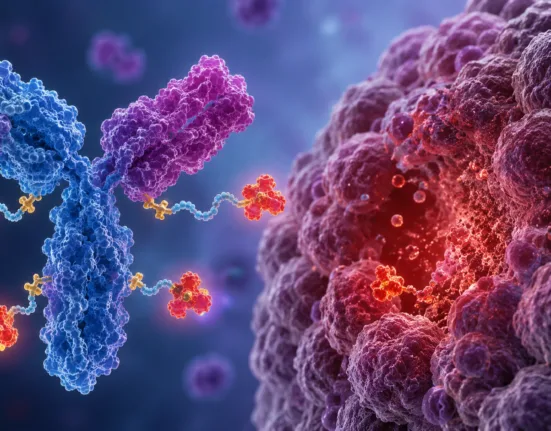
Biohaven Ltd. presented updated Phase 1 clinical data on BHV-1510, its next-generation Trop2-targeting antibody-drug conjugate, at the 2025 European Society for Medical Oncology (ESMO) Immuno-Oncology Congress in London. The results, derived from a heavily pretreated population with advanced or metastatic solid tumors, showed encouraging response rates across non-small cell lung cancer, endometrial cancer, and urothelial carcinoma when BHV-1510 was administered in combination with Regeneron Pharmaceuticals Inc.’s PD-1 inhibitor cemiplimab. Importantly, the safety profile of BHV-1510 appeared differentiated from existing Trop2 ADCs, with no cases of interstitial lung disease or dose-limiting toxicities that forced discontinuation.
What this reveals about Biohaven’s strategy to avoid toxicity seen in earlier Trop2 ADCs
Antibody-drug conjugates targeting Trop2 have long attracted attention for their potential to address difficult-to-treat solid tumors, but safety concerns have limited their broader clinical deployment. Agents like sacituzumab govitecan and datopotamab deruxtecan, while effective in certain cancers, have been associated with hematologic toxicity, treatment-emergent diarrhea, alopecia, and, notably, interstitial lung disease in some patients. These risks have forced oncologists to weigh clinical benefit against quality-of-life concerns, especially in combination regimens.
Biohaven Ltd. appears to be responding to this challenge directly. The company’s BHV-1510 was designed using its proprietary TopoIx payload, coupled with a highly stable linker. The company’s aim was to limit systemic release of the unconjugated cytotoxic agent, which contributes to many off-target side effects in earlier ADCs. According to the clinical data presented at ESMO, the unconjugated payload concentration in circulation remained low and the molar payload-to-ADC ratio was less than one percent. This pharmacokinetic profile may account for the cleaner safety results observed in the study, where no participants discontinued due to adverse events and the most common toxicity—oral mucositis—was manageable and consistent with class effects.
This design shift could signal a new phase in Trop2 ADC evolution, one in which tolerability is considered not just a secondary benefit but a primary point of differentiation.
Why early efficacy in post-PD-(L)1 settings could shift trial positioning for BHV-1510
The trial population studied by Biohaven Ltd. was not treatment-naïve. In fact, the median number of prior lines of therapy was two, and over 87 percent of participants had previously received PD-(L)1 inhibitors. Despite this, confirmed objective response rates were notable. At the 2.5 mg/kg every-three-week dose level, 60 percent of patients with non-small cell lung cancer responded to therapy, alongside 100 percent of endometrial cancer patients and 50 percent of those with urothelial cancer. One participant with triple-negative breast cancer also showed a confirmed response.
Across all dose levels and evaluable patients (n=23), the confirmed objective response rate stood at 52.2 percent. The median time to response was 11.1 weeks, and 18 patients remained on therapy beyond the six-month mark at the clinical cutoff date. These numbers suggest not only initial activity but potential for longer-term disease control, particularly when considering the prior treatment histories of the patient group.
The ability to drive responses in patients who have already progressed on checkpoint inhibitors positions BHV-1510 as a possible salvage-line option, and may also support future investigation in earlier-line combinations. If these outcomes hold in larger cohorts, it could reshape how Trop2 ADCs are sequenced in the treatment paradigm, particularly in immunotherapy-refractory settings.
How BHV-1510 may challenge current ADC design norms in solid tumors
The Biohaven Ltd. program stands out not merely for the early efficacy, but for its deliberate challenge to current ADC design orthodoxy. Many first- and second-generation ADCs have emphasized increasing potency by linking more aggressive cytotoxic agents to antibodies. This approach has led to strong anti-tumor effects but also narrow therapeutic windows, particularly in combination regimens.
Biohaven Ltd. appears to be taking a different route. By using a topoisomerase payload engineered for better stability and tolerability, the company may be redefining what success looks like in the ADC field. A candidate that enables co-administration with immunotherapies without overlapping toxicity could unlock previously inaccessible tumor types or patient populations.
For example, the combination with cemiplimab makes sense both biologically and commercially. Cemiplimab has approvals in advanced non-small cell lung cancer and cutaneous squamous cell carcinoma and is under active investigation in endometrial and urothelial cancers. If BHV-1510 can expand the therapeutic footprint of cemiplimab—or vice versa—it increases the likelihood of pathway-aligned label expansions.
What Biohaven’s oncology pivot signals for future pipeline bets
Biohaven Ltd., once primarily known for its neurology focus and the blockbuster migraine therapy rimegepant (since acquired by Pfizer Inc.), has repositioned itself post-divestiture as a more diversified platform company. The move into oncology, and specifically into immunotherapy-ADC combinations, represents both a strategic risk and a market-driven response to industry momentum around targeted protein degradation and precision delivery systems.
The BHV-1510 program is not an isolated asset. The company is also advancing other modalities including Kv7 ion channel modulators, MoDE and TRAP protein degradation platforms, and agents targeting the myostatin-activin pathway. Taken together, these programs reflect a portfolio strategy anchored in mechanistic innovation rather than single-asset dependency.
If BHV-1510 achieves proof of concept in larger studies, Biohaven Ltd. could be better positioned to secure strategic partnerships, raise non-dilutive capital, or even re-enter acquisition discussions on stronger terms. The differentiation in both technology and clinical profile may allow the company to punch above its weight in a highly competitive oncology sector.
What regulatory and development risks remain despite the optimism
While the early data from the Phase 1 trial are promising, multiple questions still limit forecasting. The trial is open-label, single-arm, and relatively small. This raises obvious concerns about selection bias and generalizability. Moreover, response rates in heavily pretreated populations are often subject to fluctuation as trial enrollment expands and sites diversify.
Another unknown is the role of Trop2 expression in driving outcomes. The company has not yet disclosed whether Trop2 levels were used as a biomarker for patient selection or correlated with response. This could pose regulatory hurdles, as agencies increasingly require biomarker-defined populations for accelerated approval pathways, especially in immunotherapy combinations.
The trial also included multiple dosing regimens, including 2 mg/kg to 2.75 mg/kg every three weeks and a less frequent D1D8Q3W approach. Future studies will need to clarify which dosing strategy optimizes efficacy while preserving tolerability, a key consideration as the program moves toward pivotal development.
Finally, manufacturing and scalability remain open issues. The use of a novel linker and proprietary payload suggests that Biohaven Ltd. may need to invest significantly in specialized production capacity to meet future commercial demand. Ensuring chemistry, manufacturing, and controls compliance at scale could become a gating factor for registration and launch.
What comes next for clinicians and industry watchers tracking Trop2 ADCs
Clinicians following the ADC field are likely to view the BHV-1510 data as an intriguing but preliminary signal. If the safety profile remains favorable across expanded cohorts, and if durable responses are observed in checkpoint-refractory cancers, the case for Phase 2 progression will strengthen significantly. Regulatory watchers will be looking for clarity on biomarker strategy, durability, and comparative benchmarks against existing ADCs.
For now, BHV-1510 offers a proof point that antibody-drug conjugate design is not a closed chapter. The Biohaven Ltd. approach suggests that improvements in tolerability can be just as disruptive as improvements in efficacy. As combination immunotherapies move toward earlier lines of treatment, the ability to reduce additive toxicity will become even more valuable.