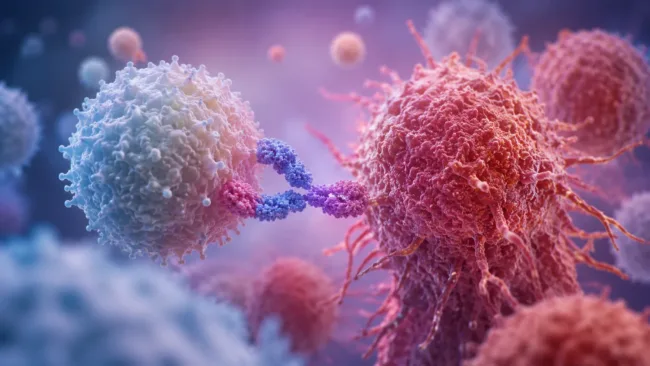
WuXi Biologics and Sinorda Biomedicine have entered into a strategic collaboration to advance the development and clinical manufacturing of SND006, a novel bispecific antibody targeting inflammatory bowel disease and other autoimmune conditions. The agreement will see Sinorda Biomedicine utilize WuXi Biologics’ CRDMO capabilities to support preclinical development, IND-enabling activities, and global clinical supply for SND006, with regulatory filings planned in both China and the United States in 2026.
What this collaboration changes for early-stage bispecific antibody developers in IBD and autoimmunity
The agreement signals another assertive step toward de-risking early biologic innovation through CRDMO-enabled scalability. While WuXi Biologics has long been a go-to partner for large molecule developers, its positioning in the bispecific antibody space is increasingly specialized, with SND006 entering a development funnel reportedly backed by hundreds of prior bispecific projects. For Sinorda Biomedicine, the alliance offers an accelerated regulatory path without the overhead of building global-scale process development and manufacturing infrastructure internally.
In the context of inflammatory bowel disease, a bispecific modality still represents a novel frontier, especially when contrasted with entrenched monoclonal antibodies such as adalimumab or ustekinumab. If SND006 demonstrates differentiated targeting or safety profiles in first-in-human studies, it could enable Sinorda Biomedicine to leapfrog conventional positioning and seek value-based contracting or niche labeling for difficult-to-treat subpopulations.
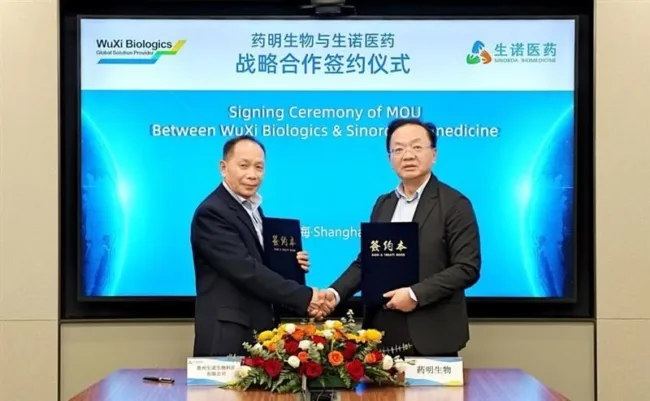
The fact that WuXi Biologics is committing full-stack CRDMO resources—including IND-supporting preclinical work and clinical-grade batch production—suggests confidence in both the manufacturability and the novelty of SND006. However, with no disclosed clinical data yet available, and only in vitro validation completed to date, the molecule remains in the high-risk zone of pre-IND development. Analysts tracking the field will be watching closely for the pharmacodynamic rationale, dual-target design specifics, and potential Fc-engineering features that may differentiate it in a crowded immunology pipeline.
What SND006 reveals about Sinorda Biomedicine’s evolving platform strategy
Sinorda Biomedicine’s move to advance SND006 through global regulatory pathways, including both the National Medical Products Administration and the U.S. Food and Drug Administration, reflects its ambition to move beyond domestic commercialization and into globally competitive positioning. The company has previously taken one molecule—linaprazan glureta—through approval and industrialization in gastric acid-related disorders, but SND006 is structurally and clinically distinct, representing a pipeline transition toward immunology-focused, high-differentiation assets.
By securing WuXi Biologics’ platform support, Sinorda Biomedicine appears to be laying groundwork for future scalability not just of this molecule, but of its broader bispecific pipeline. The announcement hints at further multi-asset collaboration beyond SND006, suggesting the company is betting on bispecific antibodies as a cornerstone modality for its next-generation therapeutics, including possible immuno-oncology crossover applications.
While Sinorda Biomedicine has not disclosed its lead targets or binding domains, industry observers believe that any molecule selected for joint IND planning with a global CDMO must meet minimal developability criteria, including favorable biophysical characteristics, manufacturability, and at least preliminary target engagement in in vitro systems. That said, a wide chasm remains between a promising preclinical profile and first-in-human validation, particularly for bispecifics, which are structurally complex and prone to immunogenicity, stability, and expression challenges.
Why WuXi Biologics is leaning harder into bispecifics amid shifting global CDMO dynamics
WuXi Biologics’ growing emphasis on bispecific and multispecific antibody programs reflects more than just commercial trend alignment—it represents a calculated response to evolving regulatory and geopolitical headwinds. As concerns mount in the United States and Europe regarding over-reliance on Chinese biomanufacturing infrastructure, WuXi Biologics finds itself navigating increased scrutiny over foreign Contract Development and Manufacturing Organization (CDMO) involvement in sensitive clinical and commercial supply chains. In this climate, the company is doubling down on high-complexity modalities such as bispecific antibodies, where its decade-long investments in expression platform optimization, dual-arm chain pairing, and advanced purification protocols offer competitive defensibility that many rivals lack.
Bispecific antibodies are particularly demanding in terms of upstream and downstream process development, often requiring intricate cell line engineering, novel linker chemistry, and tailored analytics to ensure stability, specificity, and manufacturability. These requirements align closely with WuXi Biologics’ existing infrastructure and its proprietary WuXiBody platform, which enables flexible and scalable bispecific production. This makes the category not only commercially attractive but also technically synergistic with WuXi Biologics’ core capabilities, offering an opportunity to position the firm as an indispensable partner for small- and mid-cap biotechs seeking to de-risk early clinical development in autoimmune diseases, oncology, and other immunology-focused indications.
From an operational standpoint, WuXi Biologics has surpassed the critical mass needed to sustain long-term platform innovation. As of year-end 2025, the company was supporting over 945 integrated client programs globally, including 74 assets in Phase III development and 25 in commercial-scale production. This breadth of clinical and commercial engagement allows WuXi Biologics to leverage cross-project learnings and continuously refine its CMC protocols, which are increasingly relevant in the bispecific space where quality control and regulatory harmonization are complex and evolving. The partnership with Sinorda Biomedicine, centered on the investigational bispecific antibody SND006, can be interpreted as a deliberate move to extend this expertise into autoimmune disease areas beyond WuXi Biologics’ traditional stronghold in oncology.
Strategically, the Sinorda deal may also be viewed as a case study in WuXi Biologics’ shift from being a transactional CDMO to becoming a true co-innovation partner—particularly in modalities that sit at the frontier of biologics development. This evolution is increasingly important as early-stage biotech firms look for end-to-end platform partners who can support not only technical execution but also regulatory strategy, manufacturing scale-up, and global supply chain readiness. By embedding itself into the pre-IND development cycle for SND006, WuXi Biologics is securing early-stage visibility into potential commercial winners, while reinforcing its credentials as a trusted development partner capable of navigating the full product lifecycle.
That said, material risks remain—especially for Chinese CDMOs looking to support U.S. and EU clinical programs. Geopolitical dynamics have introduced new layers of uncertainty around the use of overseas manufacturing platforms in FDA- or EMA-regulated submissions. While current U.S. regulatory frameworks do not explicitly prohibit Investigational New Drug (IND) filings supported by Chinese-based CDMOs, a series of policy proposals and draft bills aimed at securing domestic biomanufacturing capacity have begun to shift the tone of regulatory discourse. Industry observers are closely monitoring how these developments could impact site inspections, CMC review timelines, or sponsor disclosure obligations—particularly for first-time INDs such as SND006.
WuXi Biologics’ challenge is therefore twofold: to continue demonstrating technical excellence in complex modalities like bispecific antibodies, and to reassure Western regulators that its compliance infrastructure, data integrity practices, and operational transparency meet the evolving expectations of cross-border oversight. For programs like SND006, success will depend not just on preclinical promise or manufacturing quality, but also on how seamlessly the regulatory story can be told across jurisdictions where political optics are becoming inseparable from technical merit.
This delicate balance between innovation, execution, and geopolitical navigation will define the next phase of WuXi Biologics’ evolution. For Sinorda Biomedicine, the partnership offers a clear short-term benefit: access to sophisticated bispecific manufacturing systems and regulatory support without the overhead of building in-house capacity. For WuXi Biologics, the stakes are higher. Each such collaboration becomes a referendum on whether China-based CRDMOs can continue to serve as integral players in the global biotech ecosystem amid rising barriers to scientific globalization.
What could go wrong as Sinorda prepares SND006 for dual IND filings in 2026
The most immediate risk to the program lies in clinical transition. SND006, like many pre-IND bispecifics, has only completed in vitro functional validation. The absence of in vivo pharmacokinetics, immunogenicity profiles, or dose-range estimates raises questions about how smoothly the IND package will progress through both Chinese and U.S. regulators. Dual filings also increase complexity in CMC documentation, comparator arms, and harmonized regulatory messaging, particularly for a small biotech still building its global regulatory function.
There are also adoption-related risks. Even if SND006 enters clinical trials and demonstrates efficacy, it will face stiff competition from both small molecules (such as JAK inhibitors and S1P modulators) and other biologics approved or in late-stage development for inflammatory bowel disease. Without clear superiority on either safety or mechanistic novelty, payers may not offer favorable reimbursement unless outcomes-based evidence is generated early.
From a manufacturing standpoint, bispecific antibody formats carry risk profiles that differ from monoclonals. Dual-chain pairing, aggregation potential, and scale-up consistency are known pain points, particularly in programs advancing toward first-in-human trials. While WuXi Biologics has relevant experience, no CDMO can entirely de-risk the physics and chemistry of bispecific manufacturing at scale.
Finally, institutional investors and potential licensing partners will need to see validated preclinical animal data and clinical trial design clarity before assigning significant forward value to the program. While the collaboration provides executional strength, it does not eliminate the scientific, regulatory, or market access uncertainties inherent in first-in-class autoimmune biologics.