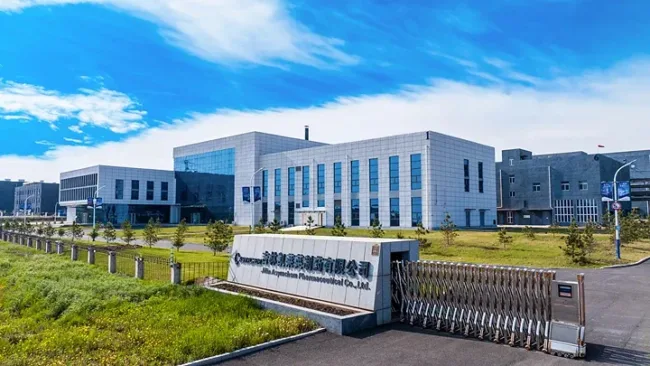
Asymchem Laboratories has reported that Jilin Asymchem Pharmaceuticals Co. Ltd., its dedicated Dunhua 2 carbapenem manufacturing facility in China, completed its first inspection by the United States Food and Drug Administration. The short-notice pre-approval inspection supported an undisclosed commercial active pharmaceutical ingredient manufactured using continuous raw-material feeding and reaction technology.
The on-site inspection took place between April 27 and April 30, 2026, with Asymchem saying the inspection process was completed on June 22. The development gives the facility, which was commissioned in 2020, its first direct experience of United States FDA scrutiny in connection with a commercial drug application.
The regulatory significance is narrower, but more commercially meaningful, than a generic claim that the plant has been “FDA approved.” A pre-approval inspection is linked to the review of a particular marketing application and evaluates whether the named manufacturing operation can reliably execute the process described in that application under current good manufacturing practice requirements. It does not provide unrestricted approval for every product, process or production line at the facility.
Asymchem has also not identified the API, the pharmaceutical sponsor, the finished drug, the application pathway or the expected regulatory decision date. The inspection therefore represents an important manufacturing de-risking event, while the commercial consequences will remain uncertain until the associated drug application progresses and the customer begins meaningful supply activities.
What did the FDA pre-approval inspection establish at Asymchem’s Dunhua 2 facility?
The inspection placed the Dunhua 2 quality system, manufacturing controls and continuous-processing approach under FDA review for the first time. In a pre-approval inspection, regulators may examine whether the manufacturing process is consistent with the chemistry, manufacturing and controls information submitted in the application, whether supporting records are complete, and whether the facility appears capable of reproducing the proposed commercial process.
That makes the inspection relevant to both Asymchem and its undisclosed customer. A manufacturing site can become a significant obstacle to a drug approval when regulators identify deficiencies in process validation, data integrity, contamination control, laboratory systems or commercial readiness. Conversely, completion of a pre-approval inspection without an unresolved manufacturing barrier can remove one source of regulatory uncertainty for the application.
There are nevertheless important details that Asymchem did not disclose. Its announcement did not state whether inspectors issued a Form FDA 483, whether any observations required corrective action, or how the agency classified the inspection. It also did not say whether the associated drug application has been approved.
Those omissions do not invalidate the company’s description of the inspection as successful, but they limit the conclusions that outside observers can draw. An FDA inspection is one component of a broader application review that also covers product quality, clinical evidence, labeling and other regulatory requirements. The result should therefore be described as a facility and manufacturing milestone, not as approval of the API or the medicine that will contain it.
Why does continuous raw-material feeding matter in carbapenem API manufacturing?
Asymchem said the inspected commercial API process uses continuous raw-material feeding and reaction technology. That wording is important because it does not necessarily establish that every manufacturing stage, including isolation, purification, drying and final release, operates continuously.
Even a partially continuous process can create operational advantages when it is appropriately designed and controlled. Materials can be introduced at defined rates rather than processed only in large, discrete batches, while critical reaction variables can be observed and adjusted throughout production. Continuous systems may also reduce the quantity of reactive material present at a single moment, which can be particularly valuable for reactions involving hazardous reagents or tightly controlled temperature conditions.
The regulatory burden does not disappear simply because a process is continuous. Manufacturers need a scientifically justified control strategy covering residence time, material traceability, equipment disturbances, process interruptions, diversion of potentially non-conforming material and the definition of a production batch. They must also demonstrate that monitoring systems can detect changes before affected material progresses through the process.
The International Council for Harmonisation’s Q13 framework gives manufacturers and regulators a common structure for evaluating continuous manufacturing of drug substances and drug products. For Asymchem, the Dunhua 2 inspection is therefore a practical test of whether its continuous-process development expertise can be translated into an inspection-ready commercial operation.
Asymchem separately says Dunhua 2 contains continuous-flow ozonolysis technology developed by its engineering organisation, with capabilities intended to support tonnage-scale production. Ozonolysis can be operationally demanding because ozone is highly reactive and requires careful control of gas handling, temperature, reaction conditions and residual materials. Conducting such chemistry in a continuous-flow environment can reduce the amount of reactive inventory present inside the system, although safe execution still depends on engineering design, process monitoring and validated operating controls.
Why is a dedicated carbapenem facility central to FDA manufacturing expectations?
Carbapenems belong to the non-penicillin beta-lactam antibacterial class. Their manufacture requires particularly careful contamination controls because beta-lactam residues can create potentially serious risks when they enter manufacturing areas or products that are not intended to contain them.
FDA guidance has generally recommended comprehensive separation between manufacturing operations for non-penicillin beta-lactam antibacterials and operations for other drugs. That expectation affects building design, air-handling arrangements, personnel and material movement, equipment segregation, waste handling, cleaning controls and environmental monitoring.
Dunhua 2 is described as a dedicated carbapenem site rather than a general multipurpose manufacturing plant. This specialisation is strategically relevant because it can make the facility more compatible with the containment and separation expectations applied to beta-lactam production.
Asymchem lists Dunhua 2 as having approximately 263.5 cubic metres of carbapenem manufacturing capacity, with reactor sizes ranging from 3,000 litres to 20,000 litres. These published specifications suggest that the facility was designed for substantial production volumes rather than laboratory or early development work alone.
Capacity, however, should not be confused with validated commercial output. The economic value of the facility will depend on utilisation, customer demand, successful process transfers, validation performance, manufacturing yields and the ability to maintain regulatory compliance over repeated production campaigns.
Why is this a new milestone when Asymchem has already hosted FDA inspections in Dunhua?
The wording around the “first FDA inspection” requires some geographical and corporate precision. Asymchem has previously undergone an FDA pre-approval inspection at another Dunhua operation. Jilin Asymchem Laboratories Co. Ltd., now identified as the Dunhua 1 site, completed its first FDA pre-approval inspection in 2017.
The 2026 milestone relates specifically to Jilin Asymchem Pharmaceuticals Co. Ltd., or Dunhua 2, which is a separate manufacturing facility and legal entity. It should not be interpreted as the first time any Asymchem operation in Dunhua has encountered the FDA.
This distinction matters because regulatory inspection histories are facility-specific. Prior experience across a corporate group can help management develop common quality systems, inspection-readiness programmes and corrective-action procedures, but each plant must demonstrate that its own equipment, employees, documentation and controls comply with applicable requirements.
Asymchem says its global organisation has completed more than 100 regulatory inspections and undergoes about 200 customer audits annually. Dunhua 2 can potentially draw on that wider institutional experience, although the first inspection of a newer site remains a meaningful operational test. A corporate compliance record cannot substitute for sustained performance at the specific establishment named in a drug application.
How could the inspection strengthen Asymchem’s commercial small-molecule CDMO position?
Asymchem Laboratories is listed on both the Shenzhen Stock Exchange and the Hong Kong Stock Exchange. The company’s established small-molecule contract development and manufacturing business remains a major revenue contributor even as it expands into peptides, oligonucleotides, antibody-drug conjugates and other emerging modalities.
The group reported first-quarter 2026 revenue of approximately RMB1.80 billion, an increase of 16.91% from the corresponding period. Small-molecule CDMO revenue was about RMB1.20 billion, rising only 0.43% on a reported basis, while the company’s emerging businesses produced substantially faster growth.
That financial pattern increases the strategic importance of regulatory milestones capable of supporting new commercial small-molecule programmes. Dunhua 2 does not need to become the company’s fastest-growing asset to be valuable. Dedicated carbapenem capacity could contribute durable commercial manufacturing work, deepen customer relationships and improve the utilisation of infrastructure already built for specialised chemistry.
The inspection also has relevance to Asymchem’s international customer strategy. Revenue attributed to customers in the United States and Europe reached approximately RMB1.25 billion in the first quarter, accounting for a large share of group revenue. Demonstrating that another Chinese manufacturing site can support an FDA-reviewed commercial process may strengthen the company’s ability to compete for programmes intended for regulated Western markets.
For investors, however, the update is better understood as regulatory and operational de-risking than as a measurable near-term earnings catalyst. Asymchem has disclosed no contract value, committed volume, pricing arrangement or expected revenue contribution from the inspected API. Any financial impact will depend on the customer’s regulatory outcome and subsequent production demand.
What remains undisclosed about the inspected API and its regulatory pathway?
The identity of the API is the most significant missing piece. Without knowing the associated molecule or finished product, it is impossible to assess the potential market, competitive environment, expected production volumes or importance of Dunhua 2 within the customer’s supply chain.
The announcement also does not establish whether the application involves an innovative medicine, a generic product, a supplemental filing or an alternative manufacturing source for an existing drug. Each scenario would carry a different commercial timeline and risk profile.
An innovative medicine awaiting initial approval could generate attractive commercial demand if successfully launched, but volumes would depend on clinical uptake and competition. A generic carbapenem could require larger production volumes but face greater pricing pressure. The addition of a second manufacturing source for an established product might primarily improve supply resilience rather than create a new revenue stream.
The absence of an inspection classification or information about possible observations also means that the market cannot independently evaluate the extent of any post-inspection work. FDA inspections may conclude without a Form 483, with observations that can be addressed through written responses, or with more significant deficiencies that affect an application. Asymchem’s release does not provide enough detail to determine which situation applies.
The most reliable evidence of commercial progress would be approval of the associated application, confirmation that Dunhua 2 is included in the authorised manufacturing network, and subsequent disclosure of commercial production or supply volumes.
What will determine whether Dunhua 2 becomes a larger United States supply platform?
The first test is the outcome of the customer’s drug application. The inspection can support the FDA’s manufacturing assessment, but approval will depend on the entire regulatory dossier. Dunhua 2 will then need to execute validation and commercial campaigns consistently, meet specifications, investigate deviations thoroughly and maintain accurate records.
The second test is repeatability. Continuous processes may deliver advantages in control, safety and efficiency, but those advantages must persist across longer operating periods, changes in scale and routine commercial schedules. Robust handling of start-up material, shutdowns, equipment disturbances and process deviations will be central to demonstrating lifecycle reliability.
The third test is customer expansion. A facility built around specialised carbapenem and continuous-flow capabilities becomes more commercially attractive when it supports several programmes rather than depending heavily on one undisclosed product. Additional technology transfers and regulatory filings would indicate that the site is evolving from a single-project asset into a broader supply platform.
Finally, Dunhua 2 will remain subject to continuing regulatory oversight. Completion of one pre-approval inspection does not eliminate future surveillance inspections, application-specific reviews or customer audits. The lasting value of the July 2026 announcement will be determined by what follows: an approved product, dependable commercial deliveries and a compliance record that allows Asymchem to bring more carbapenem programmes through the same facility.
The supplied editorial standard calls for analytical, evidence-conscious trade journalism rather than a press-release rewrite. The inspection dates and process description came from Asymchem’s announcement, while the interpretation of pre-approval inspections, continuous manufacturing and beta-lactam separation was checked against FDA guidance. Financial context was verified against Asymchem’s first-quarter filing, and the distinction between Dunhua 1 and Dunhua 2 was checked against the company’s earlier inspection disclosure.