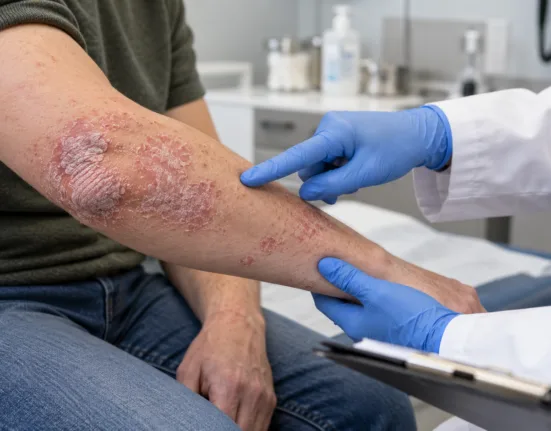
Pfizer Inc. (NYSE: PFE) has reported positive topline results from two pivotal Phase 3 studies evaluating once-daily LITFULO, or ritlecitinib, in patients with active or stable nonsegmental vitiligo. According to the company, both TRANQUILLO and TRANQUILLO 2 met their prespecified primary efficacy objectives at Week 52, with significantly more LITFULO-treated patients achieving substantial facial and total-body repigmentation than those receiving placebo.
The disclosure moves Pfizer closer to seeking regulatory approval for LITFULO in a second dermatology indication after its 2023 approval for severe alopecia areata in adults and adolescents aged 12 years and older. Pfizer said it plans to submit applications for the treatment of adults with nonsegmental vitiligo to regulatory authorities around the world, although it has not yet provided a filing timetable or disclosed whether adolescent submissions will follow separately.
The results represent an important clinical and regulatory step, but the topline announcement leaves several questions unanswered. Pfizer has not yet published the exact response rates, absolute differences against placebo, confidence intervals, detailed discontinuation data or complete safety findings. The company has characterised the results as preliminary and subject to further analysis, with a fuller presentation planned for a future medical meeting.
That distinction matters because meeting a Phase 3 endpoint establishes that a study achieved its prespecified statistical objective. It does not, by itself, reveal the magnitude, durability or practical relevance of the benefit, nor does it guarantee regulatory approval.
Why do the two Phase 3 endpoint wins materially strengthen Pfizer’s regulatory case?
The TRANQUILLO programme is unusually large for an oral systemic vitiligo development programme. Pfizer enrolled 2,174 patients across 271 sites, including 607 adults and adolescents in TRANQUILLO and 1,567 adults in TRANQUILLO 2. TRANQUILLO compared LITFULO 50 mg once daily with placebo, while TRANQUILLO 2 evaluated 50 mg and 100 mg doses against placebo before continuing into longer-term treatment periods.
The United States co-primary endpoints were the proportion of patients achieving at least a 75% improvement from baseline in the Facial Vitiligo Area Scoring Index, known as F-VASI75, and at least a 50% improvement in the Total Vitiligo Area Scoring Index, known as T-VASI50, at Week 52. Outside the United States, F-VASI75 served as the primary endpoint and T-VASI50 as a key secondary endpoint. Both measures therefore assess meaningful degrees of repigmentation rather than small numerical changes in skin-area scores.
Obtaining positive results in two pivotal studies reduces the risk that the efficacy signal was confined to one trial, one geography or one statistical analysis. It also gives regulators a broader dataset through which to examine consistency across skin types, baseline disease extent, age groups and patients with active versus stable disease.
However, regulatory strength will depend on more than the binary result. Reviewers will need to assess how many patients reached each response threshold, how rapidly responses emerged, whether the benefit continued to deepen between Weeks 24 and 52, how missing data were handled and whether outcomes were consistent across prespecified subgroups.
The programme included patients with vitiligo affecting approximately 4% to 60% of total body surface area, alongside measurable facial involvement. This is clinically relevant because it potentially positions an oral therapy for people whose disease may be too widespread or operationally difficult to manage through repeated application of topical medication alone.

What do the 50 mg and 100 mg results suggest about Pfizer’s eventual dose selection?
Dose selection may become one of the most closely examined parts of the future regulatory package. Pfizer reported that both the 50 mg and 100 mg regimens produced statistically significant and clinically meaningful improvements in facial and total-body repigmentation compared with placebo across the Phase 3 programme. However, the company also stated that the 50 mg comparisons in TRANQUILLO 2 were exploratory and descriptive rather than part of the study’s formal multiplicity-controlled testing strategy.
LITFULO is currently approved in the United States at 50 mg once daily for severe alopecia areata in patients aged 12 years and older. An approved 50 mg vitiligo dose could allow Pfizer to use an already manufactured and commercially established strength, although the vitiligo application will still require indication-specific evaluation of efficacy, safety and benefit-risk.
The 100 mg dose creates a different regulatory question. If it provides materially greater repigmentation, Pfizer may argue that the additional exposure is justified for certain adults. Regulators, clinicians and payers will nevertheless want to know whether the incremental benefit is large enough to outweigh any increase in adverse events, laboratory abnormalities or long-term systemic risk.
The trial-design publication said earlier exposure-response modelling had suggested that doses above 50 mg might provide additional efficacy, which explains why TRANQUILLO 2 included the higher regimen. The Phase 3 dataset must now establish whether that pharmacological expectation translated into a clinically worthwhile difference.
Pfizer’s decision to discuss initial global filings for adults is also notable because TRANQUILLO enrolled adolescents from 12 years of age. The company has not explained whether additional analyses, longer follow-up or separate regulatory discussions will be required before seeking an adolescent indication. That leaves the potential paediatric development pathway open rather than confirmed.
Why could durability become as important as the Week 52 repigmentation response?
Vitiligo is a chronic autoimmune condition, which makes maintenance of repigmentation a central issue. A strong Week 52 response would be clinically encouraging, but patients, clinicians and payers will also want to know whether improvement persists with continued treatment, whether response is lost after interruption and whether patients can reduce their dose after achieving meaningful repigmentation.
Pfizer designed long-term extensions to address some of these questions. The TRANQUILLO extension includes randomised withdrawal and dose-adjustment components intended to examine response maintenance, relapse and the effects of switching between dosing strategies. TRANQUILLO 2 also incorporates longer-term treatment designed to provide additional information on sustained response and safety.
Those findings could influence the eventual product label and treatment pathway. A therapy requiring uninterrupted long-term dosing would carry different adherence, monitoring and reimbursement implications from one that permits dose reduction or treatment pauses after a stable response.
Durability data may also affect how payers define continuation criteria. Coverage policies for high-cost systemic therapies frequently require documented improvement after a specified treatment period. The choice of facial response, total-body response or a combination of clinical and patient-reported outcomes could therefore influence real-world access even after approval.
The current announcement does not disclose quality-of-life outcomes, patient-reported treatment satisfaction or the visibility and distribution of repigmentation. These measures could help determine whether statistically successful changes translate into benefits that patients regard as worthwhile.
Why will the complete safety dataset be central to the LITFULO vitiligo review?
Pfizer reported that LITFULO’s safety profile in the Phase 3 vitiligo programme was consistent with its established profile in alopecia areata. The company said rates of treatment-emergent adverse events were similar between LITFULO and placebo groups and that no new safety signals were identified during the disclosed period.
That is reassuring at the topline level, but it is not a substitute for detailed safety data. The announcement does not provide rates of serious adverse events, infections, treatment discontinuations, laboratory abnormalities, dose interruptions or events stratified between the 50 mg and 100 mg groups.
The current United States prescribing information for LITFULO includes a boxed warning covering serious infections, malignancy, major adverse cardiovascular events, mortality and thrombosis, consistent with regulatory precautions applied to the Janus kinase inhibitor class. The label also requires clinical consideration of infection risk, vaccination status, blood counts and liver enzymes, among other factors.
These warnings do not mean that the events occurred at high rates in the vitiligo trials. They do mean that regulators will evaluate the proposed indication against the risks of chronic systemic immune modulation, particularly if treatment is expected to continue for years.
The safety assessment could be especially important for younger adults, people with cardiovascular or malignancy risk factors and patients considering systemic therapy for disease that varies widely in extent and personal burden. Appropriate patient selection and monitoring are therefore likely to remain part of the commercial and clinical conversation.
How could an oral LITFULO indication change the current vitiligo treatment landscape?
The United States Food and Drug Administration approved Incyte Corporation’s topical JAK inhibitor Opzelura, or ruxolitinib cream, in 2022 for nonsegmental vitiligo in adults and children aged 12 years and older. It was the first FDA-approved treatment specifically intended to support repigmentation in the condition. The product is applied twice daily to affected areas covering up to 10% of body surface area, and the regulator noted that a satisfactory response may require treatment for longer than 24 weeks.
LITFULO could occupy a different position because it is an oral systemic medicine studied in patients with substantially broader body-surface involvement. An oral therapy may be operationally attractive for people with widely distributed lesions or areas that are difficult to treat consistently with creams.
That convenience must be balanced against systemic safety warnings, laboratory monitoring and the need to define which patients have sufficient disease burden to justify oral treatment. Topical therapy can limit systemic exposure, while an oral medicine provides body-wide treatment but introduces different benefit-risk considerations.
There has been no head-to-head trial comparing LITFULO with topical ruxolitinib, phototherapy or other commonly used approaches. Percentages reported across separate studies should not be treated as evidence that one therapy is superior because patient populations, baseline severity, endpoints, treatment duration and statistical methods may differ.
Pfizer’s commercial opportunity will therefore depend on differentiation rather than merely becoming another JAK-targeted option. The company will need to demonstrate where LITFULO fits within dermatology practice, which patients are most likely to respond and whether its convenience and efficacy justify systemic treatment and associated monitoring.
What do the results mean for Pfizer’s dermatology strategy and investor sentiment?
LITFULO is already a marketed Pfizer medicine, but the company does not separately disclose its sales in its main quarterly revenue tables. It is included within Pfizer’s portfolio of launched and acquired products, a group that recorded operational revenue growth of 22% during the first quarter of 2026. Pfizer reported total first-quarter revenue of approximately $14.5 billion and maintained full-year 2026 revenue guidance of $59.5 billion to $62.5 billion.
A vitiligo indication could broaden the commercial reach of an existing asset while allowing Pfizer to use established dermatology, medical-affairs, manufacturing and market-access capabilities. That makes the programme strategically more efficient than launching an entirely new molecule with no commercial infrastructure.
Revenue impact is nevertheless unlikely to be immediate. Pfizer must complete its analyses, submit applications, secure regulatory decisions, negotiate payer access and persuade clinicians that the treatment offers a compelling benefit-risk profile for appropriately selected patients.
Pfizer shares closed at $25.01 on July 31, 2026. Based on closing-price data, the stock was approximately 1.9% higher than on July 24 and about 4.7% above its July 1 close, while remaining within a 52-week trading range of roughly $23.40 to $28.75. The shares declined modestly on July 30, the announcement date, before recovering part of the move on the following session, indicating that the topline result did not produce an outsized immediate market reaction.
For a company of Pfizer’s scale, the announcement is better understood as a meaningful pipeline de-risking event than a company-defining catalyst. Its financial importance will become clearer only after the full response data, proposed dose, addressable label and commercial positioning are known.
What must Pfizer disclose next to turn a positive topline result into a persuasive filing package?
The next critical disclosure will be the complete Phase 3 dataset. Clinicians and regulatory observers will look for exact F-VASI75 and T-VASI50 response rates, placebo-adjusted differences, statistical confidence intervals, time-to-response curves, outcomes by baseline disease extent, consistency across skin types and the proportion of patients achieving deeper levels of repigmentation.
Safety reporting will need to separate the 50 mg and 100 mg groups and detail serious adverse events, infections, laboratory findings, dose interruptions and discontinuations. Longer-term extension results should clarify whether responses persist, whether treatment withdrawal leads to relapse and whether dose adjustment can maintain benefit.
Pfizer must also define its regulatory strategy more precisely. Its announcement confirms planned global submissions for adults but does not identify the first jurisdiction, filing date, proposed dose or exact target population. Adolescent development, combination with topical treatment and positioning after phototherapy also remain unresolved.
The Phase 3 success has moved LITFULO beyond early efficacy uncertainty and closer to regulatory execution. The programme’s ultimate value, however, will depend on whether the missing data demonstrate a response that is sufficiently substantial, durable and predictable to justify long-term systemic treatment in nonsegmental vitiligo.