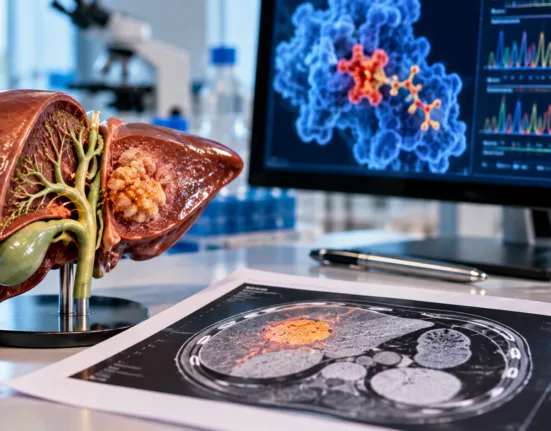
Mezzion Pharma Co., Ltd. (KOSDAQ: 140410) has reported that udenafil significantly reduced kidney cyst burden and blood urea nitrogen in an animal model of autosomal dominant polycystic kidney disease, adding an important in vivo signal to the company’s emerging renal disease programme. The company said the preclinical study also demonstrated activity within the intended cyclic guanosine monophosphate pathway and produced a statistically significant reduction in a measure of cardiac hypertrophy, although the findings remain company-reported animal data rather than evidence of clinical benefit in people with ADPKD.
The August 2, 2026 disclosure moves the programme beyond the earlier in vitro and ex vivo experiments that supported Mezzion’s initial decision to expand udenafil into kidney disease. It strengthens the biological case for a planned Phase 2b study, but the announcement did not disclose the animal model, group sizes, treatment duration, udenafil doses, absolute effect sizes, confidence intervals, individual p-values or detailed safety observations. Those omissions make it impossible to independently assess the magnitude, reproducibility or translational relevance of the reported results from the announcement alone.
Investors nevertheless treated the update as a meaningful pipeline catalyst. Mezzion shares were trading 12.37 percent higher at KRW 66,300 at 12:48 p.m. Korea Standard Time on August 3, the first market session following the Sunday announcement. That placed the shares about 9.4 percent above their July 27 close and approximately 10.7 percent above the July 3 close, although the stock remained well below its 52-week high of KRW 179,900. The reaction indicates enthusiasm for the possibility of a second major rare disease programme, but it should not be interpreted as clinical or regulatory validation.
What do the latest in vivo findings actually establish about udenafil in ADPKD?
The latest study was conducted at Mayo Clinic in Florida under principal investigator Fouad T. Chebib. According to Mezzion, udenafil reduced cyst burden and blood urea nitrogen compared with control groups, with both results reaching statistical significance across the evaluated treatment groups. The company also reported evidence that the drug engaged the nitric oxide and cyclic guanosine monophosphate signalling pathway that underpins its proposed mechanism in ADPKD.
This matters because animal data test a drug in a whole biological system rather than isolated cells or excised tissue. An in vivo model can reveal whether exposure reaches the relevant organs, whether pathway activity occurs in living tissue and whether the treatment produces measurable effects on disease-associated characteristics. Consistency across in vitro, ex vivo and animal experiments can therefore reduce some aspects of biological uncertainty before a drug enters human testing.
It does not eliminate the larger translational risk. Animal models often reproduce selected features of ADPKD rather than the full decades-long progression of the human disease. A reduction in experimental cyst burden may support the mechanism, but it cannot establish that udenafil will slow total kidney volume growth, preserve estimated glomerular filtration rate, delay kidney failure or improve quality of life in patients.
The absence of detailed study results is particularly important. Without the size of the cyst-burden reduction, the baseline severity of disease, the duration of treatment and the relationship between dose and response, readers cannot determine whether the finding was large, modest or heavily dependent on one experimental condition. Publication of the full dataset, including histological findings, exposure measurements, adverse observations and statistical methods, would provide a more reliable basis for evaluating the programme.
Why does the nitric oxide-cGMP pathway give udenafil a differentiated ADPKD hypothesis?
Udenafil inhibits phosphodiesterase type 5, an enzyme involved in breaking down cyclic guanosine monophosphate. By inhibiting phosphodiesterase type 5, the drug is intended to increase or preserve cyclic guanosine monophosphate signalling, which is involved in vascular function and other cellular processes. Mezzion is investigating whether modulation of this pathway can influence cystic disease and associated cardiovascular abnormalities in ADPKD.
The proposed approach differs from that of tolvaptan, the established disease-modifying treatment in the United States for adults at risk of rapidly progressing ADPKD. Tolvaptan is a selective vasopressin V2 receptor antagonist that is indicated to slow kidney function decline in that defined population. Its label includes a boxed warning for potentially serious liver injury and requires monitoring and restricted distribution, while common adverse reactions include thirst and increased urination.
A different mechanism could have commercial and clinical value if it eventually produces meaningful kidney protection with an acceptable long-term safety and tolerability profile. ADPKD is a lifelong condition, which means any chronic therapy must demonstrate not only biological activity but also durability, manageable monitoring requirements, practical dosing and adherence over extended treatment periods.
However, mechanistic differentiation is not the same as clinical differentiation. Udenafil must still show that its pathway effects translate into a measurable reduction in disease progression. A future trial will also need to determine whether any benefit is independent of changes in blood pressure, vascular tone, hydration or other physiological variables that could affect kidney-related measurements.

Why are cyst burden and BUN useful signals but insufficient predictors of clinical success?
Kidney cyst burden is relevant because progressive cyst formation and enlargement are defining features of ADPKD. In clinical development, total kidney volume can provide an earlier indication of structural disease progression than waiting for major changes in kidney function. The 2025 Kidney Disease: Improving Global Outcomes guideline also emphasises imaging-based risk assessment, including the Mayo Imaging Classification, when evaluating disease progression and treatment suitability.
The blood urea nitrogen finding provides an additional biochemical signal. Blood urea nitrogen measures the concentration of nitrogen from urea in the blood and can rise when the kidneys become less effective at clearing waste. It is nevertheless influenced by factors beyond underlying kidney function, including protein intake, hydration, gastrointestinal bleeding and metabolic state. A lower value in an animal study is therefore supportive, but it is not equivalent to demonstrating preserved glomerular filtration or delayed kidney failure.
Mezzion has said that its planned Phase 2b study is expected to evaluate kidney volume, kidney function, disease-related biomarkers, pharmacokinetics, safety and tolerability. That combination is appropriate because no single measurement can fully establish whether an investigational ADPKD therapy is working. Structural imaging, functional outcomes, biomarker behaviour and safety observations will need to point in a consistent direction.
Trial duration will be another central consideration. Kidney function can decline slowly, particularly in patients with earlier-stage disease, which makes dose selection and endpoint timing challenging. Mezzion previously indicated that it was considering a one-year study with three active-dose groups and a placebo group, although the final design remains subject to regulatory review and protocol completion.
How should the cardiac hypertrophy finding be interpreted within the ADPKD programme?
Mezzion also reported a statistically significant reduction in an experimental measure of cardiac hypertrophy. This is scientifically relevant because ADPKD is not confined to the kidneys and can be associated with hypertension, vascular abnormalities and cardiovascular complications. The finding raises the possibility that udenafil’s vascular and cyclic guanosine monophosphate effects could influence disease manifestations outside the kidney.
The result should remain secondary to the renal development hypothesis until more information becomes available. The announcement did not specify how cardiac hypertrophy was measured, whether the analysis was prespecified, how large the effect was or whether cardiac function also changed. A reduction in an anatomical animal-model measurement does not establish that the therapy will prevent heart failure, reduce cardiovascular events or produce a clinically meaningful cardiac benefit in people with ADPKD.
The Phase 2b programme will therefore need to decide whether cardiovascular measurements should be exploratory endpoints, safety variables or a more formal component of the development strategy. Adding too many objectives could complicate interpretation, while ignoring the signal entirely could miss an opportunity to understand the broader pharmacology of the drug. A focused exploratory assessment may offer the most proportionate approach during early clinical evaluation.
What regulatory work remains before Mezzion can begin Phase 2b testing?
Mezzion disclosed in May that the United States Food and Drug Administration had provided written feedback following a pre-investigational new drug Type C interaction. The regulator indicated that the company’s nonclinical package, together with previous clinical and safety experience with udenafil, could provide a reasonable foundation for clinical development. That feedback supports further preparation, but it was not an investigational new drug clearance, trial approval or judgment that the therapy is effective.
The company subsequently completed a pre-submission consultation with the Korea Ministry of Food and Drug Safety in July. Mezzion said it planned to incorporate the in vivo findings into the protocol, use the regulator’s advance-review process, select a contract research organisation and submit the formal clinical trial application. It has described a two-part programme that would begin primarily through Korean hospitals before expanding to United States sites, subject to approvals and operational readiness.
The next meaningful milestones are therefore procedural and scientific. Mezzion must finalise the patient population, dose groups, statistical assumptions, imaging methodology, kidney function endpoints, safety monitoring and criteria for progression between study components. It must also manufacture appropriate clinical supplies, secure ethics approvals and demonstrate that existing udenafil data are applicable to the intended ADPKD population.
Previous human exposure can help inform dose selection and safety monitoring, but it cannot replace indication-specific evidence. Patients with progressive kidney disease may differ from participants in cardiovascular studies in renal clearance, concomitant medication use, blood pressure management and susceptibility to adverse events. The Phase 2b trial will need to establish an ADPKD-specific benefit-risk profile.
How does the ADPKD programme change Mezzion’s broader pipeline and investment case?
Until recently, Mezzion’s value proposition was dominated by the development of udenafil for people with Fontan circulation. The company’s global FUEL-2 Phase 3 trial remains its most advanced programme, with a planned enrolment of 436 patients and a 26-week randomised, double-blind, placebo-controlled treatment period. An independent blinded statistical review concluded that the sample size did not need to be increased.
ADPKD creates a second development path for the same molecule, potentially allowing Mezzion to use existing manufacturing knowledge, clinical experience and regulatory documentation across more than one rare disease programme. This can be strategically attractive because a successful molecule may support multiple value-creating indications without requiring the discovery of an entirely new chemical entity.
It also raises execution demands. Running a global Phase 3 cardiovascular programme while preparing a multinational kidney disease trial requires capital, clinical operations capacity, regulatory coordination and manufacturing resources. Mezzion will need to prevent the newer programme from distracting from FUEL-2 while ensuring that the ADPKD study is adequately designed rather than accelerated primarily to satisfy investor expectations.
The August 3 stock reaction shows that investors see optionality in the renal programme. Yet the company’s KRW 66,300 intraday share price remained roughly 63 percent below its 52-week high, reflecting the volatility and binary risk that often accompany development-stage biotechnology companies. The market is assigning value to potential milestones, not established ADPKD revenue.
The latest study gives Mezzion a stronger reason to proceed, but the pivotal shift will occur only when a properly controlled human trial demonstrates interpretable effects on kidney structure or function. Until then, udenafil’s ADPKD programme should be viewed as a scientifically supported preclinical opportunity with an emerging regulatory path, substantial commercial potential and a high level of remaining clinical uncertainty.