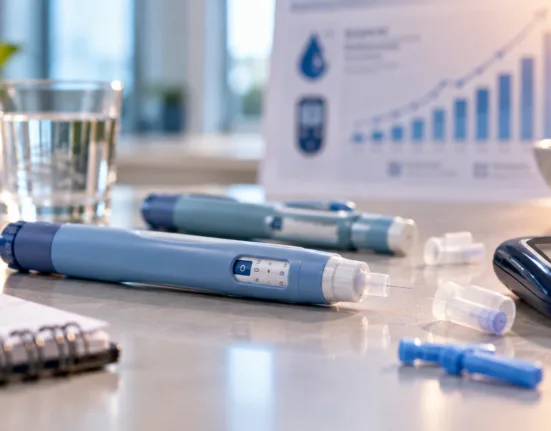
Novo Nordisk has entered a collaboration with Anthropic to apply Claude and the newly introduced Claude Science capabilities to drug discovery and pharmaceutical research, pushing artificial intelligence deeper into the Danish drugmaker’s research workflow after earlier partnerships with OpenAI and Amazon Web Services. The companies plan to identify scientific problems within Novo Nordisk’s research organization where advanced reasoning models and agentic software could accelerate work, while maintaining human oversight and controlled data governance.
The most striking evidence that this is more than a speculative artificial-intelligence announcement comes from work Novo Nordisk has already done with Claude. Reuters reported that the pharmaceutical company has used the model to automate elements of clinical-trial report generation, reducing creation of certain patient documentation from months to minutes. The new relationship moves beyond documentation efficiency toward the harder question of whether frontier artificial intelligence can help scientists make better and faster research decisions.
That distinction is important. Pharmaceutical companies have spent heavily on artificial intelligence for years, but administrative automation is much easier to prove than faster discovery of medicines that ultimately survive clinical testing and regulatory review. Novo Nordisk and Anthropic are therefore moving into an area with far greater economic potential but also considerably greater uncertainty.
What will Novo Nordisk actually use Anthropic’s Claude for?
Novo Nordisk said its researchers and computational scientists will identify specific drug-discovery challenges where Claude Science can be tested. The collaboration will initially focus on selected research and development workflows rather than handing autonomous control of discovery programs to an AI system. The companies also plan to apply Anthropic’s models to AI-driven software development, another potentially significant productivity area inside an increasingly data-intensive pharmaceutical organization.
Claude Science is designed to support scientific reasoning across tasks such as literature analysis, hypothesis generation, data interpretation and complex research workflows. In pharmaceutical development, those capabilities could theoretically help researchers connect information across biological datasets, published literature, experimental results and internal knowledge faster than conventional manual processes.
The commercial opportunity comes from reducing iteration time. Drug discovery involves repeated cycles of target identification, molecule design, laboratory testing, interpretation and redesign. If artificial intelligence can shorten even some of those cycles while maintaining scientific quality, the economic value can be considerable because every month removed from development potentially extends the effective commercial life of a successful medicine.
However, Novo Nordisk has not identified a specific drug candidate that the Anthropic partnership is expected to produce, nor have the companies disclosed financial terms. That means the current milestone should be viewed as an R&D productivity collaboration rather than evidence that Claude has already created a clinically validated molecule.
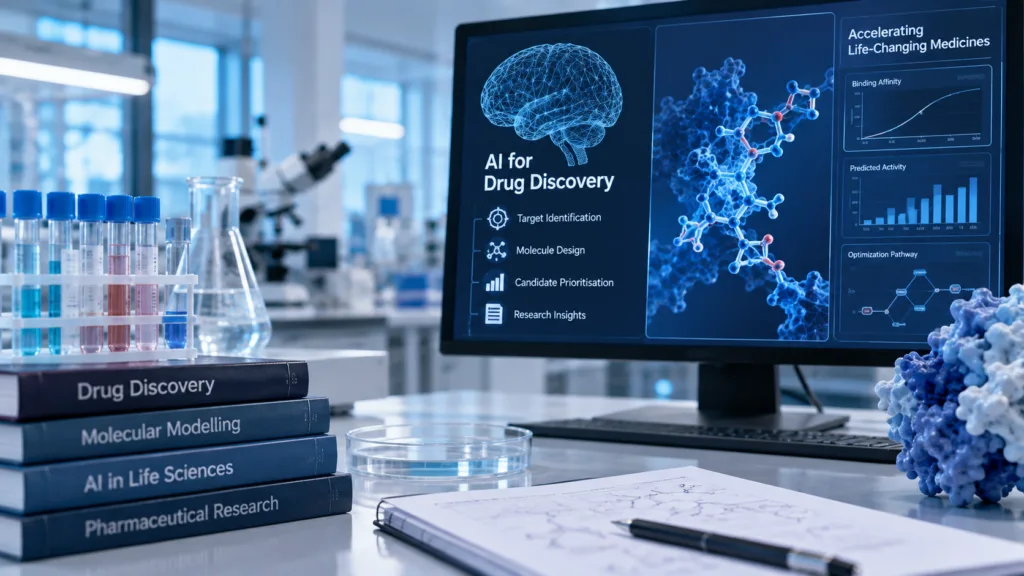
Why is Novo Nordisk assembling several different AI partnerships?
Anthropic is not Novo Nordisk’s only major artificial-intelligence partner. In April 2026, the company announced a strategic collaboration with OpenAI to integrate advanced AI across functions ranging from drug discovery to broader operations. In August, Novo Nordisk expanded its relationship with Amazon Web Services, making AWS a preferred cloud provider and strategic AI partner while creating a co-innovation hub in London.
At first glance, three major AI partnerships in five months could look redundant. In practice, the relationships address somewhat different layers of the technology stack. Cloud infrastructure provides the computational and data foundation; frontier model developers provide reasoning and generative capabilities; internal Novo Nordisk scientists then determine where those tools can be trusted and where they add measurable value.
Using multiple partners also reduces technological dependence on a single model provider. Artificial-intelligence capabilities are advancing rapidly, and pharmaceutical development timelines stretch over many years. A company committing its research architecture exclusively to one frontier model could risk locking itself into technology that is overtaken by competitors.
The harder challenge will be integration. Adding AI tools does not automatically create productivity if researchers must navigate fragmented systems, duplicated data pipelines or inconsistent governance. Novo Nordisk’s ability to create a coherent internal architecture around these partnerships will matter more than the number of technology companies appearing in its announcements.
Why does research productivity matter more to Novo Nordisk now?
Novo Nordisk remains one of the world’s most important metabolic-disease drugmakers, but the commercial environment around obesity and diabetes has become substantially more competitive. Eli Lilly has emerged as a powerful rival with its incretin portfolio, while pricing pressure and expectations around future weight-loss therapies have increased investor scrutiny of Novo Nordisk’s growth outlook.
The company therefore needs more than continued execution around semaglutide. It needs a pipeline capable of producing next-generation obesity medicines, combination therapies and drugs in adjacent disease areas, while also diversifying beyond the franchise that drove its extraordinary growth earlier in the decade.
Artificial intelligence cannot solve that strategic problem directly, but it can potentially improve the probability-adjusted economics of research. Pharmaceutical R&D consumes billions of dollars partly because most early candidates never become approved medicines. Better target selection, faster experimental cycles or earlier identification of likely failures could create value even if AI does not independently “discover” a drug.
This is why the distinction between speed and success matters. Producing a report in minutes instead of months is an obvious productivity gain. Selecting a biological target faster is useful only if the target turns out to be therapeutically relevant. The ultimate benchmark for Novo Nordisk’s AI strategy will therefore be whether development programs reach the clinic faster, fail earlier when they should fail, or generate differentiated medicines.
Has artificial intelligence actually produced an approved drug yet?
The pharmaceutical industry’s AI enthusiasm remains ahead of its ultimate clinical validation. Despite numerous AI-designed or AI-enabled candidates entering development, the sector has yet to establish a clear example in which a frontier generative-AI system independently produced a medicine that progressed all the way through clinical trials to FDA approval. That gap explains why claims that AI is already transforming drug discovery require careful qualification.
AI has nevertheless demonstrated value in narrower applications. Models can analyze large datasets, support protein and molecular design, search scientific literature, optimize clinical-trial workflows, assist patient matching and automate documentation. Many of those tasks do not require AI to replace scientists; they require it to reduce the time scientists spend searching, formatting, coding or manually synthesizing information.
Novo Nordisk’s existing Claude documentation use is a good example. Transforming months of document preparation into a workflow measured in minutes creates tangible operational value regardless of whether the model ever designs a molecule. Extending the technology into scientific reasoning introduces far greater upside, but the burden of proof also rises sharply.
Could AI materially shorten the path from drug target to human testing?
Novo Nordisk’s AWS partnership has explicitly focused on compressing the path between identifying a potential drug target and administering a candidate to the first human participant. That interval includes computational work, laboratory validation, candidate optimization, preclinical studies, manufacturing and regulatory preparation, meaning no language model can eliminate all of the bottlenecks.
Artificial intelligence may nevertheless accelerate the information-heavy portions. Agentic systems can potentially coordinate searches, run approved computational analyses, compare experimental outcomes, generate code and prepare structured summaries for researchers. If integrated properly, scientists could spend more time making decisions and less time moving information between systems.
The largest gains may ultimately come from combining AI with automated laboratories rather than from language models alone. Software that proposes experiments becomes more valuable when those experiments can be executed quickly, results returned digitally and the next cycle generated automatically. Major pharmaceutical companies are increasingly investing in precisely that closed-loop model.
Novo Nordisk’s technology partnerships can therefore be viewed as infrastructure for a longer-term transformation rather than isolated productivity tools.
How does the Anthropic partnership fit current Novo Nordisk investor sentiment?
Novo Nordisk shares have faced a more difficult market backdrop than during the first phase of the obesity-drug boom. Competitive pressure from Eli Lilly, concerns over United States pricing and expectations for next-generation products have increased the importance investors place on pipeline execution. Recent market coverage has highlighted the substantial divergence between Novo Nordisk and Eli Lilly share performance as investors reassess leadership in the fast-growing obesity market.
An Anthropic collaboration is unlikely to alter earnings estimates immediately because Novo Nordisk has disclosed neither the economics of the agreement nor a drug candidate whose value can be modeled. Its investor relevance is instead tied to R&D productivity. If the company can demonstrate that AI materially shortens development timelines or improves pipeline success, the impact could eventually be much more important than the near-term cost savings from automated documentation.
That evidence will take time. Investors should therefore distinguish between a strategically sensible technology investment and a demonstrated pharmaceutical productivity improvement.
What should PDN watch next from Novo Nordisk’s AI strategy?
The first meaningful milestone would be disclosure of specific workflows where Claude Science produces measurable improvements. Time saved, experiments avoided, software-development productivity, target-validation speed or clinical-documentation efficiency would provide more useful evidence than generalized claims about AI transformation.
The second milestone will be whether Novo Nordisk begins associating AI partnerships with named pipeline programs. Once a candidate or target influenced materially by these systems enters preclinical or clinical development, the industry will have something more concrete to evaluate.
The third is organizational. Novo Nordisk now works with Anthropic, OpenAI and Amazon Web Services across overlapping parts of the AI stack. Turning those relationships into a unified, governed research environment will be essential if the company wants the technology to scale beyond pilots.
For now, the Anthropic collaboration represents a credible escalation of Novo Nordisk’s AI strategy rather than proof of an AI-driven drug-discovery breakthrough. Claude has already demonstrated that it can compress certain pharmaceutical documentation workflows dramatically. The far more consequential test begins now: whether the same class of technology can help Novo Nordisk make better scientific decisions quickly enough to change the economics of bringing new medicines to patients.