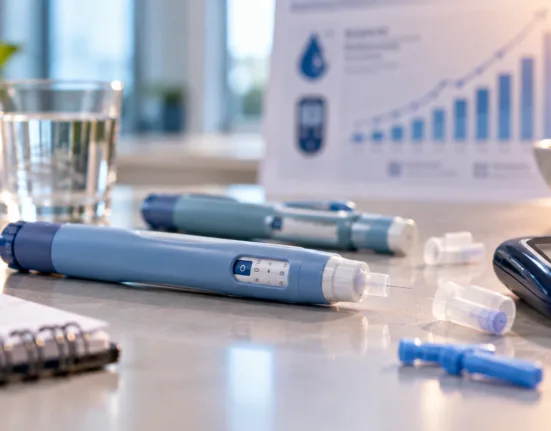
Novo Nordisk has moved closer to opening a new European growth-hormone market after the European Medicines Agency’s Committee for Medicinal Products for Human Use recommended once-weekly Sogroya for children with idiopathic short stature and persistent growth disturbance. If the European Commission follows the recommendation, Sogroya would become the first growth hormone specifically approved in the European Union for idiopathic short stature, a diagnosis applied to children who are significantly shorter than their peers despite having no identifiable underlying medical cause. Novo Nordisk expects the European Commission to decide on the expanded marketing authorization later in 2026.
The September 18 recommendation potentially gives Novo Nordisk a commercially useful distinction in an established but fragmented growth-hormone market. Sogroya, or somapacitan, is administered once weekly rather than every day, and Phase 3 REAL8 data showed that the medicine was non-inferior to daily growth hormone for annualized height velocity at 52 weeks across children with idiopathic short stature, Noonan syndrome and persistent short stature after being born small for gestational age. The company had already secured a favorable European regulatory recommendation for the latter two pediatric indications earlier in 2026.
The opportunity is more complex than simply replacing seven injections with one. Idiopathic short stature can affect as many as 3% of children globally according to sources cited by Novo Nordisk, but recognition, diagnosis and treatment practices vary considerably between countries. Europe has not historically provided a dedicated approved growth-hormone indication for these children, meaning a European Commission approval could create a more clearly defined treatment pathway where therapy has previously been unavailable, off-label or inconsistently used.
Why could once-weekly Sogroya change treatment for children with idiopathic short stature?
Growth hormone treatment is fundamentally different from medicines administered for a few weeks or months. Children may receive therapy for years during a limited developmental window, so treatment burden accumulates through hundreds or potentially thousands of injections.
A daily regimen requires families to remember and administer treatment every evening or according to their prescribed schedule. Missed injections can reduce treatment exposure, while injection fatigue can become more significant as children grow older and take greater responsibility for their own care. A once-weekly formulation reduces the theoretical number of injections from 365 per year to roughly 52, giving Novo Nordisk a straightforward adherence and convenience proposition.
Sogroya achieves its prolonged action using albumin-binding technology that allows somapacitan to remain in the circulation longer than conventional growth hormone. The medicine is already approved in the European Union for growth hormone deficiency in adults and for children aged three years and older with growth hormone deficiency, providing regulators and clinicians with experience using the formulation before the potential idiopathic short stature expansion.
The clinical question, however, is whether reduced injection frequency preserves enough efficacy to justify switching from established daily therapy. REAL8 addressed that by comparing once-weekly somapacitan with daily Norditropin, Novo Nordisk’s somatropin product. The Phase 3 program met the non-inferiority requirement for mean annualized height velocity at 52 weeks, allowing convenience to become part of the value proposition without requiring families to accept demonstrably weaker growth performance.

What is idiopathic short stature and why is the potential market difficult to define?
Idiopathic short stature is essentially a diagnosis of exclusion. A child is significantly shorter than expected, but physicians do not identify another disease or genetic explanation sufficient to account for the growth pattern.
That creates an unusually complicated commercial and clinical population. Short stature itself exists across a spectrum, and not every short child has a disease requiring pharmaceutical treatment. Physicians first need to rule out growth hormone deficiency, nutritional issues, chronic disease, genetic syndromes and other explanations before arriving at an idiopathic diagnosis.
Timing can also affect outcomes because the opportunity to influence final height becomes narrower as puberty approaches and growth plates mature. Novo Nordisk notes that some affected children are not referred to pediatric endocrinologists until relatively late, potentially limiting how much benefit growth-promoting treatment can provide.
This means an EU approval would not automatically turn up to 3% of European children into treatment candidates. Diagnosis, severity thresholds, physician attitudes, national reimbursement criteria and family preferences would all narrow the practically addressable population.
The commercial opportunity may nevertheless be significant because regulatory recognition can change clinical behavior. Once a condition has an explicitly approved therapy, physicians have clearer prescribing guidance, payers have a formal indication to evaluate and families have a more defined route through specialist care.
Why does the REAL8 study matter beyond the first year of growth?
Height velocity during the first year is important because growth-hormone response is often strongest early in treatment. Yet families ultimately care about sustained growth and eventual adult height rather than one favorable 52-week measurement.
Novo Nordisk presented two-year REAL8 data at the European Society for Paediatric Endocrinology meeting in September 2026, including follow-up of children with idiopathic short stature and patients switching from daily growth hormone to somapacitan. The existence of longer-term follow-up is important because these therapies are designed for chronic use, although the European regulatory recommendation was supported primarily by the broader REAL8 clinical package rather than a simple single-endpoint comparison.
Long-term safety is equally important in otherwise generally healthy children. Growth hormone treatment affects insulin-like growth factor signaling and metabolism, which means clinicians monitor growth response, dosing and potential adverse effects rather than simply prescribing treatment and allowing it to run indefinitely.
For Novo Nordisk, durable results would also strengthen the competitive argument for weekly therapy. If children can move from daily injections without sacrificing growth response over multiple years, treatment convenience becomes much harder for competing daily formulations to dismiss.
How does Sogroya fit Novo Nordisk’s rare-disease business?
Novo Nordisk is overwhelmingly associated with diabetes and obesity because Ozempic, Wegovy and other GLP-1 medicines dominate investor attention. Yet growth disorders form part of a rare-disease business with roots stretching back decades.
The company generated DKK19.5 billion of rare-disease sales during 2025, with rare endocrine disorders contributing approximately DKK5.9 billion. Rare endocrine sales increased 24% at constant exchange rates that year, with Novo Nordisk identifying both Norditropin and Sogroya as drivers of growth in the United States and international markets.
Sogroya therefore offers something strategically useful: expansion inside a franchise where Novo Nordisk already possesses specialist physician relationships, injection-device expertise and long-standing commercial infrastructure. The company does not need to build an entirely new pediatric endocrinology organization to reach the potential idiopathic short stature population.
It can instead broaden the number of growth disorders served by the same long-acting hormone platform.
The strategy is already visible in the regulatory sequence. Sogroya began with growth hormone deficiency and is now moving toward children with persistent growth disturbance after being born small for gestational age, Noonan syndrome and idiopathic short stature. A single medicine could consequently address several distinct causes of childhood short stature, increasing the value of the commercial platform without requiring a different molecule for each diagnosis.
Could Sogroya gradually replace Novo Nordisk’s own daily Norditropin business?
That is one of the more interesting strategic implications.
Norditropin is a well-established daily growth hormone and has itself contributed to strong rare-endocrine sales. Sogroya therefore competes partly against Novo Nordisk’s existing franchise rather than attacking only rival products.
Cannibalization is not necessarily a problem if the newer product strengthens the company’s overall market position. Pharmaceutical companies frequently prefer to move patients toward improved formulations they control rather than allow competitors to disrupt an aging franchise.
Weekly dosing may also expand the market by attracting families who previously considered daily injections too burdensome. If that occurs, Sogroya could generate additive growth rather than simply transferring revenue from Norditropin.
The economics will depend heavily on reimbursement. Payers may ask whether a weekly product commands a premium over established daily somatropin and whether greater convenience translates into better adherence or improved long-term outcomes. Demonstrating real-world persistence could therefore become commercially important after approval.
What regulatory hurdle remains before Sogroya can be sold for idiopathic short stature in Europe?
The CHMP recommendation is important, but it is not the final marketing authorization. The opinion now moves to the European Commission, which normally considers the scientific recommendation when making a legally binding decision covering European Union member states.
Novo Nordisk expects that decision later in 2026 and says the authorization under consideration would encompass idiopathic short stature, Noonan syndrome and short stature in children born small for gestational age.
The EMA’s September meeting highlights confirm that Sogroya was among the already authorized medicines receiving a recommended extension of indication during the September 14–17 committee meeting.
Approval would then shift the challenge from regulatory science to commercial execution. Novo Nordisk would need national reimbursement decisions, physician education, diagnostic pathways and sufficient awareness among pediatric endocrinologists to turn the new label into actual treated patients.
What does Sogroya mean for Novo Nordisk investor sentiment?
Novo Nordisk shares ended September 18 at DKK281.55 in Copenhagen, up 0.79% during the session and about 1.8% over the preceding week. The stock remained roughly 14% lower for 2026 and more than 27% below year-earlier levels, reflecting a much broader investor reassessment driven primarily by obesity-market competition, pricing, pipeline expectations and the company’s longer-term growth strategy rather than Sogroya alone.
The Sogroya recommendation therefore is unlikely to alter earnings expectations in the way a major Wegovy or next-generation obesity development can. Its relevance lies in diversification.
Novo Nordisk reported adjusted second-quarter 2026 sales of DKK78.49 billion, up 7% at constant exchange rates, demonstrating the enormous scale difference between its metabolic business and individual rare-disease products. Yet investor concerns about reliance on diabetes and obesity make successful assets outside GLP-1 medicines increasingly valuable strategically.
Sogroya will not solve Novo Nordisk’s diversification challenge by itself. It does, however, demonstrate that the company can expand established platforms in rare disease at a time when investors are looking more closely at growth beyond semaglutide.
What should happen next if the European Commission approves Sogroya?
The first question will be how individual European countries approach reimbursement for idiopathic short stature. Approval creates legal access to the indication, but European healthcare systems make separate decisions about funding and prescribing restrictions.
The second question is adoption relative to daily somatropin. Physicians will need to assess whether weekly administration improves adherence, satisfaction and treatment persistence sufficiently to justify switching established patients or selecting Sogroya for newly diagnosed children.
Longer-term REAL8 follow-up will matter as well. Sustained height gain, safety and final-height outcomes can strengthen confidence that weekly treatment offers more than convenience.
For Novo Nordisk, the opportunity is therefore larger than another label extension but smaller than the enormous populations addressed by obesity medicines. Sogroya could become the first growth hormone formally approved in Europe for idiopathic short stature while simultaneously turning a once-weekly formulation into a platform spanning several pediatric growth disorders.
That would give Novo Nordisk something strategically useful: a growing specialty franchise where competitive advantage comes not from chasing the largest possible patient population, but from reducing treatment burden across several narrowly defined groups with persistent unmet needs.