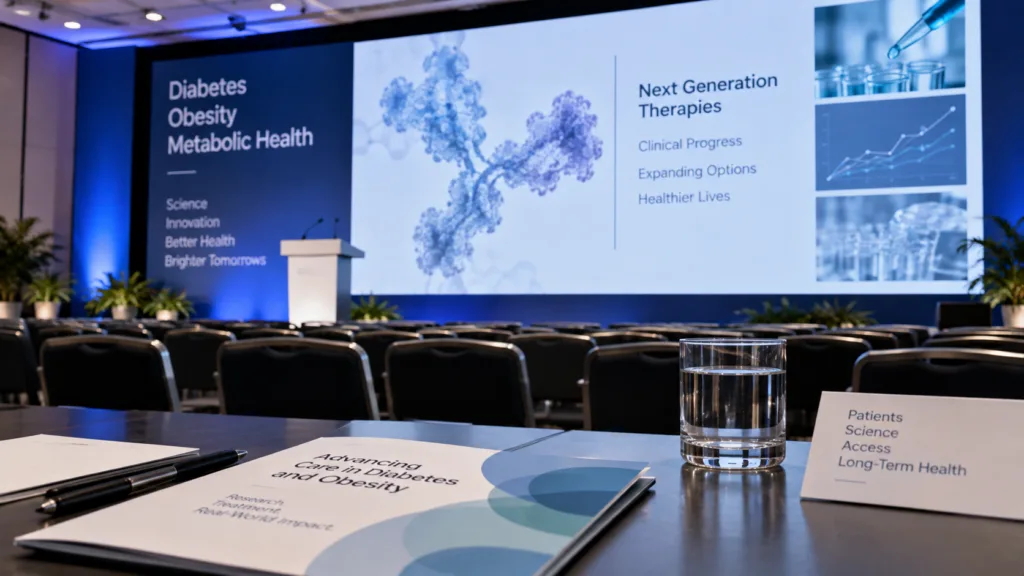
Eli Lilly and Company is preparing to put three different next-generation cardiometabolic strategies in front of physicians within the same conference program, underscoring how the company is moving beyond the question of whether it can compete in obesity and toward a more complicated challenge: how many different therapies it can position across an enormous and increasingly segmented market. At the European Association for the Study of Diabetes meeting in Milan from September 28 to October 2, Lilly plans detailed presentations covering the triple agonist retatrutide, oral GLP-1 medicine Foundayo, and eloraTZP, an experimental combination of the amylin agonist eloralintide with tirzepatide.
The headline number remains retatrutide. In the Phase 3 TRIUMPH-2 study, adults with obesity or overweight and type 2 diabetes receiving the 12-milligram dose lost an average 20.8% of body weight, equivalent to 49.6 pounds, over 80 weeks while reducing glycated hemoglobin by as much as 1.6 percentage points. TRIUMPH-3 separately produced average weight loss of as much as 22.6% among adults with severe obesity and established cardiovascular disease, giving Lilly the clinical package it says can support global obesity submissions, including a planned United States Biologics License Application in the first quarter of 2027.
That would already represent a substantial pipeline asset, but Lilly is not developing retatrutide in isolation. Foundayo, or orforglipron, gives the company an oral small-molecule GLP-1 option that does not require injections, while eloraTZP is designed to test whether combining an amylin mechanism with tirzepatide can push efficacy beyond Lilly’s existing injectable standard. The result is increasingly a portfolio strategy in which administration route, efficacy, tolerability, comorbidities and patient preference could determine which Lilly medicine is used rather than whether a patient receives a Lilly therapy at all.
Why does Eli Lilly need several obesity medicines when Zepbound and Mounjaro are already growing so rapidly?
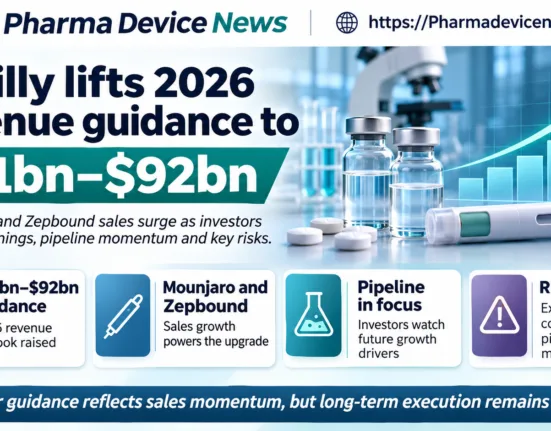
The financial starting point is unusually strong. Eli Lilly reported second-quarter 2026 revenue of $23.0 billion, up 48% from a year earlier, primarily because of Mounjaro and Zepbound volume. Mounjaro generated approximately $9.9 billion of quarterly worldwide revenue, while United States Zepbound revenue reached about $4.9 billion, helping Lilly raise full-year revenue guidance to between $85 billion and $87 billion.
Those numbers might appear to reduce the need for additional obesity drugs, but they actually explain why Lilly is investing so aggressively. The obesity market is becoming large enough that no single formulation is likely to satisfy every patient, physician and payer. Some patients will prioritize maximum weight reduction, some will prefer an oral treatment, some may need therapies with stronger evidence for particular complications, and others may be unable or unwilling to tolerate the gastrointestinal effects associated with incretin treatment.
Retatrutide potentially occupies the high-efficacy end of that spectrum. By activating glucose-dependent insulinotropic polypeptide, GLP-1 and glucagon receptors within one molecule, Lilly is attempting to produce greater metabolic effects than medicines acting through fewer pathways. The Phase 3 weight-loss results make that hypothesis commercially credible, although regulators will evaluate the complete safety and efficacy dataset rather than weight loss alone.
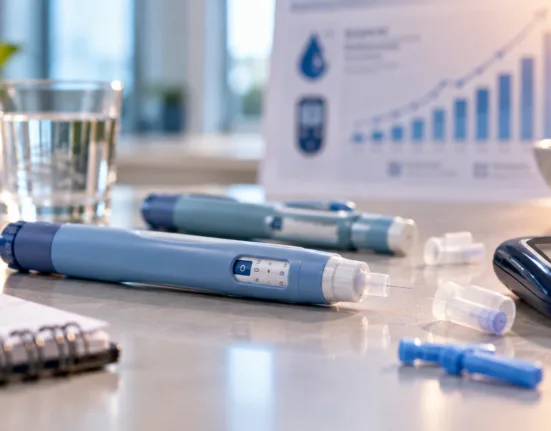
Foundayo addresses a different constraint. As a once-daily non-peptide oral GLP-1 receptor agonist that can be taken without food or water restrictions, it gives Lilly a product designed for patients who prefer tablets to injections. Lilly is now preparing additional Phase 3 diabetes data for EASD, including ACHIEVE-4, where Foundayo demonstrated non-inferiority to insulin glargine and produced numerically lower cardiovascular-event rates, although the reported confidence intervals around those cardiovascular estimates included no difference and should not be interpreted as proof of superiority.
Could eloraTZP become the medicine that pushes efficacy beyond tirzepatide?
The more experimental part of Lilly’s strategy is the combination of eloralintide with tirzepatide. Eloralintide targets the amylin receptor, a mechanism that can influence satiety and food intake, while tirzepatide already combines GIP and GLP-1 receptor activity. Early Phase 1 data disclosed by Lilly showed 17% weight loss over 16 weeks when eloralintide 3 milligrams was added to tirzepatide 5 milligrams, compared with 10% for tirzepatide 5 milligrams alone.
Those numbers are intriguing but should not be compared casually with results from 72-week or 80-week obesity trials. The treatment period was short, dose regimens differ, patient populations vary and Phase 1 studies are not designed to establish the comparative efficacy needed for regulatory or prescribing decisions. The Phase 2 eloraTZP data scheduled for EASD will therefore be substantially more informative about whether adding an amylin mechanism produces enough incremental weight loss to justify another combination treatment.
The strategic logic resembles what happened in hypertension, oncology and other large therapeutic markets: once the first effective mechanism establishes the category, development moves toward combinations tailored to different biological and clinical needs. Obesity may ultimately evolve from a relatively simple GLP-1 market into a multi-mechanism field encompassing GLP-1, GIP, glucagon, amylin and potentially additional metabolic pathways.
That would favor companies with unusually broad pipelines because they can test combinations internally rather than relying entirely on external partners. Lilly is effectively building multiple pieces of that toolkit simultaneously.
How could retatrutide change competition with Novo Nordisk and other obesity developers?
Retatrutide’s most commercially important feature is not that it produces substantial weight loss, because several medicines now do so. The question is whether the magnitude, durability and complication-specific benefits are sufficient to establish a new efficacy benchmark once safety, tolerability and real-world persistence are considered.
Lilly is studying retatrutide across obesity, type 2 diabetes, obstructive sleep apnea, knee osteoarthritis pain, cardiovascular and renal outcomes, metabolic dysfunction-associated steatotic liver disease and other conditions. A successful multi-indication strategy could make the medicine more valuable than a weight-loss product alone because payers increasingly want evidence that obesity treatment reduces downstream disease burden rather than simply lowering body weight.
The competitive bar will also keep moving. Novo Nordisk and numerous biotechnology companies are developing additional incretin, amylin and combination therapies, while oral approaches could widen treatment dramatically by reducing dependence on injectable manufacturing capacity. The market may therefore segment quickly enough that being the strongest product in one efficacy measure does not guarantee dominance across every patient population.
Manufacturing will remain another differentiator. Lilly committed an additional $4.5 billion to expand Indiana manufacturing sites during the second quarter, reflecting the enormous capital requirement behind sustaining obesity-drug volume. Even a clinically superior product cannot generate multibillion-dollar sales if supply constrains patient access.
What will investors be looking for when the detailed EASD data arrive?
Lilly shares closed at $1,152.44 on September 17, up 1.28% for the session, although the stock remained about 10.9% below its August 19 52-week high. The shares had also declined roughly 7% over the preceding month, showing that even extraordinarily strong commercial growth is being weighed against high expectations, pricing pressure and questions about how much future obesity success is already embedded in valuation.
For retatrutide, investors and clinicians will want detailed discontinuation rates, gastrointestinal adverse events, treatment-emergent safety findings and dose-response information alongside the striking weight-loss headline. For Foundayo, the discussion will increasingly shift toward how an oral medicine competes on persistence, price and accessibility rather than simply efficacy. For eloraTZP, the key test is whether adding amylin biology generates enough additional benefit to justify the complexity of another injectable combination.
This is why Lilly’s EASD program matters beyond an ordinary medical-congress presentation. The company is effectively showing three potential answers to three different obesity-market questions: how to achieve deeper weight loss, how to make treatment easier to take, and how to combine mechanisms to push the therapeutic ceiling higher.
The risk is that some of those medicines eventually compete with one another. The opportunity is that Lilly may prefer to cannibalize its own obesity franchise rather than leave those patient segments available to competitors.