Sanofi is accelerating its shift toward higher-growth innovative medicines through a proposed transaction that would transfer 20 mature drugs and three manufacturing facilities to Cheplapharm in exchange for a 26.4% equity stake in the privately held German pharmaceutical specialist. The structure is more strategically interesting than a conventional product divestment because Sanofi is removing the operational burden of managing an older portfolio while retaining substantial exposure to the business that will commercialize it.
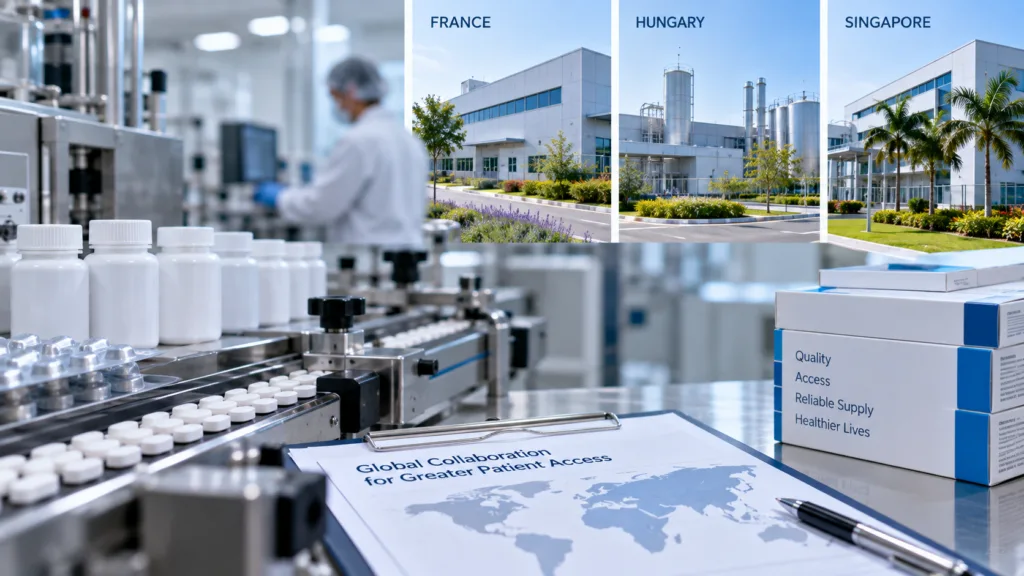
The medicines include Lovenox/Clexane, excluding the United States, while the manufacturing assets are located in Csanyikvölgy, Hungary; Jurong, Singapore; and Ploërmel, France. Those sites employ approximately 400, 100 and 65 people respectively. Commercial transfer of the medicine portfolio is expected to begin during the first quarter of 2027, followed by the factory transfers, with full completion targeted for the third quarter of 2027 subject to regulatory approvals, employee consultation procedures and customary closing conditions.
Sanofi said the proposed arrangement is not expected to affect its 2026 financial guidance, and the companies have not yet disclosed additional financial details. That means the immediate earnings impact appears limited, while the strategic consequence lies in what the deal says about where Sanofi wants management attention, manufacturing resources and future capital to be concentrated.
Why are mature medicines increasingly a different business from innovative biopharma?
A medicine can remain clinically useful for decades after its period of highest commercial growth. Yet mature products require regulatory maintenance, pharmacovigilance, manufacturing, supply-chain oversight and commercial infrastructure even when revenue is stable or declining.
That creates an organizational mismatch inside research-intensive pharmaceutical companies. The capabilities required to maximize an established off-patent medicine are different from those required to develop and launch a new biologic, rare-disease therapy or oncology drug.
Cheplapharm specializes in precisely that mature-product lifecycle. The company says it has invested more than €6.2 billion since its creation, acquired nearly 100 products since 2015 and holds 3,440 marketing authorizations across 160 countries.
Sanofi can therefore transfer drugs into a business whose operating model is designed around mature brands while concentrating its own research, development and commercial organization on newer assets.
The equity component prevents this from being a complete economic exit. Sanofi will own more than a quarter of Cheplapharm, allowing it to participate indirectly if the specialist company creates additional value from the portfolio.
Why does transferring three manufacturing sites make the transaction more consequential?
Product rights can be moved with contracts and regulatory filings. Factories are more complicated because they involve employees, specialized equipment, local regulatory approvals, quality systems and supply obligations.
The inclusion of sites in France, Hungary and Singapore indicates that Sanofi is reshaping physical manufacturing capacity alongside product ownership. Approximately 565 employees are associated with the three facilities, and Sanofi said existing employment arrangements and collective agreements are expected to continue during the transfer.
For Cheplapharm, owning manufacturing capacity reduces dependence on third-party supply for products entering its portfolio. Lovenox/Clexane is especially important because established injectable medicines can require manufacturing capabilities that are difficult to replicate quickly.
For Sanofi, the transaction can reduce complexity inside a manufacturing network increasingly expected to support newer biologics, specialty therapies and vaccines. Pharmaceutical factories are capital-intensive, and management must decide continuously which technologies deserve investment.
Moving plants closely aligned with mature products can therefore make strategic sense even if those facilities remain operationally healthy.
How does the transaction fit Sanofi’s push toward innovative medicines?
Sanofi’s second-quarter results illustrate why portfolio mix is shifting. Sales grew 17.8% at constant exchange rates, while revenue from newer pharmaceutical launches rose 48.3% to €1.3 billion. Dupixent alone generated approximately €5.2 billion during the quarter, rising 37.6% and exceeding €5 billion of quarterly sales for the first time.
Those growth rates contrast sharply with the economics of mature medicines. Management therefore has a clear incentive to deploy commercial resources toward immunology, rare diseases, neurology, oncology and vaccines where successful innovation can generate much faster expansion.
Sanofi has also been pruning its pipeline rather than simply spending more. The company discontinued several programs during 2026 and appointed a more focused executive committee as part of a broader strategy centered on research productivity and capital discipline. Research and development spending still rose 17.9% in the second quarter to €2.2 billion, illustrating that portfolio simplification is being paired with substantial investment rather than general retrenchment.
The Cheplapharm transaction fits that pattern. Sanofi is not abandoning pharmaceutical manufacturing or established medicines entirely; it is deciding which businesses belong inside an innovation-focused operating model.
Why take Cheplapharm shares instead of simply accepting cash?
The 26.4% equity stake is one of the most interesting aspects of the deal. A conventional divestiture would monetize the mature medicines immediately and leave Sanofi without further exposure.
Equity creates a different risk-reward structure. Cheplapharm can apply its specialized mature-brand model to the transferred portfolio, while Sanofi participates in future value creation through ownership without managing those medicines directly.
The structure also aligns the two companies through the manufacturing transition. Sanofi has an economic interest in Cheplapharm succeeding, while Cheplapharm obtains both products and production capability from a long-standing partner.
There are trade-offs. Private-company equity is less liquid than cash, valuation is harder for outside investors to assess, and the eventual financial return depends on Cheplapharm’s broader performance rather than only the transferred Sanofi assets.
Until additional financial terms are disclosed, investors cannot calculate whether the 26.4% interest represents an unusually attractive valuation or primarily a strategic solution to portfolio complexity.
What does Lovenox tell us about the products being transferred?
Lovenox, known as Clexane in many markets, is a well-established anticoagulant based on enoxaparin. It remains medically important despite being a mature therapy, illustrating why older pharmaceutical assets cannot simply be discontinued when they lose strategic priority for their original manufacturer.
These medicines often require dependable global supply more than aggressive innovation. That creates a natural role for companies specializing in managing established brands through long product lifecycles.
Cheplapharm said the transaction would give it both products and the expertise required to manufacture a flagship medicine such as Lovenox/Clexane. Sanofi, meanwhile, keeps the United States business outside the scope of the transfer.
The transaction therefore separates geographical and operational responsibilities rather than indiscriminately selling every right attached to the product.
How are investors interpreting Sanofi’s portfolio simplification?
Sanofi shares closed at €74.59 in Paris on September 16, up approximately 0.45% for the session, while Deutsche Bank maintained a Buy recommendation and €95 price target following the announcement. The modest movement suggests investors view the transaction as strategically sensible but not immediately transformative for earnings, consistent with Sanofi’s statement that 2026 guidance will not change.
The more important investor question is whether management converts portfolio simplification into better research productivity. Sanofi’s underlying commercial performance has been strong, but pipeline setbacks have made capital allocation and R&D execution particularly important.
A company cannot create long-term value simply by selling older medicines. The rationale works only if resources freed from lower-growth assets are redeployed into therapies capable of producing higher returns.
What should we watch before the transaction closes?
Employee consultation and regulatory approvals come first, particularly because three manufacturing sites are changing ownership. Continuity of medicine supply will also be critical because patients depend on these established products regardless of the strategic rationale behind the transaction.
Additional financial disclosure could reveal how Sanofi and Cheplapharm valued the 20 medicines, manufacturing assets and 26.4% stake. That information will determine whether the transaction should be interpreted mainly as operational simplification or also as meaningful capital recycling.
The longer-term measure is Sanofi’s portfolio mix. If growth increasingly comes from newer medicines while mature-product complexity declines, the Cheplapharm partnership will look like another step in a deliberate transformation toward innovative biopharma.
For now, the structure is noteworthy because Sanofi has found a middle ground between ownership and exit. It is handing over products and factories to a specialist operator but retaining a sizable financial interest in what happens next.