Novo Nordisk has agreed to pay Hengrui Pharma up to $2.6 billion for global rights to HRS-1596, an experimental GLP-1/GIP dual receptor agonist designed for once-weekly oral administration in obesity and type 2 diabetes. The agreement includes a $300 million upfront payment and as much as $2.3 billion in development, regulatory and commercial milestones, with Hengrui also eligible for royalties on future sales. HRS-1596 has not yet entered human testing, making the transaction a substantial early-stage wager on whether dual incretin activity can eventually be delivered effectively in a weekly pill.
Novo Nordisk will receive exclusive rights to develop, manufacture and commercialize HRS-1596 outside mainland China, Hong Kong, Macao and Taiwan. Hengrui has already received clearance in China to begin Phase 1 trials in weight management and type 2 diabetes, while the transaction itself is expected to close in the fourth quarter subject to U.S. antitrust clearance and other customary conditions.
Once-weekly oral dosing could distinguish HRS-1596 from current incretin treatment options
HRS-1596 simultaneously targets the GLP-1 and GIP receptors, two pathways involved in glucose regulation, appetite and energy balance. The candidate is intended to reduce food intake while stimulating insulin secretion and improving insulin sensitivity, creating a mechanistic rationale for development across obesity, type 2 diabetes and potentially other cardiometabolic conditions.
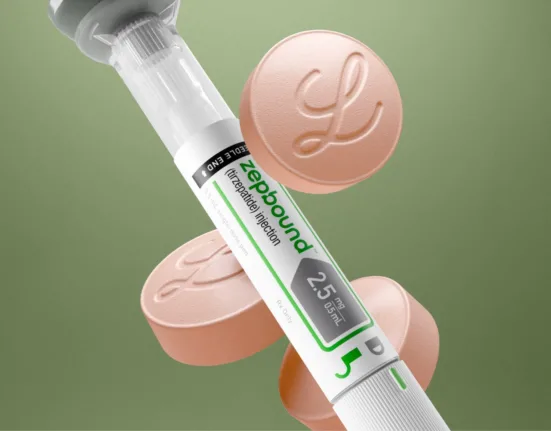
Dual GLP-1/GIP agonism is already clinically validated through injectable tirzepatide, which has demonstrated that combining the two incretin pathways can produce substantial glucose lowering and weight reduction. What differentiates HRS-1596 at this stage is not the receptor combination itself but the ambition to deliver that pharmacology through an oral medicine taken only once each week.

A successful weekly pill could materially reduce treatment burden compared with daily oral therapy while preserving an administration route preferred by patients reluctant to use injections. That possibility is particularly relevant as obesity medicine moves from a predominantly injectable category toward a broader mix of injectable and oral options.
Novo Nordisk already markets the Wegovy pill in the United States as a once-daily oral semaglutide treatment for obesity. The product launched in January and exceeded three million prescriptions within its first several months, providing early evidence that substantial demand exists for oral GLP-1 treatment.
HRS-1596 could theoretically push convenience further by reducing dosing from daily to weekly. However, no human pharmacokinetic, efficacy or safety data have yet been disclosed, so it remains unknown whether once-weekly oral exposure can produce competitive weight loss or glucose control without unacceptable tolerability limitations.
The $2.6 billion deal reflects Novo Nordisk’s push to deepen its next-generation obesity pipeline
Novo Nordisk is licensing HRS-1596 while simultaneously expanding a broad internal cardiometabolic pipeline that extends beyond semaglutide. The company has set an ambition to move at least five obesity and diabetes programs into or through Phase 3 development by 2030 while pursuing more than five potential multiblockbuster launches across its broader pipeline.
One of its most advanced next-generation assets is zenagamtide, previously known as amycretin, which combines GLP-1 and amylin receptor activity. Novo Nordisk has reported mean weight reductions of up to 10.1% with oral zenagamtide in a Phase 2 diabetes study and is advancing the molecule into later-stage development alongside an injectable formulation.
Novo Nordisk is also developing CagriSema, higher-dose semaglutide and other combination or multi-receptor programs as it seeks to maintain leadership in a rapidly evolving obesity market. HRS-1596 therefore enters a crowded internal portfolio rather than becoming Novo Nordisk’s sole successor to Wegovy.
That competition within the pipeline can be strategically useful. Different patients may ultimately require different balances of weight loss, glucose control, tolerability, dosing frequency and administration route, making multiple mechanisms and formulations valuable even when they target overlapping markets.
The size of the Hengrui transaction nonetheless demonstrates the value Novo Nordisk places on securing external innovation early. Only $300 million is payable upfront, while most of the potential $2.6 billion value depends on HRS-1596 reaching future development, regulatory and commercial milestones.
This milestone-heavy structure limits Novo Nordisk’s initial financial exposure if the candidate fails in early clinical development. It simultaneously gives Hengrui substantial upside if HRS-1596 advances successfully into late-stage trials and commercialization.
Phase 1 testing will need to establish whether weekly oral pharmacology is achievable in humans
The major limitation surrounding HRS-1596 is the maturity of the evidence. The candidate is described as Phase 1-ready rather than clinically validated, and Hengrui has only received authorization to begin first-in-human testing in China.
Phase 1 development will initially need to characterize safety, tolerability, pharmacokinetics and appropriate dosing. For an orally administered incretin therapy intended to last an entire week, investigators will also need to establish whether drug exposure can be maintained consistently enough to support sustained receptor activity between doses.
Oral delivery poses different challenges from injectable incretin therapy. Peptide-based medicines can be degraded in the gastrointestinal tract and may have limited absorption, requiring formulation technologies or molecular characteristics that produce adequate systemic exposure. The ability to combine reliable oral absorption with a sufficiently long pharmacological duration will therefore be central to the candidate’s development case.
Even if the pharmacokinetic profile supports weekly administration, HRS-1596 will eventually need to compete on efficacy and tolerability. Gastrointestinal adverse events such as nausea, vomiting and diarrhea remain important limitations across the incretin class, while increasingly effective competing medicines continue raising expectations for the amount and durability of achievable weight loss.
The current licensing announcement provides no human evidence showing how HRS-1596 compares with semaglutide, tirzepatide, zenagamtide or other experimental oral obesity therapies. Comparisons based solely on its receptor profile or proposed dosing frequency would therefore be premature.
Hengrui deal highlights intensifying competition for Chinese obesity drug innovation
The agreement also reflects the growing role of Chinese pharmaceutical companies in global metabolic-drug development. Hengrui has built an increasingly broad pipeline across obesity, diabetes and other therapeutic areas and has pursued partnerships that transfer development rights to companies with larger international commercialization networks.
Novo Nordisk’s agreement represents another example of multinational drugmakers licensing assets from Chinese developers at increasingly early stages. Reuters reported that HRS-1596 is Novo Nordisk’s second obesity-related licensing transaction with a Chinese developer, against a backdrop of intense competition for emerging GLP-1 and metabolic assets.
The competitive pressure is substantial. Eli Lilly has established a major position through tirzepatide, while numerous biotechnology and pharmaceutical companies are developing oral GLP-1 therapies, dual agonists, triple agonists, amylin combinations and other approaches intended to improve efficacy or convenience.
Novo Nordisk is simultaneously scaling its established oral franchise. The company said weekly U.S. prescriptions for the Wegovy pill exceeded 265,000 by mid-July, while its longer-term strategy includes building enough capacity to serve substantially more patients with oral GLP-1 treatment.
HRS-1596 therefore does not address an immediate weakness in Novo Nordisk’s portfolio. Instead, it gives the company another option for a future market in which daily tablets, weekly injections and potentially weekly oral therapies could compete alongside one another.
HRS-1596 remains a high-potential but highly speculative addition to Novo Nordisk’s pipeline
The commercial appeal of once-weekly oral obesity treatment is straightforward, but the scientific risk remains substantial. HRS-1596 still has to establish basic human safety and pharmacokinetics before questions about weight-loss efficacy, cardiovascular effects or commercial differentiation become meaningful.
Novo Nordisk’s decision to commit $300 million upfront indicates significant confidence in the preclinical package and formulation strategy, while the much larger milestone component protects the company if the program does not progress. Hengrui retains rights across Greater China and could receive both future milestone payments and royalties if the medicine reaches the market.
For patients, the most important potential advantage would be convenience. A once-weekly tablet capable of producing competitive metabolic outcomes could make long-term incretin treatment easier for people who prefer oral therapy and could reduce the daily adherence burden associated with existing tablets.
Whether HRS-1596 can deliver that profile remains unanswered. The agreement gives Novo Nordisk another potentially differentiated weapon in the next generation of obesity and diabetes development, but the candidate must first translate its preclinical promise into human data before the $2.6 billion headline value becomes clinically meaningful.