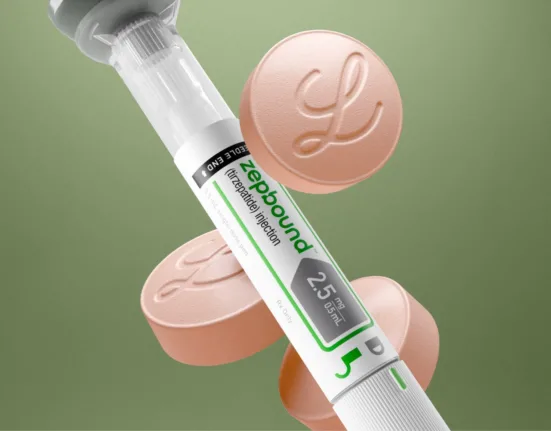
Eli Lilly and Company (NYSE: LLY) and Hims & Hers Health, Inc. (NYSE: HIMS) have agreed to integrate access to Lilly’s FDA-approved obesity medicines Zepbound, or tirzepatide, and Foundayo, or orforglipron, into the Hims & Hers telehealth platform. Under the November 6 agreement, eligible patients prescribed the medicines by licensed providers can obtain Foundayo from $149 per month and Zepbound from $299 per month at the same self-pay prices Lilly offers through other direct channels.
The arrangement removes an important piece of friction from the consumer journey. Patients using Hims & Hers previously had to move outside the platform to access Lilly medicines through a separate channel, whereas the new model allows consultation, prescribing where clinically appropriate, payment and home delivery to operate within a more integrated experience. The companies did not disclose the commercial economics of the agreement, so the revenue-sharing, dispensing and margin implications for Hims & Hers cannot yet be quantified.
More strategically, the deal shows how quickly the relationship between large pharmaceutical companies and digital weight-loss platforms has changed. Telehealth companies helped expand the market partly through compounded GLP-1 medicines during shortages and periods of limited branded access. Hims & Hers is now positioning FDA-approved medicines from both Lilly and Novo Nordisk A/S at the centre of its U.S. obesity business, while committing that it has not offered and will not offer compounded copies of Lilly’s GLP-1 medicines.
Why does Lilly need Hims & Hers when Zepbound is already generating more than $5 billion a quarter?
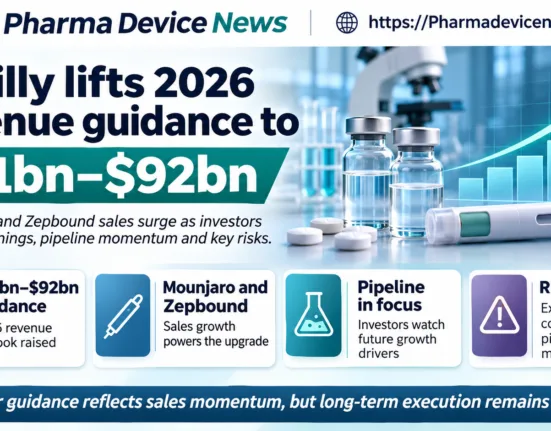
The agreement is not a response to weak demand. Lilly reported Zepbound revenue of $5.35 billion in the third quarter of 2026, up 49% from a year earlier, while year-to-date sales reached $14.44 billion. Total Lilly revenue increased 39% to $24.4 billion, prompting the company to raise its full-year revenue guidance to between $91 billion and $92 billion.
Foundayo is much newer but has already begun contributing meaningful revenue. The once-daily oral GLP-1 receptor agonist was approved by the FDA on April 1 for chronic weight management in adults with obesity or certain adults with overweight and at least one weight-related comorbidity. Lilly reported $184 million of Foundayo revenue in the third quarter and $281 million since its launch.
The Hims & Hers relationship therefore appears less about creating demand than capturing patients where they increasingly begin their healthcare journey. Consumers searching online for weight-loss treatment may first encounter a telehealth provider rather than a manufacturer, endocrinologist or obesity clinic. Integrating branded medicines directly into that experience reduces the chance that a motivated consumer abandons the process while moving between separate prescribing, payment and fulfilment systems.
Lilly also retains control over its self-pay architecture. The prices available through Hims & Hers are the same prices available to other self-pay patients rather than a separately disclosed discount negotiated exclusively for the platform. That allows Lilly to widen distribution without publicly fragmenting its direct-pay pricing strategy.
How does Foundayo change the economics of selling obesity treatment through telehealth?
Foundayo could be particularly well suited to digital distribution because it is taken as a once-daily oral tablet rather than an injection. The medicine does not eliminate the need for clinical screening, ongoing monitoring or adherence support, but it removes injection training, needles and some of the logistical considerations associated with injectable GLP-1 therapies.
The $149 starting self-pay price also gives Hims & Hers a substantially lower-priced branded entry point than injectable Zepbound at $299 per month. Price alone will not determine clinical selection because the medicines have different pharmacology, dosing and efficacy profiles, but a lower-cost oral option broadens the range of FDA-approved treatments that telehealth providers can discuss with eligible patients.
Foundayo is not being offered as an over-the-counter consumer product. It remains a prescription medicine with a defined FDA indication and safety requirements, and the Lilly agreement specifically preserves independent clinical decision-making by providers on the Hims & Hers platform. The commercial integration can streamline access, but it does not remove the clinician from the prescribing decision.
That separation will matter as manufacturers deepen relationships with consumer health platforms. Pharmaceutical companies want the reach and convenience of digital distribution without creating the impression that treatment selection is being dictated by a commercial arrangement between the platform and drug manufacturer.
Why is Hims & Hers now working with both sides of the Lilly versus Novo Nordisk obesity battle?
The November agreement gives Hims & Hers something commercially unusual: direct platform access to branded obesity medicines from both of the dominant global GLP-1 manufacturers.
Hims & Hers entered a new U.S. collaboration with Novo Nordisk in March 2026 that added FDA-approved Ozempic and Wegovy formulations to the platform. The arrangement followed a difficult history between the companies. Novo Nordisk had terminated an earlier 2025 collaboration, alleging concerns about Hims & Hers’ promotion and sale of compounded semaglutide products.
By March 2026, the relationship had changed. Hims & Hers announced that it would stop advertising compounded GLP-1 medicines and reposition its U.S. weight-loss offering around a broader selection of FDA-approved treatments. The company said compounded semaglutide would remain available only on a limited basis where a clinician determined that a commercially available FDA-approved medicine could not meet an individual patient’s clinical needs.
Lilly’s agreement takes that transition another step. Hims & Hers said it has never offered compounded copies of Lilly’s GLP-1 medicines and committed not to do so in the future. The platform can now offer branded semaglutide products from Novo Nordisk alongside tirzepatide and orforglipron from Lilly, making Hims & Hers less dependent on promoting a proprietary drug choice and more valuable as a distribution and care-navigation layer.
Is Hims & Hers becoming a marketplace rather than a pharmaceutical competitor?
The distinction is becoming less clear-cut.
Hims & Hers built much of its consumer proposition around controlling a large part of the patient experience, including digital acquisition, telehealth consultation, prescription management, fulfilment and continuing care. Compounded medicines offered additional economic control because the platform was not simply referring patients to a large pharmaceutical manufacturer’s existing branded product.
A broader catalogue of branded medicines changes that model. Hims & Hers increasingly becomes the interface through which patients navigate a selection of therapies owned and priced by external pharmaceutical manufacturers. The value shifts from controlling the medicine itself toward controlling consumer acquisition, clinical workflow, engagement, adherence services and the relationship with the patient.
That can still be an attractive business, especially if millions of consumers prefer obtaining chronic-care treatment digitally. Hims & Hers reported nearly 2.9 million subscribers at the end of the second quarter, up 19% from a year earlier, while quarterly revenue increased 38% to $753.2 million.
The economic question is whether branded pharmaceutical distribution can produce enough profit to support the growth rate investors have historically expected from the platform.
Why could the Lilly agreement help Hims & Hers revenue while putting pressure on margins?
Hims & Hers already showed the financial tension during the second quarter. Gross margin fell to 64% from 76% a year earlier even as revenue increased sharply. The company attributed the decline primarily to its weight-loss offerings, including shorter shipping cadences and higher fulfilment costs, alongside international expansion, new products, acquisitions and costs related to the restructuring of its U.S. weight-loss business.
That does not establish how profitable the Lilly arrangement itself will be because the companies have not disclosed the commercial terms. Branded medicines can nonetheless produce different economics from vertically integrated or compounded products because a larger portion of the final drug price flows to the pharmaceutical manufacturer.
Hims & Hers may accept lower percentage margins if the arrangement expands the absolute number of patients using the platform and improves retention. A consumer who initially arrives for obesity treatment may also use the company for dermatology, sexual health, mental health, hormone treatment or other services, making lifetime customer economics more important than the gross margin on one prescription.
The next financial checkpoint arrives quickly. Hims & Hers is scheduled to report third-quarter results on November 9, giving investors a more current picture of how its transition toward branded obesity medicines is affecting revenue growth, subscriber economics and profitability.
Why did Hims & Hers shares jump when branded drugs may generate lower margins?
Hims & Hers shares closed November 6 at $26.00, up 8.1% for the session after the Lilly agreement was announced. Trading volume exceeded 13 million shares, above the stock’s recent average, although the price remained about 22% lower for 2026 and more than 40% below its level a year earlier.
The reaction suggests investors placed value on greater certainty around Hims & Hers’ role in the evolving GLP-1 distribution system. One of the strategic concerns surrounding telehealth obesity businesses has been what happens when branded supply improves, shortages end and regulators and manufacturers push back against large-scale use of compounded versions.
Access to both Lilly and Novo Nordisk products provides an answer, although not necessarily the high-margin answer some investors originally expected. Hims & Hers can remain relevant to obesity treatment even if the market migrates decisively toward branded FDA-approved medicines because its consumer relationship, provider network and digital infrastructure continue to sit between manufacturers and patients.
Lilly shares closed the same session at $1,354, down 0.8%, reinforcing how differently the deal matters to the two companies. For Lilly, Hims & Hers is another distribution channel inside a rapidly expanding obesity franchise. For Hims & Hers, access to Lilly completes a much broader strategic repositioning of one of its most closely watched growth categories.
Does this agreement weaken LillyDirect or make Lilly’s direct-to-consumer strategy stronger?
The two models can coexist because they solve different parts of the access problem.
LillyDirect gives Lilly a manufacturer-controlled route for connecting patients with healthcare and pharmacy services. Hims & Hers brings its own consumer audience, recurring membership relationships and marketing infrastructure. Allowing both channels to offer the same self-pay pricing lets Lilly meet consumers through several digital front doors without forcing all patients into a manufacturer-owned experience.
That strategy may become increasingly valuable as obesity medicine shifts toward chronic treatment and the market expands beyond early adopters. Pharmaceutical manufacturers need sustained demand, but they also need patients to remain engaged through dose escalation, adverse effects, lifestyle changes and long-term maintenance.
Digital platforms can provide some of that surrounding infrastructure. Hims & Hers describes its weight-loss service as including ongoing access to a care team, nutrition support and clinical follow-up. The actual value of those services will depend on engagement and outcomes rather than their existence on the platform, but they represent capabilities drug manufacturers do not necessarily want to build independently for every patient.
Lilly is therefore not outsourcing control of Zepbound and Foundayo. It is extending the reach of its existing pricing and product strategy through a platform that already has millions of consumer relationships.
Could telehealth become one of the main battlegrounds in the Lilly and Novo Nordisk obesity rivalry?
Competition between Lilly and Novo Nordisk is increasingly about more than which medicine produces the strongest clinical result. Availability, dosage form, pricing, insurance coverage, manufacturing capacity and ease of obtaining a prescription all influence how large obesity franchises become.
Hims & Hers now reduces one distribution difference between the companies because consumers on the platform can access medicines from either manufacturer. That places more emphasis back on clinical suitability, price, formulation and patient preference rather than whether one manufacturer happens to have better access to a particular telehealth channel.
The arrival of oral obesity medicines makes digital distribution even more strategically relevant. Lilly’s Foundayo and Novo Nordisk’s oral Wegovy create lower-friction alternatives for consumers who prefer tablets, while injectables remain available for patients whose providers consider them appropriate.
For Hims & Hers, offering both portfolios could also strengthen the credibility of its claim that prescribing decisions remain independent. A platform tied commercially to only one major GLP-1 manufacturer could face questions about whether its product menu influences prescribing. Access to competing branded options does not eliminate commercial incentives, but it gives providers a wider FDA-approved treatment set.
What does the agreement say about the future of compounded GLP-1 medicines?
The direction of travel is increasingly clear even though personalized compounding has not disappeared.
When branded GLP-1 supply was constrained, compounded products filled a large access gap and allowed digital health companies to scale weight-loss programmes rapidly. As manufacturers expand capacity, launch cheaper self-pay options and introduce oral products, the economic and clinical justification for mass-market compounded copies becomes harder to sustain.
Hims & Hers’ progression illustrates that change. The company has moved from heavy reliance on compounded weight-loss treatments toward agreements with Novo Nordisk and now Lilly, while limiting the circumstances in which compounded semaglutide is positioned as an option. Its commitment not to offer compounded copies of Lilly’s GLP-1 medicines gives Lilly additional protection against a business model pharmaceutical manufacturers have repeatedly challenged.
Compounding will remain relevant where medically necessary individualized formulations meet regulatory requirements. The strategic shift is that large telehealth platforms may increasingly find it more durable to negotiate access to branded medicines than to build their growth around competing versions of products owned by the pharmaceutical companies whose supply they ultimately need.
What will show whether the Lilly and Hims & Hers model actually works?
The first evidence will come from Hims & Hers’ financial results. Subscriber growth and weight-loss revenue need to remain strong enough to offset the margin pressure associated with a more branded product mix, while the company must show that consumers value having multiple FDA-approved options inside one digital experience.
For Lilly, the test is incremental reach. Zepbound already generates billions of dollars each quarter, so simply shifting an existing patient from LillyDirect to Hims & Hers would add convenience without necessarily creating meaningful new demand. The agreement becomes more valuable if Hims & Hers converts consumers who otherwise would not have started or persisted with a Lilly medicine.
Foundayo may provide the more interesting early signal. The oral medicine generated $184 million in its first full quarter of commercial availability, and its $149 starting self-pay price creates a relatively accessible branded option for a telehealth population already accustomed to subscription-style healthcare purchasing.
The November 6 agreement ultimately reflects a structural change in obesity medicine distribution. Hims & Hers is no longer positioned primarily as a company trying to route around the pharmaceutical industry’s GLP-1 franchises. Lilly and Novo Nordisk are increasingly using the platform to reach the same consumers themselves.
That leaves Hims & Hers with a different but potentially durable role: not owning the obesity drug, but owning enough of the digital patient relationship that the companies producing the world’s biggest weight-loss medicines increasingly want to be inside its platform.