AbbVie Inc. (NYSE: ABBV), the United States-based biopharmaceutical company, announced on October 11, 2026, new clinical and real-world findings for Skyrizi (risankizumab-rzaa) and Rinvoq (upadacitinib) across Crohn’s disease and ulcerative colitis, highlighting additional evidence of treatment response in patients with difficult-to-manage inflammatory bowel disease. The 22 scientific abstracts featured at the American College of Gastroenterology Annual Scientific Meeting in Nashville, Tennessee, from October 9 to 14 include additional Phase III AFFIRM analyses, multiyear Skyrizi extension findings and observational Rinvoq outcomes in patients with complicated Crohn’s disease. The programme adds evidence on treatment durability and different patient populations as AbbVie pursues regulatory authorisation for subcutaneous Skyrizi induction in adults with moderately to severely active Crohn’s disease.
The most consequential development concerns the potential expansion of Skyrizi administration options. The AFFIRM trial previously demonstrated that subcutaneous risankizumab induction achieved Crohn’s Disease Activity Index clinical remission in 55% of patients at week 12, compared with 29.6% receiving placebo, while endoscopic response reached 44% versus 14.3%. The October conference programme provides additional analysis of treatment outcomes in patients with differing previous treatment experiences, strengthening the evidence package supporting AbbVie’s regulatory submissions.
The broader findings also highlight an increasingly important clinical objective in inflammatory bowel disease treatment: achieving sustained control of intestinal inflammation rather than relying exclusively on short-term symptom improvement. Long-term Skyrizi analyses extend observations across several years and disease subgroups, while real-world Rinvoq studies examine outcomes in patients with fistulizing, stricturing and isolated ileal Crohn’s disease. However, the evidence comes from studies with different methodologies, and uncontrolled extension findings and observational remission rates should not be interpreted as equivalent to results from randomised comparative trials.
How do the Phase III AFFIRM results support subcutaneous Skyrizi induction for Crohn’s disease?
The Phase III AFFIRM trial investigated whether risankizumab could induce clinical remission and endoscopic improvement when administered through subcutaneous injections rather than the intravenous induction regimen currently approved for Crohn’s disease. The global, randomised, double-blind, placebo-controlled study enrolled 289 adults with moderately to severely active Crohn’s disease, allocating participants to subcutaneous risankizumab or placebo in a 2:1 ratio. Approximately 65% had previously experienced failure of at least one advanced therapy, making the overall population relevant to patients with substantial treatment histories.
The trial met both coprimary endpoints at week 12. Clinical remission, defined as a Crohn’s Disease Activity Index score below 150, occurred in 55% of risankizumab-treated patients compared with 29.6% receiving placebo, representing an absolute difference of 25.4 percentage points. Endoscopic response, assessed using the Simple Endoscopic Score for Crohn’s Disease, was achieved in 44% versus 14.3%, an absolute difference of 29.7 percentage points.
Both primary comparisons achieved statistical significance, with reported P values below 0.0001. These findings provide controlled Phase III evidence that the investigational subcutaneous induction regimen can improve both clinical symptoms and intestinal inflammation. The endoscopic endpoint is particularly relevant because visible improvement in intestinal disease activity can provide information that symptom measurements alone may not capture.
The additional subgroup findings show that patients without previous advanced therapy failure experienced particularly high response rates. Within this 100-patient subgroup, 73.1% receiving risankizumab achieved clinical remission at week 12, compared with 27.3% receiving placebo. Endoscopic response reached 61.2% versus 15.2%, demonstrating a pronounced numerical treatment difference within the subgroup.
Patients with previous advanced therapy failure also demonstrated improvements. Clinical remission occurred in 45.2% of risankizumab recipients compared with 30.8% receiving placebo, while endoscopic response reached 34.7% versus 13.8%. These findings suggest activity across patients with different treatment histories, although the magnitude of response was not identical between subgroups.
An important methodological distinction concerns how the subgroup without prior advanced therapy failure was defined. The classification does not necessarily establish that every participant had never received an advanced treatment, since the defining characteristic was the absence of previous treatment failure. This limits how broadly the findings can be described as applying exclusively to completely treatment-naive patients.
AbbVie also reported that among patients achieving clinical response after the initial 12-week induction period, 67% were in clinical remission and 57% achieved endoscopic response at week 24 following additional treatment. These later outcomes provide supportive evidence of continued response, but they describe a selected group of initial responders rather than the entire original randomised population. The week-24 findings therefore should not be interpreted as independently demonstrating the same treatment advantage across all trial participants.
Why could subcutaneous induction become an important addition to Skyrizi’s approved treatment regimen?
Skyrizi is already approved in the United States for adults with moderately to severely active Crohn’s disease, but its approved treatment schedule requires intravenous administration during the initial induction period. Patients currently receive 600 mg through intravenous infusion at weeks zero, four and eight, followed by subcutaneous maintenance treatment beginning at week 12. Maintenance injections of 180 mg or 360 mg are subsequently administered every eight weeks, with the dose selected according to the approved prescribing information.
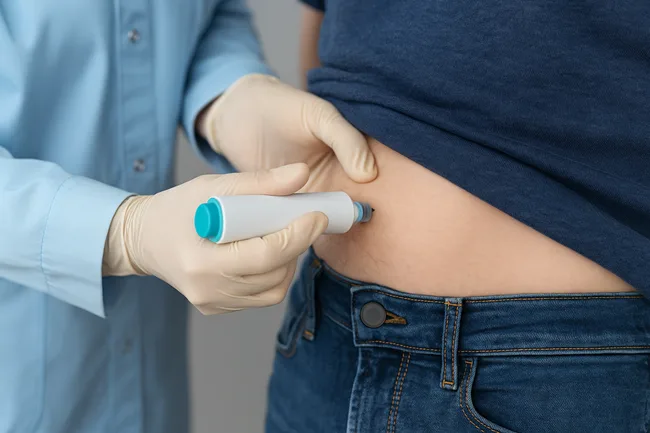
The investigational AFFIRM regimen addresses the initial treatment phase rather than introducing a completely new active medicine. If authorised, subcutaneous induction would provide another method of beginning treatment with risankizumab, potentially reducing dependence on intravenous infusion facilities. This may be relevant for patients who face difficulties attending infusion appointments or healthcare systems seeking more flexible administration arrangements.
However, a subcutaneous regimen would not necessarily eliminate the need for healthcare professional involvement. Administration training, patient suitability, product presentation and the approved dosing schedule would all influence how the treatment could be implemented. The potential convenience benefit must also be distinguished from clinical superiority, since AFFIRM compared subcutaneous risankizumab against placebo rather than directly against the approved intravenous induction regimen.
AbbVie submitted an application to the United States Food and Drug Administration on April 27, 2026, seeking approval for subcutaneous induction in adults with moderately to severely active Crohn’s disease. The company subsequently submitted a corresponding application to the European Medicines Agency on August 27. These submissions represent regulatory development milestones, but subcutaneous induction had not been established as an approved Crohn’s disease dosing option in the cited October announcement.
Regulatory authorities will evaluate whether the efficacy and safety package supports the proposed administration method and treatment schedule. The AFFIRM findings provide direct evidence of activity against placebo, while other information may help regulators assess exposure, dosing and the relationship between induction and maintenance treatment. Any eventual approval would depend on the final assessment and would apply only within the authorised indication and prescribing conditions.
What do five-year FORTIFY findings reveal about Skyrizi in fistulizing Crohn’s disease?
One of the most notable longer-term findings comes from a post-hoc analysis of the FORTIFY open-label extension programme involving patients with fistulizing Crohn’s disease. AbbVie reported that 74.5% of patients in the analysis had no draining fistulas after five years of risankizumab treatment. The finding addresses a particularly difficult manifestation of Crohn’s disease, where abnormal connections between intestinal tissue and surrounding structures can contribute to infections, drainage and repeated medical interventions.
Fistulizing disease can require a complex combination of medical and surgical management. Reducing inflammatory activity is an important treatment objective, but clinical assessment must also consider persistent fistula tracts, abscesses and other complications. The absence of active drainage is therefore a meaningful observation, although it is not necessarily equivalent to complete anatomical closure or permanent resolution of fistulizing disease.
The five-year analysis also requires careful interpretation because it comes from an open-label extension and was conducted after the original trial framework. Patients who continue participating in long-term treatment studies may differ from those who discontinue because of inadequate response, adverse events or other circumstances. This creates the possibility that outcomes among remaining participants may overrepresent those who tolerate and respond to treatment.
AbbVie’s announcement did not provide the complete denominator for the five-year fistula analysis, the number of participants who discontinued treatment or detailed information about the handling of missing observations. These details are necessary to determine how representative the reported 74.5% figure is of the broader population initially entering treatment. The result provides evidence of favourable outcomes among patients evaluated over extended follow-up, but it does not establish a 74.5% permanent fistula-healing rate across all patients starting risankizumab.
The analysis nevertheless contributes to the evidence base for a disease complication that remains difficult to manage. More detailed information about imaging-confirmed healing, surgical interventions, recurrence and concurrent treatments would help clarify whether sustained absence of drainage translates into broader disease control. Such evidence would be particularly valuable for comparing the longer-term clinical role of risankizumab with established approaches to fistulizing Crohn’s disease.
Can Skyrizi maintain endoscopic improvement across different Crohn’s disease locations?
Additional FORTIFY and SEQUENCE analyses examine whether risankizumab maintains clinical and endoscopic outcomes across different anatomical patterns of Crohn’s disease. Disease location can influence symptoms, treatment assessment and the risk of complications, making it relevant when evaluating outcomes beyond the overall trial population. Crohn’s disease may affect the ileum, colon or both regions, with patients experiencing different combinations of inflammation and structural complications.
The FORTIFY open-label extension analysis followed patients through 144 weeks of treatment. AbbVie reported that clinical and endoscopic remission rates were generally maintained or improved across patients with ileal, colonic and ileocolonic disease. These findings suggest that sustained outcomes were observed across different anatomical subgroups, although the announcement did not provide complete comparative numerical data for each location.
The SEQUENCE open-label extension programme provides another perspective, focusing on patients who had previously experienced inadequate response or intolerance to anti-tumour necrosis factor treatment. Through week 148, AbbVie reported sustained clinical and endoscopic outcomes among patients continuing risankizumab. The company also indicated that endoscopic outcomes in patients with ileal disease improved over time and became comparable with those observed in other disease locations.
This observation is relevant because isolated ileal disease can present specific challenges when assessing inflammation and treatment response. However, the reported convergence of outcomes between anatomical groups does not independently establish that every disease location responds equally well to treatment. Differences in baseline characteristics, treatment continuation and available follow-up could influence the observed pattern.
The October programme also includes results from the COMMAND open-label extension study in ulcerative colitis. AbbVie reported sustained clinical and endoscopic improvements through three years of risankizumab treatment, including among patients who had previously received multiple advanced therapies. These findings extend the company’s long-term inflammatory bowel disease evidence beyond Crohn’s disease, while retaining the limitations associated with uncontrolled extension observations.
Taken together, the studies provide evidence about durability in selected populations rather than replacing the conclusions of the original controlled trials. They may help clinicians understand how response evolves during continued treatment, particularly in patients with previous treatment exposure or different disease locations. Detailed patient retention and missing-data analyses remain important for interpreting the strength of long-term findings.
Does the new Skyrizi versus guselkumab analysis establish superiority in Crohn’s disease?
AbbVie is also presenting an anchored matching-adjusted indirect comparison evaluating subcutaneous risankizumab induction against guselkumab in patients with moderately to severely active Crohn’s disease. The analysis reported a statistically higher rate of endoscopic response with risankizumab during induction. This finding is relevant because both medicines target the interleukin-23 inflammatory pathway, making their relative clinical performance a subject of interest.
However, the comparison is not a randomised head-to-head trial. Matching-adjusted indirect comparisons attempt to account for differences between separate clinical trial populations using available participant characteristics and a common comparator. Their reliability depends on assumptions about trial similarity and whether important differences between the studies have been adequately addressed.
Differences in eligibility criteria, previous treatment exposure, baseline disease activity and endpoint assessment can influence the apparent treatment effect. Matching methods cannot necessarily adjust for every unmeasured characteristic or every difference in study conduct. Consequently, a statistically significant result from an indirect comparison should not be presented as definitive evidence that one medicine is clinically superior to another.
The October announcement did not provide the complete adjusted effect estimate, confidence interval or details of the matching population. Those data will be important for assessing the robustness of the analysis and the extent to which its findings can inform treatment selection. Direct comparative clinical evidence remains a stronger basis for establishing relative efficacy when evaluating medicines within the same therapeutic class.
What do Rinvoq’s real-world Crohn’s disease findings reveal about difficult-to-treat patients?
AbbVie’s Rinvoq programme focuses on patients with complicated Crohn’s disease who may be insufficiently represented in conventional clinical trials. Upadacitinib is an oral Janus kinase inhibitor approved for adults with moderately to severely active Crohn’s disease under specified prior-treatment conditions. Its mechanism differs from risankizumab, providing clinicians with another therapeutic approach to controlling inflammatory pathways.
One retrospective study examined upadacitinib outcomes among patients with fistulizing and stricturing Crohn’s disease treated within the United States Veterans Affairs healthcare system. AbbVie reported remission outcomes of 93.3% among patients with fistulizing disease and 76.9% among those with stricturing disease who remained on treatment. The findings involved clinical remission and corticosteroid-free remission measures, although the announcement did not provide all the details needed to distinguish the underlying outcome calculations.
The qualification concerning patients remaining on treatment is essential. Individuals who discontinue a medicine because of inadequate response or adverse events may not contribute to the same analysis of ongoing treatment outcomes. This creates a potential selection effect that can make remission rates among continuing patients appear more favourable than rates calculated across everyone who initially began treatment.
The Veterans Affairs population also has characteristics that may limit generalisation to the broader Crohn’s disease population. Differences in age, sex distribution, comorbidities and healthcare access may influence observed outcomes. Without complete baseline information, treatment discontinuation rates and appropriate comparators, the reported percentages cannot establish that upadacitinib produces equivalent results across all patients with fistulizing or stricturing disease.
A separate study involving patients with isolated ileal Crohn’s disease in the United States Department of Defense healthcare system provided additional observational findings. At six months, 57% of patients achieved clinical remission, 58% achieved endoscopic response and 53.6% achieved endoscopic remission while receiving upadacitinib. These results are relevant because they include objective assessment of intestinal inflammation alongside clinical symptoms.
Endoscopic remission is a more stringent outcome than endoscopic response because it generally reflects a lower level of residual visible inflammation. However, the study’s specific assessment methods, patient numbers and handling of missing data are necessary to determine the reliability of the reported rates. The observational design also means the findings cannot establish a treatment advantage over another medicine or distinguish all treatment effects from patient-selection factors.
The evidence supports further understanding of upadacitinib use in complicated Crohn’s disease, particularly outside tightly controlled trials. Its clinical relevance lies in identifying whether previously established efficacy extends to patients with disease features that can complicate conventional management. Broader confirmation will require studies that account for discontinuations, safety outcomes and differences in baseline disease severity.
How do Skyrizi and Rinvoq safety profiles influence treatment decisions in inflammatory bowel disease?
The two medicines have different mechanisms of action and distinct safety considerations. Risankizumab selectively inhibits the p19 subunit of interleukin-23, while upadacitinib inhibits Janus kinase signalling pathways. These pharmacological differences influence their established warnings, monitoring requirements and clinical use, making it inappropriate to evaluate them solely through remission percentages.
In AFFIRM, AbbVie reported that the safety profile of subcutaneous risankizumab induction was consistent with earlier Crohn’s disease experience. During the 12-week placebo-controlled period, serious adverse events occurred in 0.5% of risankizumab-treated patients compared with 3.1% receiving placebo. The most commonly reported adverse events among risankizumab recipients included upper respiratory tract infections, abdominal pain and joint pain.
These findings are reassuring within the controlled observation period, but the numerical difference in serious adverse events does not independently demonstrate that risankizumab is safer than placebo or another active therapy. Short clinical trials may be insufficient to identify uncommon adverse events, and the longer-term safety profile must be interpreted using the broader clinical development and post-marketing evidence. Skyrizi’s prescribing information also includes warnings relating to infections, hypersensitivity and liver injury, particularly during inflammatory bowel disease treatment.
Rinvoq carries an FDA boxed warning addressing serious infections, mortality, malignancy, major adverse cardiovascular events and thrombosis. Some important class-related risk evidence originated from a safety study of another Janus kinase inhibitor in rheumatoid arthritis, while upadacitinib has its own reported safety findings. These warnings remain relevant when assessing treatment suitability, particularly among patients with cardiovascular risk factors, infection susceptibility or other clinical concerns.
The real-world Rinvoq studies highlighted at the conference provide information about treatment outcomes but do not establish that these safety concerns have been eliminated in difficult-to-treat Crohn’s disease. Their observational design and selective reporting of efficacy outcomes also limit conclusions about comparative tolerability. Longer-term assessments of infections, treatment discontinuation and other adverse events will be important when evaluating clinical benefit alongside risk.
Why do the new inflammatory bowel disease findings matter for AbbVie’s commercial strategy?
Skyrizi and Rinvoq have become major drivers of AbbVie’s pharmaceutical revenue as the company transitions away from its historical dependence on Humira. Both medicines have established positions across multiple immune-mediated inflammatory diseases, and inflammatory bowel disease represents an important component of their continuing clinical development. The October research programme provides additional evidence that could support prescribing confidence, treatment persistence and future regulatory opportunities.
AbbVie’s second-quarter 2026 financial results illustrate the scale of these franchises. Global Skyrizi net revenue reached $5.505 billion, an increase of 24.4% from the corresponding quarter of 2025, while Rinvoq generated $2.525 billion, representing growth of 24.5%. Together, the two medicines contributed more than $8 billion in quarterly revenue.
The company’s overall immunology portfolio generated $8.786 billion during the quarter, compared with $756 million from Humira. This revenue distribution illustrates how Skyrizi and Rinvoq have increasingly become the principal commercial contributors within AbbVie’s immunology business. Continued development in Crohn’s disease and ulcerative colitis may help reinforce their clinical positioning, although the financial results do not disclose the revenue contribution attributable specifically to the October research findings.
Subcutaneous Skyrizi induction represents a potential lifecycle-management opportunity because it would expand the administration options available for an existing medicine. If approved, the regimen could reduce the need for intravenous induction visits for appropriate patients and potentially influence preferences among prescribers and healthcare organisations. However, the actual commercial impact would depend on regulatory conditions, reimbursement, pricing, treatment access and clinical adoption.
Long-term extension evidence has a different potential commercial role. Findings suggesting sustained control of disease activity may support confidence in continued treatment, particularly when clinical decisions involve patients who have already failed several therapies. Nevertheless, favourable extension results do not establish longer treatment persistence across routine populations or justify assumptions about increased future revenue.
Rinvoq’s observational studies could also strengthen understanding of its role in more complicated disease presentations. However, its boxed warnings and established treatment restrictions remain important factors influencing its use, and successful outcomes in selected real-world cohorts do not remove those constraints. AbbVie’s commercial opportunity will therefore continue to depend on demonstrating a favourable benefit-risk profile within the populations specified by regulatory labels.
What will determine whether AbbVie’s latest Skyrizi and Rinvoq evidence changes inflammatory bowel disease care?
The immediate regulatory question concerns subcutaneous risankizumab induction in Crohn’s disease. AFFIRM has already met its prespecified week-12 coprimary efficacy endpoints, and the new conference programme provides additional details about treatment outcomes across patient subgroups and follow-up periods. Regulatory authorities will now need to determine whether the complete evidence supports the proposed administration option.
More comprehensive publication of the AFFIRM results would also help clarify the relationship between early clinical response, endoscopic improvement and sustained treatment outcomes. Information about subgroup precision, missing data and longer-term safety will be useful when evaluating the regimen’s applicability across patients with different treatment histories. A direct comparison with intravenous induction would offer additional insight into relative treatment performance and convenience, although such a comparison was not the basis of AFFIRM’s primary findings.
For the FORTIFY, SEQUENCE and COMMAND extension programmes, the priority will be transparent reporting of long-term patient retention and outcome assessment. The five-year fistulizing Crohn’s disease findings are particularly notable, but additional information about persistent drainage, anatomical healing and treatment discontinuation would strengthen their interpretation. The same principle applies to multiyear clinical and endoscopic findings across different disease locations and previous treatment exposures.
The Rinvoq real-world studies add useful observations from patients with complicated disease, but their clinical significance will depend on how well those results can be reproduced and contextualised. Prospective comparative evidence, consistent endpoint definitions and comprehensive safety reporting would help determine whether the favourable outcomes extend beyond the selected populations investigated. Their findings are complementary to controlled trial evidence rather than a substitute for it.
AbbVie’s October 2026 inflammatory bowel disease programme illustrates the increasing emphasis on durable disease control, objective assessment of intestinal inflammation and treatment strategies tailored to patients with different clinical histories. Skyrizi’s investigational subcutaneous induction regimen offers a potential additional administration option, while its extension findings and Rinvoq’s observational data address longer-term and more complicated disease management questions. The decisive clinical and commercial milestones will be regulatory assessment of the new Skyrizi regimen, fuller publication of the extended follow-up results and evidence that the reported outcomes remain meaningful across broader inflammatory bowel disease populations.