Eli Lilly and Company has presented detailed Phase 3 TRIUMPH-4 data showing that once-weekly retatrutide produced substantial weight loss alongside significant reductions in knee osteoarthritis pain in adults with obesity or overweight and symptomatic knee disease. At 68 weeks, participants receiving 9 mg retatrutide lost an average 26.4% of body weight and those receiving 12 mg lost 28.7%, while average weight loss with placebo was 2.1%.
The pain result was almost as striking. Average Western Ontario and McMaster Universities Osteoarthritis Index pain scores fell by 4.48 points with the 9 mg dose and 4.41 points with 12 mg from an average baseline of approximately 6 points, compared with a 2.43-point reduction with placebo. Both retatrutide doses achieved statistically significant improvements in the trial’s co-primary endpoints.
Yet the most important implication may extend beyond another impressive weight-loss percentage. TRIUMPH-4 strengthens the argument that treating severe obesity can materially alter symptoms associated with weight-sensitive chronic diseases, potentially expanding the clinical value proposition of next-generation obesity medicines beyond the scale. What remains unresolved is how much of the knee-pain improvement reflects mechanical unloading from dramatic weight reduction, changes in systemic inflammation, direct pharmacological effects or a combination of these mechanisms.
What did the detailed TRIUMPH-4 Phase 3 results show beyond Lilly’s earlier topline announcement?
TRIUMPH-4 was a randomised, double-blind, placebo-controlled Phase 3 trial involving 445 adults with obesity or overweight and knee osteoarthritis who did not have diabetes. Participants were assigned equally to weekly subcutaneous retatrutide at 9 mg, retatrutide at 12 mg or placebo for 68 weeks alongside diet and physical-activity interventions.
The population entered the study with substantial obesity. Mean body weight was approximately 112.7 kg and mean body mass index was 40.4 kg/m², placing the average participant well within the obesity range. Women accounted for about 63% of participants, while mean age was approximately 55 years.
The co-primary endpoints were percentage change in body weight and change in WOMAC pain score at Week 68. The WOMAC instrument is widely used in osteoarthritis studies to assess pain, stiffness and physical function, making the pain endpoint clinically relevant rather than merely a metabolic surrogate.
With the efficacy estimand, body weight declined by 26.4% with 9 mg retatrutide and 28.7% with 12 mg compared with 2.1% on placebo. In absolute terms, Lilly previously reported average losses of approximately 29.1 kg with 9 mg and 32.3 kg with 12 mg.
Pain also improved significantly. Average WOMAC pain scores fell by approximately 4.5 points with 9 mg, 4.4 points with 12 mg and 2.4 points with placebo. The placebo response was therefore substantial, as is often seen in osteoarthritis trials, but both retatrutide groups still separated significantly from placebo.
Why should the headline 75.8% pain reduction be interpreted carefully?
Lilly has highlighted that the 9 mg dose reduced WOMAC knee-pain scores by approximately 75.8% from baseline, while the 12 mg dose produced a roughly 74.3% reduction. Those figures are visually powerful, particularly when combined with the finding that some participants reported no knee pain by the end of treatment.
However, percentage changes in the WOMAC pain score were post-hoc calculations rather than prespecified percentage-based endpoints. The prespecified trial endpoint was the absolute change in WOMAC pain score, and that is the more appropriate primary basis for assessing whether TRIUMPH-4 succeeded.
The absolute changes were nevertheless substantial and statistically significant. The efficacy estimand showed reductions of approximately 4.5 and 4.4 points with the two retatrutide doses versus approximately 2.4 points with placebo, while analyses intended to reflect outcomes regardless of treatment discontinuation also favoured retatrutide.
That distinction strengthens rather than weakens the analytical interpretation. The trial does not need the 75.8% figure to establish efficacy because its prespecified pain endpoint was positive. But presenting the percentage without explaining that it was calculated post hoc could make the magnitude appear more definitive than the statistical hierarchy supports.
Does nearly 29% weight loss explain the improvement in knee osteoarthritis pain?
The obvious biological explanation is mechanical unloading. Excess body weight increases forces transmitted through weight-bearing joints, and substantial weight reduction can decrease the load experienced by the knee during ordinary activities such as walking and climbing stairs.
TRIUMPH-4 achieved a magnitude of weight loss that would have been extremely difficult to produce through lifestyle intervention alone in a comparable population. With participants beginning at an average weight of roughly 113 kg, the higher retatrutide dose produced average weight loss exceeding 32 kg under the efficacy estimand.
Physical function improved alongside pain. WOMAC physical-function scores declined by approximately 4.1 points with 9 mg and 4.2 points with 12 mg compared with about 2.1 points on placebo. Greater proportions of retatrutide-treated patients also achieved large reductions in pain and physical-function impairment.
The relationship may not be purely mechanical, however. Obesity is associated with systemic inflammatory changes that may contribute to osteoarthritis symptoms and progression, while retatrutide activates glucagon-like peptide-1, glucose-dependent insulinotropic polypeptide and glucagon receptors. The trial was not designed to establish exactly which biological pathway produced the pain benefit.
Any claim that retatrutide directly treats the underlying structural pathology of osteoarthritis would therefore go beyond the evidence currently available. TRIUMPH-4 demonstrated improvement in pain and physical function in patients with obesity and knee osteoarthritis, not regeneration of cartilage or prevention of structural joint deterioration.
Why could retatrutide change how obesity and osteoarthritis are treated together?
The trial enters a clinical environment in which obesity and osteoarthritis are frequently managed as overlapping but operationally separate conditions. Patients may receive analgesics, physical therapy, intra-articular procedures or eventually joint-replacement surgery for osteoarthritis while obesity is addressed through a different treatment pathway.
Powerful pharmacological weight loss could blur that separation. If substantial weight reduction consistently reduces pain and improves mobility, obesity treatment may become an increasingly important component of managing selected patients whose knee osteoarthritis is accompanied by excess weight.
That does not mean obesity medicines can replace established osteoarthritis care. Patients may still have substantial structural damage, mechanical abnormalities, inflammatory disease or pain that persists despite weight loss. Nor does symptom improvement establish that retatrutide delays knee replacement or prevents radiographic disease progression.
Those are precisely the kinds of outcomes that could determine the long-term clinical and economic importance of this treatment strategy. Payers and health systems will eventually want to know whether expensive chronic obesity therapy reduces downstream utilisation, including injections, specialist visits, disability and orthopaedic surgery, rather than simply improving scores during a clinical trial.
How does TRIUMPH-4 fit with the wider evidence linking obesity medicines and knee pain?
Retatrutide is not the first incretin-based medicine to suggest that pharmacological weight reduction can improve knee osteoarthritis symptoms. Previous randomised evidence with semaglutide has also shown improvements in weight and knee pain among patients with obesity and osteoarthritis.
Those findings support a broader therapeutic concept, but cross-trial comparisons should be treated cautiously. Differences in patient characteristics, baseline pain, treatment duration, drug dosing, estimands and statistical methods prevent isolated percentages from establishing that one obesity medicine provides greater osteoarthritis benefit than another.
Retatrutide’s differentiating feature is the magnitude of weight loss generated through simultaneous agonism of GIP, GLP-1 and glucagon receptors. In TRIUMPH-4, the 12 mg dose produced close to 29% average weight loss with the efficacy estimand, pushing pharmacological weight reduction towards levels historically associated with bariatric procedures in some patients.
The clinical question is whether greater weight loss continues to translate into proportionally greater musculoskeletal benefit. TRIUMPH-4 does not provide a definitive answer because the 12 mg dose produced more weight loss than 9 mg without producing a larger average reduction in knee pain.
That pattern is potentially important. It suggests there may be a threshold beyond which additional weight reduction provides diminishing incremental improvement in pain, although the trial was not designed to establish such a relationship.
What does the safety profile reveal about retatrutide’s potential trade-off?
The efficacy comes with a treatment burden that will matter if retatrutide progresses towards broad chronic use. Gastrointestinal adverse events were common and generally occurred during dose escalation, consistent with the broader incretin drug class.
Nausea occurred in approximately 38.1% of participants receiving 9 mg and 43.2% receiving 12 mg compared with 10.7% on placebo. Diarrhoea occurred in 34.7% and 33.1% of the respective retatrutide groups compared with 13.4% on placebo, while vomiting was reported in roughly one-fifth of retatrutide-treated participants compared with none in the placebo group.
Dysesthesia, an abnormal sensation that can include tingling or altered skin sensation, was reported in 8.8% of participants receiving 9 mg and 20.9% receiving 12 mg compared with 0.7% on placebo. Lilly has characterised these events as generally mild and said they rarely resulted in treatment discontinuation, but the clear dose relationship makes the finding relevant as development progresses.
Discontinuation because of adverse events occurred in 12.2% of patients receiving 9 mg and 18.2% receiving 12 mg versus 4% with placebo. Lilly previously said some discontinuations were associated with what participants perceived as excessive weight loss, highlighting an unusual development challenge for an obesity treatment capable of producing very large reductions in body weight.
The safety dataset therefore reinforces the importance of dose selection. The 12 mg dose delivered greater average weight loss than 9 mg but did not generate greater knee-pain improvement, while adverse-event discontinuations and dysesthesia were more frequent at the higher dose.
Could the 9 mg dose ultimately prove more attractive than 12 mg for some patients?
TRIUMPH-4 provides a strong argument for examining that possibility. Average weight loss was 26.4% with 9 mg and 28.7% with 12 mg, meaning the higher dose added a little more than two percentage points of weight reduction under the efficacy estimand.
Yet WOMAC pain improvement was numerically slightly greater with 9 mg, at approximately 4.48 points versus 4.41 points with 12 mg. The differences between the active doses should not be interpreted as proof that 9 mg is superior, but they show no obvious pain advantage from escalating to 12 mg in this trial.
Meanwhile, adverse-event discontinuations rose from 12.2% at 9 mg to 18.2% at 12 mg, and dysesthesia increased markedly. That creates a potential benefit-risk argument for individualised maintenance dosing rather than automatically pursuing the maximum tolerated dose.
Lilly’s broader Phase 3 retatrutide programme includes multiple maintenance doses, including 4 mg in some studies. Regulatory decisions will ultimately depend on the complete evidence package across obesity, metabolic disease and associated complications rather than TRIUMPH-4 alone.
Why does osteoarthritis broaden the commercial opportunity for Eli Lilly?
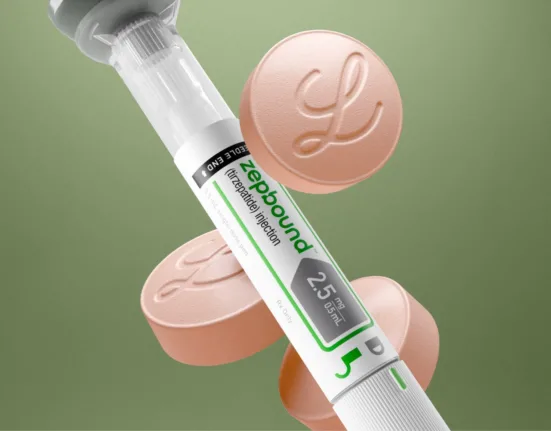
Eli Lilly already occupies a leading position in the obesity market through Zepbound, or tirzepatide. Retatrutide offers the company an opportunity to defend and potentially expand that franchise as competing pharmaceutical companies advance next-generation incretin and non-incretin therapies.
The commercial logic increasingly extends beyond weight loss itself. Obesity is associated with cardiovascular disease, obstructive sleep apnoea, metabolic dysfunction, musculoskeletal disease and numerous other complications. Demonstrating benefits across those conditions can strengthen payer arguments, expand eligible populations and differentiate medicines whose headline weight-loss percentages may otherwise become increasingly similar.
Knee osteoarthritis is particularly relevant because of its enormous disease burden and close association with obesity. A therapy capable of producing large weight loss while meaningfully reducing pain could appeal to clinicians managing patients for whom obesity is directly aggravating mobility and function.
Retatrutide remains investigational, however. Positive Phase 3 data do not represent regulatory approval, and TRIUMPH-4 alone does not establish a marketed indication for knee osteoarthritis or obesity.
Lilly will need the complete Phase 3 programme, an acceptable long-term safety profile and regulatory review before retatrutide can become a commercial competitor to currently approved obesity medicines.
What should clinicians and investors watch next in the retatrutide programme?
The biggest question is whether the extraordinary metabolic efficacy seen across retatrutide studies remains consistent when the full Phase 3 programme is assembled. TRIUMPH-4 adds compelling evidence in obesity complicated by knee osteoarthritis, while other studies are examining broader obesity populations and additional weight-related conditions.
The detailed TRIUMPH-4 presentation also makes dose selection increasingly important. More weight loss was not accompanied by greater pain improvement at 12 mg, while some adverse events and discontinuations became more common. That balance may influence how Lilly positions maintenance doses if retatrutide ultimately reaches regulatory review.
A peer-reviewed full publication of TRIUMPH-4 will provide another important evidence step. The ACR presentation offers substantially more detail than the original topline disclosure, but clinicians will still want complete analyses of missing data, treatment adherence, adverse events, rescue medication, functional outcomes and potentially the relationship between the magnitude of weight loss and improvement in pain.
For Eli Lilly investors, retatrutide remains one of the company’s most important pipeline assets. The shares closed at US$1,354 on 6 November, after reaching a 52-week high of US$1,453 during the preceding session. Despite retreating late in the week, the stock remained roughly 15% higher over the preceding month and around 40% above its level a year earlier, reflecting expectations extending far beyond any single clinical study.
TRIUMPH-4 helps explain why those expectations remain high. Retatrutide is increasingly being tested not simply as another obesity medicine, but as a platform capable of changing outcomes across diseases amplified by excess weight.
The osteoarthritis results provide a strong signal that large-scale weight reduction can translate into meaningful improvement in pain and function. The more consequential test now is whether those improvements prove durable, clinically valuable enough to change treatment pathways and economically meaningful enough to persuade payers that next-generation obesity therapy should be judged by more than kilograms lost.