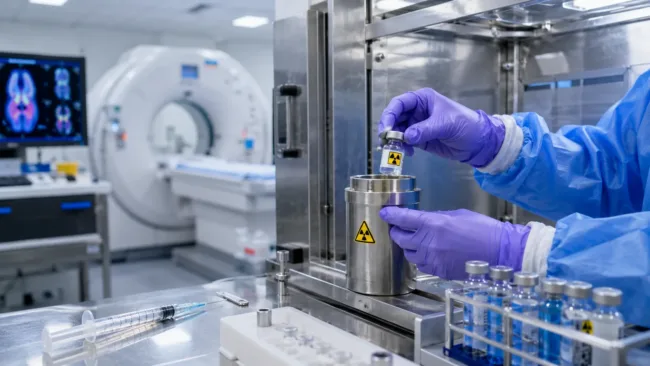
TAG1 Inc. has announced a collaboration with the Molecular Cancer Imaging Facility at Dana-Farber Cancer Institute aimed at advancing the development of targeted alpha therapies by expanding access to the radioisotope Lead-212. The St. Louis-based isotope supplier will provide Lead-212 through its proprietary generator technology to support preclinical and translational radiopharmaceutical research at the Boston-based cancer center.
The announcement reflects a growing recognition across the oncology industry that isotope availability is becoming one of the most critical enabling factors for the next generation of radiopharmaceutical therapies. Targeted alpha therapies, which use high-energy alpha particles to destroy cancer cells with minimal damage to surrounding tissue, are attracting increasing attention as pharmaceutical companies and academic researchers look beyond traditional beta-emitting radiotherapies.
Why isotope supply is emerging as the key bottleneck in targeted alpha therapy development
The scientific promise of targeted alpha therapy has been evident for years, but the ability to translate that promise into clinical pipelines has often been constrained by access to suitable isotopes. Unlike widely used diagnostic radionuclides, alpha-emitting isotopes are difficult to produce and distribute at scale. Lead-212, a short-lived alpha-emitting radionuclide used in several experimental cancer therapies, illustrates this challenge.
Industry observers note that the supply of alpha-emitting isotopes has historically lagged behind the surge of research interest in targeted radiopharmaceuticals. Many early programs have struggled to secure reliable isotope sources for preclinical experiments, let alone clinical trials. In this context, TAG1 Inc.’s effort to expand Lead-212 availability through a portable generator platform represents an attempt to address a structural constraint in the radiopharmaceutical development ecosystem.
By partnering with a leading cancer research institution such as Dana-Farber Cancer Institute, the isotope supplier is positioning its technology within a scientific environment that can rapidly translate early discoveries into experimental models and eventually clinical programs. The Molecular Cancer Imaging Facility at Dana-Farber has long served as a specialized research hub supporting radiochemistry optimization and imaging-based drug development, making it a natural partner for isotope-driven therapeutic research.
What this collaboration reveals about the evolving radiopharmaceutical innovation model
The collaboration between TAG1 Inc. and Dana-Farber Cancer Institute reflects a broader shift in how radiopharmaceutical innovation is organized. Historically, many nuclear medicine therapies were developed through vertically integrated pharmaceutical programs in which isotope production, radiochemistry, and clinical development were tightly controlled within a single organization.
More recently, however, the radiopharmaceutical field has begun to resemble a distributed ecosystem involving isotope producers, radiochemistry specialists, academic cancer centers, and biotechnology companies. In this emerging model, isotope availability platforms serve as foundational infrastructure enabling multiple downstream therapy programs.
Industry observers tracking the field note that the commercialization of targeted alpha therapies may depend as much on isotope supply chain innovation as on drug discovery itself. Without reliable access to isotopes such as Lead-212, Actinium-225, or Astatine-211, even promising therapeutic concepts may struggle to advance into human studies.
The collaboration therefore reflects an attempt to create a research platform rather than simply support a single therapy program. By enabling Dana-Farber researchers and external collaborators to experiment with Lead-212-based compounds, the partnership could help seed multiple radiopharmaceutical development pathways simultaneously.
What Lead-212 brings to the targeted alpha therapy landscape
Lead-212 occupies a unique position within the alpha-therapy isotope landscape. With a half-life of approximately 10.6 hours, the isotope provides a balance between therapeutic potency and practical logistics. This half-life allows sufficient time for radiopharmaceutical preparation and administration while still delivering potent alpha radiation capable of damaging cancer cells at very short distances.
Clinicians following the field believe this balance makes Lead-212 particularly attractive for targeted therapies designed to bind tumor-specific antigens. Once delivered to a cancer cell, the emitted alpha particles can induce double-strand DNA breaks, a type of damage that cancer cells often struggle to repair.
Compared with beta-emitting isotopes commonly used in radiopharmaceutical therapies, alpha emitters deliver significantly higher energy over much shorter distances. This property reduces the likelihood of damaging nearby healthy tissue while intensifying the destructive impact within the tumor microenvironment.
However, the same short half-life that makes Lead-212 therapeutically attractive also complicates its distribution. Traditional production and logistics models often struggle to deliver the isotope quickly enough to research centers. Generator-based approaches attempt to address this limitation by allowing on-site production, reducing dependence on centralized isotope facilities.
What clinicians and researchers may watch as the collaboration evolves
Although the partnership announcement focuses on research collaboration, its implications may extend far beyond academic experimentation. If the TAG1 generator platform proves capable of reliably producing Lead-212 in research settings, it could create a pathway toward broader clinical adoption.
Regulatory watchers suggest that isotope supply infrastructure may eventually become a key consideration for the approval and commercialization of targeted alpha therapies. Drug developers may need to demonstrate not only clinical efficacy but also reliable isotope manufacturing and distribution pathways.
In practical terms, this means that collaborations between isotope suppliers and research institutions could help establish early proof points regarding supply reliability, radiochemistry workflows, and translational feasibility. Data generated through the Dana-Farber collaboration may ultimately inform future clinical trial programs involving Lead-212-based therapies.
Another issue clinicians and researchers will likely monitor is how efficiently early-stage compounds move through the discovery pipeline. The Molecular Cancer Imaging Facility’s role in translating radiochemistry concepts into in vivo models may allow researchers to evaluate candidate therapies more quickly than traditional drug discovery processes.
What risks and uncertainties remain in the targeted alpha therapy field
Despite growing enthusiasm around targeted alpha therapy, the field remains at an early stage. Several challenges could limit the pace at which these therapies reach widespread clinical use.
One persistent uncertainty involves manufacturing scalability. Even if generator technologies expand research access to isotopes, producing sufficient quantities for large clinical trials and eventual commercial distribution may prove more complex. Scaling isotope production while maintaining quality and regulatory compliance represents a significant technical and logistical challenge.
Another open question involves clinical differentiation. While alpha-particle therapies are biologically potent, demonstrating clear advantages over existing radiopharmaceutical treatments will require carefully designed clinical trials. Endpoints such as progression-free survival, overall survival, and safety profiles will ultimately determine whether targeted alpha therapies become a mainstream oncology modality.
Reimbursement dynamics also remain uncertain. Radiopharmaceutical treatments often involve complex manufacturing and administration processes, which can create challenges in healthcare reimbursement systems. Payers may require strong clinical evidence demonstrating meaningful patient benefit before covering these therapies at scale.
What this development suggests about the future direction of nuclear medicine oncology
The TAG1 Inc. collaboration with Dana-Farber Cancer Institute illustrates how nuclear medicine oncology is evolving into a multidisciplinary field combining isotope production, radiochemistry, imaging science, and targeted drug development.
Industry observers note that the success of targeted alpha therapies will likely depend on how effectively these different capabilities are integrated. Partnerships linking isotope technology providers with research institutions and biotechnology developers may therefore become increasingly common.
If such collaborations succeed in expanding isotope access and accelerating experimental research, they could help establish targeted alpha therapy as one of the most important emerging modalities in oncology treatment. The current partnership represents an early step toward building the infrastructure required for that future.
For now, the collaboration underscores a key reality of the radiopharmaceutical sector. Scientific breakthroughs in cancer therapy often depend not only on molecular innovation but also on the practical ability to manufacture and deliver the radioactive building blocks that make those therapies possible.