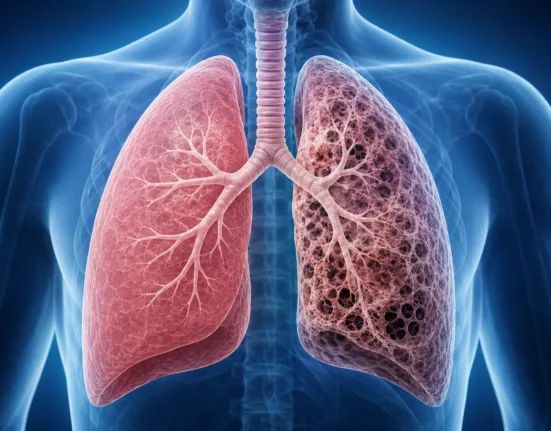
Calluna Pharma AS has completed enrollment in the global Phase 2 AURORA study of CAL101 in idiopathic pulmonary fibrosis, bringing 161 patients into the trial more than six months ahead of schedule. The monoclonal antibody targets S100A4, an upstream protein linked to fibrotic signaling, with topline data now expected in the first quarter of 2027.
Why early AURORA enrollment raises the stakes for CAL101 in idiopathic pulmonary fibrosis
That timeline matters because idiopathic pulmonary fibrosis remains one of the most difficult fibrotic diseases to treat meaningfully, even after years of commercial and clinical activity in the field. Current standard therapies can slow decline, but they do not reverse disease, and their tolerability profile has limited how transformative they can be in routine care. Against that backdrop, any mid-stage program that reaches full enrollment early starts to attract more serious attention, not because it is proven, but because it has moved beyond preclinical promise and into the stage where trial design, endpoint selection, and operational execution begin to separate aspirational science from investable development.
Why Calluna Pharma’s upstream S100A4 strategy could differentiate CAL101 from existing fibrosis programs
What makes CAL101 strategically interesting is not just that it is another anti-fibrotic candidate, but that Calluna Pharma is trying to intervene further upstream than many established or emerging competitors. The drug targets S100A4, a damage-associated molecular pattern protein that appears to sit earlier in the cascade of fibroblast activation and pro-fibrotic immune signaling. If that mechanism translates in humans the way Calluna Pharma hopes, CAL101 could in theory affect multiple downstream pathways rather than modulating a narrower piece of the fibrotic machinery. That is the upside case. The obvious risk is that upstream biology, while elegant on paper, can also become harder to control clinically, especially when complex inflammatory and tissue-repair pathways behave differently in patients than in preclinical models.
Why forced vital capacity remains the decisive test for CAL101 despite a promising mechanism
The AURORA trial itself looks conventional in structure, which is not a weakness in this setting. It is randomized, double-blind, and placebo-controlled, with forced vital capacity change from baseline as the primary endpoint. In idiopathic pulmonary fibrosis, lung function decline remains one of the most accepted ways to evaluate whether a therapy is doing more than generating biomarker noise. That gives the study practical relevance for clinicians and regulators alike. At the same time, forced vital capacity is a demanding endpoint, and it can expose the gap between mechanistic enthusiasm and measurable disease modification. A strong biological theory will not matter much if the magnitude of benefit is modest, inconsistent across subgroups, or difficult to distinguish from background variability over a six-month treatment period.
What rapid global patient recruitment reveals about execution strength, and what it still does not prove
The enrollment milestone also says something about trial execution, not just scientific ambition. Recruiting 161 adults with idiopathic pulmonary fibrosis across more than 50 sites in the United States, United Kingdom, European Union, Turkey, and South Korea more than six months ahead of plan suggests Calluna Pharma and its investigators were able to activate sites efficiently and identify eligible patients in a competitive environment. That is not trivial in pulmonary fibrosis, where trial participation can be affected by disease severity, comorbidities, background therapy, and the practical burden of repeated visits and infusions. Fast enrollment does not predict efficacy, but it does reduce one important development risk, namely that operational drag delays value inflection points and weakens investor confidence before the data even arrive.
Why early enrollment should not be mistaken for proof that CAL101 will succeed in Phase 2
Still, early enrollment should not be overinterpreted as a proxy for clinical strength. It can reflect good site selection, broad investigator engagement, or strong patient interest in new options, but none of those guarantee that CAL101 will outperform placebo on lung function. In fact, once a program reaches this stage, the questions become narrower and more unforgiving. Is the effect size clinically meaningful rather than merely statistically directional? Does the safety profile remain manageable over repeated monthly intravenous dosing? Can the antibody demonstrate a signal that looks durable enough to justify late-stage investment in a disease area where long-term preservation of lung function is the real commercial and medical prize?
How monthly intravenous dosing could shape CAL101’s eventual commercial positioning in IPF
The fact that CAL101 is being delivered through monthly intravenous infusions adds another layer to the commercial picture. In idiopathic pulmonary fibrosis, route and frequency of administration do not automatically disqualify a therapy, particularly if efficacy is compelling. However, convenience and treatment burden will matter if Calluna Pharma eventually needs to compete for use earlier in the disease course or alongside existing anti-fibrotic drugs. Physicians may tolerate infusion complexity if the benefit is clearly superior, if tolerability is improved, or if the therapy is positioned for patients who cannot stay on currently available drugs. But if efficacy ends up looking incremental, the burden of monthly infusion visits could become a commercial friction point rather than a manageable tradeoff.
Why the competitive fibrosis landscape leaves little room for merely incremental benefit
That is where the broader competitive context becomes important. Idiopathic pulmonary fibrosis has long been a field where clinical need remains high despite the existence of approved therapies. The bar for new entrants is no longer simply to show biological activity. The bar is increasingly to show that a new treatment can either preserve lung function better, fit more cleanly into combination use, or offer a tolerability or disease-modifying advantage that changes physician behavior. CAL101 is entering that conversation with a differentiated mechanism, which helps. Yet differentiated biology alone does not guarantee differentiated positioning, especially in a market where development-stage competitors are also trying to reframe fibrosis around immune signaling, epithelial injury, and tissue remodeling rather than purely downstream scar suppression.
What the Phase 1 package supports for CAL101, and what only AURORA can answer next
The Phase 1 backdrop offers some support, but only within limits. Calluna Pharma has said that a randomized Phase 1 study showed a favorable safety profile, predictable pharmacokinetics, and pharmacodynamic effects consistent with extracellular S100A4 neutralization. That is the kind of early package investors want to see before a Phase 2 readout, because it indicates that the antibody behaved as intended and did not reveal obvious early red flags. Even so, Phase 1 data in fibrosis programs are mainly useful for de-risking exposure and target engagement. They rarely answer the harder question of whether a mechanistically attractive drug can alter a relentlessly progressive disease in a clinically meaningful way. That question remains squarely in front of AURORA.
Why the size and severity of the IPF market keep attracting new therapeutic bets despite repeated setbacks
The patient population size also deserves attention. Calluna Pharma cites idiopathic pulmonary fibrosis as affecting roughly 233,000 people in the United States and European Union, with median survival typically only three to five years. That epidemiology underlines why the field still attracts drug developers despite repeated setbacks and mixed late-stage histories. This is a severe, fatal disease with substantial unmet need and room for therapeutic improvement. But those same characteristics make study interpretation more delicate. In progressive diseases with variable trajectories, topline data can look superficially positive or negative depending on how baseline characteristics, concomitant therapy use, and discontinuation patterns influence the endpoint. Observers will likely watch closely not just for the headline forced vital capacity result, but for consistency across safety, treatment adherence, and any exploratory markers that help explain whether the biology is truly modifying disease activity.
How Calluna Pharma may be positioning CAL101 beyond pulmonary fibrosis, and why proof in IPF comes first
Another important angle is platform expansion. Calluna Pharma is already framing CAL101 not only as a pulmonary fibrosis asset, but as a candidate with possible relevance across broader inflammatory or fibrotic diseases. From a portfolio standpoint, that is sensible. If S100A4 proves to be a meaningful upstream amplifier of maladaptive tissue repair, the commercial opportunity could extend beyond one lung indication. But this is also where biotech messaging can get ahead of the evidence. Cross-indication potential is attractive only after one core indication shows convincing proof of concept. Until then, platform optionality should be viewed as a strategic possibility rather than a valuation certainty.
What regulators and industry watchers are likely to focus on as CAL101 moves toward its 2027 readout
Regulatory watchers are also likely to focus on what sort of Phase 2 package AURORA ultimately produces. A clean study with a meaningful signal on forced vital capacity, acceptable safety, and supportive secondary outcomes could position Calluna Pharma for late-stage discussions with a much stronger hand. A more mixed readout could still preserve the asset, but it would likely shift the conversation toward subgroup selection, study redesign, combination strategies, or biomarker-guided development. In other words, the difference between a strong Phase 2 and a merely interesting one can be the difference between a credible pivotal path and an extended period of development ambiguity.
Why Calluna Pharma’s next real value inflection now depends entirely on the AURORA topline data
For now, the market takeaway is less about triumph and more about transition. Calluna Pharma has moved CAL101 out of the early uncertainty that surrounds many novel fibrosis mechanisms and into the far more consequential zone where execution gives way to evidence. The company now has a defined catalyst in the first quarter of 2027, a completed mid-stage enrollment milestone, and a mechanistic story that is differentiated enough to draw attention. But until the lung function data arrive, the central investment question remains unresolved: whether targeting S100A4 can convert a scientifically appealing upstream fibrosis thesis into a clinically persuasive result in one of respiratory medicine’s hardest proving grounds.