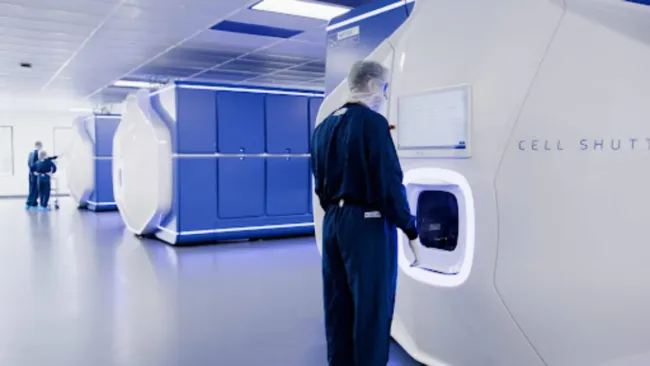
Terumo Blood and Cell Technologies, also known as Terumo BCT, and Steminent Biotherapeutics have entered a strategic collaboration to accelerate late-stage clinical manufacturing readiness for mesenchymal stem cell therapies. The collaboration will focus on automated cell expansion using Terumo BCT’s Quantum Flex Automated Cell Expansion System to support Steminent’s adipose-derived mesenchymal stem cell program as it moves toward late-stage trials, regulatory filings, and potential commercial manufacturing.
Why Terumo BCT and Steminent are focusing on the manufacturing problem behind MSC therapies
The Terumo BCT and Steminent Biotherapeutics collaboration is less about adding another headline to the crowded regenerative medicine pipeline and more about addressing the problem that has repeatedly slowed the field after early clinical promise. Mesenchymal stem cell therapies have long attracted interest because of their potential immunomodulatory, anti-inflammatory, and tissue-supportive effects, but the path from promising biology to approved, reproducible, commercially viable therapy has been uneven. For MSC developers, late-stage success depends not only on whether cells appear clinically useful, but also on whether the product can be manufactured consistently across batches, sites, regions, and regulatory systems.
That is why this collaboration matters. Steminent Biotherapeutics is not simply seeking capacity. It is trying to strengthen the production foundation around an MSC therapy platform that has already moved beyond exploratory science. The confirmed development is the integration of Terumo BCT’s automated cell expansion technology into Steminent’s manufacturing process development and optimization work. The commercial context is that allogeneic MSC therapies require repeatable expansion, characterization, documentation, and release testing if they are to satisfy regulators and payers. The unresolved question is whether automation alone can solve the deeper challenges of MSC variability, potency definition, clinical endpoint durability, and global regulatory alignment.
For Terumo Blood and Cell Technologies, the partnership reinforces its ambition to be a manufacturing enabler for cell and gene therapy developers in Asia-Pacific and beyond. The medical technology manufacturer already has a broader cell therapy automation narrative built around collection, expansion, processing, formulation, and closed-system manufacturing. The Steminent agreement gives that narrative a late-stage MSC use case, where automation is not a nice-to-have efficiency tool but potentially a condition for credible commercial translation. However, the collaboration still has to demonstrate that the optimized workflow can preserve critical quality attributes while reducing the operator dependence that has historically made manual cell culture difficult to scale.
How automated cell expansion could change the economics of MSC therapy production
The core manufacturing challenge in MSC therapy is that the product is alive, biologically variable, and sensitive to process conditions. A conventional small-scale culture workflow can support early clinical development, but it often becomes a liability when a developer has to supply larger trials or prepare for commercial production. Manual handling increases variability, creates documentation burdens, raises contamination risk, and makes production harder to reproduce across facilities. Automated cell expansion is designed to reduce those weak points by controlling the cell culture environment, media exchange, waste removal, gas exchange, and process monitoring more consistently.
Terumo BCT’s Quantum Flex Automated Cell Expansion System is relevant because MSCs are adherent cells, meaning they attach to surfaces during culture. Hollow-fiber bioreactor systems can create a large surface area inside a compact, closed environment, which is attractive for developers that need to expand cells without multiplying manual flask-based operations. The commercial significance is straightforward. If Steminent Biotherapeutics can shift more of its process into a controlled automated system, it could improve batch-to-batch consistency, reduce manual process burden, and prepare a more defensible chemistry, manufacturing, and controls package for regulators.
The risk is that cell therapy scale-up is rarely a plug-and-play conversion. MSCs can be affected by donor source, passage number, media conditions, harvest timing, cryopreservation, and potency assay design. A system that improves process efficiency still has to show that the cells produced under the new workflow remain comparable to those used in earlier clinical studies. For Steminent, this means the collaboration must bridge process optimization with clinical continuity. Any meaningful manufacturing change near late-stage development can trigger regulatory scrutiny if it affects identity, purity, viability, potency, or product comparability.
Why Steminent’s MSC program puts manufacturing readiness under a brighter spotlight
Steminent Biotherapeutics’ lead MSC strategy is closely associated with Stemchymal, an allogeneic adipose-derived mesenchymal stem cell therapy being developed for spinocerebellar ataxia. The clinical context is important because spinocerebellar ataxia is a rare neurodegenerative disorder with limited disease-modifying treatment options, and any therapy positioned for this space has to demonstrate not only biological plausibility but also measurable clinical benefit in a slowly progressive disease. The company’s prior Phase 2 activity in Taiwan and Japan has helped move the program beyond speculative early-stage regenerative medicine, but global expansion increases the manufacturing burden.
This is where the Terumo BCT collaboration becomes strategically useful. A therapy aimed at late-stage trials and eventual multi-region commercialization cannot rely indefinitely on artisanal manufacturing. Regulators in the United States, Japan, Taiwan, and other markets are likely to focus on whether the production process can be controlled, validated, documented, and repeated. For an allogeneic MSC product, that scrutiny extends to donor material, expansion conditions, release specifications, stability, and the relationship between potency assays and clinical effect. Manufacturing is therefore not a back-office issue. It is part of the clinical credibility of the therapy.
The limitation is that stronger manufacturing readiness does not automatically de-risk clinical efficacy. MSC therapies have a mixed global record, with relatively few approvals compared with the number of clinical trials conducted. Some products have reached markets in Asia and other regions, but broader adoption has remained limited. The field still faces questions about mechanism of action, durable benefit, patient selection, dose response, and endpoint sensitivity. Steminent’s manufacturing collaboration may improve the probability of operational readiness, but clinicians and regulators will still ask whether the therapy produces a convincing, reproducible clinical effect.
What the collaboration reveals about the maturing MSC therapy market
The Terumo BCT and Steminent collaboration reflects a broader shift in regenerative medicine from discovery enthusiasm to industrial discipline. In the early years of MSC development, much of the attention centered on what these cells might treat. The next phase is more practical and arguably less forgiving. Developers now have to show that MSC therapies can be manufactured like regulated biological products, not handled like research-grade cellular preparations. That means closed systems, automation, quality-by-design thinking, comparability strategies, and scalable documentation are becoming central to competitive positioning.
For Asia-Pacific cell therapy developers, this shift is especially important. The region has produced several MSC approvals and remains an active base for regenerative medicine development, but international commercialization requires alignment with more demanding regulatory expectations. Terumo BCT’s APAC-focused manufacturing strategy fits into that gap. The confirmed collaboration with Steminent supports process development, technology transfer, and optimization. The broader commercial context is that regional innovators need manufacturing platforms that can travel across borders. The risk is that regional regulatory acceptance does not always translate into global acceptance, especially if pivotal evidence packages differ across jurisdictions.
Industry observers are likely to view the partnership as a sign that MSC companies are preparing earlier for the manufacturing questions that can otherwise surface too late. That is a healthy development for the field. However, it also highlights a competitive divide. Developers with access to automated, scalable, well-documented manufacturing infrastructure may be better positioned for late-stage trials and licensing discussions. Smaller regenerative medicine firms that remain dependent on manual workflows could find it harder to attract global partners, even with promising early clinical signals.
How regulators may view automated MSC manufacturing in late-stage development
Regulatory agencies are unlikely to reward automation simply because it sounds modern. They will want evidence that the automated process improves or preserves control over the product. For Steminent Biotherapeutics, this means the Terumo BCT collaboration has to produce more than an efficient workflow. It has to support a manufacturing story that connects process parameters to product quality and, ultimately, to clinical performance. In cell therapy, that connection is often harder to establish than in conventional biologics because the active product is complex and not fully reducible to a single molecular marker.
The confirmed collaboration includes process development and transfer elements, which suggests that Steminent is preparing for more advanced regulatory and commercial expectations. That matters because late-stage MSC programs must often justify how manufacturing changes affect previously generated clinical data. If an optimized automated process becomes part of a future pivotal or commercial strategy, regulators may ask whether the product remains comparable to earlier clinical material. This could require analytical bridging, additional validation runs, and possibly clinical or nonclinical evidence depending on the extent of process change.
The unresolved question is timing. If manufacturing optimization occurs early enough, it can strengthen the late-stage package. If it occurs too close to registrational development or after key clinical data are generated, it can create additional comparability burden. That is the quiet but important calculus behind the Terumo BCT and Steminent partnership. It may help Steminent avoid a familiar cell therapy trap, where clinical momentum outpaces manufacturing maturity and the program has to slow down later to fix the industrial base.
Why MSC therapies still face adoption barriers even after manufacturing improves
Even if Terumo BCT and Steminent Biotherapeutics succeed in improving cell expansion consistency, MSC therapy adoption will still depend on clinical confidence, reimbursement logic, and physician workflow fit. Spinocerebellar ataxia and other neurodegenerative indications create a demanding clinical environment because progression can be variable, endpoints can be difficult to interpret, and treatment expectations must be carefully managed. A therapy that slows deterioration may be meaningful, but regulators and payers will want to see that benefit measured clearly and sustained over a clinically relevant period.
Manufacturing automation can support cost control and supply reliability, but it does not guarantee affordability. Allogeneic MSC therapies may have more scalable economics than autologous, patient-specific therapies, yet they still involve donor sourcing, controlled expansion, testing, storage, distribution, and cold chain considerations. For rare disease indications, the addressable patient population may be limited, which can increase pricing pressure. For broader indications, developers face a different problem: much larger supply requirements and potentially tougher payer scrutiny.
There is also a reputational burden in the stem cell field. Regulators, clinicians, and patient groups remain alert to the distinction between rigorously developed cell therapies and unapproved stem cell interventions marketed outside evidence-based pathways. That background makes credible manufacturing, controlled trials, and transparent regulatory engagement especially important. Steminent’s move toward automated late-stage manufacturing may help separate its program from the less disciplined end of the regenerative medicine market, but the clinical evidence still has to carry the final argument.
What clinicians and industry watchers will monitor next
The next meaningful signals will not come from the collaboration announcement itself, but from execution. Clinicians will look for evidence that Steminent’s MSC therapy can deliver clinically meaningful outcomes in spinocerebellar ataxia or related target populations. Regulatory watchers will focus on whether the manufacturing process is sufficiently controlled to support late-stage trials and filings across multiple regions. Industry observers will watch whether Terumo BCT’s Quantum Flex platform becomes a preferred automation route for other MSC developers that face similar scale-up challenges.
For Terumo Blood and Cell Technologies, the collaboration strengthens its position in the cell therapy manufacturing supply chain at a time when developers are under pressure to reduce manual steps and improve process reproducibility. For Steminent Biotherapeutics, the agreement could improve readiness for the next development phase and support a more credible commercial manufacturing plan. The strategic value lies in bringing manufacturing discipline closer to clinical ambition.
The central question is whether this kind of automation can help MSC therapies cross the difficult boundary between promising late-stage programs and durable commercial products. The Terumo BCT and Steminent collaboration does not answer that question yet. It does, however, show that the field is increasingly treating manufacturing as a decisive development variable rather than a technical afterthought. In regenerative medicine, that may be the difference between an interesting clinical program and a therapy platform capable of surviving regulatory, commercial, and real-world pressure.