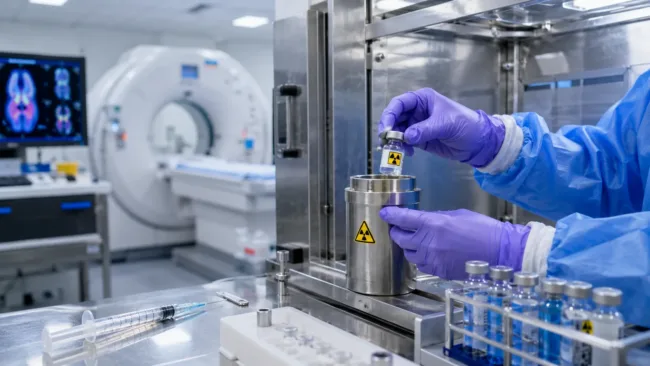
Ranok Therapeutics has reported published Phase 1a clinical results for RNK08954, an investigational oral small-molecule inhibitor targeting KRAS G12D mutations in patients with advanced solid tumours. The early dataset showed clinical activity across KRAS G12D-mutated cancers, including a stronger signal in non-small cell lung cancer, placing the drug candidate into one of precision oncology’s most competitive and closely watched development races.
Why does RNK08954 matter in the KRAS G12D cancer treatment race?
RNK08954 matters because KRAS G12D has become one of the most important unresolved targets in solid tumour oncology. KRAS mutations are common in pancreatic ductal adenocarcinoma, colorectal cancer and non-small cell lung cancer, but the field’s first major wave of targeted KRAS success centred on KRAS G12C. KRAS G12D has remained more difficult because the mutation’s structural biology and drug-binding behaviour create a different discovery challenge.
That makes Ranok Therapeutics’ early clinical signal more meaningful than a routine Phase 1 update. The company is not simply testing another broad targeted cancer agent. It is trying to validate an oral inhibitor against a KRAS mutation that is highly relevant in some of the hardest-to-treat solid tumours, especially pancreatic cancer. A credible KRAS G12D therapy could create a new precision oncology segment if efficacy, safety and patient selection are confirmed in larger trials.

The caution is that the field is still early. Phase 1a studies are designed primarily to evaluate safety, tolerability and dose selection, not to prove definitive clinical benefit. Response rates in small cohorts can shift substantially as patient numbers grow and as trials move into more controlled expansion settings. RNK08954 has generated a signal worth watching, but it has not yet resolved whether KRAS G12D can be targeted reliably across tumour types.
What does the Phase 1a response signal suggest and where are the limits?
The Phase 1a study evaluated RNK08954 in patients with KRAS G12D-mutated advanced solid tumours, with 36 patients evaluable for clinical activity. The reported overall objective response rate was 28%, while the disease control rate reached 86%. The non-small cell lung cancer cohort appeared especially notable, with a 58.33% objective response rate and 100% disease control rate.
Those numbers are likely to attract attention because early KRAS programmes are often judged by whether they can show more than pathway inhibition in laboratory models. A response signal in patients suggests that RNK08954 is reaching the target and producing measurable anticancer activity. The non-small cell lung cancer result is particularly interesting because lung cancer is a clinically familiar testing ground for targeted therapies, and oncologists have become accustomed to mutation-driven treatment decisions.
However, the dataset must be interpreted with discipline. The total evaluable population was small, tumour-specific cohorts were smaller, and Phase 1 trials often include heavily pretreated patients with varied prior therapies. A high response rate in one subgroup may reflect real drug activity, but it may also be influenced by patient selection, disease biology or sample size. The next challenge is to show that the signal remains consistent in larger Phase 1b and Phase 2 expansion cohorts.
Why is KRAS G12D especially important in pancreatic cancer and other solid tumours?
KRAS G12D is especially important because of its prevalence in pancreatic ductal adenocarcinoma, one of the most lethal solid tumours and one of the most resistant to conventional treatment progress. Pancreatic cancer has long lacked the kind of biomarker-driven therapeutic revolution seen in EGFR-mutated lung cancer, ALK-positive lung cancer or HER2-driven breast cancer. A druggable KRAS G12D pathway would therefore represent a major scientific and commercial opening.
The relevance extends beyond pancreatic cancer. KRAS G12D mutations also appear in colorectal cancer and non-small cell lung cancer, creating a multi-tumour opportunity if a drug can show activity across disease settings. That is why early basket-style clinical exploration can be useful. It allows developers to identify tumour types where the biology is most responsive and where expansion studies may be most efficient.
The unresolved question is whether one KRAS G12D inhibitor can behave similarly across tumour contexts. Pancreatic cancer, colorectal cancer and lung cancer have different microenvironments, co-mutation patterns, treatment histories and resistance mechanisms. A drug may show strong activity in one tumour type but weaker effects in another. Ranok Therapeutics will need to build a development strategy that reflects tumour-specific biology rather than assuming KRAS G12D behaves uniformly across cancers.
How differentiated is RNK08954 in a rapidly crowded KRAS inhibitor field?
RNK08954 is positioned as a highly selective oral small-molecule inhibitor of KRAS G12D, designed to bind directly to the Switch II pocket of the KRAS G12D protein. That design goal places the therapy in the same broader innovation wave that turned KRAS from a historically difficult target into a drug-development priority. The field is now moving beyond KRAS G12C and toward broader allele-specific and pan-KRAS strategies.
The strategic challenge is competition. KRAS G12D has attracted intense interest from biotechnology and pharmaceutical developers because the commercial opportunity is large and the unmet need is obvious. Ranok Therapeutics will need to show that RNK08954 is differentiated not only by early activity, but also by dose flexibility, safety, durability, combination potential and efficacy in the most commercially important tumour settings.
Differentiation may also depend on pharmacology. The company’s reported design emphasis around selective binding and downstream signalling blockade gives the programme a mechanistic rationale. But in oncology drug development, mechanistic rationale is only the opening argument. The decisive evidence will come from durable responses, progression-free survival, resistance patterns and whether the drug can be combined with chemotherapy, immunotherapy or other targeted agents without unacceptable toxicity.
Why does the safety profile matter for long-term KRAS G12D development?
Safety is central because KRAS G12D inhibitors may need to be used chronically, in combination regimens or in patients with significant disease burden. The reported Phase 1a tolerability profile for RNK08954 was described as generally manageable, with treatment-related adverse events mainly consisting of Grade 1 and Grade 2 gastrointestinal adverse events and decreased appetite. No dose-limiting toxicities were observed during dose escalation.
That profile is encouraging for early development because gastrointestinal tolerability can influence dosing continuity, quality of life and combination feasibility. In pancreatic cancer and other advanced gastrointestinal malignancies, patients may already have nutritional compromise, weight loss, treatment fatigue or digestive symptoms. A targeted therapy that worsens appetite or gastrointestinal function could face practical limitations even if anticancer activity is present.
The limitation is that Phase 1 safety findings can change as exposure broadens. Larger studies may reveal less common toxicities, cumulative adverse events or tumour-specific vulnerabilities. Safety also becomes more complex when drugs move into combinations. If RNK08954 is eventually paired with chemotherapy, immune checkpoint inhibitors or other pathway agents, tolerability will need to be reassessed rather than assumed from monotherapy escalation data.
Can RNK08954 move beyond early monotherapy signals into combination strategies?
Combination development is likely to become central for RNK08954, especially in pancreatic cancer and colorectal cancer. KRAS-driven tumours often adapt through bypass signalling, feedback loops and microenvironmental resistance. Monotherapy may produce responses in selected patients, but durable disease control may require rational combinations that suppress resistance pathways or enhance tumour vulnerability.
The opportunity is significant. An oral KRAS G12D inhibitor could potentially be combined with chemotherapy in pancreatic cancer, immune-based strategies in lung cancer, or pathway inhibitors in colorectal cancer. If RNK08954 has a clean enough safety profile, Ranok Therapeutics could explore these combinations without immediately overwhelming patients with toxicity. That would expand the drug’s clinical relevance beyond a single-agent niche.
The risk is that combinations can turn a promising early programme into a more complicated development maze. Each combination requires safety testing, dose optimization, regulatory logic and commercial justification. The wrong combination strategy can consume capital and time without producing a clear registration path. Ranok Therapeutics will need to choose combinations based on strong biology and practical clinical need, not simply the desire to broaden the programme.
What does the Phase 1b expansion mean for the drug’s development path?
The Phase 1b expansion study is the next real test because it should help clarify which tumour types offer the strongest signal and which dose strategy can support later development. Phase 1a establishes preliminary safety and activity. Phase 1b begins to answer whether those findings hold up in more focused patient groups.
For RNK08954, the expansion strategy across non-small cell lung cancer, pancreatic cancer and other KRAS G12D-mutated indications is logical. Lung cancer may offer a faster readout of targeted therapy activity because response assessment and molecular treatment pathways are well established. Pancreatic cancer may be the higher unmet-need opportunity, but it is also a tougher clinical proving ground. Colorectal cancer could require careful combination thinking because KRAS-targeted monotherapy responses may be limited by pathway feedback.
The key unresolved question is endpoint selection. Early response rate can support momentum, but later development will require more robust measures such as duration of response, progression-free survival, overall survival and patient-relevant benefit. Ranok Therapeutics will need to convert response signals into a coherent registrational path, especially if it wants RNK08954 to be viewed as more than an interesting early-stage KRAS asset.
How could RNK08954 affect the competitive landscape for KRAS-targeted oncology?
RNK08954 adds to a broader shift in precision oncology: KRAS is no longer treated as a single untouchable target. The field is now fragmenting into allele-specific strategies, tumour-specific strategies and combination-driven development. That fragmentation creates opportunities for smaller biotechnology companies, but it also raises the bar for differentiation.
For Ranok Therapeutics, the early non-small cell lung cancer signal may help the programme stand out because visible response in a molecularly defined lung cancer cohort is easier for clinicians and investors to interpret. However, the bigger commercial prize may lie in pancreatic ductal adenocarcinoma, where KRAS G12D is deeply relevant and therapeutic options remain limited. If RNK08954 can show meaningful activity in pancreatic cancer, the programme’s profile could change materially.
The competitive risk is that larger companies with deeper development resources may move rapidly. If rival KRAS G12D inhibitors show stronger durability, cleaner safety or more advanced clinical timelines, Ranok Therapeutics could face pressure to partner, accelerate or narrow its strategy. In targeted oncology, being scientifically credible is not enough. Speed, trial execution and strategic focus often determine which assets become clinically relevant.
Why should clinicians and industry observers still be cautious?
Clinicians should be cautious because early targeted therapy signals can look promising before resistance, heterogeneity and real-world tolerability become clear. KRAS-mutated tumours are biologically complex, and resistance can emerge through parallel pathways, secondary mutations or tumour microenvironment effects. A response in an early cohort does not guarantee durable benefit across broader populations.
Industry observers should also avoid treating KRAS G12D as a solved category. KRAS G12C drug development showed that target validation can still be followed by durability challenges, resistance questions and combination needs. KRAS G12D may follow a similar path, with early enthusiasm gradually refined by tumour-specific evidence and real-world use.
For Ranok Therapeutics, this means the next stages must do more than repeat headline response rates. The biotech firm will need to define who benefits most, how long responses last, what resistance looks like and how the drug can be used safely in the treatment sequence. That is the difference between a promising mechanism and a clinically durable oncology asset.
What should the market watch next as RNK08954 advances?
The most important next signals will be updated Phase 1b data by tumour type, duration of response, dose selection, safety at the recommended expansion dose and any early evidence in pancreatic ductal adenocarcinoma. The pancreatic cancer data will be especially important because that indication could define the programme’s most valuable clinical niche.
Regulatory watchers will also look for clarity on the U.S. development path. RNK08954 has investigational authorization for clinical study purposes, but it is not approved for commercial use. The path from early Phase 1 data to a pivotal programme will require stronger evidence, careful endpoint selection and likely tumour-specific development plans.
For now, RNK08954 gives Ranok Therapeutics a credible seat at the KRAS G12D table. The Phase 1a data suggest that the drug can produce measurable anticancer activity with an early tolerability profile that supports expansion. The harder question is whether that early signal can survive larger cohorts, tougher tumour settings and a crowded competitive field. If it does, RNK08954 could become part of the next major chapter in KRAS-targeted precision oncology.