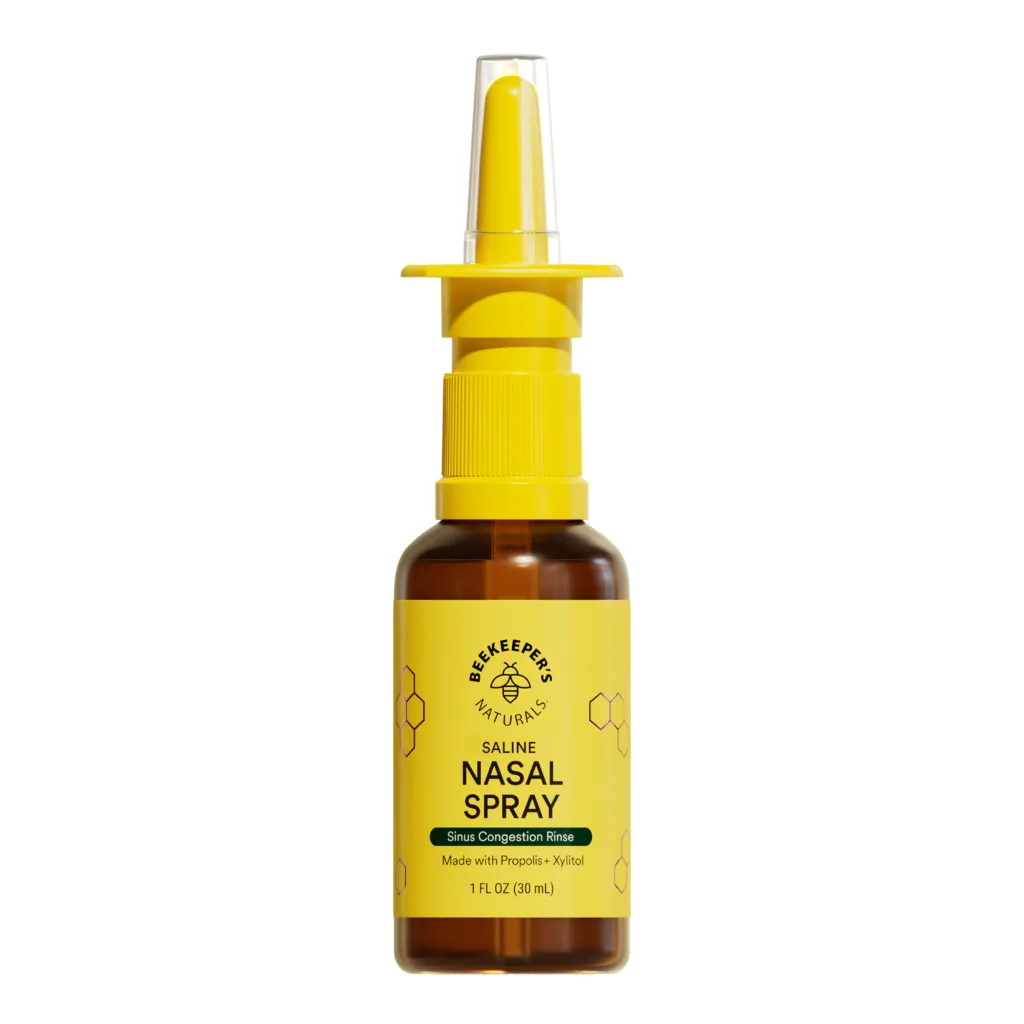
Beekeeper’s Naturals has issued a voluntary nationwide consumer-level recall of lot 5950 of Beekeeper’s Naturals Saline Nasal Spray after the Amazon-sold product tested above acceptable microbiological limits for yeast and may contain Aspergillus species. The recall affects a 1 fluid ounce saline nasal spray used as a sinus congestion rinse, placing the development at the intersection of over-the-counter drug safety, outsourced manufacturing oversight, e-commerce distribution and fungal contamination risk.
Why the Beekeeper’s Naturals recall raises bigger questions about OTC nasal spray quality controls
The most important industry signal is not the size of the recall, but the pathway by which an affected lot reached consumers before testing results were available. For over-the-counter healthcare products, especially those administered into the nasal cavity, quality-control systems are not just back-office compliance functions. They are the commercial foundation that allows wellness brands to compete in categories where consumers often assume that everyday products carry minimal medical risk.
This is why the Beekeeper’s Naturals recall matters beyond one product lot. Nasal sprays occupy a sensitive position in consumer health because they are applied directly to mucosal surfaces, are often used during respiratory discomfort, and may be purchased by people with underlying sinus, allergy or lung issues. Even when the exposed population is limited, microbial contamination in a nasal product carries a different risk profile from contamination in a lower-risk external-use product. The unresolved question is whether the issue represents an isolated release-control failure or a broader weakness in how fast-scaling consumer health brands manage manufacturing, testing and distribution handoffs.
The commercial context is also uncomfortable for the wider wellness sector. Many emerging health brands have grown through online-first channels, subscription models, social media visibility and marketplace access, rather than through traditional pharmacy-led credibility alone. That model can scale quickly, but it also compresses the margin for operational error. When a product sold through Amazon is recalled for possible fungal contamination, the story becomes less about one lot and more about whether digital distribution systems can match the discipline expected in regulated healthcare supply chains.
How Amazon-only distribution changes the recall calculus for healthcare brands
The Amazon-only sales channel creates a sharper but narrower recall dynamic. On one hand, the distribution footprint appears easier to trace than a broad retail rollout across pharmacies, supermarkets and independent stores. Direct purchaser notification through Amazon can potentially shorten the time between recall identification and consumer awareness, which is a meaningful advantage when affected units have already moved into homes.
However, marketplace recall execution still depends on data accuracy, customer engagement and consumer behaviour after notification. Healthcare products are not always used immediately after purchase. Some sit in medicine cabinets for weeks or months, which means the recall risk does not vanish once buyers are contacted. The unresolved limitation is whether all end users are actually the purchasers of record, since a nasal spray could be bought for another family member or shared within a household.
For Amazon and similar marketplaces, the recall also reinforces a growing reputational challenge. E-commerce has become a major route for over-the-counter and wellness products, but the convenience of digital purchasing can blur consumer assumptions about regulatory oversight, manufacturer accountability and platform responsibility. Industry observers are likely to watch whether online marketplaces face more pressure to create stronger product safety visibility, especially for health products that are regulated as drugs but marketed in a consumer-friendly wellness format.
What the Aspergillus contamination risk reveals about vulnerable-user exposure
The clinical concern attached to possible Aspergillus contamination is not evenly distributed across the population. Most healthy individuals encounter environmental molds without developing serious illness, but people with weakened immune systems or lung diseases can face more severe consequences from Aspergillus exposure. That risk differential is central to why microbial findings in nasal products are taken seriously, even when the number of sold units appears relatively modest.
For clinicians, the concern is not simply that a contaminated product could cause irritation. The more serious risk lies in the route of exposure and the profile of vulnerable users. A sinus rinse or nasal spray can be used by people already experiencing congestion, respiratory symptoms or chronic nasal irritation. In a subset of patients, especially those with compromised immune defences or underlying lung disease, contamination with fungal organisms can raise concern for infections that are clinically more difficult to manage.
The limitation is that recall announcements rarely provide enough information to judge the full clinical risk. A statement that a product may contain Aspergillus species does not necessarily identify the exact species, contamination level, viable organism burden, or conditions that allowed growth. Without those details, clinicians and industry observers can assess the warning signal, but not the complete hazard profile. That uncertainty is precisely why preventive quality systems matter more than post-release remediation in this product class.
Why third-party manufacturing oversight is the central operational issue now
The involvement of a third-party manufacturer shifts attention to supplier qualification, batch-release controls and accountability across the manufacturing chain. Outsourced manufacturing is common across consumer health, pharmaceuticals, dietary supplements and wellness products because it allows brands to scale without owning full production infrastructure. That model is efficient, but it demands rigorous oversight from the brand owner because regulatory and reputational responsibility does not disappear when production is outsourced.
The confirmed issue points to a product lot that was produced externally and later found to exceed acceptable microbiological limits. The most consequential operational detail is that the lot was shipped before testing results became available because of a clerical error. That type of failure raises uncomfortable questions about whether documentation systems, shipment holds, quality release gates and enterprise resource planning controls were sufficiently integrated.
For industry executives, this is the deeper lesson. Quality failures are often described through the language of contamination, but the root commercial damage frequently comes from process control failure. If a lot cannot be released until testing is complete, the system must make premature shipment difficult or impossible. A manual clerical step that can override the quality release process becomes a single point of failure, and that is a serious vulnerability for any brand selling regulated health products at scale.
What this recall changes for consumer trust in natural and wellness-positioned products
Beekeeper’s Naturals operates in a consumer environment where wellness branding, natural ingredients and accessible health claims often build strong emotional trust. That trust can be commercially powerful, but it can also become fragile when the affected product sits inside a regulated health category. Consumers may forgive cosmetic packaging issues or flavour inconsistencies more readily than contamination concerns involving a product used in the nose.
The wider implication is that wellness-positioned healthcare brands cannot rely on brand warmth as a substitute for pharmaceutical-grade discipline. Saline nasal products may appear simple compared with prescription medicines or advanced biologics, but simplicity at the consumer level does not eliminate the need for robust microbiological controls. If anything, the low-friction purchase journey can create a higher expectation that safety is already fully handled before the product reaches a buyer.
The risk for Beekeeper’s Naturals is reputational rather than merely transactional. The affected lot count may be limited, and no other Beekeeper’s Naturals products were identified as impacted in the recall announcement. However, trust damage can spread beyond the specific product if consumers begin questioning the broader quality culture behind the brand. For a wellness company, that is the part of a recall that cannot be solved only through refunds, notifications or replacement logistics.
Why regulators may watch release controls rather than the recall size alone
From a regulatory perspective, the small number of affected units does not automatically make the event insignificant. Regulators tend to examine not only the public health impact, but also the system failure that allowed a problematic lot to enter commerce. In this case, the key question is how a product could be shipped before microbiological testing results were available, and whether corrective actions are strong enough to prevent recurrence.
That distinction matters for industry observers because recall size and compliance seriousness are not always the same thing. A limited distribution window can contain exposure, but a weak release-control mechanism can reveal a broader compliance risk. For products regulated as drugs, even clerical errors can become meaningful if they show that quality decisions were not fully protected from commercial or logistical movement.
Regulatory watchers are likely to focus on whether Beekeeper’s Naturals and its manufacturing partner can document root-cause analysis, quarantine discipline, batch-release controls, personnel retraining and system-level safeguards. The unresolved question is whether corrective action will remain limited to this product lot or require broader review of quality workflows across other products handled by the same manufacturing or fulfilment processes.
How this compares with broader contamination concerns in nasal and respiratory products
The recall fits into a wider pattern of heightened sensitivity around contamination in nasal, ophthalmic and respiratory-adjacent consumer products. These categories can appear routine, but they involve routes of administration where microbial quality matters. Unlike tablets or capsules, sprays and rinses depend on formulation integrity, container controls, preservative strategy where applicable, manufacturing hygiene and post-fill stability.
The comparison with other consumer health recalls is instructive. Contamination events often expose a gap between how consumers perceive over-the-counter products and how regulators evaluate them. A saline spray may be viewed as a basic wellness item, but once it is used in the nasal cavity and marketed for congestion relief, quality failures become clinically relevant. That creates a higher burden for brands that position themselves at the crossover point between natural wellness and regulated healthcare.
The limitation, however, is that not every recall in this category implies systemic market deterioration. Many recalls are isolated, detected through testing and addressed through defined actions. The question for investors, retailers, platform operators and clinicians is whether these incidents are becoming more visible because surveillance is improving, or because manufacturing networks are under strain from faster product launches, outsourced production and high-volume marketplace fulfilment.
What clinicians, regulators and industry observers are likely to watch next
Clinicians will watch for any further adverse-event signals, especially among users with immune compromise, chronic sinus disease or lung conditions. The reported customer complaints connected to the recalled lot appear to include sinus congestion, irritation or infection, but the clinical meaning of those reports remains limited without deeper case detail. A rise in confirmed infection reports would materially change the risk perception around the event.
Regulators will likely focus on whether the recall remains limited to lot 5950 and whether corrective actions address the shipment-before-results failure. The most reassuring outcome would be a clear containment boundary, completed purchaser notification, no expansion to other lots, and no evidence that the underlying manufacturing issue affected other Beekeeper’s Naturals products. The less reassuring scenario would involve additional lots, recurring quality findings, or evidence that release controls were not consistently enforced.
For the industry, the larger takeaway is that consumer health brands cannot separate growth strategy from quality architecture. Amazon can accelerate sales, outsourced manufacturing can accelerate production, and wellness branding can accelerate consumer adoption. However, every acceleration point increases the importance of hard controls that prevent products from moving before quality clearance is complete. The Beekeeper’s Naturals recall is therefore a modest-volume event with a larger strategic message: in healthcare-adjacent consumer products, trust is built slowly, distributed quickly and damaged in one failed batch-release decision.