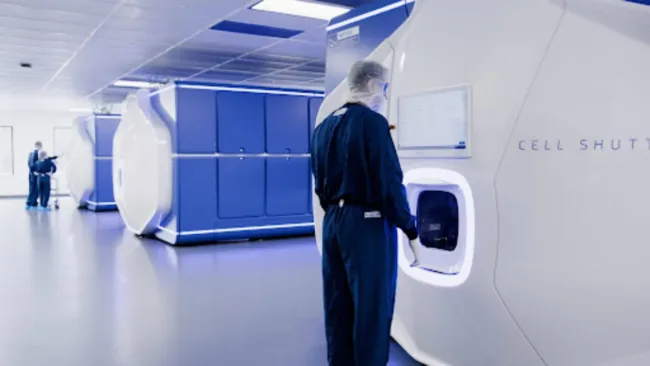
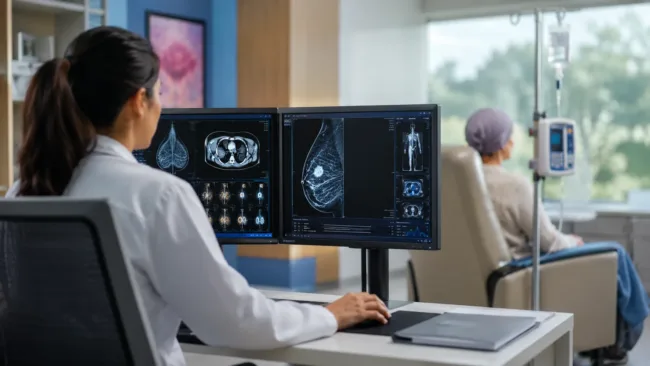
Rakuten Medical, Inc. has signed a manufacturing agreement with South Korea-based LOTTE Biologics to support global supply of its Alluminox platform-based photoimmunotherapy. The agreement, announced at the J.P. Morgan Healthcare Conference, will enable production of monoclonal antibody intermediates and conjugates used in Rakuten Medical’s oncology programs.
What this CDMO agreement changes for Rakuten Medical’s global expansion plans
The manufacturing partnership reflects a critical strategic milestone as Rakuten Medical shifts from a primarily Japan-based therapy rollout to a broader international development model. While the company has already commercialized photoimmunotherapy in Japan for recurrent head and neck cancer, broader adoption requires scalable, validated biologics manufacturing infrastructure that meets regulatory expectations across multiple jurisdictions. LOTTE Biologics, through its Syracuse Bio Campus and Songdo Bio Campus, is being positioned as the backbone of that manufacturing scale-up.
This is not simply a matter of ensuring drug supply. Rakuten Medical’s platform includes complex bioconjugation requirements—pairing monoclonal antibodies with light-activatable dyes—which introduces specific manufacturing challenges that go beyond standard monoclonal antibody production. Choosing a partner with capabilities in ADC-grade containment, linker-payload management, and validated fill-finish for high-potency products is essential for clinical trial continuity and future commercial readiness.
Industry observers view this partnership as a sign that Rakuten Medical is approaching a critical inflection point—where early platform validation gives way to industrialization demands. For companies working in emerging oncology modalities, the ability to manage global scale without losing clinical precision is often where platforms either break out or stall.
Why Rakuten Medical is betting on external manufacturing rather than building in-house
In outsourcing to LOTTE Biologics rather than investing in its own manufacturing network, Rakuten Medical appears to be following a risk-balanced CDMO strategy. This mirrors the path taken by many clinical-stage biotech firms in cell and gene therapy who require specialized infrastructure but prefer to avoid the capital and operational risk of in-house buildouts.
For Rakuten Medical, which must juggle a drug-device combination regulatory model, internal bandwidth is likely being reserved for clinical development, device platform expansion, and regulatory engagement. By contrast, LOTTE Biologics offers end-to-end bioconjugate manufacturing capabilities with prior regulatory approvals, de-risking both clinical and commercial scale-up.
This CDMO-centric model may also offer cost benefits over time. Rather than sinking capital into bespoke facilities, Rakuten Medical can pursue adaptive capacity models through LOTTE’s dual hubs, flexibly shifting manufacturing between North America and Asia based on trial geographies, regulatory timelines, and future market entry strategies.
What differentiates LOTTE Biologics in the crowded CDMO space
LOTTE Biologics has rapidly repositioned itself from a relatively new entrant to a global CDMO with advanced biologics and conjugate capabilities. Since acquiring Bristol Myers Squibb’s Syracuse site in 2022, the company has aggressively added conjugation suites and bioreactor capacity. This now includes 40,000 liters of GMP stainless steel bioreactors in New York and over 360,000 liters in development across three planned bio plants in South Korea.
In contrast to many legacy CDMOs that evolved from small-molecule roots or are focused primarily on traditional monoclonals, LOTTE Biologics has placed an early strategic emphasis on next-generation biologics, including bispecific antibodies, fusion proteins, and ADCs. The decision to invest in on-site conjugation infrastructure has made it an attractive partner for biotechs working on novel oncology formats that require high-throughput bioconjugate production, containment protocols, and specialized quality systems.
From a regulatory standpoint, the company brings more than 60 global GMP approvals across sites, giving Rakuten Medical a compliant pathway to support its multinational clinical trials and eventual market applications. This dual-continent footprint may become particularly valuable if Rakuten Medical pursues a staggered global rollout, targeting Japan, the United States, Europe, and Asia-Pacific in phased fashion.
What sets Alluminox apart from other targeted cancer therapies
Unlike antibody-drug conjugates or immune checkpoint inhibitors, Rakuten Medical’s Alluminox platform introduces a hybrid approach that combines biologic precision with device-enabled focal activation. Its central premise involves conjugating antibodies to IRDye 700DX or other light-sensitive dyes that accumulate in tumor tissue and are then selectively activated by near-infrared light. This localized activation triggers rapid necrotic cell death through physical membrane disruption and may also elicit downstream immune effects.
What differentiates Alluminox from other platforms is the controllability of activation. Because the biologic is inert until illuminated, clinicians can theoretically achieve higher on-tumor activity with lower systemic toxicity. The model also introduces a new kind of modularity into cancer therapy: the same illumination device can be paired with different antibody-dye conjugates to target multiple solid tumor types, assuming the necessary target is expressed.
However, the trade-off is operational complexity. Effective treatment requires synchronized administration and illumination, meaning the drug and device must function as a tightly coupled system. Clinicians must be trained on both the drug’s pharmacokinetics and the light delivery protocol, and clinical sites must be equipped with specialized devices. These requirements present potential friction points in mainstream oncology adoption.
How this deal aligns with global clinical trial timelines
Rakuten Medical is currently conducting a global Phase 3 trial for head and neck cancer in the United States, Japan, and Taiwan, with treatment initiation planned in Ukraine and Poland. Additionally, a new Phase 1 trial targeting other solid tumors is expected to launch in Japan this year. These trials represent a shift from single-country approval to broader oncology indications across multiple health systems, which dramatically increases supply chain complexity.
By tapping LOTTE Biologics now, Rakuten Medical is attempting to get ahead of those complexities—ensuring that monoclonal antibody intermediates and conjugates are available at scale, and that manufacturing constraints do not delay enrollment, site onboarding, or regulatory compliance.
This move also suggests that Rakuten Medical is preparing for commercial ramp-up scenarios. Should the global Phase 3 trial read out positively and result in approvals in one or more major markets, manufacturing latency will become a key determinant of speed to launch. CDMO partners like LOTTE will therefore play a central role not just in supplying the drug, but in maintaining momentum post-approval.
What questions remain around commercial scalability and adoption
While the agreement provides clear manufacturing tailwinds, the commercial path for Alluminox remains complex. Outside Japan, the platform remains investigational. Regulatory agencies will need to evaluate not just the biologic, but the integrated drug-device combination, and may impose varying evidentiary standards across markets. Whether Rakuten Medical’s trial data will be sufficient for simultaneous approval in the United States and Europe remains an open question.
Moreover, successful commercial rollout will depend on adoption across heterogeneous provider settings. Oncologists must be convinced of the therapy’s clinical value, health systems must be willing to invest in device infrastructure, and payers must be willing to reimburse for a novel mode of action that does not fit neatly into existing reimbursement categories. These challenges mirror those faced by other device-enabled therapies such as Tumor Treating Fields or interventional radiology-guided platforms.
LOTTE Biologics may provide reliable manufacturing and quality assurance, but the broader adoption challenge will rest on Rakuten Medical’s ability to convince regulators, clinicians, and payers that photoimmunotherapy represents not just innovation, but sustainable value.