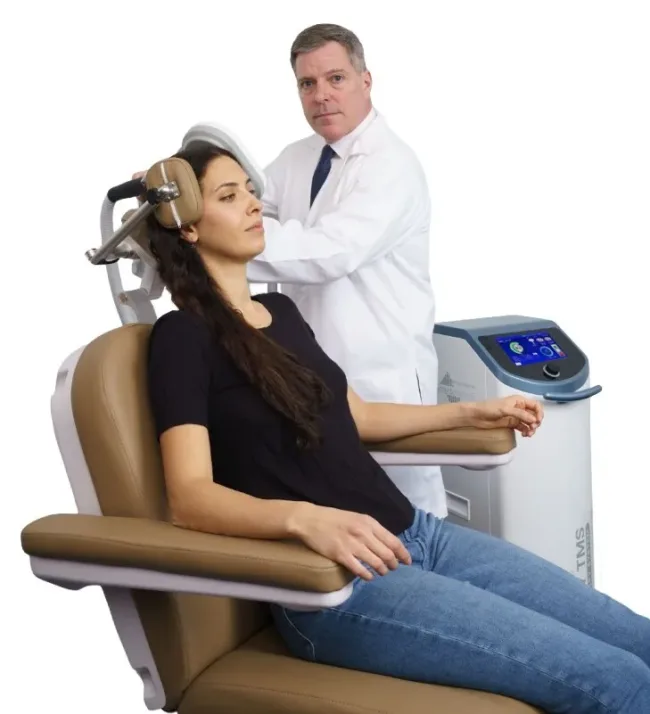
Serenity Mental Health Centers has expanded its ketamine treatment services to Nocatee, Florida, marking a strategic extension of its outpatient psychiatry model. The expansion adds psychedelic-assisted therapy to its existing offerings, including transcranial magnetic stimulation (TMS) and medication management. This comes at a time when treatment-resistant depression and anxiety remain widespread, and interest in fast-acting, alternative therapies is rising among clinicians and regulators alike.
While the company’s announcement was framed around access and patient-first care, the underlying shift is more structural: Serenity is testing whether its outpatient-focused ketamine model can gain traction in smaller but growing suburban hubs like Nocatee. The location, nestled in a high-income corridor between Jacksonville and St. Augustine, represents a new kind of deployment territory—one with strong payer coverage, high mental health demand, and minimal competition for novel depression interventions.
What Serenity’s Florida expansion signals about scalability in psychiatric interventions
At its core, Serenity Mental Health Centers appears to be expanding a replicable clinic model built around ketamine infusion and neuromodulation rather than a traditional psychiatric footprint. With more than 35 locations across the United States, the Denver-based company is one of several private mental health chains attempting to build scale in a sector historically dominated by fragmented, solo-practice providers and large hospital systems. This rollout into Nocatee suggests Serenity is confident that demand for ketamine therapy is strong enough—and the operational model lean enough—to thrive even outside urban cores.
This is significant because ketamine clinics in the United States have traditionally clustered around major cities and research hospitals. Nocatee, by contrast, represents a suburban market with affluent patients, limited access to specialty mental health services, and a demographic profile skewing toward middle-aged adults—a group disproportionately affected by treatment-resistant depression and anxiety.
Industry observers suggest that the real test will not be demand, but care delivery economics. Outpatient psychiatric practices often face scale challenges due to clinician availability, variability in mental health coverage, and low insurance reimbursement rates for time-intensive services. Serenity’s approach of integrating ketamine into a bundled suite of offerings—alongside medication management and TMS—could mitigate those headwinds, but only if appointment throughput and staff retention are maintained as the network grows.
Why ketamine therapy is moving from experimental to clinical deployment
Ketamine’s positioning in psychiatric care has shifted dramatically in the last five years. Once confined to off-label use in tightly controlled settings, it is now viewed by many clinicians as a viable option for patients who have failed first-line antidepressants. While esketamine (the intranasal formulation branded as SPRAVATO) has a formal regulatory path through the U.S. Food and Drug Administration, many clinics including Serenity offer intravenous racemic ketamine, which remains off-label but increasingly accepted in clinical practice.
This expansion in Nocatee does not change the regulatory landscape, but it does highlight a trend: the growing normalization of ketamine as a third- or fourth-line intervention, particularly in outpatient care. Serenity’s positioning of the therapy as part of a broader mental health services portfolio is important here—it distances the offering from the standalone “ketamine clinic” model that has faced scrutiny over safety, oversight, and patient monitoring.
Clinicians tracking the space believe this integrative model could help shield providers from regulatory pushback. The use of board-certified psychiatrists and psychiatric nurse practitioners for triage and ongoing care also signals an attempt to align with best practices and professional guidelines. However, questions remain about long-term data, including relapse rates post-infusion and the durability of response in non-research settings.
What risks remain around the adoption of psychedelic-adjacent therapies in mainstream psychiatry
Even as ketamine becomes more accepted in psychiatric circles, it still sits in a clinical gray zone. There is no universally agreed-upon dosing protocol for off-label use. Patient selection criteria vary widely by provider. And while studies continue to validate its efficacy for acute depression and suicidal ideation, much of the long-term safety data is limited to controlled environments that do not resemble real-world outpatient clinics.
Serenity’s ability to address these challenges at scale will be critical. The company’s Nocatee clinic advertises same-day appointments and individualized infusions. While this accessibility is attractive to patients, it also raises operational questions about how patient monitoring, follow-up care, and adverse event handling are structured. Reimbursement remains another pain point. Most insurers still do not cover racemic ketamine for psychiatric use, forcing clinics to rely on cash-pay models that may limit equitable access.
Regulatory watchers note that the line between innovative care and underregulated service provision is thin in this segment. Without centralized reporting mechanisms, data on adverse events, dropout rates, and longitudinal patient outcomes remain scarce. This leaves regulators with few tools to evaluate safety and efficacy trends beyond individual published studies or anecdotal reports.
The broader psychiatry landscape and why outpatient models are gaining momentum
Beyond the drug itself, Serenity’s model reflects a shift in how psychiatric services are being delivered. TMS and ketamine therapy, while both FDA-cleared in different formats, require specialized equipment, clinical oversight, and patient engagement across multiple sessions. These demands do not align well with hospital-centered psychiatry but are increasingly compatible with outpatient micro-clinic formats that prioritize scheduling flexibility, rapid intake, and high-frequency engagement.
Serenity’s operational strategy appears designed to capitalize on this shift. By offering a mix of traditional and non-medication treatments under one roof, the company may be creating a new standard for mental health clinics that can differentiate from telehealth-first startups on one end and resource-constrained public health systems on the other.
However, that model’s durability will hinge on two key unknowns: payer evolution and workforce supply. If insurance reimbursement for ketamine expands—or if bundled payment models begin covering multimodal treatment pathways—providers like Serenity will gain a margin and access advantage. Conversely, without sustainable coverage and sufficient psychiatric staffing, the model could stall at the limits of manual scalability.
What to watch next as Serenity’s clinic network expands
With the opening of the Nocatee facility, Serenity now has a foothold in a strategic Florida market—one where demographic growth, mental health awareness, and income levels could support its model. But to industry professionals and policy analysts, the larger story is not about a single location. It is about how ketamine is being operationalized, and whether these outpatient deployment strategies can bridge the gap between experimental science and everyday care.
If Serenity’s approach succeeds in Florida, it may serve as a model for national expansion—not just for itself, but for competitors in the ketamine and psychedelic therapy space. If it fails, the reasons will likely stem not from lack of patient demand, but from the enduring complexity of integrating emerging psychiatric treatments into scalable, reimbursable care frameworks. Either way, the next phase of outpatient psychiatry will be defined less by whether ketamine works and more by how providers make it work in the real world.