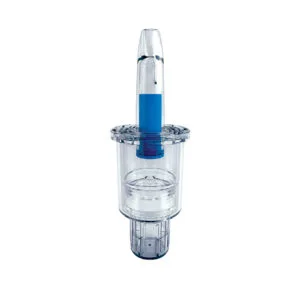
AptarGroup, Inc. (NYSE: ATR) said on July 20, 2026, that its Aptar Beauty business has achieved the first commercial launch of NeoDropper Autoload, an automatic skincare dispensing system selected for Dermalogica’s FutureCode Booster serum. The 30 millilitre format combines an auto-loading cap, a short applicator and a nominal 0.35 cubic centimetre dose to support more controlled cosmetic application. Aptar Beauty described the launch as the technology’s first commercial deployment.
The distinction between a technology introduction and a commercial launch matters. Aptar Beauty originally presented NeoDropper Autoload in January 2026, but Dermalogica’s adoption moves the system into a consumer-facing product and provides an initial test of manufacturing integration, brand acceptance and everyday usability.
NeoDropper Autoload is cosmetic packaging rather than a regulated medical device or pharmaceutical delivery system. Precision dosing in this context refers to consistency in the amount of skincare formula dispensed, not delivery of a clinically prescribed dose. The packaging also does not independently validate Dermalogica’s claims about FutureCode Booster or establish that the serum produces better outcomes because it is dispensed through the Aptar Beauty system.
The commercial question is therefore narrower, but still important for the skincare packaging industry. Aptar Beauty must demonstrate that its mechanism can provide consistent dispensing, protect different formulations and improve the consumer experience without adding excessive complexity, cost or manufacturing difficulty.
Why does Dermalogica’s adoption turn NeoDropper Autoload into a meaningful commercial test?
Dermalogica is using NeoDropper Autoload for FutureCode Booster, a 30 millilitre prestige serum marketed for visible signs of skin ageing, uneven tone and rough texture. The formula includes niacinamide, teprenone, antioxidants, botanical extracts, phospholipids, hyaluronic acid and other ingredients associated with hydration, barrier support and cosmetic appearance claims.
The dispensing system is relevant because Dermalogica instructs consumers to use one dose over the face and neck, normally in the morning and evening. The serum can be applied independently or mixed with another skincare product, making dose consistency potentially useful for consumers trying to repeat the same application routine.
Dermalogica’s instructions require the user to unscrew the cap slowly, allow approximately five seconds for the applicator to fill, press the button to dispense and then replace the cap without pressing the button again. Unused formula is designed to return to the bottle. That sequence is more controlled than manually squeezing a conventional rubber bulb, although it still introduces a short learning process that the packaging design and on-pack instructions must communicate clearly.
Aptar Beauty said Dermalogica had received positive feedback concerning dispensing performance, ease of use and dose consistency. However, the announcement did not disclose the size, design or methodology of that consumer assessment. The feedback is consequently useful as an early commercial signal, but it should not be interpreted as an independent usability study or proof that every consumer will prefer the mechanism.
How does the automatic loading mechanism change precision, hygiene and product restitution?
NeoDropper Autoload uses a twist-and-push mechanism that loads the short applicator as the packaging is operated. According to Aptar Beauty, the applicator is prepared with a controlled dose for the next use, reducing the need for consumers to judge how firmly or how long they should squeeze a conventional dropper bulb.
The 0.35 cubic centimetre specification gives brands a defined nominal dispensing target. Consistency may be commercially valuable for expensive formulas because uncontrolled dispensing can lead to excess use, product running down the applicator or uneven depletion of the bottle. Better control can also help brands connect the stated period of use with the amount contained in the package.
The shorter applicator is intended to reduce direct contact with the bulk formula and lower the risk of breakage associated with long glass pipettes. A sealed bottle is designed to prevent the product from spilling when the package is open or overturned, while an internal dip tube supports high product restitution as the bottle empties.
These characteristics address familiar weaknesses in traditional droppers, but actual performance will depend on formula viscosity, surface tension, ingredient composition, temperature and the way consumers operate the package. A mechanism that performs consistently with one serum cannot automatically be assumed to provide identical dosing with oils, highly fluid essences, suspensions or thicker emulsions.
The dispensing system therefore creates a platform opportunity rather than a universal solution. Its long-term value will depend on the breadth of formulas that can be validated without substantial customization or performance compromises.

What does Aptar Beauty’s microbiology testing establish, and what remains uncertain?
Aptar Beauty previously reported that NeoDropper Autoload produced microbial contamination levels four times lower than those observed with a traditional dropper in a controlled challenge test conducted by an independent microbiology laboratory. The assessment used 20 test samples filled with a bacteriostatic medium and challenged twice daily for five days.
The result supports the engineering rationale for reducing contact between the applicator and the formula. A shorter pipette and sealed package may reduce opportunities for contamination to move from the exposed applicator into the bulk contents.
The available information does not establish a universal fourfold reduction for every commercial skincare formula, consumer environment or period of use. The disclosed test was limited in size and duration, and Aptar Beauty has not published detailed information about statistical analysis, real-world handling conditions or testing across multiple formula chemistries.
The findings should therefore be understood as controlled packaging performance data rather than clinical evidence. They do not show that NeoDropper Autoload prevents skin infections, improves treatment outcomes or allows brands to reduce preservative systems. Cosmetic manufacturers remain responsible for appropriate microbial challenge testing, stability work and package compatibility assessment for the final marketed formulation.
That distinction becomes particularly important as beauty brands increasingly use terms associated with clinical skincare, active ingredients and precision. More sophisticated packaging may support product integrity, but it does not convert a cosmetic into a medicine or replace the evidence required to substantiate product claims.
Why will formula compatibility and filling-line execution determine broader adoption?
Prestige packaging decisions are rarely based on appearance and consumer handling alone. Brands must establish that a dispensing system can be filled, assembled and transported at commercial scale while maintaining dose consistency, closure integrity and acceptable rejection rates.
NeoDropper Autoload uses a 30 millilitre glass bottle with a 20/400 neck finish. Aptar Beauty offers customization of the collar, actuator and cap through options that include metallization, silk-screening and lacquering, subject to regional capabilities. The system is listed as available across Asia, North America, Latin America, Europe, the Middle East and Africa.
Regional availability does not necessarily mean that every configuration can be produced with identical lead times, decoration choices or minimum order quantities in every market. Brands evaluating the system will need to consider filling-line compatibility, closure torque, leakage testing, shipping resilience, component supply and the cost of any line modifications.
Aptar Beauty has not disclosed Dermalogica’s order volume, component pricing, production yield or the speed at which the package can be assembled and filled. Those commercially sensitive details will determine whether NeoDropper Autoload remains concentrated in high-priced prestige products or expands into wider dermocosmetic portfolios.
The design may be best positioned initially for formulas whose retail price can absorb a more complex dispensing system. FutureCode Booster is sold in the United States as a premium 30 millilitre product, providing a commercial setting in which controlled dosing and differentiated packaging can contribute to the overall value proposition.
Can precision packaging create enough consumer value to justify additional complexity?
Packaging can influence whether consumers use the intended amount, keep a product clean and continue using it consistently. In premium skincare, the dispenser is also part of the sensory experience and can affect perceptions of quality before the formula has had time to produce visible results.
NeoDropper Autoload seeks to retain the familiar dropper gesture while removing some of its unpredictability. The automatically prepared dose may reduce mess and guesswork, while the push-button actuator creates a repeatable action that brands can demonstrate through packaging instructions, online videos and professional skincare channels.
The trade-off is that the system is not entirely self-explanatory. Dermalogica asks users to wait for the applicator to fill and avoid pressing the button when closing the package. If consumers open or close it too quickly, misunderstand the reload cycle or expect an ordinary dropper, the experience may not match the design intent.
Successful adoption will consequently depend on more than mechanical performance. Brands will need clear instructions, intuitive visual cues and customer service support capable of resolving dispensing questions. Repeat-purchase behaviour and complaint rates will provide more meaningful evidence than launch-stage enthusiasm.
Sustainability will also influence procurement. Dermalogica identifies the glass bottle as recyclable, subject to local facilities, but directs consumers to place the mixed-material dropper in general waste. The packaging should therefore be assessed as a complete system rather than described as fully recyclable because its bottle can enter a glass stream.
How does NeoDropper Autoload fit AptarGroup’s Beauty segment and commercial priorities?
NeoDropper Autoload is an incremental commercial development for AptarGroup rather than a standalone earnings catalyst. No contract value, revenue expectation, production volume or order duration was disclosed, making it impossible to estimate the launch’s near-term financial contribution.
The strategic relevance is clearer. AptarGroup’s Beauty segment generated approximately US$1.31 billion in reported sales during 2025, representing an increase of about 7%, while core sales grew 2%. Adjusted earnings before interest, taxes, depreciation and amortisation declined slightly to US$158.8 million, and the segment’s adjusted margin fell from 13% to 12.1% amid product-mix pressure, supplier disruption and manufacturing inefficiencies.
During the first quarter of 2026, Beauty segment reported sales increased 19%, supported substantially by currency movements and acquisitions, while core sales rose 3%. Adjusted earnings margin declined by one percentage point to 11.1%, showing why revenue growth alone is not enough. Higher-value innovations must also be manufactured reliably and converted into profitable recurring programmes.
For AptarGroup, the most valuable outcome would be to turn NeoDropper Autoload into a repeatable platform selected across several brands and formulations. One prestige launch validates commercial readiness, but a broader adoption cycle would be needed before the technology could materially influence Beauty segment growth or margins.
What milestones will show whether NeoDropper Autoload can extend beyond one hero product?
The next evidence will come from execution rather than another product description. Industry observers will be watching for additional brand selections, repeat orders from Dermalogica, expansion into multiple formula types and evidence that the dispensing system can maintain performance across regional manufacturing networks.
More detailed data on dose variability, long-term leakage, microbial protection, formula compatibility and consumer error rates would strengthen the technical case. Evidence collected from commercial production and prolonged household use would be particularly valuable because controlled laboratory testing cannot reproduce every way a package will be stored, transported and handled.
Dermalogica gives NeoDropper Autoload a credible first showcase in a premium product where consistent dispensing is closely connected to the consumer proposition. Aptar Beauty’s larger test is whether it can convert that showcase into a scalable packaging platform that brands can manufacture economically, consumers can operate intuitively and sustainability teams can defend across the complete package lifecycle.