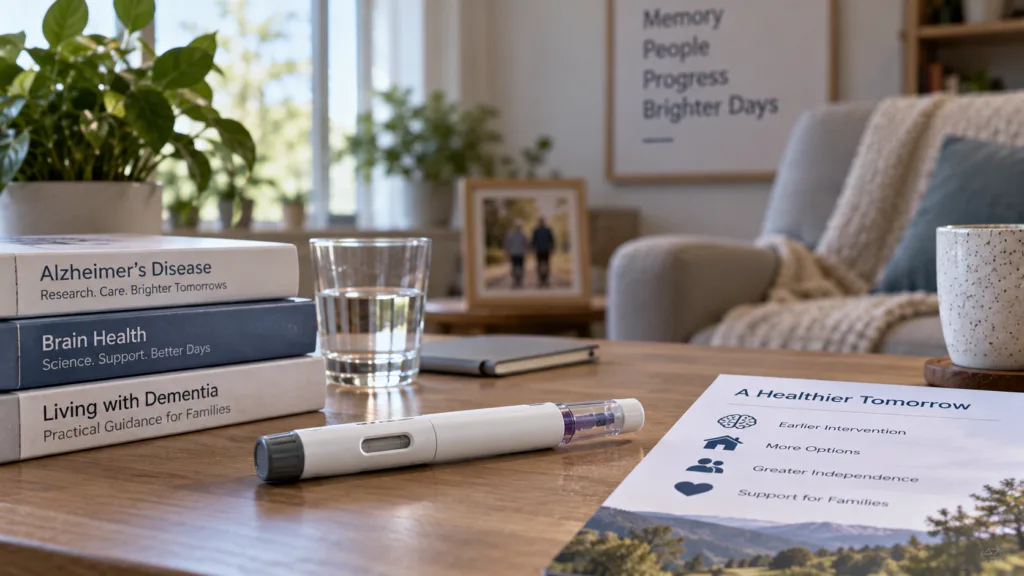
Biogen and Eisai have secured Japanese approval for the Leqembi Pen, allowing their anti-amyloid Alzheimer’s therapy to move from hospital-based intravenous treatment toward once-weekly subcutaneous administration at home. The autoinjector regimen uses two pens totaling 500 milligrams once a week, with each injection taking approximately 15 seconds, compared with the existing Leqembi regimen administered intravenously every two weeks in a medical facility. Japan becomes the third country to approve a subcutaneous initiation formulation of lecanemab, following approvals in the United States and China.
The September 16 approval changes treatment logistics rather than the fundamental mechanism of Leqembi, but that distinction may prove commercially important. Anti-amyloid drugs are attempting to establish themselves in a chronic neurological disease affecting older patients who frequently rely on family members or caregivers, and repeated trips to infusion centers can create substantial treatment friction. Eisai and Biogen are effectively trying to convert Leqembi from a specialist infusion therapy into a medicine that can increasingly be incorporated into patients’ lives outside hospitals.
The shift does not eliminate medical supervision. Japanese patients will initially receive treatment under direct physician supervision, and self-administration will require physician assessment, education and confirmation that the patient or caregiver can safely use the autoinjector. At-home administration is expected to become available after the product is added to the relevant Japanese injectable-drug list following reimbursement deliberations, which the companies said generally occurs within 60 days of approval.
Why could at-home Leqembi matter almost as much as another efficacy improvement?
Leqembi already has randomized Phase 3 evidence supporting its clinical effect. The Clarity AD trial enrolled 1,795 patients with mild cognitive impairment or mild dementia caused by Alzheimer’s disease and showed that intravenous lecanemab slowed decline on the Clinical Dementia Rating Sum of Boxes scale by 27% compared with placebo after 18 months. Patients receiving lecanemab worsened by an adjusted 1.21 points compared with 1.66 points in the placebo group, a difference of 0.45 points.
The next commercial challenge is therefore not simply proving that amyloid removal can alter the disease trajectory. Companies need to make treatment practical enough for large numbers of patients to initiate therapy and remain on it.
Intravenous administration creates several constraints. Hospitals and infusion centers need staff, treatment chairs and appointment capacity, while patients and caregivers must travel repeatedly to healthcare facilities. Those issues are particularly relevant in Alzheimer’s disease because the patient population is older and cognitive impairment can make travel and appointment management increasingly difficult.
Two injections totaling roughly 30 seconds of administration time represent a radically different treatment experience from a recurring infusion-center visit. That does not mean the complete healthcare burden falls to 30 seconds, because diagnostic testing, physician oversight and safety monitoring remain necessary. It does mean the administration itself can move away from one of the most resource-intensive parts of the Alzheimer’s treatment pathway.
Does the Leqembi Pen provide the same treatment exposure as intravenous Leqembi?
The Japanese approval was supported by integrated data and pharmacokinetic modeling from the Phase 3 Clarity AD program and subcutaneous-treatment studies conducted during its long-term extension. Eisai and Biogen said once-weekly 500-milligram subcutaneous administration produced exposure similar to intravenous treatment given every two weeks, supporting the expectation of comparable efficacy.
The companies also reported that the overall safety profile of subcutaneous treatment was generally similar to intravenous administration. Systemic injection or infusion-related reactions occurred less frequently with subcutaneous treatment in the clinical dataset cited for the application, with an incidence of 1.4% among patients newly initiated through the studied subcutaneous regimen.
That combination is crucial commercially. Convenience would have far less value if patients had to sacrifice meaningful drug exposure or accept a substantially worse safety profile to obtain it.
The strategy resembles lifecycle development seen across other major biologic franchises, where manufacturers move established medicines from intravenous administration toward subcutaneous formulations. The objective is partly patient convenience, but it can also protect and expand a franchise by creating a treatment experience that becomes harder for competitors to displace.
Why does MRI monitoring still prevent Leqembi from becoming a simple home medicine?
The autoinjector does not remove one of the most important constraints associated with anti-amyloid therapy: amyloid-related imaging abnormalities, or ARIA.
ARIA can involve swelling or fluid accumulation in the brain, known as ARIA-E, or small areas of bleeding and iron deposition, known as ARIA-H. Many cases are asymptomatic, but serious neurological events can occur. The United States Food and Drug Administration has previously strengthened Leqembi MRI-monitoring recommendations after reviewing safety experience, including recommending an additional MRI earlier in treatment.
Japan’s Leqembi Pen approval similarly retains brain magnetic resonance imaging requirements before treatment and at specified points after initiation. Patients therefore still require a healthcare infrastructure capable of confirming an Alzheimer’s diagnosis, establishing amyloid pathology, performing MRI scans and responding appropriately if imaging abnormalities or neurological symptoms develop.
That distinction matters because describing Leqembi as an at-home drug could create the wrong impression. Administration can increasingly occur at home, but treatment remains medically intensive.
The commercial benefit is consequently best understood as removing one bottleneck rather than eliminating the entire treatment pathway. Infusion-center capacity can be preserved for other therapies, nurses may spend less time administering Leqembi, and families may avoid repeated infusion visits, while specialist neurological monitoring continues.
How could home administration change the competition with Eli Lilly’s Kisunla?
The anti-amyloid market is becoming a competition over more than headline efficacy numbers.
Eli Lilly’s Kisunla is administered as an intravenous infusion every four weeks, generally over approximately 30 minutes. Its prescribing framework also allows physicians to consider completing treatment after amyloid plaques have fallen to defined low levels, giving Lilly a differentiated argument around potentially limited-duration treatment rather than indefinite chronic dosing.
Leqembi is developing a different form of differentiation. Eisai and Biogen are emphasizing continued treatment targeting soluble protofibrils alongside plaque and increasingly convenient administration through the autoinjector.
The contrast creates an interesting competitive choice. One franchise can emphasize less-frequent monthly infusions and the possibility that treatment may eventually stop after sufficient amyloid removal, while Leqembi can increasingly offer administration at home throughout both initiation and maintenance.
Neither advantage automatically determines which medicine physicians will prefer. Patient characteristics, ARIA risk, efficacy evidence, treatment philosophy, payer coverage and healthcare infrastructure will continue influencing individual decisions.
But administration logistics are becoming a legitimate competitive variable. As multiple disease-modifying Alzheimer’s medicines become available, physicians and families will increasingly compare not only whether a treatment works but also how difficult it is to live with that treatment.
How important is Leqembi to Biogen’s attempt to return to sustainable growth?
Leqembi remains relatively small compared with the blockbuster multiple sclerosis franchises that historically defined Biogen, but its growth is becoming increasingly important.
Global Leqembi in-market sales reached $184 million during the second quarter of 2026, increasing 15% from a year earlier and 9% sequentially. United States sales accounted for $97 million. Biogen’s wider growth portfolio generated $1.06 billion during the quarter, rising 24% year over year and, importantly, exceeding the $767 million generated by its legacy multiple sclerosis portfolio.
That crossover illustrates why Leqembi matters strategically. Biogen is trying to replace declining revenue from older multiple sclerosis products with newer franchises spanning Alzheimer’s disease, rare diseases, postpartum depression and specialized immunology.
Biogen does not recognize all Leqembi sales directly because Eisai leads the global collaboration and both companies share economics under their agreement. Biogen reported $63.7 million of Alzheimer’s collaboration revenue during the second quarter, compared with $54.9 million a year earlier.
The larger opportunity depends on increasing the number of eligible patients who actually make it from diagnosis to treatment. Home administration could help because commercial success in Alzheimer’s disease is constrained not only by the number of patients but by how quickly health systems can identify amyloid-positive individuals, assess treatment suitability and administer therapy.
Could convenience help Leqembi overcome the slow rollout that initially constrained anti-amyloid drugs?
The anti-amyloid market has developed more slowly than early blockbuster expectations suggested. Treatment requires specialist diagnosis, confirmation of amyloid pathology, MRI capacity and management of ARIA risk, creating infrastructure requirements that ordinary primary-care medicines do not have.
Yet evidence suggests patients who begin Leqembi often remain on therapy. A United States real-world analysis presented by Eisai and Biogen earlier in 2026 found that 78.4% of patients remained on lecanemab at 18 months, with 71.7% continuing at 20 months and 67.3% at 24 months.
That suggests initiation may be at least as important commercially as persistence. If healthcare systems can identify appropriate patients and successfully begin treatment, a large proportion appear willing to continue.
An autoinjector directly addresses part of that bottleneck. Patients who might hesitate at the prospect of repeated hospital visits could view home treatment differently, and providers can potentially treat more people without expanding infusion capacity at the same rate.
Japan provides a particularly useful test because Eisai is headquartered there and Leqembi has been approved in the country since 2023. The new formulation will show whether administration convenience can measurably expand penetration within an already established market rather than merely shifting existing intravenous patients to another delivery method.
What does the latest development mean for Biogen investor sentiment?
Biogen shares closed at $215.50 on September 18, declining 1.62% during the session after gaining 1.41% the previous day. The stock remained only around 4.6% below its September 3 52-week high of $225.80, suggesting broader sentiment toward Biogen has improved materially even though the Japanese approval did not produce a sustained one-day rally.
It would be misleading to attribute those daily movements solely to Leqembi because Biogen’s valuation also reflects the Apellis Pharmaceuticals acquisition, its expanding rare-disease portfolio, multiple late-stage pipeline programs and declining legacy multiple sclerosis revenue.
Leqembi nevertheless sits near the center of the growth debate. Global sales need to expand substantially if Alzheimer’s treatment is to become one of Biogen’s major long-term revenue engines, and administration convenience provides a practical lever for improving uptake without requiring another drug-discovery breakthrough.
What happens next after Japan’s Leqembi Pen approval?
The immediate step is reimbursement and inclusion on Japan’s designated injectable-drug list so that appropriate patients can begin self-administration under physician management. The companies indicated that this process generally occurs within approximately 60 days of approval.
Commercial attention will then turn toward whether patients actually move away from intravenous treatment and whether new patients begin therapy because at-home administration lowers the practical barrier. Infusion-center utilization, patient persistence and growth in overall Japanese Leqembi treatment numbers could provide early evidence.
The broader global rollout is already accelerating. Lecanemab has been approved in 53 countries and regions, while the subcutaneous initiation formulation has now reached the United States, China and Japan.
The larger competitive shift is clear. The first phase of the Alzheimer’s drug race centered on whether amyloid-targeting medicines could slow clinical decline at all. The next phase will increasingly revolve around how easily health systems can find patients, monitor them safely and deliver therapy at scale.
For Eisai and Biogen, the Leqembi Pen attacks one of those constraints directly. It does not turn anti-amyloid therapy into a simple prescription, nor does it remove MRI monitoring or ARIA risk. But transforming treatment administration from a recurring hospital infusion into two short weekly injections at home could materially change how practical disease-modifying Alzheimer’s treatment feels to patients, caregivers and overloaded healthcare systems.