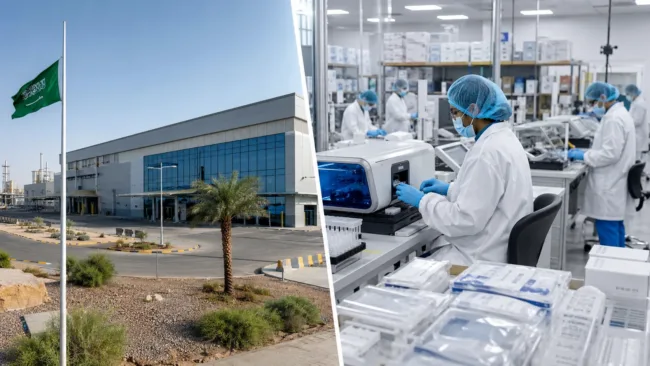
CEL-SCI Corporation has signed a strategic partnership, distribution, and revenue-sharing agreement with Amarox to support the registration, potential commercialization, and distribution of Multikine, or Leukocyte Interleukin Injection, for head and neck cancer in Saudi Arabia. The agreement places Amarox at the center of the local regulatory process with the Saudi Food and Drug Authority, while giving CEL-SCI Corporation a possible regional path to commercialize its neoadjuvant immunotherapy if approval is secured.
Why CEL-SCI’s Saudi Arabia strategy could matter for Multikine’s commercial credibility
For CEL-SCI Corporation, the Saudi Arabia agreement is not simply another regional distribution arrangement. It is a test of whether Multikine can move from long-running clinical and regulatory ambition into a defined commercial pathway in a market that is actively trying to expand access to advanced therapies. That makes the Amarox deal strategically important, even though it does not yet represent product approval, revenue generation, or definitive regulatory validation.
The commercial logic is clear. Multikine is designed to be given before surgery, radiotherapy, and chemotherapy in newly diagnosed, previously untreated head and neck cancer, a setting where the immune system may still be strong enough to mount a meaningful response. That positioning separates it from many oncology therapies used after primary treatment has already begun or after disease progression. However, it also creates a higher burden of evidence, because clinicians and regulators must be persuaded that intervening earlier can improve outcomes without disrupting established surgical and oncologic workflows.
Saudi Arabia offers CEL-SCI Corporation a focused regulatory and commercial test case. The U.S.-based biotech firm is seeking to align Multikine with the Saudi Food and Drug Authority’s accelerated pathways, including the Breakthrough Medicine Designation. If granted, that designation could potentially shorten the route to patient access. The risk is that accelerated review does not eliminate the need for regulatory confidence in clinical evidence, manufacturing consistency, patient selection, and post-approval oversight. The agreement improves CEL-SCI Corporation’s local execution capacity, but it does not by itself resolve the core clinical questions that have shaped Multikine’s long development history.
How the Amarox partnership changes CEL-SCI Corporation’s regional execution model
The most meaningful element of the Amarox agreement is operational rather than symbolic. Amarox will act as local regulatory representative, coordinate communications with the Saudi Food and Drug Authority, and take on exclusive commercial distribution rights in Saudi Arabia if Multikine is approved. That gives CEL-SCI Corporation a local partner with an existing regulatory and commercial footprint, which is often essential in markets where healthcare access, hospital procurement, and regulatory engagement require domestic execution.
This matters because oncology commercialization rarely depends on approval alone. Even after regulatory clearance, adoption depends on whether hospitals understand where a therapy fits in treatment sequencing, whether specialists see a practical clinical rationale, and whether payers or public health systems believe the product addresses a high-priority unmet need. In head and neck cancer, that challenge is especially important because treatment decisions often involve surgeons, radiation oncologists, medical oncologists, and multidisciplinary tumor boards.

Amarox’s role therefore gives CEL-SCI Corporation more than a sales channel. It provides a route into the regulatory and provider ecosystem that would be difficult to build independently at speed. The limitation is that local strength can accelerate engagement, but it cannot manufacture demand unless the clinical proposition is compelling. For Multikine, the question will be whether Saudi oncologists view neoadjuvant immune activation as a practical addition to standard care or as a concept that still needs stronger real-world and regulatory validation.
Why the 50 percent revenue-sharing model signals both opportunity and uncertainty
The 50 percent net revenue-sharing structure between CEL-SCI Corporation and Amarox is notable because it gives both partners direct financial exposure to the product’s Saudi performance. For CEL-SCI Corporation, that structure could be attractive if Multikine achieves meaningful uptake, since it allows the biotech firm to retain ownership of intellectual property, manufacturing know-how, and global rights while sharing commercialization economics in one defined territory.
The model also reflects the uncertainty surrounding the asset. A revenue-sharing agreement can limit upfront financial complexity while aligning incentives around approval, launch preparation, and market development. It avoids the cleaner but often more expensive structure of a large upfront licensing deal, which may have been harder to secure given Multikine’s still-unresolved commercial status. In that sense, the agreement looks like a pragmatic bridge between clinical ambition and market testing.
Investors and industry observers are likely to read the structure in two ways. Optimists may see it as evidence that CEL-SCI Corporation is building a credible first-market strategy in a region prioritizing oncology innovation. Skeptics may argue that a commercial partnership without approval remains only a pathway, not proof of demand. Both readings can be true. The deal improves optionality, but the value inflection still depends on regulatory progress and actual use in clinical practice.
How Saudi Vision 2030 could support advanced oncology access, but not remove adoption hurdles
Saudi Arabia’s healthcare modernization agenda gives the CEL-SCI Corporation and Amarox partnership a broader strategic backdrop. The country has been investing in healthcare transformation under Vision 2030, including expanded access to advanced medical technologies, stronger domestic healthcare capacity, and a greater role for innovation in treatment pathways. Oncology is a natural area of focus because cancer burden, specialty care capacity, and access to novel therapies are all central to national health planning.
For Multikine, this creates a potentially favorable policy environment. A therapy positioned for serious, life-threatening cancer with unmet need may fit well with accelerated regulatory priorities. If the Saudi Food and Drug Authority grants Breakthrough Medicine Designation, Saudi Arabia could become one of the first markets to evaluate Multikine through a focused access pathway.
However, policy alignment should not be confused with clinical adoption. Neoadjuvant treatment in head and neck cancer is complex because timing matters. Any therapy given before surgery must be integrated without delaying definitive treatment, increasing perioperative risk, or creating uncertainty for multidisciplinary care teams. Regulators may also look closely at how the therapy’s benefit is defined across patient subgroups, disease stages, and standard-of-care combinations. The Saudi pathway could move quickly, but it will still need to answer the same fundamental question: does Multikine deliver enough clinical value in the right patients to justify adoption before conventional treatment begins?
What Multikine’s positioning reveals about the evolving immunotherapy market in head and neck cancer
Multikine sits in an unusual corner of immuno-oncology. The broader cancer immunotherapy market has been dominated by checkpoint inhibitors, combination regimens, and later-line oncology strategies. Multikine’s proposition is different because it is intended to activate the immune system before the immune suppression and tissue damage associated with surgery, radiation, and chemotherapy. That concept has scientific appeal, particularly in newly diagnosed patients whose immune systems may be less compromised.
The commercial challenge is that head and neck cancer treatment already requires careful sequencing. Immunotherapy has become more familiar in recurrent, metastatic, and certain advanced settings, but adding an immune-based therapy before initial surgery raises questions about workflow, endpoint selection, and patient identification. Clinicians will want clarity on which patients are most likely to benefit, whether treatment adds logistical complexity, and how outcomes compare with established surgery-led and chemoradiation-based approaches.
This is why CEL-SCI Corporation’s Saudi strategy is important beyond geography. If Multikine can secure regulatory acceptance and demonstrate practical deployment in Saudi Arabia, the U.S.-based biotech firm may gain a reference point for discussions in other Gulf Cooperation Council countries and potentially other markets. If the pathway stalls, however, it could reinforce concerns that the therapy’s commercial story remains harder than its scientific rationale.
Why the optional Gulf Cooperation Council expansion could become the real strategic prize
The agreement includes an optional extension to Gulf Cooperation Council countries, including Bahrain, Kuwait, Oman, Qatar, and the United Arab Emirates. That optionality matters because the Saudi market may function as the anchor for a broader regional oncology access strategy. If Multikine gains traction in Saudi Arabia, CEL-SCI Corporation and Amarox could use that foundation to pursue a more coordinated Gulf commercialization model.
The regional opportunity is attractive because several Gulf markets are investing in specialty care, cancer centers, and advanced therapy access. A successful Saudi pathway could provide regulatory and clinical momentum that helps support neighboring market discussions. For a biotech firm without a large global commercial infrastructure, that kind of regional sequencing can be more efficient than pursuing fragmented, country-by-country launches without a strong local partner.
Still, regional expansion would introduce new layers of complexity. Each country has distinct regulatory processes, reimbursement structures, hospital procurement systems, and clinical adoption patterns. Oncology centers may also differ in how they manage head and neck cancer, especially around surgery, radiotherapy capacity, and multidisciplinary decision-making. The Gulf Cooperation Council option is strategically valuable, but it is not automatic scale. It is a second-stage opportunity that depends on first-stage execution in Saudi Arabia.
What clinicians, regulators, and investors are likely to watch next
The next major signal will be whether Multikine receives Breakthrough Medicine Designation from the Saudi Food and Drug Authority. That outcome would not equal full approval, but it would indicate that the therapy has cleared an important early regulatory filter in a market that could move faster than larger Western jurisdictions. The second signal will be how CEL-SCI Corporation and Amarox frame the evidence package, especially around patient population, timing before surgery, survival outcomes, and safety.
Clinicians will watch whether Multikine can be integrated without complicating standard treatment planning. Regulators will watch whether the therapy’s proposed benefit is sufficiently supported and whether manufacturing and quality controls are ready for commercial supply. Investors will watch whether this partnership produces a credible launch timeline, or whether it remains another preparatory step in a long development story.
The agreement with Amarox gives CEL-SCI Corporation a clearer route into Saudi Arabia and potentially the broader Gulf oncology market. It also gives Multikine a chance to be judged in a healthcare system looking for innovative cancer therapies. The hard part begins now. For Multikine to become more than an intriguing neoadjuvant immunotherapy concept, the Saudi pathway must convert regulatory engagement into approval, clinical confidence, and measurable commercial uptake.