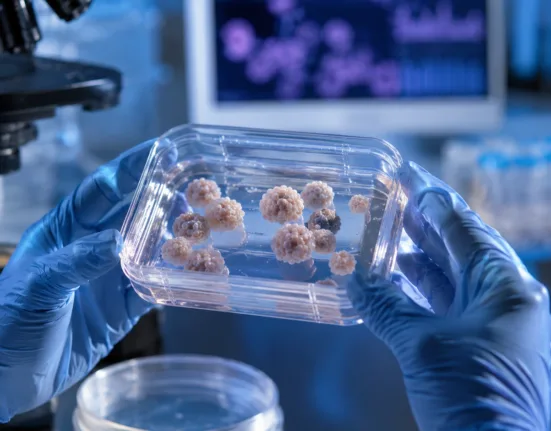
Greenstone Biosciences has received a National Institutes of Health Catalyze R61 award to pursue new drug candidates for myocardial fibrosis and dilated cardiomyopathy associated with Duchenne muscular dystrophy. The August 6, 2026 award from the National Heart, Lung, and Blood Institute places the biotechnology company at the beginning of a milestone-driven discovery programme rather than at the clinical development stage.
Greenstone plans to combine patient-derived induced pluripotent stem cell cardiomyocytes with proteomics, computational drug screening and generative artificial intelligence to identify and validate potential therapeutic candidates. The company has not announced a clinical candidate, human study or Investigational New Drug application from the programme, and the disclosed announcement did not specify the value of the individual R61 award.
That distinction matters. The funding gives Greenstone an opportunity to test whether its human-cell drug discovery platform can reveal actionable biology in an unusually difficult component of Duchenne muscular dystrophy, but it should not be interpreted as evidence that an effective cardiac fibrosis therapy has already been identified. The nearer-term question is whether the company can move from disease modelling and computational screening to experimentally reproducible targets and drug-like leads capable of clearing the programme’s predetermined R61 milestones.
Why is cardiac fibrosis such an important therapeutic gap in Duchenne muscular dystrophy?
Duchenne muscular dystrophy is caused by loss of functional dystrophin and progressively damages skeletal and cardiac muscle. As the disease advances, the heart can develop fibrosis, ventricular dysfunction, arrhythmias and dilated cardiomyopathy, making cardiac disease one of the most consequential long-term complications for patients. Reviews of Duchenne cardiovascular disease describe cardiomyopathy as a major life-limiting manifestation and identify myocardial fibrosis as an important component of its progression.
Fibrosis is particularly important because damaged myocardial tissue can progressively be replaced by scar tissue. That process can impair ventricular function and contribute to an increasingly difficult cycle of cardiac deterioration even while advances elsewhere in Duchenne care help patients survive longer.
Greenstone said there is currently no approved therapy specifically designed to directly treat the cardiac scarring caused by Duchenne muscular dystrophy. Existing management can include therapies intended to delay or manage cardiac dysfunction, but the company’s programme is taking a different discovery approach by looking for compounds capable of acting on the biological pathways that drive the fibrotic cardiac phenotype itself.
This also makes the programme different from many of the highest-profile Duchenne drug-development efforts, which have concentrated on restoring or increasing dystrophin, modifying gene expression or improving skeletal-muscle disease. A drug capable of materially slowing myocardial fibrosis could potentially address a complementary component of the disease rather than simply competing with dystrophin-directed strategies.
That remains a therapeutic hypothesis rather than an established clinical proposition. Any candidate emerging from Greenstone’s programme would still need to demonstrate that modifying a target in a laboratory model translates into an adequate pharmacological effect in living systems and, much later, into clinically meaningful cardiac outcomes.
What could Greenstone Biosciences gain from using patient-derived heart cells instead of relying only on animal models?
Greenstone’s central technological bet is that patient-derived induced pluripotent stem cells can give drug developers a more human-relevant view of Duchenne cardiomyopathy during early discovery. Its platform converts iPSCs into cardiomyocytes and other cell types that can be used to reproduce selected disease characteristics in the laboratory and test how those cells respond to potential interventions.
The broader scientific field gives that strategy a credible foundation. Independent researchers have used human iPSC-derived cardiomyocytes to investigate Duchenne-associated dilated cardiomyopathy, including work identifying cellular abnormalities and potential disease pathways that would be difficult to examine directly in patients. Recent reviews continue to identify iPSC systems as potentially useful tools for disease modelling and drug discovery in Duchenne cardiac research.
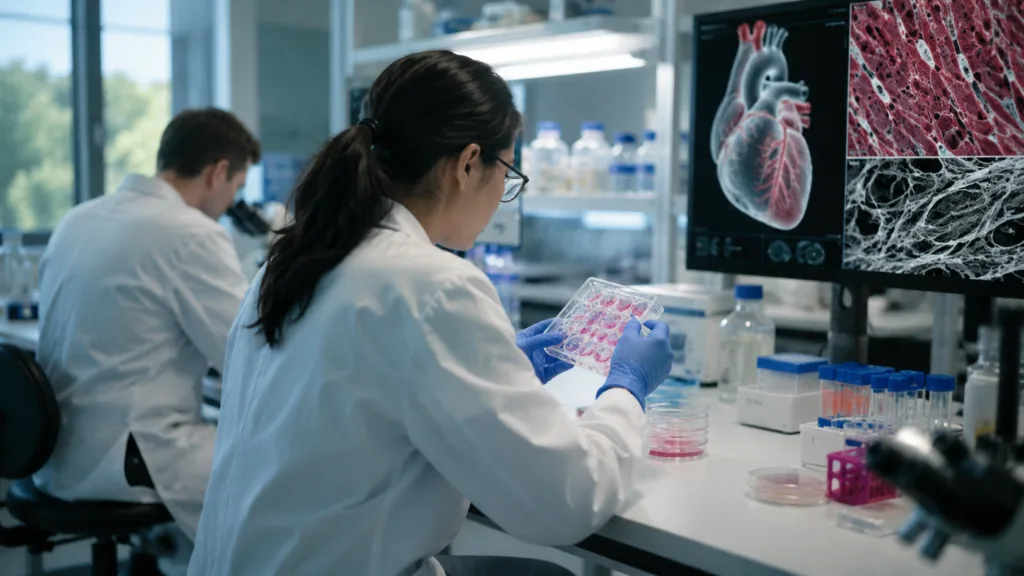
Greenstone is layering computational screening, proteomics and generative artificial intelligence onto those cellular models. In principle, that creates a discovery loop in which biological measurements from diseased human cells help identify targets, computational systems help prioritise compounds or chemical space, and laboratory experiments then test whether those predictions alter the relevant phenotype.
The company also says its wider platform includes an iPSC biobank representing more than 2,500 donors, including rare-disease cell lines. Greenstone has been trying to scale the computational side of that infrastructure as well, announcing a collaboration with Intel Corporation in June 2026 aimed at combining its human-cell datasets with additional artificial intelligence and computing capabilities.
The size of a dataset or sophistication of an artificial intelligence model, however, does not determine whether a compound will become a medicine. A candidate must survive experimental confirmation, pharmacology, toxicology, manufacturing development and regulatory scrutiny. For Greenstone, the commercially important output from the R61 project is therefore not the number of computational hits produced but whether the platform can narrow them into reproducible, experimentally validated therapeutic leads.
Why does the NIH R61 award matter if Greenstone is still far from clinical development?
The structure of the National Heart, Lung, and Blood Institute Catalyze programme helps define exactly where Greenstone sits on the development curve. The programme is designed to move promising discoveries toward viable diagnostic and therapeutic candidates, but the R61 stage remains early translational research.
Under the current Catalyze framework for small molecules, biologics and combination products, the R61 phase supports target identification, validation and screening of therapeutic compounds. The subsequent R33 stage is intended to support lead-series identification and further preclinical development. Progression is conditional rather than automatic.
NHLBI requires defined, quantifiable milestones and states that R33 funding depends on successful completion of the R61 objectives. The programme can also require evidence of non-federal matching funding and an accelerator partner before an award transitions into the later stage. These requirements make the grant valuable as translational support while simultaneously imposing decision points that can stop programmes unable to generate sufficiently robust results.
Greenstone says that, if its initial work succeeds, an R33 phase would support synthesis, characterisation and in vivo testing of promising compounds before subsequent Investigational New Drug-enabling development. That sequence underscores how much work lies between the current award and human dosing.
The most meaningful near-term milestone will therefore be evidence that the company has found a disease target and candidate series capable of repeatedly changing relevant cardiac-fibrosis biology in its experimental systems. Successful progression to R33 would provide a substantially stronger validation point than the R61 award alone because it would indicate that the programme had satisfied defined early-stage milestones.
Does the FDA push toward New Approach Methodologies strengthen Greenstone’s iPSC strategy?
The timing is favourable for developers specialising in human-relevant nonclinical models. The United States Food and Drug Administration has been expanding its work around New Approach Methodologies, which include advanced in vitro systems, computational modelling and human-derived platforms intended to improve the predictive relevance of drug-development testing and reduce unnecessary reliance on animal studies.
In its April 2026 update, the FDA said it had qualified its first artificial intelligence-based drug development tool, launched a database describing contexts in which alternative approaches are acceptable and expanded infrastructure for evaluating innovative development tools.
For Greenstone, this creates a potentially more receptive environment for the types of technologies underlying its business model. Patient-derived cardiomyocytes, organoids, computational models and artificial intelligence-assisted screening are increasingly part of the regulatory discussion rather than existing entirely outside conventional development frameworks.
Yet regulatory momentum around NAMs should not be confused with automatic regulatory acceptance of an individual Greenstone model or compound. The FDA still evaluates whether a particular method is fit for its intended context and whether the total evidence package adequately addresses safety, pharmacology and other development requirements. Greenstone’s models therefore have to prove their usefulness programme by programme.
That is especially important in Duchenne cardiomyopathy, where reproducing a cellular disease phenotype is only one part of the translational challenge. A candidate ultimately needs appropriate exposure, potency, selectivity, tolerability and biological effects in a system complex enough to support further development.
The real test is whether Greenstone can convert model fidelity into a credible drug lead
The NIH R61 award gives Greenstone Biosciences a defined opportunity to demonstrate that its combination of patient-derived cells, omics and artificial intelligence can do more than generate attractive drug-discovery hypotheses. The programme now has to identify targets and compounds strong enough to survive experimental validation and the formal milestone requirements built into the NHLBI Catalyze pathway.
Success at this stage would not mean that Duchenne cardiac fibrosis had been solved. It would mean that Greenstone had moved one or more ideas across the difficult boundary between disease modelling and genuine therapeutic development.
That could be strategically important for the company. Its technology platform is being positioned around the proposition that large collections of genetically diverse human cells can improve target discovery and prediction of drug behaviour. A convincing Duchenne programme would give Greenstone a disease-specific demonstration of that model rather than relying mainly on the scale of its biobank or the sophistication of its computational infrastructure.
For Duchenne muscular dystrophy, meanwhile, the clinical rationale remains substantial. Cardiac fibrosis and cardiomyopathy continue to impose a serious burden as patients live longer with the disease, creating room for therapeutic strategies that specifically address cardiac pathology alongside approaches targeting skeletal muscle or dystrophin restoration.
The next meaningful signal will not be another description of the artificial intelligence platform. It will be whether Greenstone can identify a reproducible target and lead series capable of progressing through R61 milestones into R33 development. Until then, the NIH award is best viewed as an important early translational endorsement of the research programme, not validation of a future Duchenne therapy.