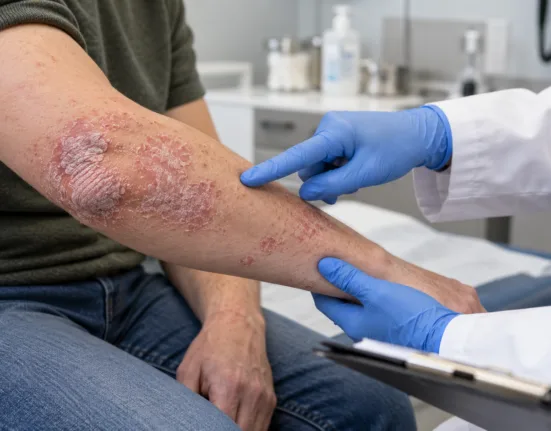
A United States Food and Drug Administration advisory committee has voted 3 to 9 that the available evidence does not establish the effectiveness of Capricor Therapeutics’ deramiocel for treating cardiomyopathy in people with Duchenne muscular dystrophy. The vote is not binding, and the FDA is still expected to decide on the resubmitted Biologics License Application by its August 22, 2026 target date. The committee’s formal question was limited to cardiomyopathy rather than deramiocel’s overall benefit-risk profile, while a separate discussion was more receptive to evidence suggesting preservation of upper-limb function.
The distinction is important because the Phase 3 HOPE-3 trial used upper-limb function as its primary endpoint, while the application before the FDA proposes deramiocel as a treatment for Duchenne-associated cardiomyopathy. FDA reviewers questioned whether the trial enrolled a clearly defined cardiomyopathy population and concluded that the apparently positive cardiac and skeletal-muscle findings changed substantially under different statistical assumptions.
Why the advisory committee vote focused narrowly on Duchenne cardiomyopathy
Duchenne muscular dystrophy is caused by the absence of functional dystrophin, resulting in progressive damage to skeletal, respiratory and cardiac muscle. Many patients lose the ability to walk during adolescence, after which weakness of the arms and hands becomes increasingly important to independence. Cardiac deterioration can progress more quietly but is a leading cause of death as patients live longer with improved respiratory and supportive care.

Deramiocel consists of allogeneic cardiosphere-derived cells obtained from donor hearts. Capricor administers 150 million cells through an intravenous infusion once every three months. The company proposes that the cells release exosomes, growth factors and other signals that reduce inflammation and fibrosis while promoting tissue repair, rather than permanently replacing damaged heart or skeletal-muscle cells.
The FDA asked the committee whether HOPE-3 provided substantial evidence that deramiocel is effective specifically for cardiomyopathy in Duchenne muscular dystrophy. Nine members voted no, three voted yes and none abstained. The panel was not asked to vote on whether the product benefits upper-limb function or whether the complete clinical package supports a broader Duchenne indication.
Capricor emphasized this limitation after the meeting. The company said committee members were more supportive during the separate discussion of the Performance of the Upper Limb 2.0 results, which measured patients’ ability to perform movements involving the shoulders, elbows, wrists and hands. Capricor continues to argue that HOPE-3 demonstrated benefits across both skeletal and cardiac muscle.
The FDA’s review places greater weight on whether the evidence directly supports the indication written in the application. A therapy could plausibly slow upper-limb decline without proving that it treats cardiomyopathy, particularly when the trial did not require every participant to have established cardiac disease at enrollment.
There is substantial unmet need on both sides of the disease. Several therapies are approved for selected Duchenne populations or genetic mutations, but the FDA stated that no approved treatment has been shown systematically to alter the progression of Duchenne cardiomyopathy. That unmet need gives the agency flexibility to consider the disease context, but it does not remove the requirement for substantial evidence of effectiveness.
HOPE-3 produced sharply different company and FDA interpretations of the same results
HOPE-3 was a multicenter, randomized, double-blind and placebo-controlled Phase 3 trial involving 106 male participants aged 10 to 22. Fifty-four were assigned to deramiocel and 52 to placebo, with treatment administered every three months over one year. Approximately 85% of participants were non-ambulatory, making preservation of arm and hand function particularly relevant to everyday independence.
The peer-reviewed HOPE-3 publication reported that deramiocel slowed the percentage decline in total PUL 2.0 score by 54% relative to placebo. The company’s analysis found a 4.55-percentage-point treatment difference, with a 95% confidence interval of 0.47 to 8.63 and a p-value of 0.029. Capricor also reported a significant mid-level PUL benefit, a favorable ranked analysis of left ventricular ejection fraction and improvement in measures of cardiac scarring.
FDA reviewers reached a different conclusion when they applied the statistical analysis plan established earlier in the trial. Under the original prespecified approach, the absolute difference in total PUL 2.0 change was 0.66 points, with a 95% confidence interval extending from negative 0.45 to positive 1.77 and a p-value of 0.24. That analysis did not establish a statistically significant treatment effect.
The disagreement was even more pronounced for cardiac function. Using the original model, mean left ventricular ejection fraction declined by 0.95 percentage points with deramiocel and 0.91 percentage points with placebo. The treatment difference was negative 0.041 percentage points, with a p-value of 0.97, indicating virtually no separation between the groups under that analysis.
Capricor’s later analysis converted the cardiac outcome into ranked change and reported a statistically significant result with a p-value of 0.041. FDA reviewers said the company’s analysis excluded nearly 22% of randomized participants because they lacked both baseline and 12-month cardiac measurements. The exclusions removed one placebo patient who had improved substantially and several deramiocel patients who had shown declines, creating a risk of bias in favor of the treatment.
The statistical analysis plan was revised more than once. The original plan was dated July 2022, while later versions were dated September and November 2025, near or after completion of the controlled study period. Changes included converting outcomes from absolute to percentage or ranked change and introducing new rules for missing data and prohibited medication use.
FDA reviewers concluded that the significance of the PUL result depended heavily on how data from two placebo patients were treated. Depending on the statistical plan and missing-data assumptions used, the estimated PUL treatment difference ranged from 2.38% to 4.55%, while p-values ranged from 0.26 to 0.029. The agency said that this variability undermined the robustness of the result.
Publication in a peer-reviewed journal supports the scientific visibility of the trial, but it does not resolve the regulatory dispute. Journal reviewers assess whether the research is suitable for publication based on the submitted methods and interpretation. The FDA independently determines whether the analysis was prospectively specified, sufficiently robust and capable of supporting the proposed product label.
The enrolled population did not consistently meet the FDA’s definition of cardiomyopathy
HOPE-3 did not require participants to have a clinical diagnosis of cardiomyopathy or reduced left ventricular ejection fraction. The mean baseline ejection fraction was 57.3%, which is within or close to the normal range for many patients.
Capricor classified participants as having cardiomyopathy when they met at least one of several criteria, including a medical-history term, ejection fraction of 55% or lower or evidence of cardiac scarring on magnetic resonance imaging. FDA reviewers disputed that definition, noting that an ejection fraction between 45% and 55% does not by itself establish cardiomyopathy and that cardiac-scarring imaging was available for only about one-quarter of participants.
The agency consequently said it was unclear how many HOPE-3 participants actually had the condition named in the proposed indication. That creates a fundamental evidentiary problem: even a positive trial result may not establish effectiveness for treating cardiomyopathy when the studied population was not consistently shown to have cardiomyopathy.
The trial’s primary endpoint also measured skeletal-muscle function rather than cardiac disease. Upper-limb preservation may be meaningful in advanced Duchenne muscular dystrophy, particularly for non-ambulatory patients who depend on their arms for eating, operating wheelchairs and communicating. It is nevertheless indirect support for an application focused on the heart.
Cardiac efficacy is difficult to measure in Duchenne muscular dystrophy. Cardiac deterioration develops gradually, and conventional exercise or symptom endpoints can be difficult to interpret because skeletal-muscle weakness already limits physical activity. Imaging measures such as ejection fraction and myocardial fibrosis are therefore relevant, but the FDA noted that measurement variability can be several percentage points and that links between short-term imaging changes and long-term cardiac outcomes remain incompletely established.
The FDA also questioned the biological evidence supporting cardiac benefit. Reviewers said it remained uncertain how much of an intravenous deramiocel dose reaches cardiac or skeletal muscle and whether the broadly proposed exosome-mediated mechanism is sufficiently targeted to explain a disease-modifying effect in Duchenne cardiomyopathy.
Hypersensitivity risks matter more when clinical benefit remains uncertain
The safety population included 53 deramiocel recipients and 52 placebo recipients. Serious adverse events occurred in one deramiocel patient and five placebo patients, although one placebo event was a life-threatening anaphylactic reaction that the FDA considered potentially related to excipients also used in the active product.
One deramiocel recipient experienced a treatment-related Grade 2 infusion reaction during the second infusion. The infusion was temporarily interrupted, and the patient received allergy medication and intravenous fluids before continuing in the study.
Broader hypersensitivity reactions occurred in 41.5% of deramiocel recipients and 15.4% of placebo recipients. The higher incidence does not necessarily make the treatment unacceptable in a severe progressive disease, particularly if efficacy is clinically meaningful. It becomes more consequential when regulators are unconvinced that the therapy provides benefit.
Deramiocel is intended for repeated quarterly administration rather than a single treatment. Patients could therefore face recurring infusion reactions and continuing clinical monitoring over several years. Capricor has reported experience from more than 800 infusions and long-term treatment in the HOPE-2 extension, but those uncontrolled observations cannot replace a clear efficacy finding from the pivotal study.
The August 22 FDA decision remains open despite the negative vote
The committee’s recommendation is advisory. The FDA may accept or reject the panel’s conclusion after reviewing the complete clinical, statistical, safety and manufacturing record. The agency could approve deramiocel, issue another Complete Response Letter, request additional analyses or seek another controlled study.
The application has already followed an unusual regulatory path. Capricor initially submitted a Biologics License Application based primarily on the small Phase 2 HOPE-2 study and its open-label extension. The FDA issued a Complete Response Letter in July 2025 after concluding that those studies did not provide substantial evidence of effectiveness. Capricor later resubmitted the application with the completed HOPE-3 trial.
A second rejection could require another prospective trial designed specifically around cardiomyopathy, with confirmed cardiac disease at baseline and a prespecified analysis of interpretable cardiac imaging or clinical outcomes. Such a study would probably require longer follow-up because Duchenne cardiac function often declines slowly.
An alternative pathway could involve a broader Duchenne indication based partly on upper-limb function, but the current committee vote did not evaluate a revised label. Any change in indication would require agreement that the submitted evidence and application support the different use.
The positive upper-limb discussion means the advisory meeting was not a complete rejection of deramiocel’s clinical activity. It does, however, expose a mismatch between the strongest apparent result and the indication formally under review. Capricor must persuade the FDA that the totality of evidence is sufficiently reliable to overcome concerns about trial population, statistical revisions and cardiac endpoint interpretation.
The August 22 decision will determine whether the agency views the unmet need and supportive functional evidence as sufficient for approval or considers another controlled trial necessary. Until then, deramiocel remains investigational, and the 3 to 9 vote substantially increases the regulatory uncertainty surrounding the application.