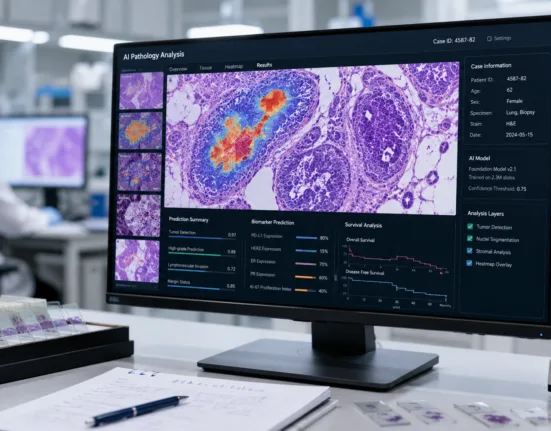
One Biosciences has reported preclinical and analytical validation data showing that its OneMap platform can generate single-nucleus RNA expression profiles from routine formalin-fixed paraffin-embedded tumour specimens, including small biopsies and archival pathology material. The multicentre study evaluated specimens from bladder, breast, colon, lung, ovarian and pancreatic cancers, supporting the technical feasibility of analysing individual tumour, immune and stromal cell populations without requiring fresh research tissue.
The results address one of the most persistent practical barriers facing single-cell oncology. Although single-cell sequencing can reveal cellular populations and biological programmes that bulk molecular tests may obscure, most existing research workflows depend on fresh or frozen tissue, specialised handling, relatively large samples and cohort-level computational analysis. Those requirements do not align easily with the way diagnostic specimens are collected, preserved and allocated in routine cancer care.
One Biosciences’ study therefore represents an important workflow validation rather than evidence that the platform can already improve treatment decisions. The data show that usable and reproducible molecular profiles can be obtained from pathology material already produced by hospitals. They do not yet demonstrate that a OneMap report changes physician decisions, predicts therapeutic response prospectively or improves patient outcomes.
What did the FFPE single-cell workflow actually validate across six cancer types?
The study examined 88 routine FFPE specimens collected from 83 patients at Institut Curie, Centre Léon Bérard, Hôpital Bichat-Claude Bernard and Memorial Sloan Kettering Cancer Center. The material included 52 surgical resections and 36 biopsies, with 116 single-nucleus RNA sequencing experiments performed after technical replicates were included.
The workflow combined a low-input sample preparation method with Chromium Single Cell Gene Expression Flex v2 chemistry from 10x Genomics and One Biosciences’ proprietary OneMap analysis platform. OneMap was used to identify malignant, immune and stromal populations, quantify gene expression within defined cell types and generate a standardised description of each tumour’s cellular composition.
This distinction matters. The platform is not simply measuring the average RNA signal across a mixed tumour sample. It is attempting to determine which cell populations are present and which genes are active within those individual populations.
A bulk measurement could, for example, detect expression of a therapeutic target without clearly establishing whether that signal originated in malignant cells, immune cells or surrounding tissue. A cell-resolved approach could provide additional biological context, particularly where target distribution or the tumour microenvironment affects drug response.
The study demonstrated that the workflow could identify multiple major cellular populations across all six cancer types. These included tumour cells, fibroblasts, endothelial cells, macrophages, T cells, B cells, plasma cells and other components of the tumour ecosystem.
However, the analysis was primarily designed to establish technical performance and biological plausibility. It was not structured as a prospective clinical trial testing whether treatment selected using OneMap produced better results than treatment chosen through current molecular pathology.
Why do four routine pathology sections change the practical equation for single-cell profiling?
One of the most commercially relevant features of the workflow is its use of four standard 5-micrometre FFPE sections. Earlier FFPE-compatible single-cell methods have often required thicker tissue curls or dedicated research material that may not be available after routine diagnostic testing has been completed.
Tissue conservation is particularly important in advanced cancer. Many patients are diagnosed from small core biopsies, and the available specimen may already be divided among histology, immunohistochemistry, molecular sequencing and confirmatory testing. An assay requiring substantial additional tissue could struggle to gain adoption regardless of its analytical sophistication.
The One Biosciences workflow was developed to reduce that conflict. The investigators compared different section thicknesses and selected 5-micrometre sections as a balance between gene coverage, nuclei recovery and tissue consumption.
Operating on individually processed specimens also differentiates the proposed workflow from research studies that combine samples into larger analytical cohorts. A clinical laboratory must be able to receive one patient’s specimen, process it independently and return an interpretable report without waiting for a batch of comparable cases.
One Biosciences says OneMap can provide reports in less than two weeks. That timeframe may be workable for some treatment-planning and drug-development applications, although the study did not provide a complete operational assessment of laboratory turnaround, failure-related delays, cost per sample or performance across decentralised laboratory sites.
Those implementation variables will matter as much as sequencing accuracy. Hospital laboratories and pharmaceutical sponsors will need to know whether the workflow can deliver consistent results across technicians, instruments, reagent lots and specimen-handling practices, not only within a controlled development programme.
How convincing are the reproducibility and pathology concordance results?
Technical reproducibility was one of the stronger parts of the evidence package. The investigators conducted 20 replicate experiments using nine FFPE specimens representing three cancer types.
Cell-type proportions showed correlations ranging from 0.88 to 1.00 between replicates, with a median correlation of 0.994. Average gene-expression profiles within malignant cells produced a median correlation of 0.982, while the proportion of cells expressing individual genes had a median correlation of 0.958.
The researchers also evaluated genes linked to potential therapeutic targets. Median correlations reached 0.960 for mean target expression and 0.935 for the proportion of target-positive cells.
These results support analytical consistency under the tested conditions. They reduce the risk that repeated processing of the same specimen would generate materially different descriptions of the tumour ecosystem.
A separate analysis compared automated estimates of lymphocyte abundance with conventional pathological assessment of tumour-infiltrating lymphocytes in 16 triple-negative breast cancer biopsies. The two measurements produced a correlation of 0.83.
That concordance provides an important biological validation point because tumour-infiltrating lymphocytes are already assessed by pathologists in several oncology research and clinical contexts. It suggests the platform was detecting an immune signal that aligned with an established histological measurement.
The comparison nevertheless has boundaries. It involved a relatively small cohort from one cancer subtype and evaluated concordance with a pathology estimate rather than prediction of treatment response. Agreement with an existing measurement supports credibility, but it does not prove that the more complex transcriptomic output adds clinically actionable information.
Broader validation will need to compare OneMap results against independent reference methods, potentially including immunohistochemistry, flow cytometry, multiplex imaging and other sequencing approaches. These comparisons will be particularly important for therapeutic-target measurements that could eventually influence patient selection.
What do biopsy and archival-sample results reveal about real-world use?
The biopsy analysis addresses a clinically significant challenge. The study included nine routine non-small cell lung cancer core biopsies from primary tumours and metastatic sites. Their median tissue surface area was approximately six times smaller than that of the surgical resections used for comparison.
Despite the low input, the workflow generated single-nucleus profiles and classified 93.7% of retained cells. The analysis identified major tumour and microenvironment populations and measured expression of genes associated with targets such as TROP2 and HER2 in tumour cells, alongside immune checkpoint genes including CTLA4 and TIGIT in T cells.
The researchers lowered the gene-coverage threshold for these small specimens from 500 to 300 genes per nucleus, increasing the number of cells available for analysis. They reported that this adjustment did not prevent automated classification, although lower coverage inevitably raises questions about how consistently weak or rare biological signals can be detected.
This is an area where future studies should disclose target-specific limits of detection and failure rates. A workflow may successfully classify broad cell populations while still lacking sufficient sensitivity for a low-abundance biomarker that carries therapeutic importance.
The archival analysis produced another useful but qualified result. The workflow successfully profiled 82% of tested specimens ranging from newly stored material to blocks approximately 11 years old. Performance deteriorated with specimen age, with older blocks yielding fewer nuclei and lower gene coverage.
Success rates improved to 90% for samples less than approximately five years old and 95% for those less than roughly three years old. This pattern suggests the platform could support retrospective biomarker studies using existing trial archives, although sponsors would need to account for age-related sample attrition and potential selection bias.
For pharmaceutical companies, the ability to analyse archived FFPE tissue could be commercially valuable. It may allow developers to revisit completed studies, investigate unexplained responder populations, refine biological hypotheses or identify candidate biomarkers without requiring a new tissue-collection programme.
Why does target-expression mapping not yet establish treatment-selection value?
OneMap generated cell-type-specific expression measurements for several approved or investigational therapeutic targets, including TROP2, HER2, HER3, EGFR, mesothelin, DLL3, c-MET, folate receptor alpha and other molecules associated with antibody-drug conjugates or targeted therapies.
This capability could provide information beyond conventional target-positive or target-negative classification. Tumours may contain mixtures of cells with different target-expression levels, and expression in malignant cells may have different implications from expression in immune or stromal populations.
Antibody-drug conjugate development is a particularly plausible use case. Response may be affected by target density, the proportion of target-expressing tumour cells, intratumoural heterogeneity, payload characteristics, bystander activity and resistance mechanisms. A single-cell view could help drug developers investigate those relationships in greater detail.
However, RNA expression should not automatically be treated as equivalent to protein abundance, cell-surface accessibility or therapeutic susceptibility. Many antibody-based treatments depend on protein expression, receptor localisation and internalisation, while transcript levels may not fully represent those properties.
The current study also did not establish validated thresholds separating likely responders from non-responders. It did not prospectively test whether patients whose tumours displayed a particular OneMap signature achieved better outcomes with a corresponding therapy.
The target-expression data should therefore be understood as an analytical capability and hypothesis-generation tool. Clinical utility will require treatment-linked datasets showing that the reported cellular patterns provide reproducible predictive information beyond existing pathology and genomic testing.
Where could OneMap create commercial value for drug developers and diagnostic partners?
One Biosciences appears to be pursuing two connected markets. The first is pharmaceutical research and development, where single-cell profiling could support target discovery, biomarker development, patient stratification and retrospective analysis of clinical trials. The second is clinical diagnostics, where OneMap could potentially provide patient-specific tumour reports to support treatment decisions.
The pharmaceutical route may offer the nearer commercial opportunity because exploratory biomarkers can be deployed in research studies before they qualify as regulated companion diagnostics. Drug developers may pay for services that help interpret response heterogeneity, identify resistant cell states or refine inclusion criteria for future trials.
One Biosciences has already linked the platform to an antibody-drug conjugate development project supported by the Paris-Saclay Cancer Cluster and conducted with Adcytherix. It is also working with Gustave Roussy on a prospective programme intended to integrate single-nucleus transcriptomic analysis into oncology workflows.
The company raised €15 million in Series A financing in 2025, bringing its disclosed funding above €20 million. That capital was intended to support clinical development of OneMap and expand partnerships with pharmaceutical and biotechnology companies.
Commercial defensibility is likely to depend less on the sequencing chemistry itself and more on the proprietary sample-preparation process, automated annotation models, report design and accumulation of clinically linked single-cell datasets. Competitors can access sequencing platforms, but reproducing a curated dataset connecting cell states with treatments and outcomes may be more difficult.
The business model must still absorb significant costs. Single-cell sequencing remains more complex and expensive than routine immunohistochemistry or targeted molecular testing. One Biosciences will need to demonstrate that the additional information changes development decisions, rescues enough trial value or improves patient selection sufficiently to justify the expense.
What evidence and regulatory steps must follow before routine oncology adoption?
The next phase should move from analytical validation to prospective clinical utility. One Biosciences will need studies in which samples are processed within real treatment timelines, reports are reviewed by molecular tumour boards and the resulting information is compared with existing diagnostic approaches.
The most persuasive evidence would show that a predefined OneMap signature predicts response, resistance or clinically relevant outcomes in an independent cohort. Validation should include locked algorithms, prespecified thresholds, representative patient populations and transparent handling of assay failures.
Clinical deployment would also require clear regulatory positioning. The materials released with the study do not describe an authorised diagnostic indication or a regulatory decision allowing OneMap to direct treatment. Any future companion diagnostic would need to be developed and validated for a specific therapy, cancer type, specimen context and intended use.
Laboratory reproducibility, data governance and model control will require attention because automated foundation-model annotation forms part of the workflow. Users will need to understand how the model was trained, how uncertain classifications are handled, whether performance differs across tumour types and how software updates affect previously validated outputs.
Reimbursement represents another hurdle. A technologically advanced assay will not gain broad clinical use merely because it produces detailed reports. Payers and healthcare systems will require evidence that the information improves decision-making, avoids ineffective treatment or produces measurable economic and clinical value.
One Biosciences has cleared an important technical barrier by showing that single-cell tumour profiling can be performed from small quantities of routine FFPE material across several cancer types. The more consequential test now begins. The company must demonstrate that the cellular detail revealed by OneMap leads to decisions and outcomes that conventional pathology, genomic sequencing and established biomarker assays cannot deliver on their own.