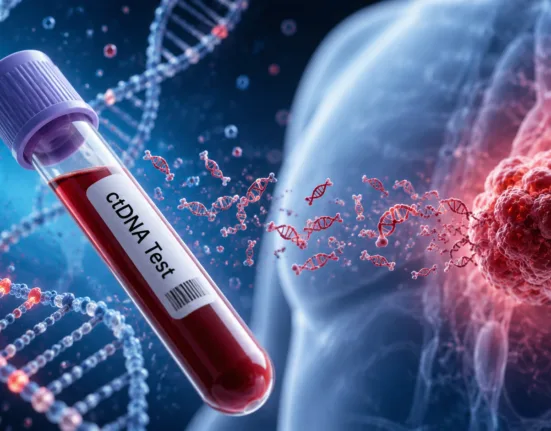
Phinomics Inc. will be featured in an upcoming All Access hosted by Andy Garcia educational segment focused on circular DNA, multi-omic biology and explainable artificial intelligence in genetics. The U.S.-based biotechnology firm is positioning its Cancer Intelligence Platform around extrachromosomal circular DNA, matched biological datasets and computational models that could support oncology biomarker discovery and therapeutic target identification.
Why does Phinomics’ circular DNA visibility matter for oncology discovery platforms?
The significance of the Phinomics announcement is less about television exposure and more about timing. Circular DNA, especially extrachromosomal DNA in cancer, has moved from a specialist genomics subject into a more visible area of oncology research because it may help explain tumour evolution, treatment resistance and disease recurrence. For a biotechnology firm trying to build a differentiated discovery platform, public education around this biology can help close the gap between scientific complexity and commercial relevance.
That matters because oncology drug development continues to struggle with a costly mismatch between promising preclinical biology and clinical performance. Drug developers have become increasingly sophisticated at sequencing tumours, stratifying patients and mining genomic datasets, yet many programmes still fail because the disease biology being targeted is incomplete, unstable or poorly understood. Phinomics is trying to position circular DNA as one of those overlooked biological layers that could improve the quality of disease interpretation before companies commit years of capital to a target or biomarker strategy.
The unresolved question is whether increased visibility can translate into stronger scientific validation. A media segment can make the concept more accessible to investors, students, physicians and industry partners, but adoption in oncology discovery depends on reproducible data, independent validation, clinically relevant sample sets and a clear demonstration that circular DNA insights outperform existing genomic, transcriptomic or proteomic approaches. In other words, the story raises awareness, but the platform still has to earn trust the old-fashioned way, through evidence that survives peer review, clinical scrutiny and commercial comparison.
What does circular DNA add to the crowded multi-omic cancer research landscape?
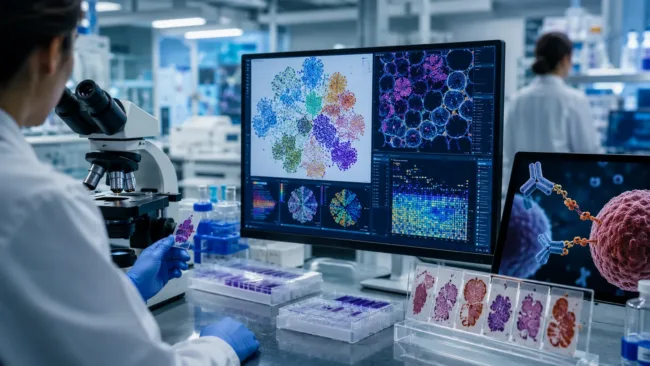
Phinomics is building its message around the idea that cancer biology cannot be understood through single-layer datasets alone. The company’s platform narrative combines circular DNA with other biological layers, including RNA and proteins, to create a more integrated view of how diseased cells adapt. That is a commercially relevant claim because most biopharma companies already have access to vast datasets, but not always to datasets that are matched, interpretable and mechanistically useful.
The broader oncology market has already moved from basic genomics toward multi-omic profiling, single-cell analysis, spatial biology and artificial intelligence-enabled target discovery. In that crowded field, circular DNA offers a potentially differentiated signal because it can reflect tumour plasticity, oncogene amplification, heterogeneous cell behaviour and resistance mechanisms that may not be fully captured by conventional linear genome analysis. If Phinomics can isolate and decode these structures at sufficient resolution, the platform could become relevant to drug discovery, biomarker development and patient stratification research.

The risk is that “multi-omic” has become one of the most overused phrases in biotechnology. Many platforms claim to integrate biological layers, but fewer can prove that integration changes a development decision, rescues a failed target, identifies a superior patient subgroup or predicts treatment resistance earlier than existing methods. Phinomics’ challenge is therefore not simply to show that circular DNA is interesting. The stronger commercial test is whether circular DNA can produce decision-grade insights that alter how oncology assets are selected, advanced, partnered or stopped.
How could explainable AI become a competitive advantage rather than another biotech slogan?
The Phinomics platform narrative also leans heavily on explainable artificial intelligence. That framing is strategically important because biopharma has grown more cautious about black-box models that generate predictions without clear biological reasoning. In oncology, a model that cannot explain why a target matters, why a biomarker predicts response or why a tumour may become resistant has limited value in clinical development, even if its statistical performance appears strong in early testing.
Explainable AI could be useful if it connects circular DNA, RNA, protein expression and disease state into a coherent biological map. For drug developers, that kind of model may help distinguish correlation from mechanism. A model that identifies a target because several matched biological layers support the same disease pathway is more valuable than a model that merely detects a pattern in one dataset. That is the commercial logic behind Phinomics’ emphasis on diverse, matched data rather than sheer data volume.
However, explainability is difficult to define and even harder to validate. A model can appear interpretable while still relying on hidden biases in sample selection, disease model choice or training data structure. Regulatory and clinical audiences will also want evidence that computational outputs remain stable across cohorts, tumour types, laboratories and treatment contexts. For Phinomics, the real differentiator would be a platform that not only explains biology elegantly, but also predicts clinically meaningful behaviour in a way that other researchers can reproduce.
Why is the distinction between scientific awareness and clinical readiness so important?
The All Access segment may help popularise circular DNA, but it should not be mistaken for a clinical endorsement or product validation milestone. Phinomics has not announced an approved diagnostic, a validated clinical assay, a registrational trial or a therapeutic candidate through this news. The development is best understood as a visibility event for a discovery platform operating in an emerging area of cancer biology.
That distinction matters for clinicians and industry professionals because circular DNA research is promising, but translation into routine use remains complex. Clinical utility requires more than biological plausibility. A test or platform must show that it can produce consistent results from real-world samples, identify clinically meaningful signals, fit into existing workflows and influence treatment or development decisions. For therapeutic discovery, it must also show that targets emerging from circular DNA biology can be drugged safely and effectively.
The unresolved issue is where Phinomics sits on that translation curve. The company’s platform language points toward cancer therapeutics and predictive biomarkers, but the market will look for evidence that links platform output to actual decisions in drug discovery or clinical research. Possible proof points include peer-reviewed studies, pharma partnerships, target discovery collaborations, biomarker validation datasets, prospective clinical studies or technology comparisons against existing sequencing and multi-omic tools.
What could Phinomics change for drug developers looking beyond conventional genomics?
For drug developers, the commercial appeal of circular DNA lies in its potential to reveal mechanisms that conventional assays may miss. Tumours are not static systems. They evolve under pressure from chemotherapy, targeted therapy, immunotherapy and the immune microenvironment. Circular DNA may help explain how cancer cells amplify growth signals, escape therapeutic pressure or generate heterogeneity across tumour populations. If mapped effectively, that biology could make discovery programmes more precise.
This could matter at several points in the oncology development chain. Early discovery teams may use circular DNA patterns to identify new targets. Translational teams may use them to understand resistance mechanisms. Biomarker teams may investigate whether circular DNA signals predict relapse, treatment escape or aggressive disease. Business development teams may view such datasets as a way to assess whether an asset has a stronger mechanistic foundation than competing programmes.
The limitation is that platform technologies often face a long path from discovery excitement to commercial adoption. Biopharma buyers usually need to see whether the platform shortens discovery timelines, reduces false positives, improves patient selection or changes the probability of technical and regulatory success. Without that evidence, circular DNA may remain scientifically compelling but commercially optional. The opportunity for Phinomics is meaningful, but the bar for industry adoption is high.
How does this announcement compare with conventional biotech milestone news?
Compared with a financing round, partnership, clinical readout or regulatory submission, this announcement is softer from a transaction perspective. It does not disclose new capital, a named pharmaceutical collaboration, clinical trial initiation, patient data or regulatory engagement. That makes it less material than hard development news, especially for readers looking for immediate commercial catalysts.
However, soft visibility can still matter for early-stage platform companies. Emerging biology often needs narrative infrastructure before it attracts broader strategic attention. Public-facing education can help explain why a technical field deserves investment, why a platform exists, and why the industry should care. In a sector where many promising technologies are difficult to communicate, the ability to translate complex science into accessible language can support recruiting, partnering, investor conversations and market positioning.
The risk is that visibility without validation can create a credibility gap. Healthcare audiences are increasingly alert to promotional claims around artificial intelligence, precision oncology and next-generation biomarkers. For PharmaDeviceNews.com readers, the measured view is that Phinomics has an interesting platform thesis in a scientifically active field, but the announcement itself should be treated as awareness-building rather than proof of clinical or commercial traction.
What will clinicians, regulators and industry observers watch after the Phinomics feature?
Clinicians tracking the field will watch whether circular DNA insights become clinically actionable rather than merely biologically descriptive. A useful oncology biomarker must answer a practical question, such as whether a patient is likely to respond to treatment, relapse earlier, develop resistance or benefit from a specific therapeutic strategy. If circular DNA remains confined to discovery research, its clinical impact will be limited.
Regulatory watchers will focus on analytical validity, clinical validity and clinical utility if Phinomics or future partners move toward diagnostic applications. That would mean proving that the platform can detect the relevant circular DNA structures reliably, that those structures correlate with disease or treatment outcomes, and that the information improves decision-making. The regulatory pathway could vary significantly depending on whether the technology is used as a research tool, companion diagnostic, laboratory-developed test or part of a therapeutic development programme.
Industry observers will look for partnerships and publication quality. A collaboration with a pharmaceutical company, academic cancer centre or diagnostic developer would carry more weight if it includes clearly defined endpoints, prospective sample analysis or comparative performance data. Peer-reviewed publications could also help separate platform strength from marketing language. For now, the next logical milestones are not television reach or investor curiosity, but evidence that Phinomics can turn circular DNA biology into validated oncology insights.
Why could circular DNA become more important as oncology moves toward resistance biology?
The rise of targeted therapies and immuno-oncology has made resistance biology one of the most important areas in cancer research. Many therapies work initially, only for tumours to adapt through clonal evolution, pathway switching, immune evasion or molecular amplification. Circular DNA is relevant because it may provide a mechanism for rapid genomic change and heterogeneous tumour behaviour, both of which complicate durable response.
That context gives Phinomics a potentially important narrative: the future of oncology discovery may depend less on finding one more static mutation and more on understanding how cancer rewires itself over time. Circular DNA could help researchers study that adaptive behaviour. When combined with RNA, protein and other matched biological data, it may provide a more dynamic view of disease than conventional single-layer analysis.
The major caution is that dynamic biology is hard to measure, model and translate. Tumours differ by type, stage, prior treatment, sample quality and microenvironment. Circular DNA may be highly relevant in some cancers and less decisive in others. A scalable platform must therefore show where the signal is strongest, where it is clinically meaningful and where it adds value beyond established approaches. That tumour-specific clarity will determine whether circular DNA becomes a mainstream oncology tool or remains a specialised research focus.
What is the realistic industry takeaway from Phinomics’ All Access announcement?
The realistic takeaway is that Phinomics has gained a broader platform for explaining an emerging area of cancer biology at a time when circular DNA is attracting stronger scientific attention. The announcement gives the biotechnology firm a chance to frame its work around a clear industry problem: oncology still suffers from incomplete biological understanding, fragmented datasets and models that do not always explain why disease behaves the way it does.
The story is worth covering because it sits at the intersection of oncology discovery, diagnostics, computational biology and biomarker development. It also reflects a wider shift in the sector. The industry is no longer impressed by data scale alone. The more important question is whether data diversity, biological context and explainable models can produce better decisions.
The caveat is equally important. Phinomics’ visibility does not yet prove clinical utility, regulatory readiness or commercial scalability. The company’s opportunity depends on whether its circular DNA platform can generate validated, reproducible and decision-relevant insights for oncology research. That is the line between an interesting genetics story and a platform that could influence how cancer therapies and biomarkers are developed.