Eli Lilly and Company (NYSE: LLY) announced on November 12, 2026, that construction has begun on its $3.5 billion pharmaceutical manufacturing facility in Pennsylvania’s Lehigh Valley, advancing plans to expand United States production of next-generation injectable obesity medicines. The facility, located in Fogelsville, is intended to manufacture products including investigational triple hormone receptor agonist retatrutide and is expected to become operational in 2031.
The groundbreaking marks a physical construction milestone for a project originally announced in January 2026, rather than the commitment of an additional $3.5 billion beyond the previously disclosed investment. The site is one of ten new United States manufacturing locations announced by Lilly since 2020 and forms part of a broader domestic manufacturing expansion valued at approximately $50 billion. The company expects the Pennsylvania project to support 850 permanent positions and approximately 2,000 construction jobs.
The investment illustrates the long planning horizons associated with large-scale pharmaceutical manufacturing, particularly for medicines whose eventual commercial demand remains dependent on clinical development and regulatory decisions. Retatrutide is still investigational and has not received marketing approval, making its planned inclusion in the facility’s manufacturing portfolio a capacity strategy rather than evidence of an authorised commercial product. Lilly’s challenge is to align manufacturing infrastructure expected to operate in 2031 with a rapidly changing obesity treatment market.
Why is Eli Lilly committing $3.5 billion to pharmaceutical production years before the plant opens?
Large pharmaceutical manufacturing facilities require extensive planning because production processes must be developed, equipment installed and qualified, quality systems established and personnel trained before commercial medicines can be released. Injectable products create additional requirements involving contamination control, process validation and appropriate manufacturing environments. These activities can require several years between the initial capital decision and routine production.
Lilly’s new Fogelsville facility reflects an effort to build capacity before future demand becomes a limiting factor. The company already markets tirzepatide-based medicines for diabetes and obesity, while continuing to develop additional incretin-related treatments. A broader manufacturing network could allow it to support an expanding portfolio rather than relying on capacity associated with existing products alone.
The timing is commercially significant because pharmaceutical manufacturing investment must often precede final regulatory certainty. Waiting until a medicine receives approval before beginning construction of a large factory could delay supply availability if demand subsequently develops rapidly. Building in advance creates the possibility of earlier readiness, although it also introduces the risk that development outcomes or market conditions may differ from expectations.
The Pennsylvania site is expected to manufacture injectable medicines and associated devices. This combination is relevant because certain obesity treatments require specialised administration systems as well as pharmaceutical production. Coordination between drug manufacturing and device supply can influence the number of complete treatment units available for distribution.
However, the $3.5 billion figure represents planned investment in a manufacturing project, not immediately available production capacity. The announcement does not disclose an annual output target or specify how much future capacity will be allocated to individual medicines. It would therefore be inappropriate to estimate the number of retatrutide doses the facility could eventually manufacture.
The company’s decision is best understood as a long-term investment in supply flexibility. Its financial return will depend on the products ultimately manufactured, operating efficiency and the extent to which demand supports utilisation of the new facility.
How does the Fogelsville project fit within Lilly’s $50 billion United States manufacturing programme?
Lilly has announced ten new United States manufacturing sites since 2020, covering active pharmaceutical ingredients, injectable medicines, delivery devices and genetic medicines. The locations represent different stages of the pharmaceutical supply chain, allowing the company to invest in specialised production capabilities. The Pennsylvania project adds to this network rather than functioning as an independent manufacturing strategy.
Five of the announced sites focus on active pharmaceutical ingredient production or related capabilities. These include facilities in Richmond, Virginia; Huntsville, Alabama; Houston, Texas; and two locations in Lebanon, Indiana. One of the Indiana facilities, Lilly Medicine Foundry, is also intended to support the development of new manufacturing processes and clinical trial medicines.
Four locations are dedicated to injectable medicines and devices. These include facilities in Research Triangle Park and Concord, North Carolina; Kenosha, Wisconsin; and the new Pennsylvania site. A separate facility in Lebanon, Indiana, is intended to support advanced therapies involving genetic medicines.
The distinction between API and finished injectable manufacturing matters because pharmaceutical supply depends on multiple production stages. Manufacturing a sufficient quantity of active ingredient does not guarantee that the medicine can be formulated, filled, inspected and packaged at the same rate. Bottlenecks can emerge at any stage of the process.
Expanding different manufacturing functions may allow Lilly to reduce selected dependencies and improve coordination across its network. However, the announcement does not establish that every facility is currently operational or that the network has eliminated supply constraints. Some sites remain under construction or in development.
The investment programme also creates a geographically distributed manufacturing footprint. This may provide operational flexibility, but the benefits depend on the ability to transfer processes, maintain consistent quality and coordinate output. Multiple sites do not automatically provide interchangeable capacity for every medicine.
The new Pennsylvania factory is therefore one component of a broader strategy addressing the complexity of producing medicines at scale. Its value will depend partly on how effectively it integrates with the other facilities as they progress towards operation.
Why is retatrutide central to the planned Pennsylvania manufacturing capacity?
Retatrutide is an investigational once-weekly medicine designed to activate three hormone receptors: glucose-dependent insulinotropic polypeptide, glucagon-like peptide-1 and glucagon. The molecule differs from tirzepatide, which targets GIP and GLP-1 receptors. Lilly is investigating whether the additional glucagon receptor activity can provide clinically useful effects on body weight and metabolic health.
The triple receptor mechanism has attracted attention because of favourable weight reduction observed in earlier clinical studies. However, differences between molecular mechanisms do not establish superiority, and early-stage results must be evaluated in the context of study design, patient population and tolerability. Larger trials remain necessary to define the treatment’s clinical profile.
Lilly is evaluating retatrutide across several Phase 3 programmes involving obesity, overweight with weight-related complications and type 2 diabetes. Additional research includes conditions such as obstructive sleep apnoea, knee osteoarthritis, cardiovascular outcomes and metabolic dysfunction-associated steatotic liver disease. These programmes involve distinct clinical objectives and should not be treated as established indications.
The breadth of research provides a rationale for manufacturing planning, but it also introduces uncertainty. A medicine may perform favourably in one population while producing different results in another, and regulatory approvals may be limited to specific indications or patient groups. Lilly cannot assume that every investigational application will become commercially available.
The announcement identifies retatrutide as one product the Pennsylvania facility is intended to manufacture. It does not disclose production volumes, the number of manufacturing lines dedicated to the molecule or whether the site will have capacity for every planned indication. The factory is also expected to support other next-generation injectable medicines.
Importantly, retatrutide cannot currently be legally marketed for human use because it remains investigational. The manufacturing announcement should not be interpreted as product approval, confirmation of a regulatory filing or evidence that commercial supply has already begun.
The investment demonstrates Lilly’s willingness to plan around the potential success of its development pipeline. The financial advantage of that strategy depends on balancing future readiness with the risk of committing capital before the final commercial opportunity is known.
What manufacturing challenges must Lilly overcome before the plant becomes operational?
Injectable pharmaceutical manufacturing requires tightly controlled processes designed to protect product quality and patient safety. Depending on the medicine and production stage, this can include formulation, aseptic processing, filling, inspection and packaging. Each step must be developed and validated for the specific product and equipment being used.
Lilly says the Pennsylvania facility will incorporate advanced automation, machine learning, artificial intelligence and digitally integrated systems. These technologies are intended to support production efficiency and consistency, particularly in processes involving numerous monitoring and inspection requirements. Their implementation will nevertheless require appropriate validation within the manufacturing quality system.
The company has described its existing manufacturing processes as involving more than 5,000 documented steps per production run and over 70 imaging or inspection checks for individual units. These figures illustrate the complexity of its quality controls, although they should not be treated as validated performance specifications for the unfinished Pennsylvania facility. The exact processes used at the new site will depend on the products manufactured.
Automation can reduce some manual handling requirements and support consistent execution of defined tasks. However, it does not eliminate equipment failures, process deviations or the need for qualified personnel. Manufacturing systems must be capable of identifying and addressing deviations without compromising the integrity of the finished medicine.
Process validation is particularly important when production moves from one facility to another. Even when the active pharmaceutical ingredient and formulation remain unchanged, differences in equipment, operating conditions and manufacturing scale may affect process performance. Comparability assessments and appropriate regulatory documentation may therefore be necessary.
The company will also need to establish supplier relationships for manufacturing materials, components and device-related products. The availability of ingredients, sterile components and packaging systems can influence production schedules. A large factory cannot operate at its intended output if critical supplies are unavailable.
The 2031 operational target provides time for these activities, but it remains a forward-looking expectation. Construction progress, equipment qualification, workforce recruitment and regulatory requirements will all influence the eventual start of commercial production.
How could the new factory affect Lilly’s obesity medicine supply strategy?
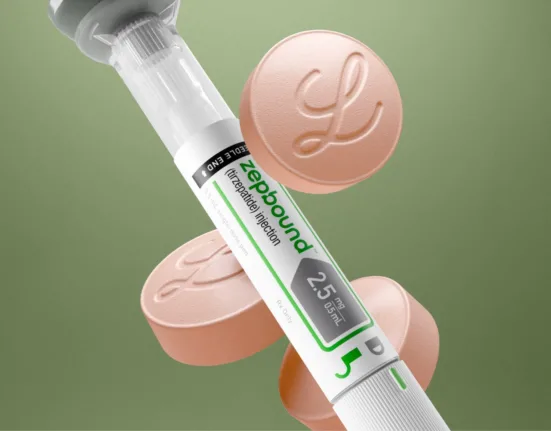
The commercial importance of manufacturing capacity is evident in Lilly’s existing diabetes and obesity franchise. In the third quarter of 2026, the company reported worldwide Mounjaro revenue of approximately $10.7 billion and Zepbound revenue of approximately $5.35 billion. Both medicines contain tirzepatide, although they are marketed under different brands for their respective approved indications.
The combined sales illustrate the scale of commercial demand associated with modern incretin-based medicines. However, the Pennsylvania facility is intended primarily for next-generation products and should not be described as an immediately available solution to current supply requirements. Its expected 2031 opening places its principal contribution several years beyond the latest quarterly sales period.
Lilly reported total third-quarter revenue of $24.4 billion, an increase of 39% year on year. The growth was driven substantially by demand for Mounjaro and Zepbound, demonstrating the financial significance of its metabolic disease portfolio. Strong revenue generation provides resources for manufacturing investment, although the return on the Pennsylvania project remains dependent on future production and demand.
The company also reported that realised prices declined in several markets during the quarter. This illustrates an important commercial consideration: rising treatment volumes do not necessarily produce proportional revenue growth when pricing and reimbursement arrangements change. Long-term manufacturing economics must therefore account for both unit demand and the revenue generated per unit.
If future medicines become commercially successful, additional production capacity could help Lilly address demand across several markets. However, forecasts made years before a factory opens are exposed to changes in competition, regulatory decisions and treatment preferences. The market in 2031 may differ substantially from conditions prevailing in November 2026.
The new site could improve supply flexibility, but it does not establish that Lilly will achieve lower production costs or greater market share. Those outcomes will depend on utilisation, manufacturing yields and the products ultimately produced.
What does the investment mean for Pennsylvania’s pharmaceutical manufacturing workforce?
Lilly expects the facility to create approximately 850 permanent positions spanning engineering, scientific operations, manufacturing, laboratory work and related technical functions. Construction is expected to support around 2,000 jobs during the development and commissioning period. These are projected employment figures rather than jobs already filled.
The company has begun recruitment activity associated with the Lehigh Valley project. Building a workforce for advanced pharmaceutical production requires specialised training, particularly where employees will work with regulated manufacturing systems and complex equipment. Skills involving quality assurance, process engineering and automation will be important.
The investment may also create demand for local suppliers, construction services and supporting infrastructure. However, secondary economic effects depend on procurement decisions and the extent to which contracts are awarded within the region. The announcement does not provide a verified estimate of indirect employment or total local economic output.
Lilly has also committed up to $1 million over five years to a community initiative associated with the Upper Macungie Township Community Fund. The programme is intended to support activities involving nutrition, health resources and community wellbeing. This commitment is separate from the $3.5 billion manufacturing investment and does not form part of the facility’s production capacity.
Environmental and resource management will be relevant as the project progresses. The company is targeting Leadership in Energy and Environmental Design Gold certification for the facility. That represents a design and construction objective rather than a certification already obtained.
The site’s long-term success will depend partly on maintaining a skilled workforce capable of operating and improving complex manufacturing processes. Employment numbers provide one measure of the project’s regional significance, but manufacturing quality and operational reliability will determine its contribution to pharmaceutical supply.
What must happen before the Pennsylvania facility can produce approved medicines?
The groundbreaking confirms that the construction phase has begun, but substantial development work remains before routine production can occur. The facility must be completed, equipment installed and qualified, manufacturing processes validated and personnel trained. Applicable regulatory requirements will need to be satisfied for the products intended to be manufactured there.
For investigational medicines such as retatrutide, successful clinical development and marketing authorisation remain separate dependencies. A completed manufacturing facility cannot legally supply an investigational product as a marketed medicine simply because production infrastructure exists. The product must first obtain the relevant regulatory approval.
The company may also need to qualify the facility within individual product manufacturing applications. Regulatory scrutiny can include process controls, quality systems and site readiness. Planned physical capacity is therefore not equivalent to authorised commercial supply.
The long interval before the expected 2031 opening creates opportunities for technological improvements and process planning. It also means Lilly may need to adapt the facility’s final production mix as its pipeline progresses. Flexibility in equipment and process design could become important if development priorities change.
Investors should therefore distinguish between three stages: the capital project, manufacturing readiness and commercial utilisation. The groundbreaking establishes progress on the first stage, while the other two remain dependent on future execution. No numerical production target has been disclosed against which eventual output can currently be assessed.
Eli Lilly’s $3.5 billion Pennsylvania investment is a substantial commitment to the future of injectable obesity medicines and its wider pharmaceutical manufacturing network. The company’s established commercial growth helps explain the scale of the investment, while retatrutide’s investigational status illustrates the uncertainty inherent in planning years ahead of regulatory decisions. The decisive test will be whether the facility reaches operational readiness by 2031 and provides reliable, economically productive capacity for the medicines ultimately authorised and demanded by patients.