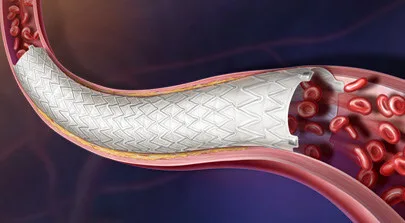
Endologix LLC has published 36-month DETOUR2 results for the DETOUR System, its percutaneous transmural arterial bypass platform for long and complex femoropopliteal disease. The analysis reports 58.2% primary patency, 66.8% freedom from clinically driven target lesion revascularization and 97.9% freedom from major amputation at three years in a population dominated by chronic total occlusions and severe arterial calcification.
The evidence strengthens the clinical case for placing percutaneous transmural arterial bypass between conventional endovascular treatment and open surgical bypass. It does not establish the DETOUR System as a universal replacement for either approach, but it gives vascular specialists longer-term evidence for treating patients whose lesion complexity, surgical risk or previous treatment history leaves few attractive options.
Why does peer-reviewed three-year publication matter more than another conference update?
The most important new development is not the first disclosure of the three-year outcome figures. Those results were previously presented at a medical conference in November 2024. Their publication in a peer-reviewed journal instead moves the evidence into a form that clinicians, hospital committees, payers and guideline reviewers can examine more closely when deciding how percutaneous transmural arterial bypass should fit into treatment pathways.
That distinction matters commercially as well as clinically. Conference presentations can generate interest, but adoption of a technically unfamiliar vascular procedure usually depends on detailed methods, endpoint definitions, adverse-event reporting and longer-term follow-up. Publication gives institutions a stronger basis for evaluating whether the procedure should be introduced, which patients should be considered and what training or surveillance infrastructure will be required.
The evidence nevertheless remains based on a prospective, international, multicentre, single-arm investigation rather than a randomized comparison. Peer review improves transparency and confidence in the analysis, but it does not remove the limitations created by the absence of an active control group. Claims that the DETOUR System matches or replaces surgical bypass must therefore be interpreted as indirect comparisons, not conclusions proven within DETOUR2 itself.
What do the DETOUR2 patency and reintervention results reveal about durability?
DETOUR2 enrolled an unusually difficult femoropopliteal disease population. Mean lesion length was approximately 32.7 centimetres, 96% of treated lesions were chronic total occlusions and 70% were severely calcified. These characteristics are important because longer occlusions and heavy calcification can make conventional wire crossing, balloon expansion, stent deployment and long-term vessel patency considerably more challenging.
Primary patency of 58.2% at 36 months indicates that a substantial proportion of treated segments continued to satisfy the trial’s strict patency criteria despite this complexity. However, it also means that more than four in ten patients no longer met that primary patency definition by three years. The result is clinically credible for advanced disease, but it should not be translated into a claim that durability concerns have disappeared.
The difference between 58.2% primary patency and 84% patency based on the presence or absence of flow is particularly revealing. A treated pathway may remain open and continue delivering blood while no longer meeting a stricter duplex ultrasound threshold or after requiring another intervention. This helps explain why limb preservation and symptom outcomes can remain favourable even as formal primary patency declines.
Freedom from clinically driven target lesion revascularization was 66.8%, suggesting that approximately one-third of patients required or met criteria for repeat treatment during the three-year period. That burden is not trivial. Repeat intervention can still be preferable to major open surgery for selected patients, but clinicians and hospitals will need to consider the entire treatment journey rather than judging the platform only by the initial procedure.
Why does the DETOUR approach differ from conventional femoropopliteal interventions?
Most endovascular procedures attempt to reopen the diseased artery by crossing, dilating or scaffolding the obstructed segment. The DETOUR System instead creates a new route around the blockage. The covered stent pathway leaves the artery above the lesion, travels through an adjacent section of the femoral vein and returns to the artery below the diseased segment.
This design allows interventionists to bypass very long arterial obstructions without making the large incisions associated with traditional surgical bypass. It may be especially relevant when an occlusion is difficult to cross, when previous endovascular treatment has failed or when the patient lacks an attractive profile for open surgery.
The approach also introduces a different category of procedural risk. Creating an arterial bypass through the venous system requires careful anatomic planning, accurate transmural crossing, sufficient stent overlap and preservation of venous function. The technique cannot be viewed as simply another femoropopliteal stenting procedure, because its procedural workflow, failure modes and post-treatment surveillance requirements are different.
That difference could become a competitive advantage if experienced centres can produce predictable outcomes in lesions that are poorly served by standard devices. It could also limit adoption if the learning curve remains steep, case volumes are insufficient or hospitals are reluctant to introduce a procedure requiring specialized inventory, imaging and clinical training.
Can DETOUR compete with surgical bypass without a randomized comparative trial?
Open bypass continues to provide an important revascularization option for patients with extensive femoropopliteal disease, particularly when suitable anatomy, surgical fitness and an appropriate conduit are present. It can provide durable blood flow, but it may also involve general anaesthesia, surgical wounds, longer recovery, infection risk and other perioperative complications.
The DETOUR System seeks to offer some of the anatomical logic of bypass without the same level of surgical exposure. Its potential value is therefore not based solely on achieving the highest possible patency percentage. A minimally invasive procedure with acceptable durability, shorter hospitalization and preserved future treatment options could be clinically valuable even if some patients require later reintervention.
However, DETOUR2 cannot establish comparative non-inferiority to open bypass because patients were not randomized between the two strategies. Comparisons with historical surgical studies are complicated by differences in lesion anatomy, bypass conduit, patient risk, surveillance methods and endpoint definitions. Outcomes from a prosthetic bypass cohort cannot be treated as interchangeable with outcomes from autogenous vein bypass or a modern endovascular population.
This is why the most defensible positioning is as an additional option for carefully selected patients, not a new default for all long superficial femoral artery lesions. A future randomized or rigorously matched comparison would be needed to determine whether percutaneous transmural arterial bypass provides superior value for defined patient groups.
Why do limb preservation and symptom improvement require cautious interpretation?
Freedom from major amputation of 97.9% through three years is encouraging, particularly because the treated population included advanced and anatomically difficult disease. It suggests that loss of strict primary patency did not automatically translate into catastrophic limb outcomes. Clinical success, measured through improvement in Rutherford classification, was also reported in 96.7% of evaluable patients at 36 months.
Those findings support the argument that technical imaging endpoints do not capture the entire patient benefit. Walking capacity, rest pain, wound status, daily function and avoidance of major amputation can matter more to patients than whether a duplex velocity measurement crosses a predetermined threshold.
At the same time, amputation outcomes depend heavily on the clinical severity of the population. A cohort containing many patients with lifestyle-limiting claudication would be expected to have a lower major-amputation risk than a cohort composed entirely of patients with chronic limb-threatening ischaemia and tissue loss. The Rutherford distribution, survival of patients through follow-up and availability of three-year functional assessments therefore influence how broadly the limb-preservation finding can be applied.
The very high clinical-success percentage must also be read alongside follow-up attrition and reintervention. Patients available for evaluation at three years may not represent every treated participant, and symptom improvement can coexist with additional procedures. The finding is meaningful, but it is not equivalent to uninterrupted, intervention-free recovery.
Why does the venous safety profile remain central to physician confidence?
Routing covered stents through the femoral vein creates an understandable concern about venous obstruction and deep vein thrombosis. DETOUR2 reported symptomatic deep vein thrombosis in 4.1% of patients through three years, with no pulmonary emboli reported. The rate was unchanged from the one-year assessment, suggesting that a delayed wave of new symptomatic venous events did not emerge during extended follow-up.
This supports the long-term feasibility of using the venous pathway in appropriately selected patients. It is particularly relevant because the device is contraindicated in patients with an elevated risk of deep vein thrombosis and in several anatomical or clinical situations that could compromise the procedure.
A 4.1% symptomatic deep vein thrombosis rate is still a real safety consideration rather than a statistical footnote. Patient selection, pre-procedure venous assessment, antithrombotic management and post-procedure surveillance are likely to remain essential parts of any DETOUR programme. Broader adoption could expose outcomes in patients and centres that differ from those participating in an investigational trial.
Rare technical complications also become more visible as commercial use expands. Device interaction, crossing errors, component positioning and management of an occluded endobypass require specialist experience. The success of the platform may therefore depend as much on controlled training and procedural discipline as on the physical device.
What could real-world evidence and reimbursement changes mean for DETOUR adoption?
The DETOUR System already has United States regulatory approval, so the strategic question has shifted from market authorization to repeatable commercial adoption. Endologix must demonstrate that outcomes achieved in selected trial centres can be reproduced across a broader range of hospitals, operators and patients.
The PTAB1 post-market study is consequently important. It is designed to evaluate performance in very long, complex superficial femoral artery lesions under real-world conditions, with planned five-year follow-up and greater representation of women. Real-world evidence could clarify procedural learning curves, treatment patterns, sex-based outcomes, reintervention frequency and venous complications more effectively than the original approval study.
Reimbursement could become a near-term adoption pressure point. Dedicated procedural and device coding reduces some administrative uncertainty, while transitional payment support can help hospitals absorb the cost of introducing a new technology. However, temporary outpatient pass-through support is scheduled to end after 2026, making durable payment arrangements and convincing health-economic evidence increasingly important.
Hospitals will ultimately examine whether the platform reduces length of stay, intensive postoperative care, wound complications and recovery time sufficiently to offset device, training and repeat-intervention costs. A procedure can be clinically effective yet struggle commercially if reimbursement is inconsistent or if total episode-of-care costs remain difficult to predict.
Which unanswered questions will determine whether PTAB becomes routine vascular practice?
The three-year publication gives the DETOUR System a more credible long-term evidence base, but several questions remain unresolved. The field still needs stronger comparative data against open bypass, contemporary drug-coated technologies, covered stents and other strategies used for long chronic total occlusions.
Investigators must also determine which patients gain the clearest net benefit. Those who are poor surgical candidates, lack suitable vein conduit, have experienced previous treatment failure or face exceptionally long calcified occlusions may represent the strongest initial population. Expanding beyond that group would require evidence showing that the procedure offers better durability, safety, recovery or cost than less complex alternatives.
Five-year durability will be especially important. The femoropopliteal segment is exposed to bending, torsion and compression, while the DETOUR pathway adds transitions between arterial and venous anatomy. Longer follow-up must establish whether stent integrity, flow preservation and venous safety remain acceptable beyond the three-year window.
The DETOUR2 results therefore represent evidence maturation rather than a final verdict. Endologix has shown that a fully percutaneous bypass can preserve limbs and sustain clinical improvement in difficult femoropopliteal disease for three years. The next phase will determine whether those outcomes are reproducible, economically sustainable and strong enough to change routine treatment sequencing.