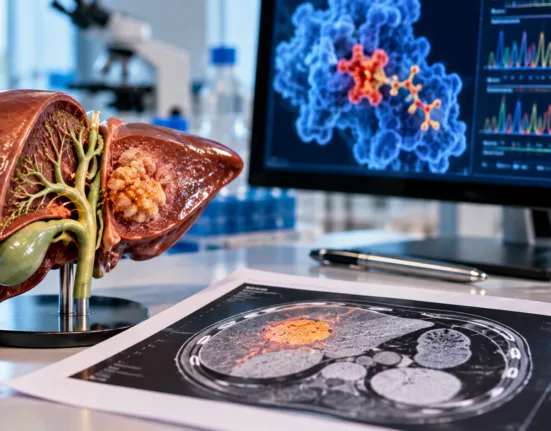
The United States Food and Drug Administration has cleared Hopstem Biotechnology’s hNPC01 for clinical development in chronic motor dysfunction caused by intracerebral hemorrhage and traumatic brain injury, while granting Fast Track designation in both indications. The investigational therapy contains allogeneic forebrain neural progenitor cells produced from induced pluripotent stem cells and is intended to replace damaged neural tissue after direct transplantation into the brain. The decision allows Hopstem to begin United States clinical studies, but it is not an approval and does not establish that hNPC01 can safely restore movement after hemorrhagic stroke or traumatic injury.
hNPC01 is designed to replace lost neurons and reconnect damaged brain circuits
Hemorrhagic stroke occurs when a blood vessel ruptures and bleeding damages surrounding brain tissue. Traumatic brain injury can similarly destroy neurons and disrupt the networks responsible for movement, balance and coordination. Rehabilitation may help patients recover remaining function, but there is no FDA-approved therapy that regenerates the damaged neural tissue responsible for chronic motor impairment.
hNPC01 is an off-the-shelf product containing human forebrain neural progenitor cells derived from a clinical-grade induced pluripotent stem cell line. These progenitor cells have not fully matured into neurons when manufactured. After stereotactic implantation into the brain, Hopstem intends them to develop into forebrain neurons and supporting glial cells, integrate with surviving tissue and help reconstruct damaged neural circuits.

That strategy differs from cell therapies intended mainly to reduce inflammation or release supportive growth factors. hNPC01 is being developed as a neuronal replacement therapy, meaning the transplanted cells are expected to survive, mature and become functional components of the recipient’s brain network.
Preclinical research published in Nature Communications showed that Hopstem’s FOXG1-positive forebrain progenitor cells matured into several cortical neuron types after transplantation into stroke-injured rats. The cells formed synaptic connections with the animals’ existing neurons, while treated animals demonstrated improved sensory and motor performance. These findings support the biological rationale for hNPC01, but they came from an ischemic stroke model in rats rather than patients with hemorrhagic stroke or traumatic brain injury.
The causes and locations of brain injury can differ substantially across ischemic stroke, intracerebral hemorrhage and trauma. Bleeding may create pressure, inflammation and tissue disruption beyond the original hemorrhage, while traumatic injuries can be diffuse, multifocal or accompanied by damage to white-matter connections. A cell product that integrates successfully into one type of damaged brain environment may not produce the same survival, distribution or functional effect in another.
The new IND clearances therefore represent permission to test whether the underlying neural-replacement strategy extends to two additional conditions. They do not confirm that the ischemic stroke evidence can be transferred directly to patients with hemorrhagic or traumatic injuries.
Early ischemic stroke results provide the clinical basis for expanding into two new indications
Hopstem’s human evidence currently comes from patients with chronic motor dysfunction after ischemic stroke. A Phase 1 program in China enrolled 23 patients whose strokes had occurred between six months and five years before treatment. The participants received intracranial hNPC01 transplantation and were followed for safety and changes in motor function.
Hopstem reported that patients in a target subgroup improved by an average of 16 points on the Fugl-Meyer Motor Scale at 12 months. Nearly 80% achieved an improvement of at least 10 points, which the company described as clinically meaningful. At 18 months, more than 92% of followed participants reportedly maintained clinically meaningful motor improvement, while 54% improved by at least one level on the modified Rankin Scale.
The company has also reported that improvement persisted through two years and appeared to reach a stable plateau rather than declining after the initial response. Through follow-up extending as long as two and a half years, Hopstem reported no abnormal cell overgrowth, tumor formation or treatment-related neurological deterioration. Manageable immune responses were the only product-related adverse effects identified in the July 29 announcement.
These findings are encouraging for an early neural transplantation study, particularly because the participants were already in the chronic phase when spontaneous recovery is generally more limited. However, the company’s announcement did not provide a randomized untreated or sham-surgery comparator for the Phase 1 results.
Without a concurrent control group, it is difficult to separate the effect of hNPC01 from continued rehabilitation, differences in baseline impairment, expectation effects or natural variability in stroke recovery. The small sample also cannot reliably identify uncommon complications or determine which patients are most likely to benefit.
The reported efficacy figures require further interpretation because some were calculated in a target subgroup rather than across every enrolled patient. Later controlled trials should specify the subgroup before treatment, explain how missing follow-up data are handled and report results for the complete enrolled population.
Evidence from ischemic stroke also cannot yet establish efficacy in hemorrhagic stroke or traumatic brain injury. Hopstem has not reported human hNPC01 outcomes in either of the newly cleared indications. Initial studies will need to determine whether the transplanted cells survive and integrate in these distinct injury environments before meaningful claims about motor restoration can be made.
Intracranial delivery creates safety questions beyond the biological activity of the cells
hNPC01 is not administered through a routine intravenous infusion. The cells must be implanted directly into selected brain regions using a stereotactic neurosurgical procedure. This delivery method may help place the therapy close to damaged motor circuits, but it introduces procedural risks separate from the risks of the cell product itself.
Investigators will need to monitor for bleeding, infection, seizures, neurological worsening and injury associated with the implantation procedure. Patients with previous intracerebral hemorrhage may require especially careful evaluation because the therapy involves entering tissue previously affected by bleeding and vascular damage.
Long-term biological monitoring is equally important. Pluripotent stem cells can theoretically produce many cell types, so manufacturing must consistently remove undifferentiated cells that could divide unpredictably after implantation. Testing must also confirm the identity, purity, potency and genetic stability of every manufactured batch.
The allogeneic nature of hNPC01 allows Hopstem to manufacture standardized cells rather than creating a separate product from each patient. That could support larger-scale production and more predictable scheduling if the therapy advances. It also means recipients may recognize the transplanted cells as foreign, making immune responses and long-term graft survival important clinical questions.
The earlier ischemic stroke experience offers some reassurance because no abnormal overgrowth or tumor formation was reported during the available follow-up. Twenty-three patients remain far too few to rule out rare events, and the safety profile could differ when cells are placed into brain tissue damaged by hemorrhage or trauma.
Researchers must also determine whether greater cell survival always produces better results. Excessive or incorrectly directed integration could create abnormal electrical activity or interfere with existing circuits. Early trials therefore need careful dose escalation, imaging and neurological monitoring rather than assuming that a larger graft will provide greater functional recovery.
Hopstem’s July announcement did not disclose the enrollment targets, dose cohorts, control groups, primary endpoints or planned start dates for the newly cleared hemorrhagic stroke and traumatic brain injury studies. Those protocol details will determine whether the programs can distinguish treatment effects from changes caused by rehabilitation and background care.
Fast Track designation can accelerate development but does not lower approval standards
FDA Fast Track designation is intended for experimental treatments addressing serious conditions and unmet medical needs. It can provide more frequent meetings and written communication with the agency, while potentially making a future application eligible for rolling review, accelerated approval or Priority Review when the separate requirements for those pathways are met.
Fast Track status does not mean that the FDA has concluded hNPC01 is effective. It also does not guarantee that clinical development will be shorter or that the therapy will qualify for approval using a surrogate endpoint. Hopstem must still produce adequate evidence showing that the treatment’s benefits outweigh its surgical, immunological and long-term cellular risks.
The company has already received Fast Track and Regenerative Medicine Advanced Therapy designations for hNPC01 in chronic ischemic stroke. Following an End-of-Phase 1 meeting, Hopstem said the FDA allowed it to proceed with a randomized, double-blind dose-bridging Phase 2 study that could potentially expand into an adaptive Phase 2/3 pivotal program. The new hemorrhagic stroke and traumatic brain injury programs are separate indications and will require their own clinical evidence.
Expanding one manufactured cell product across three forms of brain injury could make development more efficient if the therapy demonstrates a consistent mechanism. Hopstem may be able to use experience from ischemic stroke to inform cell production, implantation methods, dose selection and long-term monitoring in the newer programs.
The expansion also increases the possibility that results will differ by indication. Ischemic stroke, intracerebral hemorrhage and traumatic brain injury can damage different structures through different biological processes. A positive result in one group should not be treated as evidence that the therapy will work in all three.
The immediate significance of the FDA decision is that hNPC01 can now enter human testing for two additional causes of chronic neurological disability. The decisive evidence will come from controlled trials that show whether transplanted progenitor cells produce durable improvements beyond rehabilitation alone without causing unacceptable surgical or long-term cellular complications.