GenEditBio Limited, a Hong Kong–headquartered clinical-stage biotechnology firm focused on in vivo genome-editing therapies, announced that the United States Food and Drug Administration has cleared its Investigational New Drug application for GEB‑101, a CRISPR-based candidate for TGFBI corneal dystrophy. This regulatory milestone authorizes the launch of the Phase 1/2 CLARITY trial in the United States, which will evaluate the safety, tolerability, and early efficacy of a one-time intrastromal injection of GEB‑101 in patients with pathogenic TGFBI mutations. The trial is expected to begin patient enrollment in the second quarter of 2026.
What the FDA greenlight indicates about the evolving risk calculus in in vivo genome editing
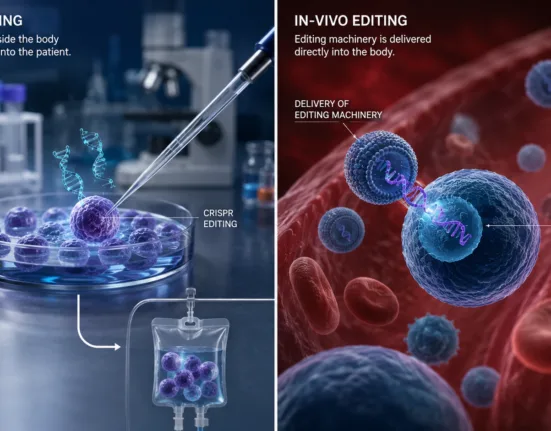
The approval of GenEditBio Limited’s IND application reflects growing regulatory comfort with nonviral delivery mechanisms in the genome-editing space. While early clinical programs in this category typically used viral vectors such as AAV or lentivirus for in vivo delivery, GEB‑101 is based on a ribonucleoprotein format packaged in a proprietary engineered protein delivery vehicle. This transient, DNA-free approach to gene editing may reduce the likelihood of prolonged off-target exposure and immunogenicity, both of which have historically slowed regulatory pathways.

Industry analysts following the gene therapy sector suggest that the Food and Drug Administration’s decision indicates a willingness to consider more modular and targeted delivery systems when paired with an immune-privileged organ system such as the eye. The cornea, in particular, has become a favored entry point for novel editing technologies given its compartmentalized structure, limited systemic absorption, and measurable endpoints. For GenEditBio Limited, this decision paves the way for future applications of its broader PDV-based platform in other localized or compartmentalized disease settings.
Why TGFBI corneal dystrophy is emerging as a strategic entry point for precision genome editing
TGFBI corneal dystrophy comprises a set of autosomal dominant eye disorders characterized by abnormal protein deposition in the cornea due to mutations in the TGFBI gene. These deposits lead to recurrent corneal erosions, vision loss, and photophobia. While treatment strategies such as phototherapeutic keratectomy or full-thickness corneal transplantation are often used, both have high recurrence rates and involve invasive procedures with significant recovery burdens.
From a product development perspective, the condition presents a set of favorable attributes. The disease is monogenic, the genetic target is well characterized, and the pathology is confined to a discrete and accessible tissue layer. These features make it particularly amenable to a one-time, precision gene-editing intervention. GEB‑101 aims to directly edit the underlying TGFBI mutations within the corneal stroma using a single intrastromal injection, potentially offering a durable correction without the need for repeat procedures or lifelong immunosuppression.
How GenEditBio Limited’s delivery vehicle differs from first-generation CRISPR programs
Unlike the first wave of in vivo CRISPR clinical programs, which typically relied on lipid nanoparticles or viral vectors, GenEditBio Limited is positioning its PDV system as a next-generation vehicle with improved tissue targeting and reduced immunogenicity. GEB‑101 delivers a preassembled Cas-based ribonucleoprotein complex into the corneal stroma via PDV, enabling direct DNA repair at the mutation site. This format eliminates the need for transcription or translation of gene-editing payloads within the cell, a potential advantage in tissues with limited cellular turnover such as the cornea.
While still early in clinical validation, the PDV platform could represent a significant evolution in how gene-editing therapies are delivered in vivo. Preclinical data submitted to the United States Food and Drug Administration reportedly demonstrated both efficient on-target editing and limited off-target effects. However, analysts note that the true test of the platform’s value will depend on its reproducibility in human tissue and its adaptability to other genetic conditions.
What the CLARITY trial design reveals about GenEditBio Limited’s risk posture and regulatory alignment
The upcoming CLARITY trial is described as a seamless, adaptive, multicenter study that will evaluate GEB‑101 across escalating dose cohorts. Patients will receive a one-time intrastromal injection of the genome-editing therapy. This adaptive design is consistent with broader regulatory trends favoring iterative, data-driven progression from safety to efficacy evaluation within a single protocol.
By designing the trial in a flexible and sequential manner, GenEditBio Limited retains the ability to respond to early safety signals, adjust inclusion criteria, or refine delivery parameters based on interim data. This approach not only mitigates development risk but also supports potential harmonization with regulatory agencies outside the United States. The company has already initiated a separate investigator-initiated trial in China, and is reportedly preparing submissions in other major jurisdictions. If GEB‑101 demonstrates early safety and molecular editing evidence, GenEditBio Limited may seek parallel approvals in the European Union and Asia-Pacific regions under rare disease or accelerated pathways.
What challenges remain for clinical validation and patient impact
Despite the enthusiasm around genome editing as a therapeutic class, several practical and scientific challenges remain. One unresolved question is whether editing a subset of corneal cells can meaningfully halt or reverse the protein deposition process over the long term. In TGFBI corneal dystrophy, extracellular aggregates are often laid down over decades, and it is not yet clear whether removing the mutation will stop the disease process or merely slow its progression.
There is also the issue of phenotypic variability among patients with different TGFBI mutations. While some variants present early with aggressive corneal pathology, others may progress more slowly or respond differently to intervention. This heterogeneity could complicate endpoint assessment and patient selection, particularly in a small initial trial cohort.
From a safety standpoint, the irreversible nature of gene editing raises concerns about unintended consequences. Even if off-target editing is minimized, any structural disturbance of the cornea’s architecture could affect visual acuity. Regulators and clinicians alike will be closely monitoring for adverse events such as corneal haze, scarring, or epithelial instability. Moreover, the immune response to foreign proteins, particularly those introduced via PDV, remains a theoretical risk that has yet to be validated in humans.
Why platform validation may outweigh the commercial value of the lead indication
Although TGFBI corneal dystrophy is a rare disorder with relatively low commercial potential as a standalone product, it serves as a critical proving ground for GenEditBio Limited’s in vivo genome-editing platform. A successful clinical demonstration of safety, precision editing, and durable effect in this program could dramatically elevate the company’s standing in the competitive genome-editing space, attracting both institutional investors and strategic partners.
If validated, the PDV platform could be repurposed across a range of genetic indications that require localized, transient editing. These may include epidermolysis bullosa, inherited skin disorders, or specific liver and muscle conditions. The modularity of the RNP format, combined with the targeted delivery of PDV, could make GenEditBio Limited one of the first companies to scale in vivo editing across multiple tissues without relying on viral vectors.
From a sectoral perspective, GEB‑101’s progress will also be watched closely by peers in the genome-editing space. Companies like Intellia Therapeutics, Editas Medicine, CRISPR Therapeutics, and Beam Therapeutics are all navigating various delivery formats and organ system targets, with varying degrees of regulatory success. GenEditBio Limited’s progress offers a real-time case study of whether smaller players with differentiated delivery platforms can compete against better-capitalized incumbents.