Eli Lilly and Company’s expanded U.S. label for EBGLYSS has turned a familiar eczema biologic question into a sharper industry issue: how much does injection burden matter once patients achieve disease control? The drugmaker’s every eight week maintenance option for lebrikizumab-lbkz in eligible patients with moderate-to-severe atopic dermatitis reflects a broader shift in dermatology, where companies are no longer competing only on whether biologics work, but on how easily patients can stay on them for years.
Why is dosing convenience becoming a serious competitive factor in atopic dermatitis biologics?
Atopic dermatitis has moved beyond the era when the arrival of any effective systemic biologic was enough to transform expectations. For patients with moderate-to-severe disease, the treatment conversation now includes a more practical set of questions. How quickly does the therapy control itch? How durable is the response? How many injections are required after the initial phase? How much topical treatment is still needed? How easy is the medicine to access through insurance? These are not soft lifestyle issues. In chronic inflammatory disease, they can decide whether a therapy remains part of a patient’s routine after the early improvement phase.
The significance of Lilly’s EBGLYSS dosing update is that it fits this more mature competitive phase. The approval does not create a new disease market or introduce a new mechanism into dermatology. Instead, it gives physicians another way to manage maintenance treatment after patients have responded adequately. That is commercially meaningful because long-term adherence in chronic skin disease is often shaped by friction. Fewer injections can reduce treatment fatigue, simplify patient routines, and make biologic therapy feel less intrusive over time.
The limitation is that convenience only matters if disease control holds. Dermatologists will not extend dosing intervals simply because the label allows it. They will need confidence that patients remain stable, that flares do not increase, and that itch and lesion control remain acceptable. The every eight week option may therefore be most relevant for selected responders rather than all patients. That makes the update useful, but not universally practice-changing. In real clinics, the most valuable feature of a label expansion is not how attractive it sounds. It is how safely and predictably it can be used.
How does EBGLYSS show the eczema market is moving into a lifecycle strategy phase?
EBGLYSS illustrates how dermatology biologics are entering a lifecycle management phase similar to other mature specialty markets. First launches establish efficacy and safety. Later label refinements, dosing adjustments, broader patient data, adolescent use, combination flexibility, and real-world evidence become the tools companies use to defend or expand market share. Lilly’s newer maintenance interval belongs squarely in this second phase. It sharpens the product story without changing the underlying treatment category.

This is important because atopic dermatitis is already served by multiple systemic options, including biologics and targeted oral therapies. In that environment, drugmakers need more than a mechanism of action story. They need a reason for physicians to think differently about patient selection, long-term management, or convenience. EBGLYSS targets interleukin-13, a cytokine linked to type 2 inflammation and skin barrier disruption. That mechanism gives Lilly a clear immunology narrative, but the dosing update gives the narrative a practical patient-facing dimension.
The risk is that lifecycle improvements can be overinterpreted. A lower-frequency maintenance option is not the same as superiority over rivals. It does not answer every question about onset, comparative efficacy, payer access, safety positioning, or switching from existing therapies. Lilly’s challenge is to make the extended interval feel clinically useful rather than merely commercially polished. That will depend on how dermatologists use the regimen in practice and whether patient experience supports the theoretical convenience advantage.
Why could fewer maintenance injections influence patient persistence in chronic eczema care?
Moderate-to-severe atopic dermatitis is not only a skin condition managed during visible flares. It is a chronic disease that can affect sleep, work, school, mental well-being, and quality of life. Patients often move through topical therapies, systemic options, lifestyle adjustments, and repeated physician visits before biologic therapy is considered. Once a biologic works, the next challenge is keeping treatment practical enough that patients remain consistent.
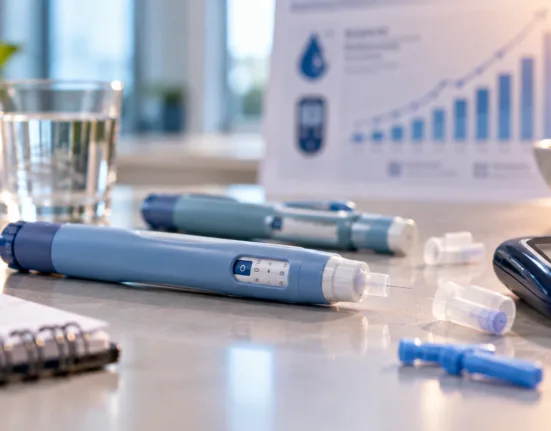
That is where fewer maintenance injections may matter. A patient who has achieved adequate response may be more willing to continue therapy if the ongoing burden is lower. Reduced injection frequency can also help caregivers, adolescents, people with needle anxiety, patients who travel often, and those managing multiple health conditions. The commercial logic is simple. In chronic disease, the medicine that patients can live with may have an advantage over a medicine that works but feels burdensome.
However, adherence is not determined by injection frequency alone. Patients may discontinue therapy because of cost, perceived loss of efficacy, adverse events, access delays, pharmacy issues, or the belief that improvement means treatment is no longer needed. Longer dosing intervals can also create a different challenge: patients may forget scheduled doses or delay treatment because the medicine feels less routine. The benefit of fewer injections must therefore be supported by education, reminders, follow-up systems, and clear guidance on what to do if symptoms return.
What does extended dosing reveal about physician decision-making in dermatology?
Dermatologists are likely to view the every eight week EBGLYSS option as a tool for individualized maintenance rather than a universal default. That is an important distinction. A patient with deep, stable response may be a strong candidate for less frequent dosing. A patient with persistent itch, frequent flares, severe baseline disease, or partial response may require a more conservative approach. In practice, physicians will decide based on disease history, response durability, patient preference, and comfort with the available evidence.
This type of decision-making is becoming more common in dermatology as targeted therapies expand. Physicians are no longer choosing only between topical treatment and broad systemic immunosuppression. They are managing a growing set of biologic and oral options, each with different dosing schedules, safety considerations, monitoring requirements, and payer hurdles. EBGLYSS now has a clearer place in that conversation for patients who value lower maintenance frequency after response.
The unresolved question is how quickly prescribing habits will change. Dermatologists often develop confidence through accumulated experience, not label language alone. If early users find that patients remain controlled on longer intervals, the regimen may become a meaningful part of EBGLYSS positioning. If clinicians use it cautiously and only for a narrow subset of patients, the commercial effect may remain modest. In specialty care, the label opens the door, but physician habit determines how wide it stays open.
How could payer access shape the real value of Lilly’s dosing advantage?
The commercial impact of a lower-frequency maintenance option depends heavily on access. Biologic dermatology therapies are expensive, and U.S. patients often encounter prior authorization, step therapy, specialty pharmacy rules, and variable out-of-pocket exposure. A label update can create a stronger clinical story, but payers will ask whether it changes cost, outcomes, or resource use enough to affect coverage preferences.
Lilly may be able to argue that fewer maintenance injections reduce treatment burden and support persistence. In theory, lower dosing frequency after response could also create a more efficient long-term treatment model. However, payers generally focus on net cost, negotiated rebates, comparative effectiveness, and formulary strategy. If EBGLYSS is not positioned favorably on formularies, the convenience advantage may not fully translate into prescribing growth.
This is where the patient support layer becomes critical. Even a compelling biologic can lose momentum if patients face delays between prescription and first dose, confusion over coverage, or interruptions during maintenance. The every eight week regimen may help Lilly’s story with dermatologists, but the practical uptake will depend on whether the drugmaker can pair that story with access programs, payer relationships, and specialty pharmacy execution. In modern dermatology, the winning therapy is often the one that combines clinical credibility with low administrative friction.
Why does this matter for the broader immunology strategy at Eli Lilly and Company?
For Eli Lilly and Company, EBGLYSS is not the center of the investor story in the same way as the drugmaker’s metabolic disease franchise. Yet the dermatology update still matters because it shows how Lilly is building depth outside its most visible growth engines. Immunology remains a valuable specialty area, and atopic dermatitis offers a large chronic market with meaningful unmet needs among patients who do not achieve adequate control with topical prescription therapies.
The expanded maintenance option gives Lilly a more differentiated talking point in a crowded category. It can position EBGLYSS around selective IL-13 targeting and long-term treatment flexibility. That may help the drugmaker strengthen dermatologist engagement, support patient retention, and reinforce its presence in specialty immunology. In large pharma portfolios, these incremental advances can matter because they add durability and breadth to revenue streams beyond headline blockbuster categories.
The caution is that investors are unlikely to treat the dosing update as a major valuation catalyst on its own. Lilly’s stock sentiment remains driven mainly by obesity, diabetes, manufacturing capacity, pipeline execution, and the sustainability of high-growth expectations. EBGLYSS can support diversification, but it is unlikely to reshape market perception unless commercial uptake surprises meaningfully. For industry readers, the more important lesson is strategic rather than financial. Lilly is using label refinement to improve competitiveness in a market where biologic differentiation is becoming harder.
How could rivals respond as eczema therapy shifts toward durability and convenience?
The EBGLYSS update also puts pressure on the wider atopic dermatitis field. As more therapies become available, rivals cannot rely only on efficacy claims. They will need to defend their own positions through long-term data, safety reassurance, real-world persistence, broader age-group evidence, flexible use patterns, and payer access. Convenience is now part of the competitive script, and that means dosing schedules will be compared more closely by physicians, patients, and payers.
This does not mean the therapy with the fewest injections automatically wins. Some patients and clinicians may prioritize speed of symptom relief, depth of skin clearance, long-term safety familiarity, or experience in specific patient groups. Others may prefer oral options despite different safety and monitoring considerations. The atopic dermatitis market is becoming more segmented, and that segmentation can benefit companies that know exactly where their product fits.
The risk for all drugmakers is that convenience messaging can become promotional if not backed by practical evidence. Patients want fewer injections, but not at the cost of losing control. Physicians want flexible dosing, but not additional uncertainty. Payers want value, but not higher spending without measurable benefit. The next phase of eczema competition will therefore be judged by real-world data and treatment persistence, not only by label language.
What should clinicians, payers, and industry observers watch next?
Clinicians should watch how patients perform when moved to longer EBGLYSS maintenance intervals after adequate response. The most important practical signals will include flare frequency, itch control, rescue medication use, patient satisfaction, missed doses, and discontinuation patterns. These everyday measures will determine whether the every eight week option becomes a regular part of dermatology practice or remains a selective strategy.
Payers will watch whether dosing flexibility translates into measurable value. If extended maintenance supports persistence and reduces disease instability, it may strengthen the case for broader access. If the effect is mainly convenience without clear health system benefit, payer enthusiasm may be more limited. The access story will be particularly important because biologics compete not only in clinics, but also in formulary reviews and specialty pharmacy channels.
For the pharmaceutical sector, the larger signal is that atopic dermatitis has entered a more sophisticated competitive stage. The first wave of targeted therapy changed expectations for disease control. The next wave is about durability, convenience, adherence, and fitting treatment into real patient lives. Lilly’s EBGLYSS update is not a revolution in eczema care. It is something more subtle and commercially revealing: a sign that the biologic market is maturing, and that the next winners may be the companies that make effective treatment easier to sustain.