IDEAYA Biosciences, Inc. (NASDAQ: IDYA) has secured three poster presentations for darovasertib at the 2026 European Society for Medical Oncology Congress, while partner Hengrui Pharma will present long-term Phase 1 results for IDE849 in small-cell lung cancer and other neuroendocrine carcinomas. The congress will be held in Madrid, Spain, from October 23 to October 27, 2026.
The programme will provide updates from the Phase 2/3 OptimUM-02 trial in HLA-A02:01-negative metastatic uveal melanoma, the Phase 2 OptimUM-01 trial in HLA-A02:01-positive metastatic disease and the Phase 2 OptimUM-09 trial in patients receiving darovasertib before local treatment for primary uveal melanoma. The Hengrui Pharma poster will provide longer-term efficacy and safety results for the DLL3-targeting antibody-drug conjugate IDE849, also known as SHR-4849.
The announcement creates a concentrated October catalyst for IDEAYA Biosciences because the four posters address three different components of its valuation: the regulatory strength of its most advanced programme, the potential expansion of darovasertib into larger patient populations and the durability of encouraging early IDE849 responses.
IDEAYA Biosciences shares closed at $36.01 on July 17, up 0.22% during the session. The modest reaction suggests investors regarded the presentation announcement as confirmation of known second-half catalysts rather than a new clinical breakthrough. However, the shares were up approximately 17.8% over the preceding month and 63% over 12 months, indicating that broader sentiment around the company’s oncology pipeline remains constructive.
Why could the OptimUM-02 subgroup analysis matter after darovasertib already met its primary endpoint?
The OptimUM-02 poster will examine darovasertib combined with crizotinib against an investigator-selected treatment in previously untreated HLA-A*02:01-negative metastatic uveal melanoma. The primary results were presented at the American Society of Clinical Oncology Annual Meeting in June, meaning the ESMO presentation is unlikely to change the basic conclusion that the trial succeeded.
In the randomized analysis of 313 patients, the combination produced median progression-free survival of 6.9 months, compared with 3.1 months for the investigator’s choice arm. That represented a 58% reduction in the risk of disease progression under blinded independent central review. The overall response rate was 37.1% with the darovasertib combination and 5.8% in the control group, while disease control rates were 73.3% and 31.1%, respectively.
Those headline figures established a statistically persuasive efficacy case. The remaining question is whether the treatment benefit is consistent across clinically relevant subgroups, including patients with liver metastases, elevated lactate dehydrogenase, different performance-status scores and other characteristics associated with poor outcomes.
Subgroup results are rarely as decisive as a trial’s prespecified primary analysis, particularly when individual categories contain relatively small numbers of patients. Nevertheless, consistency across higher-risk populations can reinforce physicians’ confidence and help regulators understand how broadly the results may apply.
Overall survival also remains important. The January 2026 data cut-off showed an early trend favouring the darovasertib combination, but the data were not mature. IDEAYA Biosciences intends to use progression-free survival to support potential accelerated approval and later overall-survival results to support full approval.
The United States Food and Drug Administration has accepted darovasertib into its Real-Time Oncology Review programme. IDEAYA Biosciences began submitting portions of its application in May and expects to complete the new drug application during the second half of 2026. Consequently, ESMO will arrive while the regulatory process is advancing, giving the subgroup analysis greater significance than an ordinary follow-up poster.

Could OptimUM-01 expand darovasertib beyond the population covered by the planned filing?
The OptimUM-01 presentation may carry the greatest commercial surprise potential because it will focus on patients with HLA-A*02:01-positive metastatic uveal melanoma.
IDEAYA Biosciences’ initial planned filing is directed at HLA-A02:01-negative patients, who account for roughly 70% of the uveal melanoma population and currently lack an approved HLA-independent targeted treatment. HLA-A02:01-positive patients have access to Immunocore Holdings plc’s Kimmtrak, or tebentafusp, an approved bispecific T-cell engager.
That creates a more demanding clinical and commercial comparison. It is not enough for darovasertib and crizotinib to demonstrate antitumour activity in the HLA-positive group. Investors will want to understand whether its response rate, progression-free survival, overall survival, tolerability and oral dosing profile could support use alongside or in competition with Kimmtrak.
Earlier OptimUM-01 findings across a mixed HLA population were encouraging. Among 44 first-line metastatic uveal melanoma patients, the combination produced median overall survival of 21.1 months, median progression-free survival of seven months and a confirmed response rate of 34%. However, those results came from a single-arm study and included both HLA-negative and HLA-positive patients.
IDEAYA Biosciences subsequently expanded enrolment to approximately 100 HLA-A*02:01-positive patients. The ESMO poster is therefore expected to provide a much more informative view of the combination’s performance in this specific population.
A credible result could support a future label-expansion strategy, inclusion in treatment guidelines or other routes to broader clinical adoption. It would also move darovasertib closer to becoming a treatment platform across metastatic uveal melanoma rather than a therapy restricted to one biomarker-defined segment.
The risk is that a single-arm study cannot provide the same level of evidence as a randomized comparison. Cross-trial comparisons against Kimmtrak would also need to be treated cautiously because patient characteristics, follow-up periods and assessment methods can differ substantially.
Can longer follow-up from OptimUM-09 strengthen the case for preserving eyes and vision?
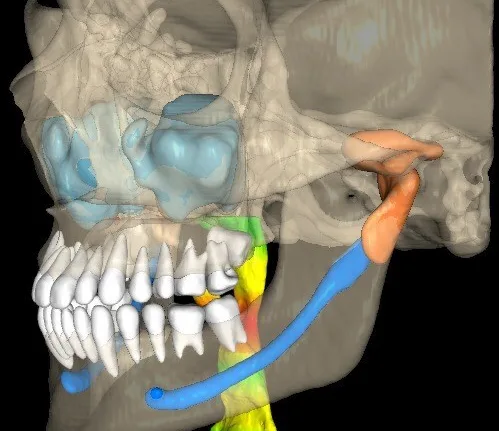
The OptimUM-09 update shifts the focus from metastatic disease to patients with primary uveal melanoma who have not yet experienced distant spread. Darovasertib is administered before local treatment with the objective of shrinking the ocular tumour, reducing the extent of radiation exposure or avoiding surgical removal of the eye.
Results presented at ESMO 2025 showed that 83% of evaluable patients experienced ocular tumour shrinkage, while 54% achieved shrinkage of at least 20%. Among patients initially recommended for enucleation, 57% retained the affected eye. Eye preservation reached 95% among the smaller subgroup that achieved tumour shrinkage of at least 20%.
In the plaque-brachytherapy cohort, 70% of evaluable patients had a reduction in the predicted radiation dose to the eye. Approximately 65% were projected to have a lower risk of vision loss three years after treatment.
These outcomes were clinically compelling because removing an eye or losing useful vision carries consequences extending far beyond a conventional radiographic response. The October 2026 poster, however, needs to show whether the initial benefits remain durable and whether delaying local treatment introduces any evidence of disease progression or metastatic risk.
Longer follow-up may also clarify how consistently early tumour shrinkage translates into eye preservation, lower radiation exposure and functional vision outcomes. That distinction matters because a smaller tumour is only a surrogate measure unless it ultimately improves the patient’s treatment experience or long-term health.
IDEAYA Biosciences is already recruiting patients into the randomized Phase 3 OptimUM-10 trial, which is intended to provide registration-enabling evidence for neoadjuvant darovasertib. The ESMO follow-up will not replace that study, but it could strengthen confidence in the biological and clinical assumptions behind the Phase 3 design.
Why will investors focus on the durability and safety of IDE849 rather than another high response rate?
Hengrui Pharma’s presentation will provide long-term Phase 1 results for IDE849 in relapsed small-cell lung cancer and other neuroendocrine carcinomas. IDE849 is an antibody-drug conjugate that targets delta-like ligand 3 and delivers a topoisomerase-1 inhibitor payload into cancer cells.
The first substantial Phase 1 dataset, presented in September 2025, included 100 patients treated across multiple dose levels. Among 71 evaluable small-cell lung cancer patients receiving doses of at least 2.4 milligrams per kilogram, the reported overall response rate was 73.2%. The confirmed response rate was 47.9%, although several responses were awaiting confirmation and the median follow-up was only 3.5 months.
Median progression-free survival across the evaluated dose levels was 6.7 months. The early activity was notable, but the limited follow-up left important questions about durability, dose selection and the eventual confirmed response rate.
Safety also warrants close attention. Grade 3 or higher treatment-related adverse events occurred in 48% of the 100 treated patients, with neutropenia and reductions in white blood cell counts among the most frequent severe toxicities. Treatment-related discontinuation was limited to 2%, and no treatment-related deaths were reported at that data cut-off.
The ESMO update should provide a more mature assessment of how long responses last, whether progression-free survival remains competitive and whether cumulative blood-related toxicities affect the feasibility of continued treatment. It may also offer more evidence from neuroendocrine carcinomas, potentially broadening IDE849 beyond small-cell lung cancer.
IDE849 is entering a competitive DLL3 market. Amgen Inc.’s Imdelltra has received traditional United States approval for extensive-stage small-cell lung cancer following progression on platinum-based chemotherapy. Although Imdelltra is a DLL3-directed T-cell engager rather than an antibody-drug conjugate, its presence establishes a clinical benchmark for response durability, survival and treatment logistics.
IDEAYA Biosciences has separately reported partial responses in three of four small-cell lung cancer patients previously treated with Imdelltra in its own global study. That observation is intriguing but comes from a very small group and cannot yet establish reliable post-Imdelltra activity.
What does the ESMO catalyst slate mean for IDEAYA Biosciences shares and investor sentiment?
IDEAYA Biosciences shares finished July 17 at $36.01, leaving them approximately 11% below their 52-week high of $40.58 but nearly 69% above their 52-week low of $21.33. The stock had declined about 2.7% over the preceding week while gaining 17.8% over one month and 63% over 12 months.
That performance points to constructive but selective sentiment. Investors appear to assign meaningful value to darovasertib’s regulatory prospects and the depth of IDEAYA Biosciences’ pipeline, while maintaining some caution around development risk, commercial execution and dilution.
The company held $972.9 million in cash, cash equivalents and marketable securities at March 31, 2026. It subsequently raised approximately $345 million in gross proceeds through a June offering of common stock and pre-funded warrants after the underwriters exercised their option in full.
The financing gives IDEAYA Biosciences substantial capacity to complete the darovasertib regulatory process, prepare for a potential commercial launch and advance multiple clinical programmes. The trade-off is a larger fully diluted share count, meaning future appreciation will increasingly depend on clinical and regulatory execution rather than balance-sheet scarcity.
In our view, the October presentations should be treated as four related but distinct tests. OptimUM-02 is primarily about regulatory robustness, OptimUM-01 concerns market expansion, OptimUM-09 addresses eye and vision preservation, and IDE849 must demonstrate that early tumour responses mature into durable clinical benefit.
Positive results across all four would strengthen the argument that IDEAYA Biosciences is evolving from a development-stage biotechnology company built around one late-stage asset into a broader precision-oncology platform. Mixed results would not necessarily undermine the entire pipeline, but they could narrow the opportunity investors are currently beginning to price into the shares.
What are the key takeaways from IDEAYA Biosciences’ four ESMO 2026 clinical presentations?
- IDEAYA Biosciences will present three darovasertib posters covering HLA-A02:01-negative metastatic uveal melanoma, HLA-A02:01-positive metastatic disease and neoadjuvant treatment of primary uveal melanoma.
- The OptimUM-02 subgroup analysis could strengthen or complicate the clinical package supporting the company’s planned United States new drug application for darovasertib combined with crizotinib.
- OptimUM-01 will provide the first larger data update focused specifically on HLA-A*02:01-positive metastatic uveal melanoma, a population in which darovasertib would face an established competitor in Kimmtrak.
- Follow-up results from OptimUM-09 will help determine whether early tumour shrinkage and eye-preservation outcomes remain durable in primary uveal melanoma.
- Hengrui Pharma’s IDE849 presentation will be closely examined for confirmed response rates, response durability, progression-free survival and longer-term haematological safety.
- IDEAYA Biosciences is targeting the first registrational IDE849 trial by the end of 2026, making the ESMO results an important test of whether that development timetable remains justified.
- The company’s financing position reduces near-term funding pressure, but the June 2026 equity offering also increased the share count and raised expectations for disciplined execution across a large clinical pipeline.