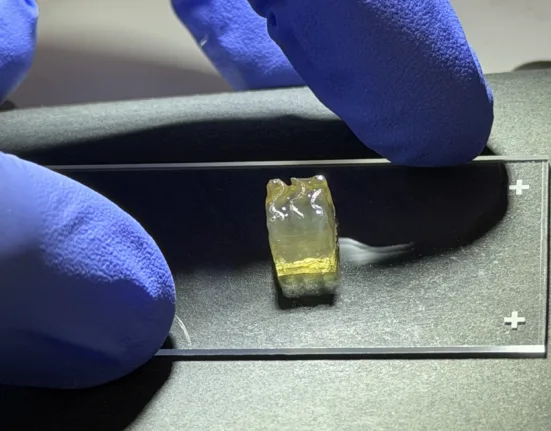
Zegenex, a Pittsburgh-based biotechnology company focused on regenerative wound care, has secured a $215,000 social-impact investment from the Richard King Mellon Foundation to accelerate formulation and preclinical development of Zegen-15, a first-in-class small-molecule cream targeting chronic wounds, including diabetic foot ulcers. The funding positions Zegenex to begin clinical trials by the end of 2026 and supports efforts to build a more accessible and cost-effective therapeutic pathway for patients historically underserved by current biologic treatments.
Why Zegen-15 marks a directional shift in DFU therapeutic development
Zegen-15’s design as a small-molecule cream distinguishes it from current FDA-approved therapies for diabetic foot ulcers, which predominantly rely on recombinant proteins or tissue-based biologics. Growth factor-based products like becaplermin have demonstrated efficacy but are constrained by high production costs, cold-chain logistics, limited insurance coverage, and poor patient access. Only an estimated 6 percent of DFU patients in the United States receive these advanced therapies, according to healthcare cost studies and payer data.
Zegenex’s small-molecule platform seeks to shift the therapeutic model from externally delivered proteins to endogenous healing activation. Zegen-15 is engineered to survive in acidic, enzyme-rich wound environments where biologics often degrade, making it potentially more viable in real-world chronic wound settings. The stability and topical nature of the product could open up outpatient administration and rural use cases where current interventions are unfeasible.
Regenerative medicine researchers tracking DFU innovation note that Zegen-15’s underlying concept — restoring the body’s dormant healing pathways through molecular signaling — is gaining traction as a credible alternative to replacement-based therapies. However, the company will need to deliver substantial human efficacy data to move beyond mechanistic validation.
What the formulation reveals about scalability and access strategies
Beyond pharmacological innovation, Zegen-15’s formulation reflects a deliberate focus on health equity and manufacturability. Zegenex’s team has positioned the cream as shelf-stable and easily transportable, which may be key in reaching low-income, elderly, or geographically isolated patients. These groups often face the highest DFU burden yet encounter systemic barriers to care, such as lack of podiatric services or inadequate insurance coverage for biologics and wound grafts.
By minimizing cold-chain dependency and shifting the treatment model to self-applied or clinician-supervised topicals, Zegenex is effectively reframing chronic wound healing as a community-level intervention, rather than a hospital-reliant process. This could enable faster deployment through public health systems, veterans’ hospitals, or mobile wound care clinics — areas where advanced therapies currently lag due to cost and complexity.
Industry analysts following wound care device markets have also pointed to the high pricing and slow turnover of traditional DFU solutions as bottlenecks to payer alignment. If Zegen-15 can demonstrate a lower cost of goods and shorter healing timelines without introducing new safety concerns, it could challenge incumbent therapies on both price and value-based outcomes.
What the current preclinical trajectory enables — and doesn’t
The Richard King Mellon Foundation’s investment is relatively modest but strategically timed. Zegenex is entering the critical formulation optimization and IND-enabling phase, where access to non-dilutive capital can determine how swiftly a preclinical molecule reaches the clinical stage. The company’s collaborations with the McGowan Institute for Regenerative Medicine and Cardinal Health Regulatory give it institutional backing for regulatory navigation, which may help de-risk early development milestones.
However, the company has not yet published peer-reviewed data from its preclinical models, nor disclosed pharmacokinetic, toxicology, or dose-ranging studies in animal systems. While the molecule’s origin in the University of Pittsburgh’s drug discovery program lends academic credibility, regulatory observers suggest that chronic wound therapies — particularly those making claims about functional tissue regeneration — often face heightened scrutiny during investigational new drug application review.
Clinical timelines for DFU therapies are typically long and involve complex endpoints such as complete wound closure, recurrence rates, and infection control. Zegenex’s plan to initiate clinical trials by late 2026 suggests an aggressive timeline, and meeting this will require clear progress in formulation stability, CMC scale-up, and initial safety studies in at least one relevant animal model.
How Zegen-15 fits into the broader wound healing innovation race
Zegenex is entering a competitive but fragmented field. Multiple companies are currently advancing next-generation DFU therapies, including cell-based skin substitutes, tissue-engineered grafts, gene therapies, and bioelectronic wound stimulators. However, few offer the kind of price-accessibility profile Zegenex is targeting.
Unlike larger players such as Organogenesis or MiMedx, which rely on surgical or in-clinic application of biologic material, Zegenex is focused on an outpatient-viable delivery model. This could position Zegen-15 as a first-line therapy for primary care settings or wound clinics not equipped for surgical interventions.
That said, the topical drug route is not inherently simpler in regulatory terms. If Zegen-15 aims to claim superiority or parity with growth factor gels or cellular matrices, the company will need to build head-to-head data or show meaningful improvements in healing duration, recurrence prevention, or patient adherence. These endpoints require sophisticated trial design, likely incorporating wound photography, standardized ulcer grading, and stratification for comorbidities such as peripheral arterial disease or neuropathy.
Regulators have historically been cautious in granting broad DFU claims without tightly controlled multicenter trial evidence. Zegenex’s ability to design such a trial while maintaining its affordability thesis may be its most difficult balance to strike.
What this funding signals about shifting investment philosophies in early-stage biotech
The Richard King Mellon Foundation’s social-impact investment arm, typically more aligned with mission-driven startups than pure ROI-seeking funds, has signaled an openness to biotech models that fuse commercial viability with unmet population needs. This alignment is particularly relevant in chronic wound care, where racial, geographic, and economic disparities are well documented but rarely drive product strategy.
The foundation’s participation may also serve as an early reputational signal to future grant funders or mission-oriented venture groups, helping Zegenex build a consortium of capital sources not dependent on high-margin pricing. If the company’s public-health-first message is sustained through clinical development, it may open paths to public-private partnerships or government-backed procurement programs.
Foundations investing in health equity are increasingly looking for durable, scalable solutions that do not rely solely on high-tech interventions or specialty centers. A chemically stable, room-temperature topical that accelerates wound healing — if clinically validated — fits that thesis in both rural U.S. contexts and potentially in global health settings.
What must still be proven for Zegen-15 to become a credible therapeutic contender
Despite strong foundational positioning, Zegenex still faces several high-stakes challenges. As of December 2025, there are no publicly available data on the drug’s systemic absorption profile, adverse event spectrum, or real-world use parameters. This lack of data may complicate early partnering conversations or non-dilutive grant applications outside the social-impact sphere.
The scalability argument, while theoretically sound, also assumes manufacturing partnerships can be established without significantly raising unit costs or compromising formulation quality. Should the molecule require additional stabilization agents, preservatives, or unique excipients during scale-up, the cost curve may shift, undercutting its core affordability proposition.
Clinician adoption may also depend on how Zegenex positions the product. If framed as a first-line topical, payers may demand cost offsets or bundling. If marketed as a biologic substitute, the company will need to present robust comparative effectiveness data — something small biotech firms often struggle to fund or execute in the absence of large commercial partners.
What stakeholders should watch in the next development phase
The coming 12 to 18 months will be critical in establishing Zegen-15’s viability as a clinical candidate. Key milestones will likely include completion of final preclinical studies, submission of an investigational new drug application to the United States Food and Drug Administration, and the selection of clinical trial sites under the company’s planned Pilot Partner Program.
Clinicians, payers, and regulators will all be watching for clarity on safety margins, mechanism durability, and real-world administration feasibility. Stakeholders in wound care policy may also assess whether Zegen-15’s access claims hold up under reimbursement modeling, particularly in Medicare and Medicaid populations where DFU burden is highest.
If Zegenex delivers compelling data and retains its health equity positioning, Zegen-15 could find a unique niche as a rare therapeutic that balances innovation, cost-effectiveness, and scalable access. However, without proof of clinical translatability, it remains an ambitious but unproven answer to one of medicine’s most persistent and underfunded challenges.