Merck KGaA, Darmstadt, Germany (Frankfurt Stock Exchange: MRK), has entered into a definitive agreement to acquire Silence Therapeutics plc (Nasdaq: SLN), the London-headquartered developer of small interfering RNA medicines, in an all-cash transaction carrying approximately $1.3 billion in equity value. The agreement, announced on October 19, 2026, provides $20 in cash for each Silence American Depositary Share, representing a 130% premium to the company’s October 16 closing price and an 82% premium to its 30-day volume-weighted average price. The transaction has an estimated enterprise value of $1.1 billion and is expected to close during the first quarter of 2027, subject to shareholder, court and regulatory approvals. The acquisition would give Merck a Phase 3-ready polycythemia vera programme and a broader RNA interference technology platform.
The central asset is divesiran, an investigational siRNA therapy targeting TMPRSS6 to regulate iron availability and excessive red blood cell production in polycythemia vera. In August 2026, Silence reported positive results from the randomized Phase 2 SANRECO study, with 88% of divesiran-treated participants achieving the defined response compared with 19% receiving placebo. The company also reported substantial reductions in the need for therapeutic phlebotomy, a standard intervention used to control elevated hematocrit. These findings provide a clinical rationale for Merck’s interest, although divesiran remains investigational and has not demonstrated an improvement in long-term survival.
The proposed acquisition follows Merck’s purchase of SpringWorks Therapeutics in 2025 and reflects its strategy of expanding its healthcare portfolio through externally developed specialty medicines. Silence also brings zerlasiran, a clinical-stage programme targeting lipoprotein(a), and several earlier RNA-targeting assets. The strategic opportunity extends beyond a single blood cancer treatment, but the immediate financial and development case depends heavily on the successful progression of divesiran.
What are the financial terms of Merck’s agreement to acquire Silence Therapeutics?
Merck has agreed to acquire all outstanding ordinary shares of Silence through a United Kingdom scheme of arrangement. Each American Depositary Share represents three ordinary shares, meaning the $20 ADS consideration corresponds to approximately $6.67 for each ordinary share. The consideration is entirely in cash rather than a combination of cash and Merck equity.
The proposed $1.3 billion equity value should be distinguished from the $1.1 billion enterprise value. Equity value represents the consideration attributable to shareholders, while enterprise value adjusts for relevant cash and debt positions. The $200 million difference between the announced figures should not be described as an additional acquisition payment or a separate development commitment.
The price represents a particularly substantial premium to Silence’s unaffected market valuation. Based on the stated 130% premium, the October 16 ADS closing price was approximately $8.70, compared with the $20 agreed consideration. The premium also exceeds the 82% calculated against the 30-day volume-weighted average price of $10.99.
A premium of this magnitude indicates that Merck is attributing considerable value to Silence’s pipeline and technology beyond its recent stand-alone trading price. However, it does not establish that the assets will generate commercial returns sufficient to recover the purchase price. Future development expenditure, regulatory risk and competitive positioning will influence the eventual economics.
The agreement follows what Silence described as a competitive sale process. Its board unanimously approved the transaction, and shareholders holding approximately 14% of voting power have entered into agreements supporting the proposed acquisition. Those commitments provide some transaction support but do not guarantee that the remaining approval conditions will be satisfied.
Why is divesiran the principal clinical asset behind the acquisition?
Divesiran is Silence’s lead wholly owned RNA interference candidate and the most advanced clinical-stage asset in the announced transaction. It is being developed for polycythemia vera, a chronic myeloproliferative neoplasm characterized by excessive red blood cell production. Patients can experience fatigue, itching, circulatory symptoms and an elevated risk of thrombotic complications.
Treatment generally aims to maintain hematocrit below 45%, a threshold associated with lower cardiovascular and thrombotic risk. Therapeutic phlebotomy removes blood to reduce red blood cell mass, while cytoreductive medicines may be used according to disease risk and treatment response. Some patients continue to require repeated phlebotomies despite receiving other therapies.
Divesiran uses a different biological strategy. Rather than directly suppressing bone marrow activity through conventional cytoreduction, it aims to regulate the availability of iron required to produce red blood cells. This could provide a more targeted approach to controlling hematocrit and reducing the frequency of blood removal.
The programme has received FDA Fast Track and orphan drug designations for polycythemia vera. These designations may provide development incentives and opportunities for regulatory engagement, but they do not represent marketing approval or confirmation of clinical benefit.
Merck’s acquisition would place the programme within a larger pharmaceutical organization with resources for late-stage trials, regulatory submissions and eventual commercialization. Nevertheless, the Phase 3 development programme remains to be completed before the medicine can establish its place in routine care.
What did the Phase 2 SANRECO trial demonstrate about divesiran?
The SANRECO Phase 2 study enrolled 48 patients with polycythemia vera who remained dependent on therapeutic phlebotomy despite standard treatment. It included a 36-week randomized, double-blind, placebo-controlled period evaluating divesiran at 6 mg/kg administered subcutaneously every six weeks or every 12 weeks. Patients could continue relevant background treatment according to the protocol.
The primary endpoint measured the proportion of participants maintaining hematocrit below 45% without needing therapeutic phlebotomy during Weeks 18 through 36. Silence reported that 88% of divesiran-treated patients achieved the defined response, compared with 19% of placebo recipients. The difference was statistically significant, with a reported p-value below 0.0001.
Both dose schedules demonstrated treatment activity. Response reached 93.8% with administration every six weeks and 81.3% with administration every 12 weeks. These findings are important because the longer interval may offer practical advantages if it can provide consistent hematocrit control.
The study also met a key secondary endpoint involving phlebotomy frequency. Patients receiving divesiran underwent an average of 0.2 phlebotomies during the evaluated period, compared with 2.1 in the placebo group. This difference suggests that the medicine substantially reduced reliance on blood removal during the controlled study.
Additional improvements were observed in hematocrit control, iron-related biomarkers and patient-reported symptoms. The company described divesiran as generally well tolerated, with no new safety findings during the randomized period. However, the trial was relatively small and does not establish the frequency of uncommon adverse events or the durability of treatment beyond longer follow-up.
How does silencing TMPRSS6 affect red blood cell production?
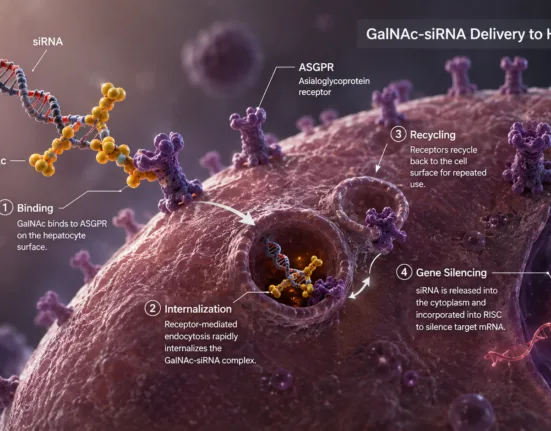
Divesiran uses Silence’s mRNAi GOLD platform to reduce expression of TMPRSS6, a gene primarily active in the liver. TMPRSS6 encodes matriptase-2, a protein involved in regulating the hormone hepcidin. Hepcidin is central to controlling how iron is absorbed, stored and distributed within the body.
By reducing TMPRSS6 expression, divesiran is intended to increase hepcidin activity. Higher hepcidin levels restrict the availability of circulating iron for red blood cell production, including iron supplied to the bone marrow. Because the excessive production of red blood cells in polycythemia vera depends on iron availability, this mechanism may help control hematocrit.
The approach differs from therapies that directly inhibit signaling within abnormal blood-forming cells. It also differs from repeated phlebotomy, which reduces circulating red blood cell mass after excessive production has already occurred. Divesiran aims to influence an upstream metabolic requirement for producing new red blood cells.
However, regulating iron availability creates its own clinical questions. Iron is essential for many normal physiological functions, and excessive restriction could contribute to anemia or other complications. The Phase 2 study reported two investigator-assessed Grade 1 anemia adverse events, supporting the need for continued monitoring.
The mechanism also does not establish that divesiran eliminates the underlying malignant blood cell population. Patients may experience improved hematocrit control while retaining the molecular abnormalities responsible for their disease. Long-term development must therefore distinguish effective blood count management from broader disease modification.
Why is dosing every 12 weeks important to the Phase 3 strategy?
Silence announced plans to initiate a Phase 3 polycythemia vera trial during the first half of 2027 using divesiran every 12 weeks. The decision follows the substantial response observed with the longer dosing interval during SANRECO. If confirmed in a larger study, treatment approximately once every three months could reduce the frequency of medicine administration.
This may be relevant for patients who currently require repeated blood draws, clinic visits or ongoing cytoreductive treatment. However, the frequency of dosing is only one aspect of treatment burden. Patients may still require routine blood count monitoring, symptom assessments and additional medical care.
The Phase 2 response rate was numerically higher with six-week dosing than with 12-week dosing. The smaller study was not designed to establish a definitive superiority comparison between those schedules. Phase 3 testing will therefore need to determine whether the longer interval provides sufficiently durable and consistent control in a broader population.
Regulators will also assess the safety of sustained interference with iron metabolism. Long-term treatment could produce effects not observed during the initial 36-week randomized period. Larger clinical trials and longer follow-up will be important for establishing an appropriate balance between hematocrit control and tolerability.
The expected Phase 3 programme is a development plan, not a completed regulatory milestone. Its start date and design remain subject to necessary preparations and interactions with regulators.
What additional value could zerlasiran and the siRNA platform provide?
Although divesiran is the immediate clinical focus, Silence has developed a broader RNA interference pipeline. Zerlasiran targets lipoprotein(a), a genetically influenced cardiovascular risk factor that is not adequately reduced by many conventional lipid-lowering treatments. The programme has generated clinical evidence of substantial lipoprotein(a) reduction, supporting continued development in cardiovascular disease.
However, lowering lipoprotein(a) is a biomarker outcome rather than direct proof of fewer heart attacks or strokes. The clinical value of targeting this risk factor must ultimately be established through appropriate cardiovascular outcome studies. Merck would therefore be acquiring another potentially important programme with material development uncertainty.
Silence’s platform is also designed to generate additional medicines targeting genes expressed in the liver and other tissues. Small interfering RNA treatments operate by reducing production of selected proteins at the messenger RNA level. This approach can be useful when disease-related proteins are difficult to address with conventional antibodies or small molecules.
A technology platform may offer strategic value beyond the candidates already in clinical testing. New targets could potentially be developed using related delivery and molecular engineering capabilities. However, the existence of a reusable platform does not guarantee that every new programme will achieve effective delivery, appropriate selectivity or clinical success.
The acquisition therefore combines a defined late-stage asset with a longer-term research opportunity. Divesiran’s progress will likely determine the earliest major clinical milestones, while the wider pipeline may contribute value over a longer period.
How does the proposed deal fit Merck KGaA’s healthcare acquisition strategy?
Merck KGaA operates across healthcare, life science and electronics and generated approximately €21.1 billion in group revenue during 2025. Its healthcare business includes specialty medicines in oncology, neurology, immunology and other therapeutic areas. The proposed Silence acquisition reflects a strategy of expanding higher-specialization opportunities through both internal development and external transactions.
The transaction follows Merck’s acquisition of SpringWorks Therapeutics in 2025, which expanded its presence in rare tumors and specialty oncology. Silence would add an RNA interference capability and a rare blood cancer programme, creating a different source of potential pharmaceutical growth. The businesses are scientifically distinct, but both align with Merck’s stated interest in specialized conditions and unmet medical needs.
The latest agreement should not be confused with Merck & Co. (NYSE: MRK), the separate United States pharmaceutical company. Merck KGaA is headquartered in Darmstadt, Germany, and operates its healthcare business in the United States and Canada under the EMD Serono name. The distinction is important when evaluating the acquirer’s ownership, financial capacity and strategic portfolio.
Merck has identified external innovation as an important element of its growth strategy. Acquiring Silence would allow it to obtain an established research platform and a clinically validated target-engagement programme without beginning those developments internally. However, integration and development expenditure will continue after the acquisition closes.
The financial case consequently depends on more than the announced purchase price. Success will require appropriate allocation of clinical development resources, manufacturing capacity and eventual commercial investment.
What approvals are required before Silence becomes part of Merck?
The transaction will be implemented through a UK scheme of arrangement under Part 26 of the Companies Act 2006. This process requires approval by Silence shareholders and sanction by the High Court of Justice of England and Wales. Other customary closing conditions, including applicable regulatory approvals, must also be satisfied.
The companies expect completion during the first quarter of 2027. That timetable represents their current expectation rather than a guaranteed closing date. Shareholder votes, court procedures and regulatory review can affect the ultimate schedule.
Silence’s board has unanimously recommended the transaction. Certain shareholders controlling approximately 14% of the company’s voting power have entered into voting and support agreements. However, those arrangements do not remove the requirement for the broader shareholder approval process.
The transaction terms do not disclose a separate contingent value right or additional clinical milestone payment to shareholders. Based on the announced agreement, holders would receive the stated cash consideration upon successful completion. That makes the outcome different from biotechnology transactions where sellers retain rights to future contingent payments.
Until closing, Silence remains a separately traded company, and its clinical programmes remain subject to their existing development arrangements. Merck’s agreement to acquire the business should not be described as a completed acquisition.
What could prevent the transaction from delivering its expected value?
The largest clinical uncertainty concerns divesiran’s Phase 3 performance. The Phase 2 study demonstrated a substantial difference from placebo, but its relatively small population and limited controlled follow-up cannot establish every aspect of long-term safety or efficacy. A larger trial could reveal more variable treatment responses or adverse events not apparent in the earlier programme.
Regulatory requirements are another consideration. Authorities will need to determine whether the final evidence supports an acceptable benefit-risk profile in polycythemia vera. Fast Track and orphan drug designations may facilitate development but do not guarantee authorization.
Commercial competition also matters. Existing treatments include phlebotomy, hydroxyurea, interferon-based therapies and ruxolitinib in appropriate patients. Divesiran would need to demonstrate a clinically meaningful role within this treatment landscape, taking account of its dosing schedule, hematocrit control, safety and cost.
The broader platform carries additional research uncertainty. Zerlasiran and earlier candidates may generate value, but their development pathways differ from that of divesiran. The acquisition price should therefore not be interpreted as a guaranteed return from a single programme or a validated forecast of future revenue.
Merck’s planned purchase represents a substantial commitment to RNA interference medicines and rare disease development. Silence’s Phase 2 evidence provides a credible clinical foundation for the transaction, with divesiran achieving an 88% response rate and sharply reducing the need for phlebotomy in the controlled study.
The decisive tests will come after closing, assuming the transaction receives the necessary approvals. Merck will need to complete late-stage development, establish a sustainable commercial position for divesiran and translate Silence’s wider RNA platform into additional medicines. The $1.3 billion agreement gives Merck access to that opportunity, while its long-term value remains dependent on clinical execution and regulatory success.