Gilead Sciences, Inc. has renewed a five-year collaboration with the World Health Organization to support elimination efforts for visceral leishmaniasis, also known as kala-azar, a fatal parasitic disease transmitted by infected sandflies. The agreement includes more than 400,000 vials of AmBisome, financial support of $9.2 million through 2030, and expanded support for countries with high disease burden, particularly in East Africa.
Why Gilead’s visceral leishmaniasis collaboration matters beyond drug donation
The renewed Gilead Sciences and World Health Organization collaboration matters because visceral leishmaniasis sits at the difficult intersection of drug access, diagnostic reach, poverty-linked disease burden and fragile health infrastructure. This is not a market expansion story in the conventional pharmaceutical sense. It is a test of whether a drug donation model, combined with public health coordination and targeted funding, can move a neglected tropical disease closer to elimination in regions where healthcare access remains uneven.
The confirmed development is substantial. Gilead Sciences is donating AmBisome and providing financial support through 2030, while the World Health Organization will coordinate with endemic countries and health systems to improve diagnosis and treatment access. The clinical context is severe because visceral leishmaniasis attacks internal organs and can be fatal if untreated. The unresolved question is whether treatment supply alone can close the gap when diagnosis, surveillance, field logistics and patient follow-up remain persistent bottlenecks.
That makes this collaboration more than a corporate access programme. It is a reminder that neglected tropical disease control depends on systems, not just medicines. AmBisome can be clinically important, but patients must first be identified, diagnosed, referred and treated safely. In high-burden regions, especially those affected by displacement, conflict or weak primary healthcare coverage, the journey from infection to treatment can be too long. The drug is one pillar. The harder part is building a reliable pathway to deliver it.
How visceral leishmaniasis exposes the limits of conventional pharma access models
Visceral leishmaniasis is not a disease category that fits neatly into the traditional commercial incentives of pharmaceutical development. It affects some of the world’s most vulnerable populations, often in low-income or lower-middle-income settings, where public health budgets are constrained and disease awareness can be limited. That is why sustained public-private collaboration has become central to controlling the disease.
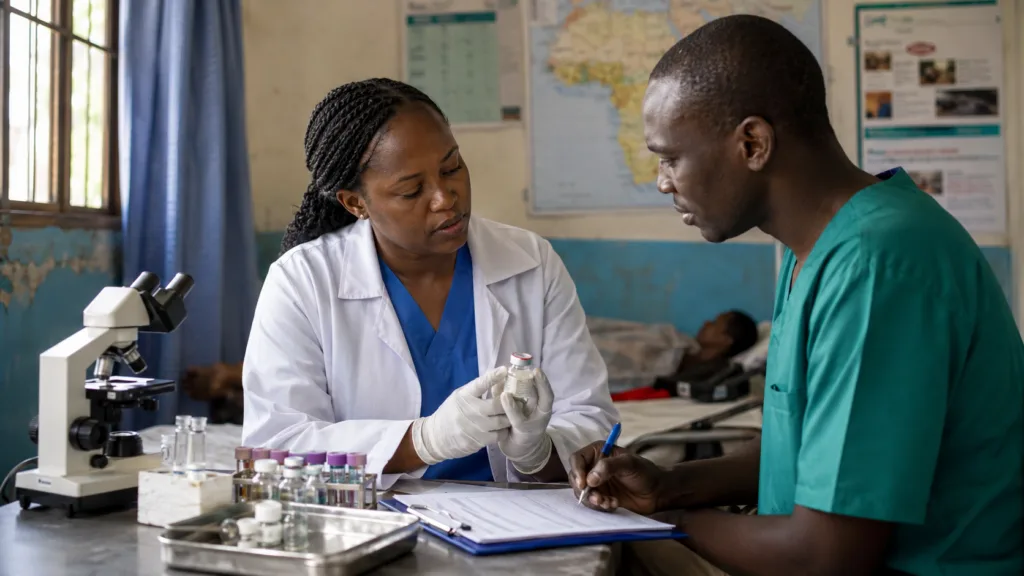
The confirmed burden remains significant, with Gilead Sciences noting that visceral leishmaniasis is associated with an estimated 50,000 to 90,000 new cases each year. The broader context is that neglected tropical diseases often receive less commercial attention than oncology, immunology or metabolic disease, even when the health impact is substantial. For pharma companies, this creates a different kind of responsibility and reputational equation. The business return may not resemble a normal product franchise, but the public health value can be high.
The limitation is that donation-based access models can become fragile if they are not embedded in durable national programmes. Free or subsidised product supply can reduce treatment barriers, but it cannot automatically strengthen laboratories, train clinicians, maintain cold-chain or procurement systems, or ensure patient adherence to care pathways. This is why the agreement’s funding and strategic support components matter. If the collaboration only moved vials, its impact would be narrower. The broader value lies in helping countries build the infrastructure needed to use those vials effectively.
Why East Africa has become a critical test for kala-azar elimination efforts
The renewed collaboration’s focus on high-burden countries in East Africa is strategically important because elimination progress has not been uniform across regions. South Asia has shown that sustained surveillance, diagnosis and treatment campaigns can reduce case numbers, but East Africa presents a tougher operating environment due to geography, conflict exposure, population movement and health-system capacity constraints.
Gilead Sciences said the donations will support countries representing approximately 74% of the global visceral leishmaniasis burden, including Bangladesh, Ethiopia, Eritrea, India, Kenya, Nepal, Somalia, South Sudan, Sudan, Uganda and Yemen, with expanded support in Chad and Djibouti. That country list reveals the real challenge. Several of these settings face humanitarian pressures, cross-border disease dynamics or healthcare infrastructure gaps that can make elimination campaigns harder to standardise.
The unresolved question is whether the same model that helped drive progress in parts of the Indian subcontinent can be adapted effectively to East Africa. Disease ecology, population mobility and healthcare delivery realities differ by region. A one-size-fits-all elimination playbook is unlikely to work. The next phase will depend on country-level execution, stronger case detection, better treatment access and sustained funding, especially in locations where political or humanitarian volatility can disrupt public health programmes.
What AmBisome access changes in the treatment landscape for visceral leishmaniasis
AmBisome, the liposomal formulation of amphotericin B, plays an important role in visceral leishmaniasis management because it offers an established treatment option for a disease that can otherwise be fatal. Its value in public health programmes is tied not only to clinical utility but also to the ability to supply and administer it in settings where patients may present late or with complicating factors.
The confirmed development is that Gilead Sciences will donate more than 400,000 vials of AmBisome over the five-year period. The clinical context is that visceral leishmaniasis treatment needs vary across geographies, patient groups and local guidelines. Amphotericin B-based therapy can be highly relevant, but treatment delivery may still require trained staff, appropriate facilities and monitoring capacity. That makes operational readiness essential.
The risk is that improved product access can expose the next bottleneck rather than solve the whole problem. If patients are not diagnosed early, if health facilities lack trained personnel, or if treatment centres are too far from affected communities, donated medicines may not fully translate into reduced mortality or elimination progress. For AmBisome donations to have maximum impact, they must be paired with active case finding, diagnostic access, referral systems and country-level planning.
Why diagnostics may be the hidden constraint in visceral leishmaniasis control
Drug donation programmes often draw attention because they are tangible and measurable. Diagnostics are less visible, but they may decide whether the programme reaches enough patients early enough. Visceral leishmaniasis can present with fever, weight loss, spleen and liver enlargement and other symptoms that may overlap with other infectious diseases. In resource-limited settings, delayed or missed diagnosis can be a major barrier.
The renewed collaboration explicitly aims to improve access to diagnostic services and treatment. That matters because elimination requires more than treating the patients who arrive at formal healthcare facilities. It requires finding cases in communities, confirming diagnosis, tracking disease clusters and responding quickly enough to interrupt transmission. Without stronger diagnostic coverage, disease burden can persist below the surface even when treatment supply improves.
The unresolved issue is how diagnostic scale will be funded, standardised and maintained across high-burden countries. Point-of-care testing, laboratory confirmation, surveillance data and clinician training all have roles, but each requires investment. For diagnostics developers and public health agencies, visceral leishmaniasis remains a reminder that neglected disease markets often need public procurement, donor support and implementation partnerships rather than purely commercial sales strategies.
How this collaboration fits the broader neglected tropical disease agenda
The Gilead Sciences and World Health Organization collaboration sits within the broader global effort to control and eliminate neglected tropical diseases by 2030. Gilead Sciences has been involved in visceral leishmaniasis support for years, including a five-year collaboration announced in 2016, when funding and product donation support was aimed at strengthening surveillance and treatment infrastructure in endemic regions.
The confirmed continuity is important. One-off commitments rarely solve neglected tropical disease challenges because elimination requires long timelines, surveillance persistence and repeated operational cycles. The broader context is that the World Health Organization’s neglected tropical disease agenda depends on national programmes, pharma donations, donor funding, technical partners and community-level implementation. No single actor can carry the burden.
The limitation is that global health commitments can lose momentum when political attention shifts. Neglected tropical diseases compete with other urgent priorities, including pandemic preparedness, antimicrobial resistance, climate-linked disease spread and health-system financing. The renewed Gilead Sciences commitment helps sustain visibility for kala-azar, but the field will still need government ownership and durable financing. Without that, progress can stall even when product access improves.
What this means for Gilead Sciences’ global health positioning
For Gilead Sciences, the collaboration reinforces a global health identity that extends beyond its better-known commercial franchises in HIV, liver disease, oncology and inflammation. The U.S.-based biopharmaceutical group has long positioned itself around access programmes and infectious disease expertise, and visceral leishmaniasis support fits that broader corporate profile.
The confirmed commitment is material in global health terms, but it is unlikely to alter Gilead Sciences’ near-term financial outlook in the way a major oncology acquisition or antiviral approval might. The strategic significance lies elsewhere. It strengthens the company’s role in public-private health partnerships, demonstrates continuity in neglected disease support and keeps AmBisome positioned as part of an access-driven public health response rather than only a marketed therapeutic.
The risk is reputational as much as operational. Access commitments are judged by delivery, not announcement language. If drug supply, diagnostics support and country execution align, the collaboration can reinforce Gilead Sciences’ global health credibility. If implementation gaps persist, observers may question whether the programme is sufficiently designed around real-world barriers in endemic settings. In neglected disease work, credibility is earned slowly and lost quickly.
Why country execution will decide whether the renewed pact can move the elimination needle
The most important measure of success will not be the number of vials pledged or the dollar amount committed. It will be whether endemic countries can reduce disease burden through earlier detection, improved treatment coverage and stronger surveillance. That requires technical support, but it also requires national ownership.
The World Health Organization’s role is essential because it can coordinate policy, technical guidance, supply allocation and country support. Gilead Sciences’ role is also important because it provides medicine access and funding. However, implementation depends on ministries of health, regional health authorities, clinicians, community workers, laboratories and local partners. Elimination is delivered locally, even when the agreement is signed globally.
The unresolved question is whether high-burden countries can sustain programme intensity through 2030. Conflict, migration, climate variability and strained health budgets can all complicate elimination efforts. Visceral leishmaniasis is also linked to environmental and social conditions that cannot be solved by medicine alone. That means the collaboration can be powerful, but only if it remains connected to broader health-system strengthening and community-level disease control.
Why the broader industry should pay attention to this neglected disease pact
The Gilead Sciences and World Health Organization agreement is a useful case study for the pharmaceutical industry because it shows where conventional drug development economics meet global health responsibility. Neglected tropical diseases often lack the commercial gravity that drives large-scale private investment, yet they require pharmaceutical expertise, quality-assured medicines, diagnostics, surveillance and long-term supply commitments.
For industry observers, the bigger lesson is that access programmes are becoming more sophisticated. The strongest models now combine product donation with funding, diagnostics, operational planning and public health coordination. That is especially important for diseases such as visceral leishmaniasis, where treatment availability is necessary but not sufficient.
The forward-looking question is whether more companies will adopt similarly structured partnerships for neglected diseases and other low-commercial-return health priorities. The answer may depend on regulatory expectations, investor attitudes toward environmental, social and governance commitments, and the willingness of public agencies to provide credible implementation channels. Gilead Sciences’ renewed commitment does not solve kala-azar by itself. But it does keep the disease on the global health agenda at a moment when attention can too easily drift elsewhere.