iHealthScreen Inc. has received U.S. Food and Drug Administration 510(k) clearance for iPredict-DR, an AI-powered Software as a Medical Device for automated diabetic retinopathy screening. The retinal imaging software detects more than mild diabetic retinopathy in adults with diabetes who have not previously been diagnosed with the condition, placing the healthcare AI developer into a commercially relevant segment where earlier screening can reduce the risk of preventable vision loss.
Why iHealthScreen’s iPredict-DR clearance matters for diabetic retinopathy screening access
The significance of iHealthScreen’s iPredict-DR clearance is not simply that another AI tool has entered the ophthalmology market. It is that the U.S.-based healthcare AI developer is targeting a structural access problem in diabetes care. Diabetic retinopathy screening is recommended because the disease can progress before patients notice symptoms, but many adults with diabetes miss annual eye exams due to specialist shortages, cost barriers, transportation issues, clinic capacity, and fragmented referral pathways.
That context makes automated screening commercially and clinically important. A Software as a Medical Device that can analyze color retinal fundus images and identify more than mild diabetic retinopathy could shift part of the screening workload away from ophthalmology offices and into primary care clinics, diabetes centers, federally qualified health centers, telehealth-linked sites, and broader preventive health settings. The value is not that AI replaces eye specialists. The value is that it may help identify patients who should be referred sooner, before irreversible damage becomes the first obvious sign of disease.
The risk is that screening access is only one part of the care pathway. A positive result still requires referral, follow-up, specialist evaluation, and treatment when appropriate. If primary care sites can capture retinal images but cannot ensure that patients reach ophthalmologists, the screening gain may not translate into better outcomes. iHealthScreen therefore faces the same reality as other AI screening companies: detection is meaningful only when it is connected to action.
What iPredict-DR changes for primary care and diabetes clinic workflows
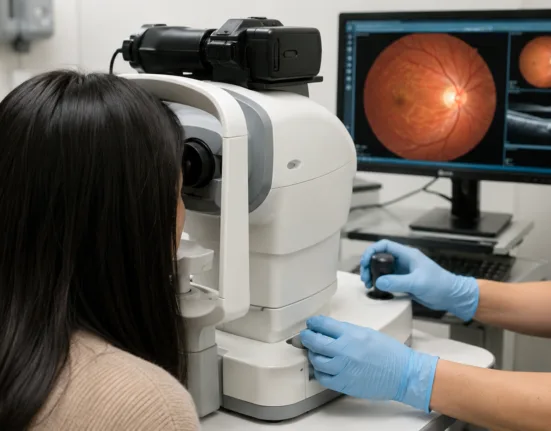
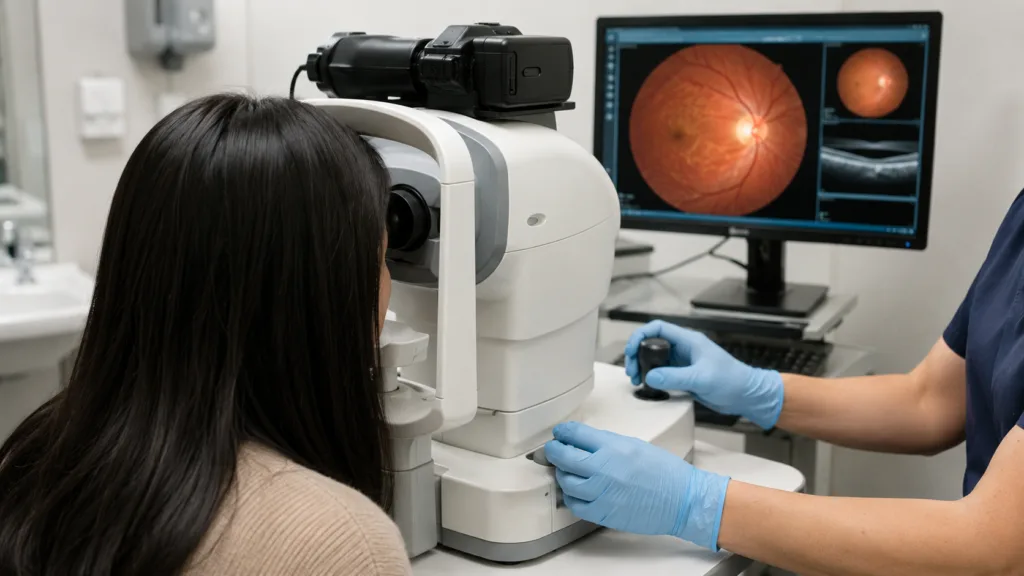
iPredict-DR is positioned for use with retinal fundus imaging, creating a pathway in which trained non-specialist staff may capture images and the software performs automated analysis. That is an important workflow proposition because diabetes care already happens in environments where eye specialists are not always present. Primary care physicians, endocrinology practices, community clinics, and diabetes programs often know which patients are overdue for eye screening, but they may not have the infrastructure to complete the exam during the same encounter.
The clinical and operational logic is straightforward. If a diabetes clinic can screen during a routine visit, fewer patients are lost between referral and ophthalmology appointment. A same-site or near-site workflow could also support population health programs, payer quality metrics, and preventive care initiatives. For health systems managing large diabetic populations, automated retinal screening can become less about one device and more about closing care gaps across thousands of patients.
The limitation is image quality and workflow reliability. Retinal imaging depends on camera placement, patient cooperation, media clarity, pupil size, operator training, and consistent capture technique. AI software can analyze images, but it cannot overcome every poor-quality acquisition. If a clinic needs repeated captures or frequent unreadable outputs, the productivity case weakens. Adoption will depend on whether iPredict-DR is easy enough for non-specialist settings without creating hidden operational friction.
How iPredict-DR fits into the wider AI diabetic eye screening race
The iHealthScreen clearance enters a category that already has momentum. AI diabetic retinopathy screening has moved beyond proof of concept, with several companies seeking to place automated detection closer to routine diabetes care. The logic is attractive because diabetic retinopathy is common, screening gaps are persistent, and retinal imaging produces structured visual data that AI systems can evaluate at scale. That makes the category one of the more practical areas for regulated AI deployment in medicine.
The confirmed clearance gives iHealthScreen a U.S. regulatory foothold in this market. For a private healthcare AI company, that is commercially useful because FDA-cleared status can help open conversations with health systems, diabetes clinics, hospitals, and distribution partners. It also supports the broader Software as a Medical Device strategy that iHealthScreen has built around retinal imaging for multiple disease areas, including age-related macular degeneration, glaucoma, hypertensive retinopathy, and cardiovascular risk assessment.
The unresolved question is differentiation. In AI screening, clearance is necessary but not always sufficient. Buyers will compare sensitivity, specificity, image quality requirements, camera compatibility, workflow integration, EHR connectivity, reimbursement fit, patient throughput, training burden, and cost. iHealthScreen will need to show that iPredict-DR is not only accurate enough for regulatory clearance but also practical enough for routine deployment in the settings that need screening most.
Why 510(k) clearance supports commercialization but should not be confused with outcome proof
The U.S. Food and Drug Administration 510(k) pathway confirms that iPredict-DR met the required regulatory standard for substantial equivalence to a legally marketed device. That is a meaningful milestone because healthcare providers and procurement teams generally need regulatory clearance before adopting diagnostic software at scale. It also helps distinguish iPredict-DR from unregulated wellness tools or experimental AI models that may perform well in research settings but lack a formal medical device pathway.
The context is important because 510(k) clearance does not automatically prove that a technology improves long-term patient outcomes in every deployment environment. The immediate regulatory question is whether the device is safe and effective for its cleared use. The broader clinical and commercial question is whether the software increases screening rates, improves referral timing, reduces undetected disease, and integrates into real-world care without overwhelming clinics or specialists with avoidable referrals.
The risk is overinterpretation. AI screening tools can be marketed around access and prevention, but healthcare systems will want evidence that they improve measurable care gaps. In diabetic retinopathy, the downstream chain matters: identifying more patients with referable findings, ensuring ophthalmology follow-up, treating when necessary, and tracking whether vision-threatening disease is reduced. iPredict-DR now has a regulatory opening. The next test is implementation evidence.
What adoption may require in underserved and high-volume care settings
iPredict-DR is commercially relevant because many of the patients most likely to miss retinal exams are the same patients who could benefit from screening embedded in primary care or community health settings. Federally qualified health centers, diabetes clinics, rural health providers, and telehealth-linked programs may see the appeal of a tool that reduces reliance on in-person specialist availability. If the workflow is simple enough, iPredict-DR could support preventive care in environments where ophthalmology access is limited.
However, underserved settings also face the steepest adoption barriers. Clinics may need compatible fundus cameras, staff training, connectivity, reimbursement support, EHR integration, patient education, and referral agreements with eye-care providers. A software clearance does not solve equipment budgets or workflow redesign. For iHealthScreen, commercial execution will depend on whether the company can package the technology with practical deployment support rather than expecting clinics to build the model themselves.
The reimbursement layer could be decisive. Screening programs work best when they align with payer incentives, quality measures, and chronic disease management pathways. Diabetes care already carries significant economic burden, and payers have reason to support early detection if it reduces advanced eye disease costs. But reimbursement rules, coding practices, and coverage decisions can vary. If clinics cannot see a clear financial path, adoption may be slower even if the clinical rationale is compelling.
How the software could affect ophthalmologists and retinal specialists
For ophthalmologists and retinal specialists, automated diabetic retinopathy screening is both an opportunity and a workload management question. The opportunity is earlier triage. If primary care screening identifies patients with more than mild diabetic retinopathy, specialists may see a more appropriate referral stream instead of relying on delayed annual exams or symptomatic presentation. Earlier detection can support earlier monitoring and treatment decisions for patients at risk of progression.
The workflow challenge is false positives, referral volume, and clinical accountability. If automated screening sends too many low-risk patients into already crowded ophthalmology schedules, specialists may become skeptical. If it misses clinically important disease, trust can erode quickly. The success of iPredict-DR will therefore depend on whether its performance supports a balanced referral pathway, identifying patients who need specialist evaluation without creating unnecessary bottlenecks.
Industry observers tracking ophthalmology AI will also watch how clinicians respond to automated reports. A useful report must be clear, actionable, and easy to interpret for non-specialists while still giving eye-care professionals enough confidence in the referral basis. In medical AI, the interface is not decoration. It is part of clinical adoption. If the output is confusing, too vague, or poorly integrated into documentation, even a technically capable algorithm can struggle in practice.
Why iHealthScreen’s broader retinal AI strategy matters beyond diabetic retinopathy
The iPredict-DR clearance is the first U.S. commercial milestone in iHealthScreen’s wider retinal AI strategy. The company is also working on tools for age-related macular degeneration, glaucoma, hypertensive retinopathy, and cardiovascular disease risk. That broader vision matters because the retina is increasingly viewed as a data-rich window into both ocular and systemic health. Fundus images can reveal disease patterns that may support multiple screening pathways over time.
The strategic appeal is platform leverage. If iHealthScreen can use a similar imaging and workflow foundation across multiple conditions, clinics could eventually run more than one screening function through a connected retinal imaging system. That could improve the business case for adoption because the same hardware, software infrastructure, and staff workflow might support broader preventive care. For a private healthcare AI company, platform expansion can also make distribution partnerships more attractive.
The risk is regulatory and clinical complexity. Each indication requires its own evidence, cleared use, performance expectations, and clinical pathway. Success in diabetic retinopathy does not automatically translate to glaucoma, age-related macular degeneration, hypertensive retinopathy, or cardiovascular risk prediction. iHealthScreen will need to avoid stretching the platform narrative faster than the evidence base can support. In regulated AI diagnostics, ambition is useful. Evidence is still the bouncer at the door.
What health systems, regulators and industry observers will watch next
Health systems will watch whether iPredict-DR can improve diabetic eye screening rates in routine practice. The most important measures will likely include completed scans, readable image rates, referral completion, patient follow-up, staff time, cost per screened patient, and integration with existing diabetes care workflows. A tool that performs well in validation but struggles inside busy clinics may face slower adoption. A tool that fits naturally into chronic care visits could gain traction.
Regulators and clinical governance teams will focus on postmarket performance, software updates, cybersecurity, data handling, and whether the algorithm remains reliable across diverse patient populations. Diabetic retinopathy screening must work across differences in age, ethnicity, disease duration, retinal pigmentation, comorbid eye disease, camera conditions, and image quality. AI tools face growing scrutiny not only for accuracy but also for fairness and operational transparency.
The sector assessment is that iHealthScreen’s iPredict-DR clearance is a strategically meaningful device milestone because it targets a real gap in diabetes care and aligns with the shift toward automated, distributed screening. The opportunity is strongest if the software helps primary care and community clinics detect referable diabetic retinopathy earlier without adding unsustainable workflow burden. The unresolved test is execution. FDA clearance gives iHealthScreen market entry, but adoption will depend on trust, reimbursement, integration, and proof that AI screening can move patients from missed exams to timely eye care.