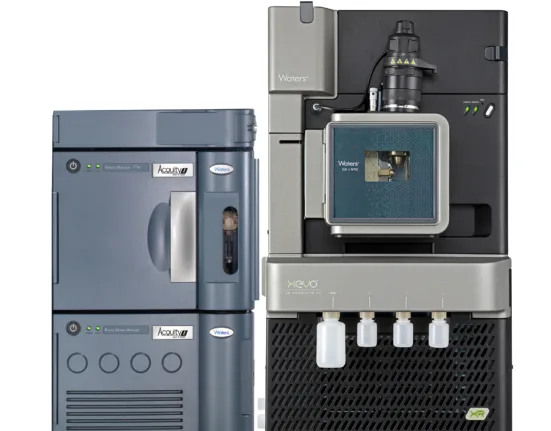
SCIEX, an operating company of Danaher Corporation, has unveiled the ExionLC MD system and a clinical version of SCIEX OS software, creating a more integrated liquid chromatography tandem mass spectrometry workflow for clinical laboratories. Introduced at ADLM 2026, the products are designed to automate routine data review, manage analytical exceptions and reduce the manual steps between sample acquisition and reportable laboratory results.
Both products are scheduled to become available later in 2026. SCIEX said the ExionLC MD system will work with its Citrine and 4500MD mass spectrometry systems, while the new SCIEX OS clinical software environment will combine data acquisition, processing, review, exception management and reporting within a unified platform.
The announcement is primarily an operational technology launch rather than evidence that a new diagnostic assay improves clinical outcomes. Its significance will therefore depend on whether laboratories can demonstrate faster turnaround, fewer manual interventions, reliable carryover control and consistent analytical performance after installing and validating the combined workflow.
SCIEX is addressing a familiar problem in clinical mass spectrometry. LC-MS/MS testing can provide high analytical sensitivity and specificity across applications such as therapeutic drug monitoring, endocrinology, toxicology and measurement of low-concentration biomarkers, but the method can also require specialised staff, extensive review procedures and carefully controlled sample preparation.
The company is effectively arguing that the next competitive battleground in clinical mass spectrometry will not be instrument sensitivity alone. It will increasingly involve how efficiently laboratories can translate raw analytical data into reviewed, traceable and reportable results without creating new operational or compliance risks.
What is genuinely new about the ExionLC MD and SCIEX OS clinical laboratory workflow?
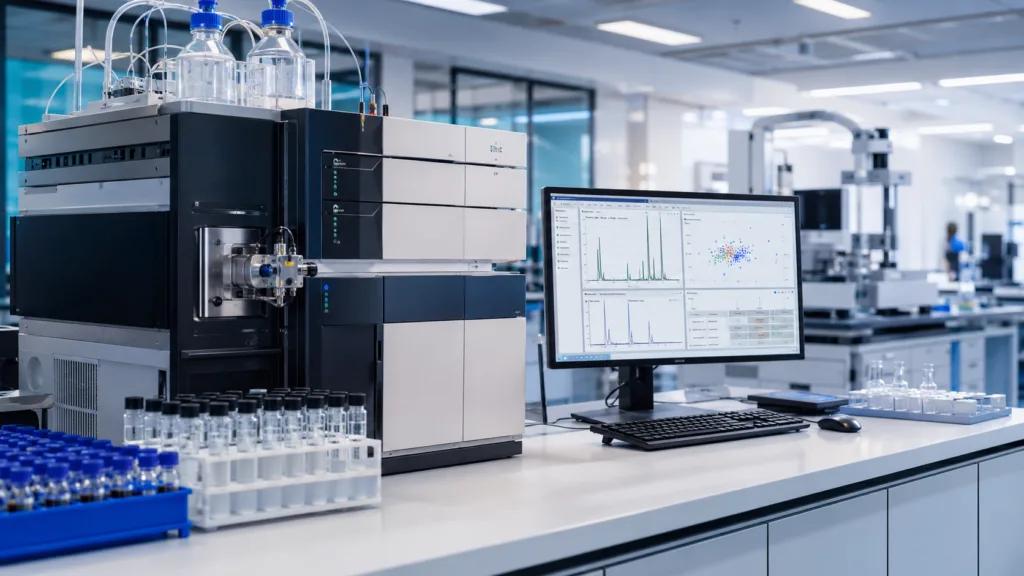
The ExionLC MD system is a high-performance ultra-high-performance liquid chromatography platform designed to provide the separation stage of an integrated LC-MS/MS workflow. SCIEX said the system uses high-pressure chromatography and sub-2-micron column technology to produce sharper chromatographic peaks while supporting faster sample processing.
The platform also includes integrated switching-valve capabilities for workflows such as trap-and-elute methods. In suitable assays, these configurations can concentrate analytes, reduce matrix interference or decrease the amount of offline sample preparation required before mass spectrometry analysis. The practical benefit, however, will vary by assay, specimen type, analyte concentration and laboratory-developed method.
SCIEX OS software contributes the second part of the launch. Rather than focusing only on data acquisition, the clinical configuration is intended to manage the full analytical sequence, including instrument control, data processing, exception identification, corrective actions and reporting.
The product includes review-by-exception functionality, allowing laboratories to define acceptance rules and direct staff towards results requiring attention instead of manually inspecting every data point in the same way. The software can also detect potential carryover, insert additional blank injections and automatically reinject certain samples when predefined conditions are met.
This makes the launch more than a conventional liquid chromatography hardware refresh. SCIEX is combining chromatography, mass spectrometry and rules-based data handling into a single operating environment, with the objective of reducing fragmentation between instruments, software applications and manual review procedures.
How could review-by-exception accelerate testing without weakening laboratory oversight?
Manual data review remains one of the most labour-intensive parts of many high-throughput LC-MS/MS workflows. Laboratory professionals may need to examine calibration performance, internal standards, peak integration, retention times, quality-control samples, carryover and results falling outside validated measurement ranges.
SCIEX OS software is designed to apply user-defined criteria to those data and flag results that require intervention. The broader SCIEX OS platform supports custom acceptance rules, calculated columns, automated outlier handling and flag-based filtering, allowing analysts to focus on exceptions rather than repeatedly reviewing routine results that meet established criteria.
The clinical portfolio brochure describes an automated carryover workflow under which the software can inject as many as three additional double-blank samples when potential sample-to-sample carryover is detected. It also describes the automatic reinjection of a high-concentration sample at a lower injection volume when the original result exceeds the upper limit of quantitation.
Those functions could shorten the time between discovering a problem and beginning corrective action. In a conventional workflow, a batch might finish before an analyst identifies carryover or an out-of-range sample, potentially delaying reinjection until a later run. Rules-based intervention during acquisition could reduce that delay.
Automation does not eliminate the need for laboratory judgement. Each decision rule, acceptance threshold and corrective action will need to reflect a validated method and the laboratory’s quality-management procedures. Poorly configured rules could overlook an important anomaly or generate unnecessary reinjections, replacing one bottleneck with another.
The strongest deployment model will therefore keep qualified laboratory professionals in control of method design, exception criteria and final result authorisation. Review-by-exception should be understood as a way to concentrate human attention, not as evidence that human oversight is no longer required.
Why will analytical validation determine whether faster chromatography produces useful results?
Faster chromatographic separation can increase sample throughput, but speed has little value if it reduces resolution, worsens matrix effects or introduces unstable retention times. Laboratories adopting the ExionLC MD system will need to assess whether shorter or higher-pressure methods preserve the analytical performance required for each intended application.
Validation considerations may include accuracy, precision, analytical measurement range, carryover, interference, dilution integrity, limit of detection, limit of quantitation, calibration stability and reproducibility across instruments, operators and reagent lots. Laboratories will also need to establish whether automated reinjection and blank-insertion rules function consistently across the concentrations and specimen types encountered in routine testing.
SCIEX said the ExionLC MD system is intended to provide reproducible UHPLC separation and support sub-2-micron columns, which can improve peak shape and signal-to-noise performance under appropriate conditions. Integrated valve switching may also support trap-and-elute workflows designed to reduce sample preparation and improve robustness. These remain workflow capabilities rather than independent demonstrations of improved patient outcomes.
The distinction matters because the announcement did not present a clinical performance study comparing turnaround time, repeat rates or analytical error rates before and after implementation. Hospitals and reference laboratories will need real-world operational evidence to determine whether the new configuration produces enough improvement to justify acquisition, installation, validation and training costs.
SCIEX also stated that its clinical diagnostic portfolio is intended for in vitro diagnostic use, subject to market availability, and is not available in every country. The announcement did not provide a detailed jurisdiction-by-jurisdiction regulatory status for the newly introduced ExionLC MD system and clinical SCIEX OS configuration, making local availability and authorised use important points for prospective customers to confirm.
Can an integrated software environment reduce the staffing burden in clinical laboratories?
Clinical laboratories continue to face pressure to deliver more tests while managing shortages of personnel with advanced mass spectrometry experience. An integrated software environment can help by standardising routine processes, reducing movement between applications and making analytical review more consistent across staff members.
SCIEX OS software includes audit trails, electronic signatures and role-based user controls designed to support traceability and controlled access. The wider software platform also provides configurable user roles, security settings, laboratory information management system connectivity and application programming interfaces for transferring data or controlling parts of the analytical workflow.
These capabilities could make it easier for larger laboratory networks to standardise processes across multiple workstations or testing locations. Shared rules and consistent review layouts may reduce variation in how individual analysts interpret and document results.
Implementation will still require substantial work. Existing SCIEX customers may need to transfer methods from Analyst MD, MultiQuant MD or other software environments, retrain users and validate the migrated workflow. Any change affecting calculations, peak integration, calibration handling, security permissions or reporting could require documented testing before the system is used for patient samples.
Laboratories will also need to evaluate cybersecurity, backup procedures, system access, software updates and interfaces with existing laboratory information systems. A unified platform can simplify operations, but it can also increase reliance on a single software environment. Resilience planning and clearly defined downtime procedures will remain essential.
How does the launch strengthen SCIEX’s position in clinical mass spectrometry?
SCIEX already offers the Citrine and 4500MD mass spectrometry systems for clinical diagnostic laboratories. The Citrine system is positioned for demanding assays requiring greater sensitivity and throughput, while the 4500MD platform is marketed as a flexible system for routine clinical applications and laboratories developing their own methods.
Adding a new liquid chromatography platform and a more automated clinical software layer allows SCIEX to offer a broader end-to-end workflow rather than competing primarily on the mass spectrometer itself. This can strengthen customer retention because laboratory validation, staff training, software familiarity and historical method performance create meaningful switching costs.
Clinical laboratories rarely select mass spectrometry platforms based on one specification. Procurement decisions can depend on installed-base reliability, service coverage, assay compatibility, instrument uptime, consumable costs, software usability, application support and the ability to transfer established methods.
SCIEX’s advantage will therefore depend on execution across the complete system. The ExionLC MD instrument must deliver reproducible chromatography, SCIEX OS must handle data and exceptions reliably, and the company’s service organisation must support laboratories during installation, migration and validation.
Competitors can respond with their own integrated instrument and informatics offerings, making independently demonstrated workflow improvements particularly important. The commercial question is not whether automation sounds attractive. It is whether SCIEX customers can document measurable reductions in review time, repeat testing and operational variability.
What does Danaher Corporation’s recent market performance reveal about investor sentiment?
SCIEX is part of Danaher Corporation, which reported second-quarter 2026 revenue of approximately $6.3 billion, representing year-over-year growth of 5.5%. Danaher said core revenue increased 3%, with its Life Sciences segment delivering 5.5% core sales growth and its Diagnostics segment reporting 2% core growth.
Danaher also raised its full-year adjusted earnings-per-share guidance to a range of $8.45 to $8.60, although its third-quarter core revenue growth outlook of 2% to 3% and full-year core growth range of 3% to 4% contributed to a volatile investor reaction following the results.
Danaher shares closed at $196.50 on July 27, up 2.61% during the session. The stock was approximately 2.3% below its July 20 closing price of $201.11, but about 1.9% above its June 29 close of $192.78. Its reported 52-week trading range stood between $160.93 and $242.80.
The shares had fallen sharply immediately after Danaher’s July 21 earnings release before recovering during subsequent sessions. That volatility indicates that investors remain sensitive to the pace of growth across Danaher’s major operating segments, even as the Life Sciences business has shown signs of improvement.
The SCIEX launch should be viewed as an incremental portfolio investment rather than a near-term valuation event for a company of Danaher’s scale. Its strategic value lies in supporting recurring instrument, software, service and consumables relationships while strengthening Danaher’s position in clinical laboratory workflows.
What must SCIEX demonstrate before the new workflow becomes commercially meaningful?
The immediate milestone is the planned commercial availability of both products later in 2026. SCIEX will then need to clarify market-specific availability, regulatory positioning, system configurations, pricing and the extent to which existing Citrine and 4500MD customers can adopt the new software and liquid chromatography platform without extensive method redevelopment.
Early customer deployments will be important because laboratories will want evidence extending beyond controlled technical specifications. Relevant measures will include sample turnaround time, analyst review time, batch failure rates, carryover events, reinjection frequency, instrument uptime and the number of manual interventions required per batch.
The company must also demonstrate that its automation works across different clinical applications rather than only within highly standardised examples. Toxicology panels, steroid measurements, therapeutic drug monitoring and low-concentration biomarker assays can create different chromatographic and data-review challenges.
SCIEX has identified a credible operational problem and assembled a technically coherent response. The ExionLC MD system brings higher-pressure chromatography and workflow flexibility, while SCIEX OS adds rules-based review, automated corrective actions and compliance-oriented data controls.
The commercial test begins after installation. Clinical laboratories will judge the platform by whether it can deliver faster, more consistent results while preserving analytical control, traceability and professional oversight. That is a higher standard than simply completing injections more quickly, but it is also where the most durable value in clinical mass spectrometry automation is likely to be created.