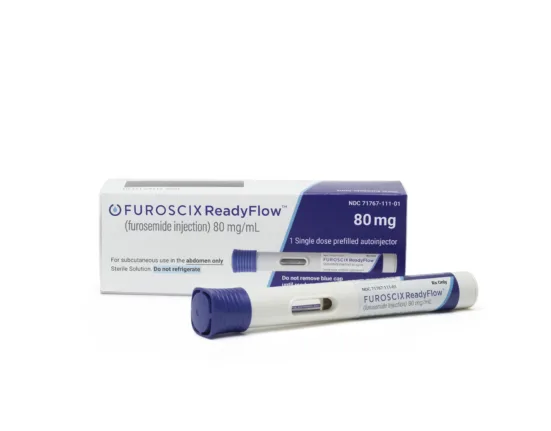
Vector Science & Therapeutics Corp. (TSXV: PAIN), LyoGenesis Plus 1, LLC and Wynn Pharmaceuticals LLC have entered into a memorandum of understanding to develop and manufacture a new line of IV bag and vial adapter products for critical medications used in hospitals and other medically supervised settings. The companies expect to negotiate definitive development and supply agreements and have projected that production could begin within three to four months, although the announcement did not identify the individual drugs, customers, regulatory submissions or finalized commercial commitments supporting that timetable.
The proposed collaboration gives Vector Science & Therapeutics a potential route into critical-care product sales without requiring the listed company to own or fund the manufacturing infrastructure directly. LyoGenesis Plus is expected to manufacture the products, Wynn Pharmaceuticals would contribute its knowledge of critical-medication markets, and Vector would manage customer relationships and sales.
That structure could create an asset-light commercial opportunity for Vector Science & Therapeutics, but the July 28 announcement remains an early framework rather than evidence of a functioning revenue stream. The central questions are now whether the parties can convert the memorandum into enforceable agreements, identify products with a viable regulatory pathway, validate manufacturing processes and secure customers willing to purchase at commercially attractive volumes.
What does the Vector, LyoGenesis Plus and Wynn Pharmaceuticals memorandum actually cover?
Under the contemplated arrangement, Vector Science & Therapeutics would receive approximately 75% of sales proceeds generated by the product line. LyoGenesis Plus would retain approximately 25% and would also be reimbursed for its manufacturing costs. The allocation remains subject to the definitive development and supply agreements that the parties expect to negotiate.
The distinction between sales proceeds and profit is important. A 75% share of revenue may initially appear generous to Vector, particularly when the company is not funding manufacturing equipment, but it does not establish the eventual gross margin or cash contribution. Those outcomes will depend on selling prices, raw materials, packaging components, validation expenses, regulatory work, testing, freight, insurance, recalls, rejected batches and the precise scope of costs reimbursable to LyoGenesis Plus.
The announcement did not disclose minimum purchase commitments, contracted customers, unit prices, exclusivity provisions, development funding, intellectual-property ownership or termination rights. It also did not indicate whether Vector’s share would be calculated before or after discounts, returns, distribution fees and other deductions.
These are not minor contractual details. They will determine whether the collaboration becomes a scalable commercial channel or simply another development programme requiring significant work before revenue can be recognized.
The companies said the initial IV bag and vial adapter opportunity could exceed $20 million annually, based on an estimate attributed to Wynn Pharmaceuticals. They also referred to the wider product line scaling to $64 million in annual revenue over the first five years. However, the forward-looking statement later described the figure as a $64 million five-year revenue estimate, creating wording that requires clarification in subsequent disclosures. Neither figure represents contracted revenue, and no customer orders were announced.

Why is the proposed critical-care revenue model attractive but still difficult to value?
Vector Science & Therapeutics is presenting the arrangement as capital-efficient because LyoGenesis Plus would carry the manufacturing role while Vector handles sales and customer relationships. In principle, the model could allow Vector to add a revenue vertical without constructing its own sterile manufacturing facility, hiring a full production workforce or directly financing every item of manufacturing equipment.
The potential advantage is strategic as well as financial. Critical-care products can involve recurring demand from hospitals, clinics, distributors and institutional purchasers. Once a supplier has completed qualification, demonstrated reliable delivery and established acceptable product quality, repeat ordering can create a more predictable commercial profile than a one-off device sale.
The barrier is that healthcare procurement rarely depends on product availability alone. Hospital buyers and distributors assess regulatory status, manufacturing reliability, quality history, pricing, contracting terms, supply continuity, compatibility with existing systems and the operational cost of switching suppliers. A new entrant may also need to demonstrate that its vial adapter or bag configuration works safely with the relevant medication, preparation process and administration workflow.
Vector’s proposed 75% share therefore looks most valuable if Wynn Pharmaceuticals can contribute genuine customer access and if LyoGenesis Plus can deliver qualified products consistently. The July 28 announcement described Wynn as a supplier of critical medications, but it did not name customers, purchasing organizations, distribution contracts or specific medications covered by the collaboration.
Investors will need to distinguish between a projected addressable opportunity and obtainable revenue. The $20 million and $64 million estimates become more informative only when the parties disclose named product categories, anticipated volumes, pricing assumptions, customer commitments and expected launch dates.
Which FDA pathways could apply to the planned IV bags and vial adapters?
The regulatory pathway cannot yet be determined from the announcement because “IV bag and vial adapter products” can describe several materially different configurations.
An empty IV container or stand-alone transfer accessory may be regulated primarily as a medical device. The U.S. Food and Drug Administration identifies IV bags, IV transfer sets and vial adapters as recognized device constituent categories, while its guidance for intravascular administration sets specifically includes vial adapters and IV transfer sets among products that may require premarket notification submissions. Existing vial adapters have received 510(k) clearance under the IV fluid transfer classification after being found substantially equivalent to legally marketed predicate devices.
The pathway could become more complex if the companies plan to fill the IV bags with drugs, package adapters with particular medicines or market an integrated drug-device system. Such configurations may be treated as combination products and could require information within a new drug application, abbreviated new drug application, biologics license application or a supplement to an existing application, depending on the product and the party holding the relevant regulatory rights.
A 510(k) clearance for a vial adapter would not automatically authorize a drug packaged with it, and an approved drug would not automatically establish that a new container or transfer configuration is suitable. Compatibility, extractables and leachables, dose delivery, stability, labeling, sterility and human-factors considerations may all become relevant.
The memorandum does not disclose whether Wynn Pharmaceuticals, Vector Science & Therapeutics, LyoGenesis Plus or another company would be the regulatory applicant. It also does not identify whether the initial products are new devices, drug-device combinations, repackaged products, compounded preparations or components intended for established drug application holders.
Until those points are disclosed, the collaboration should be understood as a product-development and manufacturing proposal rather than a regulatory de-risking event.
Does an FDA drug shortage listing automatically support expedited IND review?
The announcement said the proposed products would focus on drugs and drug substances appearing on an FDA “short list” and described those products as eligible for expedited investigational new drug review. That claim requires more product-specific explanation.
The FDA maintains a Drug Shortage Database covering current and resolved shortages. A product appears as being in shortage when national supply is inadequate to meet current or projected demand, and the agency works with manufacturers to mitigate supply disruption. Manufacturing quality problems, production delays and discontinuations are among the causes that can place medicines in shortage.
When addressing a shortage, the FDA can prioritize and expedite reviews of new drug applications, supplements involving additional production lines or material sources, and inspections or reinspections of manufacturing facilities. Those mechanisms can help expand the supply of medically necessary drugs, but they do not create a blanket approval pathway for every business seeking to manufacture a product associated with a shortage.
An investigational new drug application has a different purpose. It permits clinical investigation of an investigational therapy and does not itself provide commercial marketing authorization. The FDA’s proposed 2026 Expedited IND pilot is intended to accelerate movement from drug identification to first-in-human clinical trials through qualified research institutions. The programme is not described by the agency as an automatic benefit for products appearing in the Drug Shortage Database.
The regulatory statement in the Vector announcement may relate to particular ingredients, development programmes or discussions that were not detailed publicly. Without the names of the drugs and the intended regulatory routes, however, eligibility for expedited review cannot be independently assessed.
A stronger future disclosure would identify each product, its current FDA shortage status, the applicable application holder, the proposed submission type and any written regulatory interaction supporting an accelerated timeline.
Can production realistically begin within three to four months?
The proposed production date is one of the most consequential claims in the announcement. A three to four month start may be achievable if the initial products use established designs, qualified suppliers, existing manufacturing lines and regulatory pathways that require limited additional work. It would be considerably more demanding if the parties are developing new sterile container systems, filled drug products or combination products requiring fresh validation or regulatory submissions.
Sterile manufacturing involves more than installing equipment and producing a successful engineering batch. FDA expectations cover aseptic-process control, sterilization validation, environmental monitoring, container-closure integrity and measures preventing microbial, chemical or physical contamination. A sterile container system that cannot maintain integrity throughout storage and distribution is unsuitable for its intended purpose.
IV bags also present material and mechanical considerations. Ports, seals and flexible container surfaces must withstand manufacturing, labeling, shipping, storage and clinical handling without compromising sterility. Recent FDA compliance actions involving IV bags have illustrated how defects or inadequate aseptic controls can create contamination risks even when the underlying drug formulation is not the source of the problem.
LyoGenesis Plus is described as a contract manufacturer specialising in pharmaceutical development, testing and production, including peptides. Vector has separately said that its peptide manufacturing operation is preparing for initial production and could scale towards approximately 800,000 vials per month. Those are company projections relating to a different product vertical and do not by themselves demonstrate validated capacity for the newly proposed IV bags or vial adapters.
The next announcement will need to distinguish the beginning of technical production from commercial release. Engineering runs, validation batches and products manufactured for testing are not equivalent to saleable inventory.
How should investors interpret the relationship between Vector and LyoGenesis Plus?
The parties have been transparent that LyoGenesis Plus is related to Vector Science & Therapeutics. William Jackson serves as chief executive officer of both organizations. An earlier Vector disclosure also stated that Jackson and Vector chairman Tommy Thompson were minority owners of LyoGenesis Plus and had recused themselves from the board vote approving a previous option transaction involving the manufacturer.
That earlier option was later superseded by an exclusive licensing and manufacturing agreement between Vector and LyoGenesis Plus. The new critical-care arrangement expands the commercial relationship further by proposing that LyoGenesis manufacture products while receiving 25% of sales proceeds and reimbursement of manufacturing costs.
Related-party relationships do not automatically make a commercial arrangement disadvantageous. Shared leadership can accelerate decision-making and align development priorities. It also increases the importance of independent governance, clearly documented transfer pricing and contractual safeguards protecting the listed company and its shareholders.
The definitive agreements should therefore clarify how reimbursable costs are calculated, who approves manufacturing budgets, how pricing is established, which party owns newly developed intellectual property, how quality liabilities are allocated and what happens if production targets or regulatory milestones are missed.
What does Vector Science & Therapeutics stock performance reveal about sentiment?
Vector Science & Therapeutics shares closed at C$1.67 on July 27, the final trading session before the collaboration announcement, giving the company an indicated market capitalization of approximately C$261 million. The stock was about 7.7% above its July 21 close of C$1.55 but approximately 27.7% below its June 29 close of C$2.31. Its reported 52-week trading range was C$0.05 to C$2.65.
The long-range percentage movement needs caution because Vector completed its public listing through a reverse takeover in April 2026. Historical prices linked to the predecessor structure may not offer a clean comparison with the operating company’s current valuation.
The more relevant sentiment signal is the valuation investors are assigning to a company that describes itself as early stage and is still working towards revenue across several product verticals. The critical-care memorandum broadens the potential commercial story, but it also adds another execution track alongside peptide manufacturing and the planned VectorMist regulatory submission.
For the market, the collaboration is best treated as a long-term commercial signal rather than near-term revenue confirmation. Signed contracts, disclosed products, regulatory clarity and customer commitments would reduce uncertainty far more meaningfully than additional top-down market estimates.
Which milestones will show whether the collaboration is becoming a real business?
The first test will be whether the parties execute the promised definitive development and supply agreements. Those documents should convert broad intentions into measurable obligations covering product selection, development spending, manufacturing standards, economics, intellectual property, regulatory responsibility and commercial territories.
The second test will be product-level disclosure. Naming the first critical medications, confirming their shortage status and explaining whether the products are empty devices, filled drug containers or combination products would allow clinicians, hospital buyers and investors to assess the regulatory and operational pathway.
Manufacturing evidence will follow. Facility readiness, validated processes, qualified suppliers, container-closure testing, stability work and the release of conforming commercial batches will matter more than nominal production capacity.
Finally, the companies will need to demonstrate demand. Purchase commitments, distribution agreements, first shipments and recognized revenue will reveal whether Wynn Pharmaceuticals’ market access can translate into recurring orders.
The memorandum creates an intriguing route for Vector Science & Therapeutics to participate in critical-care supply without owning all of the manufacturing infrastructure. What happens next will determine whether the 75% sales share becomes a valuable asset-light business model or remains an attractive percentage attached to products that have not yet reached hospitals.