Meitheal Pharmaceuticals has announced United States Food and Drug Administration approval of Garzulys, or insulin aspart-fsan, as a biosimilar to NovoLog insulin aspart. The rapid-acting insulin analogue is approved to improve glycaemic control in adults and paediatric patients with diabetes mellitus, covering subcutaneous and intravenous administration. Emerge Bioscience holds the approved Biologics License Application, while Meitheal serves as the U.S. regulatory agent and holds exclusive U.S. commercialisation rights. sion removes the central regulatory barrier facing Garzulys, but it does not guarantee rapid adoption or commercially meaningful market share. Meitheal is entering a category where clinical familiarity with insulin aspart is already well established, while competition among the reference product and biosimilar alternatives is increasingly likely to be determined by price, formulary placement, distribution reach, device acceptance and supply reliability.
Garzulys therefore represents more than another product approval for the Chicago-based company. It is an important test of whether Meitheal can extend the regulatory, manufacturing and distribution capabilities developed through its generic injectable business into a complex biologics market shaped by payer contracting, pharmacy benefit structures and intense scrutiny of insulin affordability.
What exactly has the FDA approved for Garzulys insulin aspart-fsan?
Garzulys is a rapid-acting human insulin analogue intended to manage the rise in blood glucose associated with meals. The approved indication covers improvement of glycaemic control in adults and paediatric patients with diabetes mellitus, matching the broad patient population served by the NovoLog reference product.
Public disclosures identify a 10 mL multidose vial containing 100 units per mL and a 3 mL single-patient-use prefilled pen at the same concentration. The disclosures cover subcutaneous administration, including use associated with mealtime insulin delivery, as well as intravenous administration under appropriate clinical supervision. Instructions related to continuous subcutaneous insulin infusion are also included in the product information, although compatibility with individual insulin pump systems must still be assessed through the relevant device instructions and clinical workflow. s classification of Garzulys as a biosimilar means the regulator concluded that the product is highly similar to NovoLog and has no clinically meaningful differences from the reference product in safety, purity and potency. That determination should not be interpreted as evidence that Garzulys is clinically superior, more convenient or inherently less expensive than NovoLog or another insulin aspart biosimilar.
The announcement describes Garzulys as a biosimilar and does not disclose an FDA interchangeability determination. This distinction matters commercially because an interchangeable biosimilar may, depending on state law, be substituted at the pharmacy without first contacting the prescriber. A biosimilar without that designation can still be prescribed and used with the same confidence in safety and effectiveness, but automatic substitution pathways may be more limited. are the most important takeaways from the Garzulys FDA approval?
The approval gives Meitheal an FDA-authorised rapid-acting insulin product for a large and established diabetes market, while also validating a cross-border development model involving Tonghua Dongbao Pharmaceutical, Nanjing King-Friend Biochemical Pharmaceutical, Xentria and Emerge Bioscience.
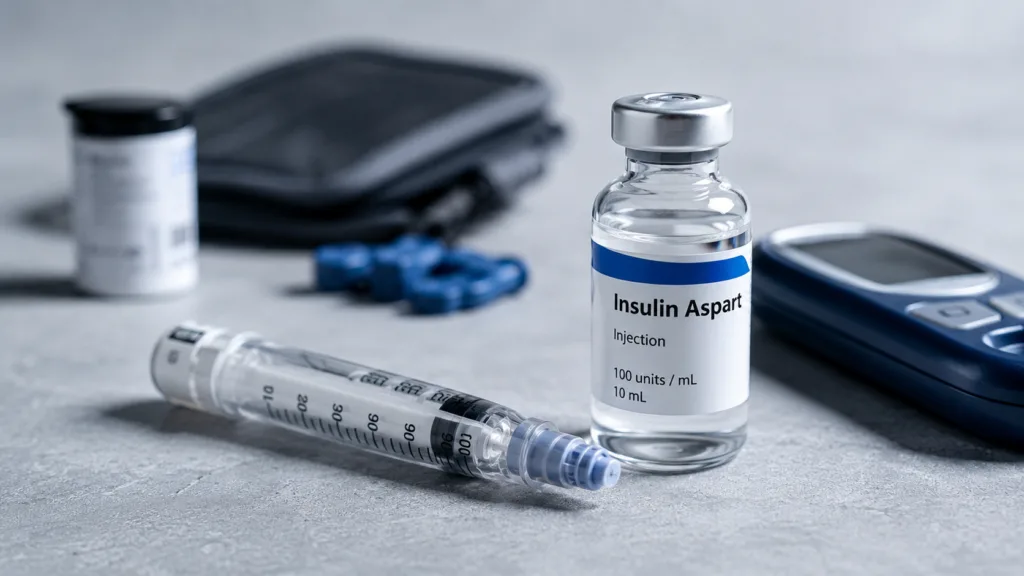
However, Garzulys is not the first biosimilar challenger to NovoLog. Merilog became the first FDA-approved rapid-acting insulin biosimilar in February 2025, followed by Kirsty in July 2025. Garzulys consequently enters as another approved option rather than opening a previously uncontested category. important unanswered questions concern launch timing, pricing, contracting and distribution. Meitheal’s announcement did not disclose a commercial launch date, list price, expected net price, formulary agreements, patient affordability programme or projected revenue contribution.
For patients and healthcare professionals, the FDA decision confirms biosimilarity to NovoLog for the approved uses. For investors and industry observers, the next phase is less about regulatory science and more about whether Meitheal can convert that approval into dependable supply and competitive access.
Why is Garzulys a regulatory de-risking event rather than a new clinical breakthrough?
Insulin aspart is an established therapeutic molecule rather than a newly discovered mechanism of action. Garzulys does not introduce a new biological target, a different treatment principle or a newly demonstrated improvement in long-term diabetes outcomes. Its clinical importance lies in providing another FDA-approved version of an established rapid-acting insulin.
This is consistent with the purpose of the biosimilar regulatory pathway. Biosimilar development is based on demonstrating high similarity to an approved reference biological product through the totality of evidence, including analytical characterisation and, where required, comparative pharmacokinetic, pharmacodynamic, immunogenicity and clinical information.
The regulatory achievement should therefore be assessed through the quality of comparability, manufacturing consistency and regulatory execution rather than through the language normally used for a novel drug approval. The FDA’s conclusion establishes that there are no clinically meaningful differences between Garzulys and NovoLog for the approved conditions of use. It does not establish that Garzulys will improve adherence, reduce hypoglycaemia or deliver better glycaemic outcomes than the reference product.
The publicly released announcement does not provide a detailed breakdown of the analytical and clinical evidence reviewed in the Biologics License Application. Greater visibility may emerge through regulatory documents, prescribing information, scientific presentations or subsequent publications, but the approval itself confirms that the submitted package met the FDA’s biosimilar standard.
How crowded is the U.S. insulin aspart market following the Garzulys approval?
Garzulys enters a market still led by NovoLog but no longer limited to a single FDA-approved insulin aspart option. Merilog, developed by Sanofi, was approved in February 2025 as the first rapid-acting insulin biosimilar in the United States. Kirsty was added to the FDA’s biosimilar list in July 2025, making Garzulys another approved competitor to the same reference product.
The increasing number of approvals creates the regulatory foundation for competition, although the number of licensed products does not necessarily correspond with the number of products that have secured meaningful commercial access. Launch decisions can be delayed by manufacturing preparation, supply allocation, contracting negotiations and the economics of competing against established rebate arrangements.
More than 38 million people in the United States have been diagnosed with diabetes, and the FDA previously estimated that approximately 8.4 million Americans rely on rapid-acting, long-acting or combined insulin therapy. That creates a substantial treatment base, but it should not be confused with an immediately obtainable market for Garzulys. vant opportunity is narrower and more operational. Meitheal must compete for patients currently using insulin aspart, new prescriptions, institutional demand, payer-preferred positions and supply opportunities created when competing products experience shortages or contracting changes.
NovoLog also benefits from longstanding prescriber familiarity, established device use, widespread distribution and extensive payer relationships. A biosimilar entrant does not need to displace the reference product across the entire market to become commercially useful, but it must offer a persuasive economic or supply proposition to pharmacies, wholesalers, insurers and healthcare systems.
Can Meitheal’s established injectable business support a competitive insulin launch?
Meitheal currently markets more than 80 FDA-approved products across therapeutic areas including anti-infectives, oncology, anaesthesia, critical care, fertility and diabetes. This existing portfolio gives the company experience in regulatory submissions, sterile-product distribution, wholesaler relationships and supply management. ulys approval nonetheless moves Meitheal into a commercially different environment. Traditional hospital injectables are frequently purchased through institutional procurement channels, while outpatient insulin demand is heavily influenced by pharmacy benefit managers, health plans, retail pharmacies, employer coverage and patient cost-sharing structures.
Meitheal will need to demonstrate that its commercial organisation can manage both the technical requirements of a biologic product and the contracting complexity of the U.S. diabetes market. Sales execution will involve more than informing endocrinologists that another insulin aspart product is available. It will require formulary negotiations, wholesaler inventory, reliable pharmacy ordering, patient support systems and clear communication around switching and device use.
Management has positioned the approval as evidence that Meitheal is expanding beyond its generic injectable foundations into biologics and branded medicines. That strategic interpretation is reasonable, although the strength of the platform will ultimately be measured by launches, sustained supply and revenue rather than the number of regulatory approvals alone.
Why is Garzulys dependent on an unusually distributed development and supply network?
Garzulys was developed through a collaboration involving several organisations with distinct responsibilities. Tonghua Dongbao Pharmaceutical was responsible for drug-substance development, Nanjing King-Friend Biochemical Pharmaceutical handled drug-product development, Xentria led the clinical development programme, and Meitheal managed the U.S. regulatory work.
Emerge Bioscience holds the approved Biologics License Application and is responsible for key supply-chain activities. Meitheal holds exclusive U.S. commercialisation rights under its licence arrangement with Emerge. The collaboration also covers two additional insulin biosimilar candidates under development, potentially giving Meitheal a pathway toward a broader insulin portfolio rather than a single-product entry. ision of responsibilities spreads development and manufacturing capabilities across specialist partners, but it also creates coordination requirements. Commercial supply depends on consistent execution across drug substance, finished-product manufacturing, quality release, international logistics, regulatory compliance and U.S. inventory management.
Insulin is a chronic medicine for which supply interruptions can have serious consequences. Hospitals, pharmacies and payers will therefore evaluate not only price but also whether the commercial network can deliver predictable volumes and respond to fluctuations in demand.
The collaboration’s future credibility will be influenced by manufacturing inspection outcomes, batch consistency, capacity allocation and the ability to avoid shortages after launch. Approval confirms that the reviewed manufacturing and quality package met FDA requirements, but continued commercial supply will require sustained compliance and operational discipline.
Will price and formulary access matter more than regulatory approval?
Regulatory approval creates eligibility to compete. Payer and formulary access determine whether meaningful numbers of patients can obtain the product under acceptable financial terms.
Meitheal has not disclosed the expected list price or net pricing strategy for Garzulys. It has also not announced major payer contracts, preferred formulary positions or arrangements with pharmacy benefit managers. Without those details, it is too early to estimate the product’s likely market penetration.
A lower list price could attract attention, but list price alone does not determine patient cost or manufacturer economics. Net pricing can be affected by rebates, distribution fees, discounts, chargebacks and contracting arrangements. A product with an aggressive headline discount may still struggle if it lacks broad coverage, while a product with strong contracting can gain volume even without being the cheapest option on paper.
Garzulys may also find targeted opportunities through health systems, government programmes, institutional channels or payers seeking additional competition and supply diversity. Meitheal’s established injectable distribution infrastructure could help, although insulin access requires capabilities beyond those normally used for acute-care hospital medicines.
Commercial progress should be judged through measurable indicators such as launch confirmation, product availability at major wholesalers, payer coverage, formulary decisions, prescription trends and evidence that supply is being maintained at scale.
What safety and implementation issues will accompany Garzulys use?
The principal safety risks are consistent with insulin aspart products generally. Hypoglycaemia is the most common adverse effect and can be severe. The product information also identifies risks involving hypersensitivity reactions, hypokalaemia, medication errors, injection-site changes and fluid retention when insulin is used with certain peroxisome proliferator-activated receptor gamma agonists.
The label warns against sharing prefilled pens between patients, even when the needle is changed, and against sharing needles or syringes used with vials. It also emphasises careful monitoring when changing insulin manufacturers, formulations, injection methods or injection sites because such changes can affect glycaemic control. users, training and continuity planning remain particularly important. Pump or infusion-set malfunction can lead to rapid hyperglycaemia and ketoacidosis, requiring patients to have access to an alternative method of insulin administration. Commercial adoption in this segment may also depend on clarity around pump compatibility and familiarity among diabetes-care teams.
These considerations do not represent safety concerns unique to Garzulys. They illustrate why adding another biosimilar to the market still requires careful product identification, patient education and healthcare-professional oversight during transitions between insulin products.
What does the approval mean for Meitheal and its publicly listed development partners?
Meitheal and Emerge Bioscience are privately held, while Tonghua Dongbao Pharmaceutical and Nanjing King-Friend Biochemical Pharmaceutical are listed on the Shanghai Stock Exchange. The approval is strategically positive for the listed partners because it demonstrates their ability to support a U.S. biologics application and provides potential exposure to the American insulin market.
The immediate financial implications remain difficult to quantify. The partners have not provided detailed U.S. revenue expectations, profit-sharing economics, commercial milestones or launch-volume guidance. Approval may strengthen investor confidence in their internationalisation strategies, but meaningful valuation support will depend on actual orders, margins and the performance of the wider insulin collaboration.
For Meitheal, Garzulys serves as a commercial proof point for its effort to evolve from a generic injectable supplier into a more diversified biopharmaceutical company. Success would strengthen the case for investing in the two additional insulin biosimilar candidates included in the collaboration. Weak uptake, delayed launch or limited payer access would demonstrate how difficult it remains for smaller commercial organisations to convert biosimilar approvals into scale.
What milestones will reveal whether Garzulys becomes commercially relevant?
The next meaningful development will be confirmation of the U.S. launch timeline. That should be followed by disclosure of pricing, wholesaler availability, payer coverage and any patient access arrangements.
Supply performance will be equally important. Consistent availability across the prefilled pen and vial formats would support uptake and help Meitheal establish credibility in diabetes care. Delays, restricted inventory or uneven distribution would reduce the practical value of the approval.
Industry observers will also watch whether Meitheal seeks an interchangeability determination, although the company has not announced such a plan. Interchangeability is not a higher standard of clinical quality, but it can influence substitution mechanics and commercial access in certain pharmacy settings.
Garzulys has cleared the scientific and regulatory test required to become an FDA-approved NovoLog biosimilar. The harder test now begins: whether Meitheal and its partners can offer a competitively priced, reliably supplied insulin product that payers will cover, pharmacies will stock and healthcare professionals can integrate smoothly into diabetes care.