ZAP Surgical Systems, Inc., the San Carlos, California-based medical technology company developing robotic stereotactic radiosurgery systems, announced on October 19, 2026, that it has secured $36 million in financing led by Catalio Capital Management, with continued support from its Chinese strategic partner Baheal. The investment will support international commercialization and expanded manufacturing capacity for the ZAP-X Gyroscopic Radiosurgery platform, a self-shielded treatment system designed to deliver highly focused radiation to selected brain and head-and-neck targets. The financing follows shipment of the company’s 50th ZAP-X system, while cumulative patient treatments worldwide are approaching 10,000. ZAP intends to use the additional capital to reach more academic medical centers, community hospitals and physician-led practices.
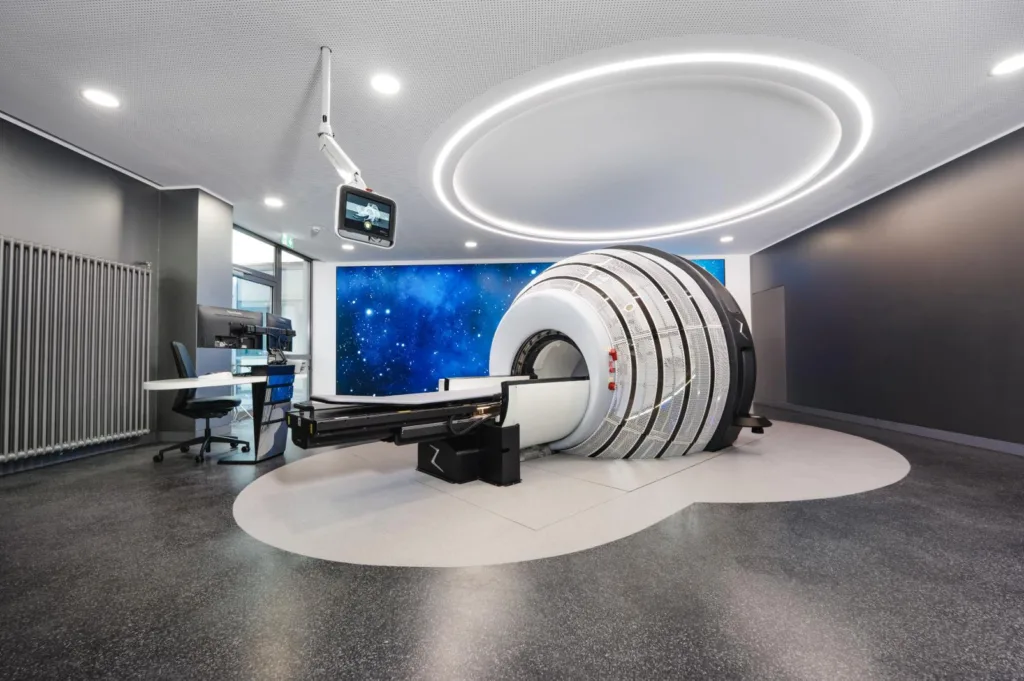
The company’s technology is intended to address some of the infrastructure requirements associated with conventional stereotactic radiosurgery. ZAP-X uses a medical linear accelerator mounted within a gyroscopic treatment system that directs radiation toward a precisely defined target from numerous angles. Its integrated shielding can eliminate the need for a conventional radiation vault in appropriate installations, potentially reducing building requirements and allowing facilities without existing radiation bunkers to establish treatment services.
The announcement also highlights ZAP’s investigation of radiomodulation, an experimental application of focused radiation intended to influence brain circuits involved in psychiatric disorders. Preliminary research in treatment-resistant depression has produced encouraging early observations, but the approach is not approved as a general clinical treatment for depression or addiction. The financing is therefore supporting an established medical device business while the company explores a separate, substantially less mature therapeutic opportunity.
What will ZAP Surgical use the $36 million financing to accomplish?
The financing is led by Catalio Capital Management, an investment firm focused on healthcare and artificial intelligence opportunities, with continued participation from Baheal. ZAP did not disclose the financing instrument, ownership dilution, company valuation or a breakdown of the commitments from individual investors. The announcement establishes the total capital secured but does not provide enough information to characterize it as a particular numbered equity round.
The principal objective is to expand manufacturing and commercial distribution of ZAP-X. The company says it is increasing production capacity as demand grows across different healthcare settings. This is commercially important because installing a radiosurgery system involves more than supplying the equipment itself, including site preparation, commissioning, training and continued technical support.
ZAP is also seeking to broaden access beyond the academic hospitals and specialist centers that have historically provided many advanced radiosurgery services. Community hospitals and physician-led practices may represent additional opportunities where conventional infrastructure has limited investment. The ability to serve these facilities could expand the addressable market, provided they have the necessary clinical expertise and patient volumes.
Catalio’s Nicholas von Guionneau will join ZAP’s board as an observer following the investment. The role creates a governance connection between the new investor and the company but does not establish a transfer of controlling ownership. ZAP founder and chief executive John R. Adler will continue to lead the business.
The financing’s ultimate value will depend on whether increased manufacturing output translates into installed, operational systems and sustained clinical utilization.
Why is shipment of the 50th ZAP-X system commercially significant?
ZAP’s shipment of its 50th system represents a manufacturing and distribution milestone for a specialized medical device. Unlike disposable products, advanced radiosurgery equipment typically requires substantial capital expenditure and a lengthy purchasing process. Institutions must assess clinical demand, infrastructure, training and long-term service commitments before acquiring a system.
The milestone demonstrates that ZAP-X has progressed beyond isolated early installations into a growing commercial network. The company also reports that nearly 10,000 patients have been treated worldwide, suggesting accumulating operational experience across participating centers. However, the company has not provided a breakdown of treatments by diagnosis, country, institution or date.
There is an important distinction between systems shipped and systems fully installed and treating patients. A shipment may precede installation, regulatory commissioning and the first patient procedure. The 50-system figure therefore should not automatically be described as 50 currently operational treatment centers.
The patient figure is similarly a cumulative commercial milestone rather than a clinical trial outcome. It cannot be used to calculate a response rate, safety rate or average treatment effectiveness. Those questions require appropriately designed clinical investigations with defined populations and follow-up.
Nevertheless, the two indicators together support ZAP’s contention that its platform is gaining commercial traction. Manufacturing expansion may allow the company to deliver equipment more consistently as additional hospitals seek to establish radiosurgery services.
How does ZAP-X deliver focused radiation without conventional open surgery?
Stereotactic radiosurgery is a form of highly focused radiation treatment designed to deliver a prescribed dose to an accurately identified target. Despite the term surgery, the procedure generally does not involve a surgical incision. Radiation beams converge on the treatment area while clinicians attempt to limit exposure to surrounding healthy tissue.
ZAP-X uses a 3-megavolt medical linear accelerator positioned within a gyroscopic mechanical structure. The system’s dual rotating mechanisms allow radiation delivery from numerous non-coplanar angles. This design enables treatment planning that distributes the entrance dose across different directions while concentrating the prescribed dose at the target.
The approach is relevant to selected brain tumors, intracranial metastases and other conditions where precise radiation delivery may be appropriate. Radiosurgery is particularly useful when conventional surgery presents challenges because of tumor location, patient characteristics or proximity to important neurological structures. However, treatment suitability depends on diagnosis, target size and clinical circumstances.
The platform uses imaging and positioning systems to help align the intended treatment target with the delivered beams. Accurate positioning is essential because even small deviations can influence radiation exposure near sensitive structures such as the optic apparatus and brainstem. Equipment design therefore must be supported by rigorous quality assurance and clinical oversight.
ZAP-X was originally cleared by the FDA in September 2017, with additional regulatory clearances for later device configurations. The October 2026 financing announcement does not represent a new FDA device approval.
What makes ZAP-X different from Gamma Knife and conventional linear accelerators?
Established stereotactic radiosurgery systems use different methods of generating and directing radiation. Gamma Knife technology traditionally employs cobalt-60 radioactive sources arranged to converge on an intracranial target. Other radiosurgery platforms use linear accelerators, sometimes configured for both cranial treatment and broader radiation oncology applications.
ZAP-X uses an electrically powered linear accelerator, avoiding the radioactive cobalt sources and periodic source replacements associated with cobalt-based equipment. Its gyroscopic design is dedicated to focused radiosurgery rather than general-purpose treatment of malignancies throughout the body. The company positions this specialization as a means of reducing unnecessary radiation exposure and certain operating requirements.
The system also incorporates substantial shielding within the equipment itself. This creates the possibility of installation without constructing the large concrete bunker commonly associated with external-beam radiotherapy equipment. However, actual facility requirements remain subject to local radiation protection regulations, building conditions and site-specific safety assessments.
ZAP estimates that avoiding a conventional radiation vault can reduce infrastructure expenditure by more than $1 million in some settings. That estimate is a company-provided cost comparison rather than a guaranteed saving for every institution. The economic result will depend on local construction costs, equipment requirements and the facility’s existing infrastructure.
The design also does not establish that ZAP-X is clinically superior to all other stereotactic systems. Comparative treatment planning, safety, local control and long-term outcomes remain necessary for establishing the relative benefits of different platforms.
What does published clinical research establish about ZAP-X performance?
A 2026 scoping review in the Journal of Clinical Neuroscience examined 24 studies involving 779 reported patient cases and 1,163 treated lesions. The review covered early institutional experience with ZAP-X through December 2025. Common treated lesions included intracranial metastases, schwannomas and meningiomas.
Across the included research, the weighted mean radiation delivery time was approximately 38.6 minutes, although individual treatment durations varied substantially. The review also examined treatment planning characteristics, including dose conformity and dose falloff. These measurements provide information about the system’s technical performance in clinical settings.
Among 245 cases with relevant tumor-volume follow-up, 230 were reported to have achieved local control, corresponding to approximately 93.9%. However, that percentage applies only to the subset with the specified outcome data. It should not be presented as a 93.9% control rate across all 779 patients, all lesions or the nearly 10,000 commercial treatments reported by ZAP.
The review also identified favorable patient satisfaction in 426 of 441 survey responses. Such feedback is relevant to treatment experience but is distinct from tumor control, neurological function and long-term survival. Its interpretation depends on the participating institutions and survey methods.
The authors concluded that early clinical results showed dosimetric characteristics broadly comparable with established radiosurgery platforms. They also emphasized the need for more prospective studies, longer follow-up and standardized outcome measures. This provides a balanced assessment of the growing evidence base without establishing definitive superiority.
How does vault-free radiosurgery affect hospital infrastructure economics?
Radiation therapy equipment can require extensive shielding infrastructure to protect patients, staff and surrounding areas from unintended exposure. Constructing or modifying a treatment vault may involve substantial building work, regulatory approvals and disruption to existing facilities. These factors can limit the feasibility of establishing advanced radiosurgery services.
ZAP-X addresses part of that challenge through integrated shielding. By containing much of the radiation within the equipment, the system is designed to reduce reliance on a traditional external bunker. The potential benefit is particularly relevant to institutions that do not already possess a suitable treatment vault.
Lower construction requirements may improve the economics of establishing a dedicated radiosurgery programme. However, the total cost of ownership also includes equipment acquisition, staffing, maintenance, software, training and ongoing quality assurance. Eliminating one major infrastructure component does not eliminate the broader expense of delivering specialist care.
Clinical staffing is another consideration. Safe radiosurgery requires trained radiation oncologists, medical physicists and other appropriately qualified professionals. Smaller hospitals may still need to establish specialist partnerships or referral arrangements even when installation becomes easier.
The real opportunity lies in expanding access to treatment where the necessary expertise and patient demand can be supported. Whether ZAP-X delivers a lower cost per treatment will depend on utilization, service arrangements and the local healthcare environment.
Which international markets are contributing to ZAP’s expansion?
ZAP has been expanding through installations and partnerships in North America, Europe and Asia. The company identifies Baheal as an important strategic partner supporting its presence in China. The latest financing is intended to strengthen that expansion while accelerating adoption in the United States.
Recent commercial announcements have included the selection of ZAP-X for programmes in Japan, Thailand and Australia. These developments indicate that the company’s technology is reaching healthcare markets with differing regulatory, infrastructure and reimbursement conditions. However, announcements of planned installations must be distinguished from systems already treating patients.
In the United States, the Miami Neuroscience Center at Larkin Community Hospital announced in March 2026 that it had completed a transition from older cobalt-based equipment to ZAP-X. This example is relevant because it involves replacing an established radiosurgery approach rather than introducing the service for the first time. Other centers may pursue the technology to create new treatment capacity.
International expansion creates operational challenges alongside commercial opportunity. Equipment servicing, spare parts, training and technical support must be coordinated across different regions. A larger installed base also increases the importance of reliable manufacturing and quality management.
The $36 million financing may support those requirements, but ZAP has not disclosed specific geographic spending allocations or installation targets for the funding period.
Why is ZAP investigating treatment-resistant depression and addiction?
ZAP is exploring whether precisely delivered radiation at selected doses can alter the activity of neurological circuits without producing the tissue destruction associated with conventional ablative radiosurgery. The company refers to this experimental approach as radiomodulation. Research has focused partly on brain regions involved in mood regulation and other neurological functions.
One clinical programme targets the subgenual anterior cingulate cortex in patients with severe treatment-resistant depression. This region is involved in networks associated with emotional processing and has been investigated through other neuromodulation approaches. The objective is to determine whether radiation can influence circuit activity in a clinically useful way.
In a first-in-human pilot study involving nine adults, investigators reported a mean reduction in Montgomery-Åsberg Depression Rating Scale scores from 33.0 to 17.0 four weeks after treatment. Six participants met the study’s response criteria, and four met remission criteria. Researchers also reported no serious treatment-related adverse events during the short observation period.
However, the study was small and compared different radiation dose levels rather than including a sham-treatment group. Symptom improvement cannot therefore be attributed definitively to radiomodulation alone. The findings were also reported in a preprint and require further independent assessment and larger controlled studies.
The treatment remains investigational and has not received general regulatory approval for depression. Research involving addiction is similarly an early development ambition rather than an established clinical application. The $36 million financing should not be interpreted as evidence that either psychiatric indication has been commercially validated.
What safety questions remain important as ZAP-X use expands?
Radiosurgery involves delivering a substantial radiation dose to a limited region of tissue, making accurate targeting and treatment planning essential. Potential complications depend on the lesion, treatment location, prescribed dose and patient characteristics. Risks can include radiation injury to surrounding structures, swelling and delayed neurological effects.
An equipment platform’s precision does not eliminate these biological risks. Clinicians must determine appropriate treatment volumes and dose constraints, particularly when targets lie near structures critical to vision, movement or other neurological functions. Long-term monitoring remains important because some radiation-related complications may emerge months or years after treatment.
Device reliability is another consideration. As with other radiation delivery systems, software, mechanical positioning and imaging functions must remain within validated operating tolerances. ZAP-X has previously been subject to FDA-recorded device corrections involving aspects of treatment positioning, underscoring the importance of ongoing quality systems and field monitoring.
Commercial growth also increases the need for consistent operator training. Hospitals establishing new programmes must demonstrate that treatment planning and delivery procedures meet applicable clinical and safety standards. Automated equipment cannot replace professional judgment or independent quality assurance.
For radiomodulation, the uncertainty is greater because the objective involves changing brain activity without producing conventional ablative lesions. Researchers will need substantially longer follow-up to assess potential cognitive, neurological and radiation-related effects before the approach can be considered an established psychiatric therapy.
What will determine whether the new financing produces sustainable growth?
The most immediate indicators will be additional system installations, increased manufacturing output and expanding treatment volumes across the installed base. ZAP has demonstrated commercial progress through 50 system shipments and nearly 10,000 cumulative patient treatments. However, it has not disclosed annual revenue, profitability, average system selling prices or a current order backlog.
Those financial details are important for determining the economics of expansion. High-value capital equipment businesses depend not only on initial sales but also on maintenance, service reliability and customer satisfaction. Increasing manufacturing capacity ahead of demand can create operational risk if installations or purchasing decisions are delayed.
The company’s differentiated infrastructure model may appeal to facilities seeking to establish radiosurgery without constructing a conventional vault. However, purchasing decisions will ultimately depend on patient volumes, clinical results, staffing and total costs. Strong technical performance alone does not guarantee favorable economics for every hospital.
Radiomodulation provides a separate potential growth opportunity but should not be incorporated into near-term commercial expectations as though psychiatric treatment were already authorized. Larger controlled clinical studies and regulatory review would be required before such applications could contribute to routine medical practice.
ZAP Surgical’s October 2026 financing supports an existing, commercially deployed medical device business with a growing international footprint. The $36 million investment could help translate demand into additional manufacturing capacity and broader access to precise brain radiosurgery, while published clinical evidence continues to develop.
The longer-term opportunity depends on demonstrating that the platform provides consistent clinical outcomes and attractive operating economics across different healthcare settings. Its exploratory psychiatric applications may eventually broaden the technology’s reach, but current evidence remains preliminary. The financing strengthens ZAP’s ability to pursue these opportunities without resolving the clinical and commercial uncertainties associated with expansion.