Aptar Pharma, the pharmaceutical division of AptarGroup, Inc. (NYSE: ATR), has acquired Germany-based Pulmotree, expanding its respiratory drug delivery portfolio with the Kolibri Non-Propellant Liquid Inhaler platform. Announced on October 26, 2026, the transaction is intended to accelerate the development, industrialisation and commercialisation of a breath-triggered inhalation technology designed to deliver medicines directly into the lungs, including potentially complex biological therapies.
The acquisition follows an exclusive development and commercial collaboration established between Aptar Pharma and Pulmotree in September 2024. Financial terms were not disclosed, and AptarGroup has not provided a revenue forecast, acquisition multiple or expected earnings contribution associated with the transaction.
The strategic significance lies in moving from a technology partnership to direct ownership of a pulmonary delivery platform at a time when pharmaceutical developers are exploring inhaled formulations of increasingly complex therapeutic molecules. Kolibri combines vibrating mesh aerosol generation, breath-guidance capabilities and digital connectivity, creating an opportunity for Aptar Pharma to offer a more integrated drug-device development service.
However, the acquisition does not establish that Kolibri has received regulatory authorisation for a specific pharmaceutical product or that its use has improved clinical outcomes. Its commercial potential will depend on demonstrating reliable aerosol performance, compatibility with individual formulations, scalable manufacturing and acceptable usability across intended patient populations.
Why has Aptar Pharma acquired Pulmotree after two years of respiratory technology collaboration?
Aptar Pharma and Pulmotree began working together under an exclusive agreement announced on September 9, 2024. That arrangement gave Aptar Pharma responsibility for leading development and promotion of the Kolibri platform while allowing pharmaceutical customers to access supporting formulation, device engineering and patient-service capabilities.
The partnership created a commercial interface through which drug developers could evaluate Kolibri without relying exclusively on Pulmotree’s internal resources. Aptar Pharma also became a principal point of contact for companies investigating how the inhaler technology could be incorporated into their pharmaceutical programmes.
According to Aptar Pharma, the collaboration generated opportunities for customers to gain direct experience with Kolibri and assess its suitability for prospective inhaled therapies. Jonathan Mulpas, the company’s director of business development for the pulmonary category, indicated that the interest observed during the relationship reinforced management’s view that pharmaceutical developers need differentiated technologies for next-generation respiratory medicines.
The acquisition changes the relationship by bringing the platform and associated technical expertise under AptarGroup’s ownership. Instead of coordinating development through a separate technology partner, Aptar Pharma can pursue greater integration between inhaler engineering, formulation development, clinical preparation and potential commercial manufacturing.
This could reduce organisational friction when customers require modifications to both the medicine and its delivery system. Pharmaceutical development often involves repeated adjustments to formulation properties, aerosol generation and device operation, making close coordination important for maintaining product performance.
The transaction may also strengthen continuity for existing pharmaceutical partners evaluating the Kolibri platform. Pulmotree chief executive Ulf Krüger described the acquisition as a continuation of the companies’ established relationship, supported by the resources of a larger international organisation.
Nevertheless, the announcement does not disclose whether Pulmotree already has binding commercial supply contracts, the value of its customer pipeline or the number of pharmaceutical programmes using Kolibri. The acquisition therefore provides a clearer ownership structure without establishing the scale of future commercial demand.
How does Kolibri’s vibrating mesh technology differ from conventional inhalation systems?
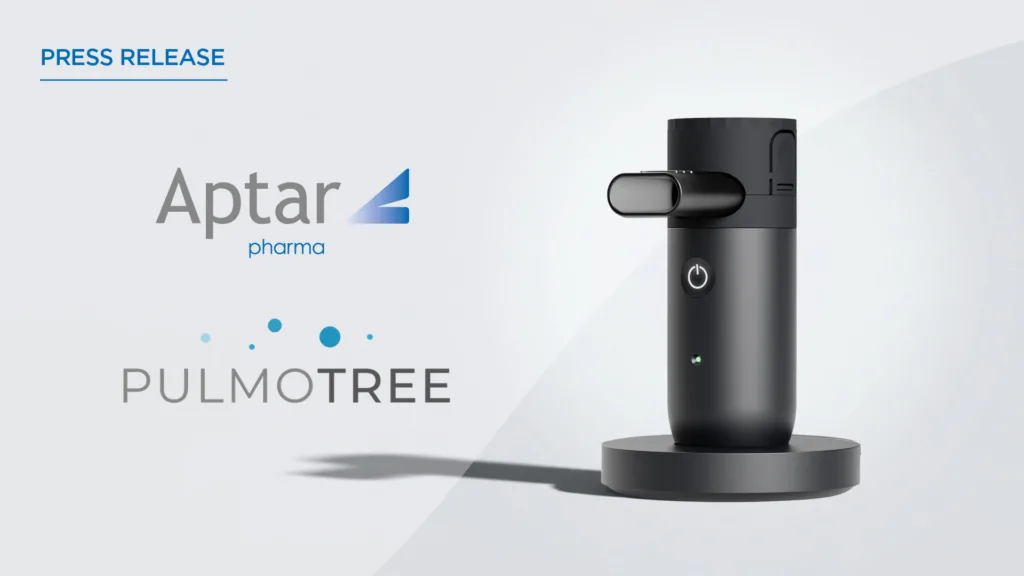
Kolibri is a non-propellant liquid inhalation platform using a breath-triggered vibrating mesh aerosolisation engine. Vibrating mesh systems generally generate aerosols by moving a liquid formulation through microscopic openings in a mesh, producing droplets that can be inhaled into the respiratory tract.
This approach differs from conventional pressurised metered-dose inhalers, which use propellants to expel medicine, and from dry powder inhalers, which rely on the patient’s inhalation to disperse powder particles. The different technologies create distinct formulation, dosing and patient-use considerations.
One of Kolibri’s defining features is its intended coordination of aerosol generation with the patient’s breathing pattern. Breath-triggered operation is designed to initiate aerosol delivery at a suitable point in the respiratory cycle, potentially reducing the amount of medicine emitted when the patient is not inhaling.
The system also incorporates breath-guidance capabilities intended to support controlled inhalation. Such features may help address the variability that occurs when patients breathe too rapidly, too shallowly or inconsistently during medication administration.
Pulmotree has positioned the technology around targeted lung deposition rather than aerosol generation alone. This is relevant because the amount of medicine reaching the intended lung region depends on droplet size, inspiratory flow, airway anatomy and other physiological factors.
However, a device’s ability to generate an aerosol with favourable physical characteristics does not automatically establish effective medicine delivery in patients. Aerosol deposition can differ between laboratory tests, computational models and clinical use, particularly among individuals with obstructive or structurally abnormal lung disease.
The clinical significance of Kolibri will therefore depend on whether controlled studies demonstrate consistent delivered dose, appropriate regional deposition and reliable use across the intended population.
These requirements become particularly important when the technology is combined with medicines having narrow therapeutic margins or complex pharmacological properties.
What does Pulmotree’s earlier aerosol deposition research establish about the Kolibri platform?
Pulmotree has previously investigated the influence of realistic breathing patterns on aerosol deposition using the Kolibri mesh nebuliser platform. Research presented at the Drug Delivery to the Lungs Conference in 2024, and described by Pulmotree in May 2026, examined whether patient-derived guided breathing profiles could improve predictions of pulmonary delivery.
The work involved Pulmotree researchers collaborating with specialists from Nanopharm, Fluidda and other scientific contributors. Investigators compared guided and unguided breathing patterns through computational approaches designed to estimate aerosol deposition under different conditions.
The modelling included a healthy-lung representation and disease-related lung models involving cystic fibrosis and non-cystic fibrosis bronchiectasis. These conditions are relevant because changes in airway structure and breathing characteristics can influence where inhaled particles are deposited.
Pulmotree reported that the guided breathing profile produced approximately 45% higher aerosol deposition in targeted lung regions across the evaluated models, accompanied by reduced deposition outside the thoracic region.
The findings support the technical rationale for integrating breath guidance with aerosol generation. However, the reported improvement came from computational modelling rather than a prospective clinical trial demonstrating a 45% increase in drug deposition or improved patient outcomes.
The distinction is important because simulated deposition is influenced by assumptions about breathing profiles, airway geometry and aerosol characteristics. Real-world performance may differ when patients have variable lung function, experience symptoms or use the device without direct supervision.
Further investigations involving suitable experimental and clinical methods would be necessary to establish whether the modelled differences translate into more consistent delivered doses or improved therapeutic results.
For pharmaceutical developers, the research nevertheless provides a basis for investigating inhalation profiles during formulation and device optimisation. Its practical value lies in informing development decisions, rather than providing definitive evidence of clinical superiority.
Why could Kolibri become relevant to inhaled biologics and other complex medicines?
Aptar Pharma has identified delivery of complex therapeutic molecules, including biologics, as an important potential application of Kolibri. The ambition reflects increasing interest in administering certain medicines through the respiratory tract rather than relying exclusively on injectable or other systemic routes.
The lungs provide a large biological surface area and can offer opportunities for local treatment of respiratory disease. Pulmonary administration may also be investigated for selected medicines intended to produce systemic effects, although suitability depends heavily on molecular properties, formulation and the intended therapeutic mechanism.
Biological medicines introduce particular development challenges because proteins and other complex molecules can be sensitive to mechanical stress, temperature, interfaces and changes in solution composition. Aerosol generation may affect molecular stability or create aggregation risks depending on the device and formulation.
A vibrating mesh system may offer useful characteristics for particular liquid formulations, but compatibility cannot be assumed across all biologics. Each candidate requires assessment of aerosol performance, molecular integrity, delivered dose and pharmacological activity following administration.
The potential development opportunity also extends beyond protein medicines. Other complex inhaled formulations may require control over droplet formation, regional delivery and residual drug volume, particularly when dosing precision is important.
For pharmaceutical companies, selecting a delivery platform early in development can influence the eventual formulation and manufacturing strategy. Changes to the inhaler during clinical development may require additional comparability testing or adjustments to the evidence supporting the final combination product.
Ownership of Kolibri gives Aptar Pharma greater scope to coordinate these decisions internally and with customers. However, the platform’s commercial value will depend on whether its technical features address measurable limitations in specific drug development programmes.
No newly approved inhaled biologic or named pharmaceutical product using Kolibri was identified in the October acquisition announcement. The opportunity therefore remains developmental rather than an established commercial treatment category.
How could Nanopharm, Noble and Aptar Digital Health strengthen Kolibri’s development pathway?
Aptar Pharma intends to combine the acquired technology with several existing capabilities across its organisation. These include Nanopharm’s formulation development and analytical expertise, Noble’s human factors and patient-training services, and Aptar Digital Health’s software and connected-health capabilities.
Nanopharm’s involvement could be particularly relevant during early formulation assessment. Drug developers need to establish whether a liquid formulation produces suitable aerosol characteristics and maintains chemical or biological stability during nebulisation.
Analytical testing may involve droplet-size distribution, emitted dose, aerodynamic deposition, residual volume and product integrity. Such measurements help determine whether the device and medicine can operate together consistently enough to justify further development.
Noble’s human factors capabilities address a different challenge: whether intended users can operate the device correctly and reproducibly. Inhalation products may be used by patients with varying ages, lung function, coordination and familiarity with medical technology.
Breath guidance and automated triggering could potentially simplify certain aspects of administration, but these features still require usability validation. Developers must establish whether patients understand device feedback, maintain appropriate breathing patterns and complete treatment as intended.
Aptar Digital Health could add connectivity and software-enabled functions supporting treatment monitoring or patient engagement. Connected features may generate useful information about device activation, treatment sessions and selected aspects of usage behaviour.
However, device-use information is not necessarily equivalent to confirmed drug delivery or clinical adherence. A recorded inhalation session may indicate that a patient operated the device, but it does not automatically prove that the intended dose reached the lungs.
Data governance, interoperability, cybersecurity and software validation will become relevant if digital functions are incorporated into regulated drug-device products. These considerations could influence development costs and regulatory requirements.
The broader commercial strategy is to provide pharmaceutical customers with an integrated service rather than a standalone device component. Its success will depend on whether that integration reduces development complexity and produces measurable advantages for customers.
What regulatory and manufacturing challenges must Kolibri overcome before commercial adoption?
The acquisition announcement identifies development, industrialisation and commercialisation as future priorities, indicating that the platform still requires substantial execution before broader pharmaceutical deployment.
The regulatory pathway will depend on how Kolibri is used. A standalone medical device, a device accessory and a drug-device combination product may face different requirements, while an inhaler developed for a specific medicine must be evaluated as part of the relevant product configuration.
In the United States, pharmaceutical products incorporating delivery devices can require evidence addressing both medicinal and device-related performance. In Europe and other jurisdictions, the applicable requirements may differ according to product classification and the regulatory route pursued.
Consequently, approval or clearance of one configuration cannot be assumed to establish authorisation for every future medicine delivered through the same technology.
Manufacturing scale is another important requirement. Vibrating mesh devices depend on consistent component characteristics and manufacturing processes that maintain reliable aerosol generation across production batches.
Variability in mesh geometry, device assembly or material properties could influence output, requiring suitable process validation and quality controls. Repeated-use devices may also require assessment of cleaning procedures, durability and performance over their intended service life.
For liquid medicines, microbial contamination and cleaning requirements may influence usability and product risk management. The relevant control strategy will depend on whether the system is reusable, disposable or incorporates replaceable components.
Commercial partners will also need confidence in supply continuity, manufacturing capacity and change-control procedures. Device modifications introduced after pharmaceutical development begins can create additional testing and regulatory obligations.
These practical requirements will determine whether Kolibri progresses from a promising engineering platform into a dependable component of commercial inhaled medicines.
What financial contribution could Pulmotree make to AptarGroup’s pharmaceutical business?
The financial terms of the transaction have not been disclosed, preventing a direct assessment of acquisition valuation or near-term earnings impact.
AptarGroup has also not identified Pulmotree’s annual revenue, profitability, order book or expected contribution to consolidated sales. The transaction should therefore be assessed primarily through its strategic and technological rationale rather than an assumed immediate financial benefit.
AptarGroup’s most recently published quarterly results, for the period ended June 30, 2026, showed consolidated sales of approximately $1.03 billion, representing reported growth of 6%. Net income was $88 million, while adjusted earnings per share reached $1.42.
The pharmaceutical division generated approximately $458.2 million in quarterly sales, increasing 4% on a reported basis. Adjusted EBITDA margin for the segment was 33.6%, reflecting a business with an established commercial base across drug delivery and related healthcare technologies.
The acquisition adds an opportunity to deepen pharmaceutical customer relationships by supporting more stages of development. Potential economic benefits could arise through device supply, engineering services, analytical work and broader combination-product programmes.
However, the announcement does not establish whether Kolibri will generate recurring disposable revenue, licence income, development fees or another particular commercial structure. The value captured will depend on the arrangements negotiated with pharmaceutical customers.
AptarGroup shares closed at $127.07 on October 26, 2026, gaining approximately 0.4% from the previous session. The stock remained above its October 16 closing price of $124.51, indicating a modest positive short-term trend.
The price movement does not establish that investors materially repriced AptarGroup because of the Pulmotree acquisition. With transaction economics undisclosed, the immediate valuation implications remain difficult to quantify.
The company’s third-quarter 2026 results are scheduled for October 29, providing a near-term opportunity for management to address capital allocation and acquisition strategy. Whether the transaction receives additional financial disclosure remains uncertain.
Can non-propellant inhalers offer a meaningful alternative to established respiratory drug delivery systems?
Interest in non-propellant inhalation technology reflects the need for delivery systems suited to different drug formulations and patient populations.
Pressurised metered-dose inhalers remain widely used in respiratory care, while dry powder inhalers and other technologies offer alternative administration characteristics. Each format has advantages and limitations relating to formulation stability, patient inhalation technique, device complexity and dose consistency.
Non-propellant liquid inhalers provide an alternative aerosol-generation approach and may help developers investigate formulations that are less compatible with existing devices.
The absence of conventional propellants may also be relevant to environmental considerations, particularly as pharmaceutical companies examine the climate impact of inhaler technologies. However, non-propellant operation alone does not demonstrate a lower overall environmental footprint.
A complete lifecycle assessment would need to consider manufacturing, materials, energy use, maintenance, disposal and the environmental characteristics of any reusable or disposable components.
Clinical performance remains the more immediate determinant of adoption. Pharmaceutical companies will need evidence that the selected platform delivers appropriate doses reliably and can be operated correctly by the intended patient population.
The availability of established inhalation technologies also creates competition. A new platform must demonstrate sufficient advantages to justify development investment and potential changes to manufacturing or patient-training infrastructure.
Kolibri’s differentiated engineering features provide potential advantages, but these must be established for particular medicines rather than assumed across the respiratory market.
What will determine whether Aptar Pharma’s Pulmotree acquisition creates long-term value?
The acquisition gives Aptar Pharma direct ownership of a technology it has already promoted through an exclusive collaboration. This reduces uncertainty around the companies’ organisational relationship and potentially improves coordination across device engineering, formulation and commercial development.
Its longer-term value will depend on the progression of Kolibri through industrialisation, validation and customer adoption. Pharmaceutical partners will need evidence of consistent aerosol performance, formulation compatibility and reliable use under clinically relevant conditions.
Manufacturing readiness and regulatory requirements will become increasingly important as individual pharmaceutical programmes advance. A technology that performs well during early feasibility work must still demonstrate reproducibility at the scale and quality required for commercial supply.
Digital connectivity and breath guidance may create additional differentiation, but their contribution must be measured through validated device performance or demonstrated clinical and operational benefits.
For AptarGroup, the transaction strengthens its position within respiratory drug delivery and expands the services it can potentially offer pharmaceutical customers. The acquisition is strategically coherent with the existing business, but its financial impact cannot yet be measured from the disclosed information.
The decisive commercial test will be whether Kolibri moves beyond development evaluations into named pharmaceutical programmes with defined regulatory pathways, manufacturing commitments and eventual market authorisations. Until then, the acquisition represents an expansion of Aptar Pharma’s technology portfolio rather than evidence of a new commercial revenue stream.