Siemens Healthineers has received United States Food and Drug Administration 510(k) clearance for its Varian TrueBeam radiotherapy systems, including TrueBeam, TrueBeam STx, VitalBeam, and Edge, for low-dose radiation therapy in adults with medically refractory osteoarthritis. The regulatory decision introduces a non-oncological indication for a platform historically used in cancer care, positioning precision radiotherapy as a treatment option for chronic joint inflammation and pain.
Why this clearance signals a strategic shift from oncology to chronic disease markets for radiotherapy platforms
This clearance represents more than a label expansion. It reflects a deliberate repositioning of radiotherapy infrastructure toward chronic disease management, a segment with far larger patient volumes than oncology. Osteoarthritis affects hundreds of millions globally, and while only a subset qualifies as medically refractory, the addressable population still dwarfs most cancer indications.
Industry observers note that radiotherapy systems have historically been capital-intensive assets with utilization tied closely to oncology throughput. Expanding into osteoarthritis introduces a potential pathway to improve equipment utilization rates while unlocking new reimbursement channels. This is particularly relevant for healthcare systems facing pressure to extract more value from installed imaging and therapy platforms.
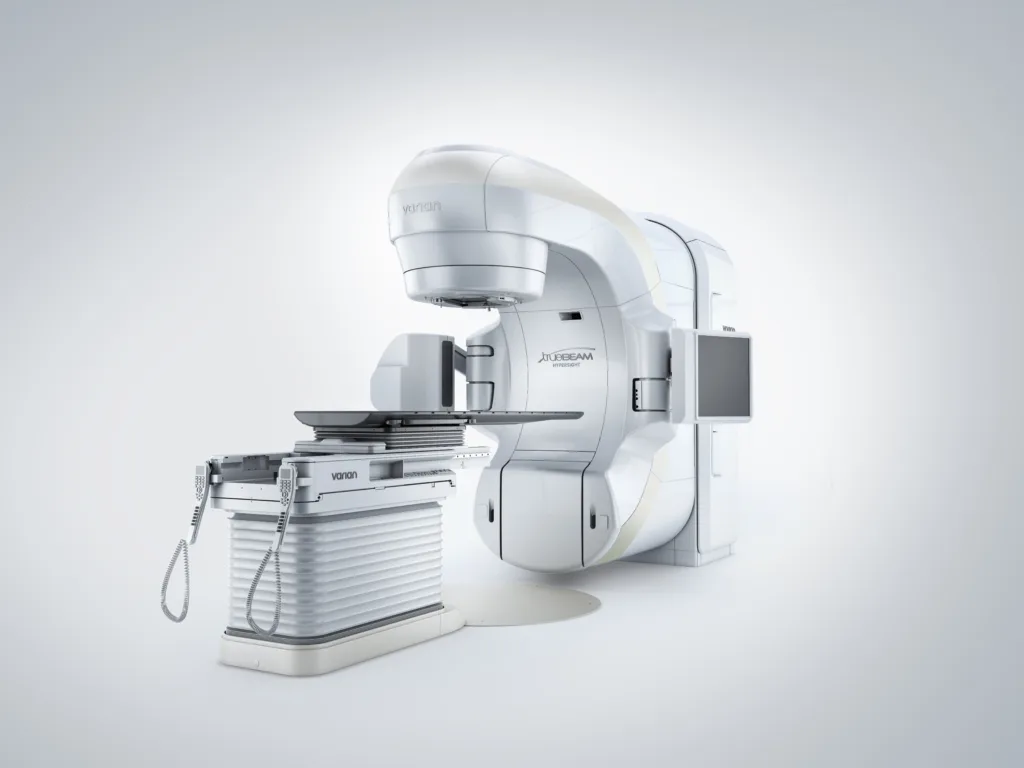
The move also aligns with a broader trend where device manufacturers are attempting to extend platform utility across multiple disease categories. In this context, Siemens Healthineers appears to be leveraging its integrated imaging and therapy capabilities to redefine radiotherapy as a precision anti-inflammatory modality rather than a cancer-specific tool.
How low-dose radiotherapy repositions inflammation targeting within osteoarthritis treatment pathways
Low-dose radiation therapy operates on a fundamentally different mechanism than conventional osteoarthritis treatments. Instead of targeting structural degeneration or pain signaling alone, it aims to modulate inflammatory pathways at the cellular level. Clinicians tracking the field suggest that this approach could complement existing pharmacological strategies, particularly in patients who have exhausted options such as nonsteroidal anti-inflammatory drugs, corticosteroid injections, and physical therapy.
The concept is not entirely new. Low-dose radiotherapy has been used in parts of Europe for benign inflammatory conditions, including degenerative joint diseases, for decades. However, adoption in the United States has been limited due to regulatory ambiguity and reimbursement uncertainty. The current clearance begins to formalize its role within a regulated framework, which may accelerate clinical interest.
What differentiates this development is the use of advanced radiotherapy platforms capable of precise dose delivery and imaging-guided targeting. This could address historical concerns about off-target effects and variability in treatment protocols, potentially making the therapy more reproducible across clinical settings.
What this development reveals about unmet needs in medically refractory osteoarthritis populations
The clearance implicitly highlights the limitations of existing osteoarthritis treatment paradigms. While early-stage disease can often be managed conservatively, patients with persistent symptoms frequently face a therapeutic gap between pharmacological management and surgical intervention.
Joint replacement surgery remains the definitive option for advanced cases, but it carries risks, costs, and recovery burdens that are not suitable for all patients. Industry observers note that a non-invasive outpatient therapy capable of delaying or reducing the need for surgery could have meaningful clinical and economic implications.
From a health system perspective, this is particularly relevant as aging populations drive a surge in osteoarthritis prevalence. The ability to manage symptoms effectively without escalating to surgery could reduce long-term healthcare expenditures while improving patient quality of life.
How this compares with existing and emerging osteoarthritis therapies targeting pain and inflammation
Compared with standard treatments, low-dose radiotherapy occupies a unique position. Pharmacological therapies primarily address pain and inflammation but often provide temporary relief and carry systemic side effects. Biologic therapies, while transformative in inflammatory arthritis conditions such as rheumatoid arthritis, have not demonstrated equivalent efficacy in osteoarthritis due to its distinct pathophysiology.
Emerging approaches, including regenerative medicine strategies such as platelet-rich plasma and stem cell therapies, aim to restore joint structure but remain heterogeneous in evidence quality and regulatory status. In contrast, low-dose radiotherapy offers a mechanism grounded in modulating immune and inflammatory responses rather than structural repair.
Clinicians following these developments suggest that the therapy may be best positioned as an adjunct or intermediate step rather than a replacement for existing modalities. Its role will likely depend on patient selection criteria, disease severity, and integration into multidisciplinary care pathways.
What regulatory clarity means for adoption, reimbursement, and clinical guideline evolution
One of the most significant implications of the clearance is the establishment of a clearer regulatory pathway. In the absence of formal approval, clinicians in the United States have had limited ability to incorporate low-dose radiotherapy into routine practice for osteoarthritis.
Regulatory watchers suggest that this decision could influence payer policies by providing a recognized indication for reimbursement discussions. However, adoption will depend heavily on how insurers interpret the clinical value proposition and cost-effectiveness of the therapy.
Guideline inclusion will be another critical factor. Professional societies typically require robust clinical evidence before recommending new treatment modalities. While existing studies support the anti-inflammatory effects of low-dose radiotherapy, large-scale randomized controlled trials in osteoarthritis populations may be needed to drive widespread guideline adoption.
What could limit adoption despite regulatory approval in a large patient population
Despite the apparent opportunity, several barriers could constrain uptake. First, there may be lingering concerns about the use of radiation in non-life-threatening conditions. Even at low doses, patient perception and clinician caution could slow adoption.
Second, workflow integration within radiotherapy centers may pose challenges. Oncology departments are often optimized for cancer treatment schedules, and incorporating osteoarthritis patients could require operational adjustments. This includes patient triaging, scheduling, and coordination with orthopedic and pain management specialists.
Third, evidence standardization remains a question. While the body of evidence supporting low-dose radiotherapy is growing, variability in dosing regimens, treatment intervals, and patient selection criteria could complicate real-world implementation. Industry observers note that consistent protocols will be essential to ensure reproducibility and clinician confidence.
How Siemens Healthineers could leverage this clearance to expand its competitive positioning in radiotherapy markets
From a competitive standpoint, Siemens Healthineers may gain a first-mover advantage in establishing radiotherapy as a multi-indication platform. By securing regulatory clearance for osteoarthritis, the company positions its Varian systems as versatile assets capable of addressing both oncological and non-oncological conditions.
This could influence purchasing decisions for healthcare providers considering capital investments in radiotherapy infrastructure. A system that supports a broader range of indications may offer a more compelling return on investment, particularly in markets with constrained healthcare budgets.
Competitors in the radiotherapy space may respond by pursuing similar label expansions or investing in clinical research to validate additional non-oncological applications. This could trigger a broader shift in how radiotherapy is perceived and utilized across healthcare systems.
What clinicians, regulators, and industry stakeholders are likely to monitor next as real-world data emerges
The next phase will likely be defined by real-world evidence generation. Clinicians will be closely monitoring patient outcomes, including pain reduction, functional improvement, and durability of response. Safety profiles will also be scrutinized, particularly in relation to cumulative radiation exposure.
Regulators may look for post-market data to validate the therapy’s effectiveness across diverse patient populations. This could influence future labeling updates or additional indications.
Industry observers suggest that long-term adoption will depend on demonstrating not just clinical efficacy but also economic value. Health systems will need to assess whether low-dose radiotherapy can reduce overall treatment costs by delaying surgeries or minimizing reliance on chronic medications.
In parallel, the broader implication is that radiotherapy may increasingly be viewed as a platform technology rather than a single-use modality. If osteoarthritis proves to be a viable indication, other inflammatory and degenerative conditions could follow, further expanding the role of precision radiation in non-oncological care.