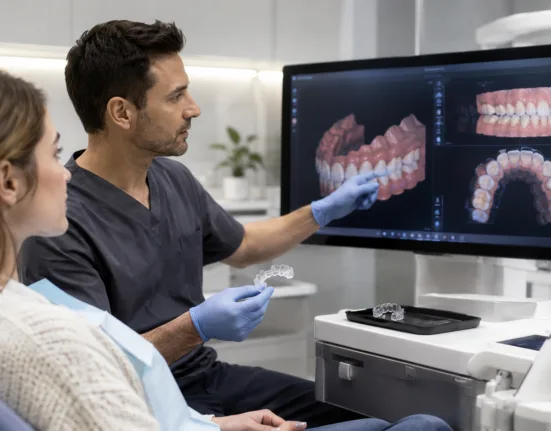
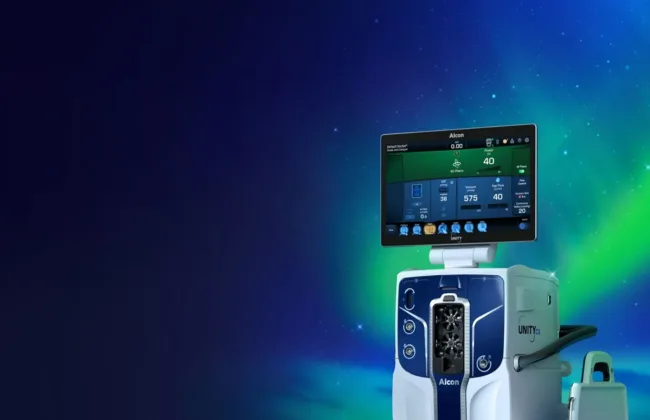
Align Technology, Inc. plans to open a new manufacturing facility in Hyderabad, India, in 2027, marking its first manufacturing presence in the country and its fourth globally. The medical device manufacturer said the project will involve about $200 million in capital and operational spending over several years, create more than 300 direct jobs, and support its Invisalign clear aligner, iTero intraoral scanner, and digital dentistry ecosystem.
The announcement is not merely another capacity addition. For Align Technology, the Hyderabad facility sits at the intersection of three industry pressures that are reshaping dental technology: the need to localise supply chains closer to growth markets, the push to protect margins after a difficult demand cycle, and the growing importance of India as both a medtech operating base and a future consumer market for premium orthodontic care.
Why Align Technology’s Hyderabad facility could change its Asia-Pacific manufacturing model
Align Technology’s India decision matters because the clear aligner business depends on speed, customisation, and regional service reliability. Invisalign clear aligners are not mass-market devices in the conventional sense. Each case depends on digital treatment planning, doctor submission, manufacturing precision, and repeated aligner production across a treatment cycle. That makes manufacturing location more than a cost issue. It directly affects turnaround time, support quality, operating resilience, and the ability to serve doctors at scale.
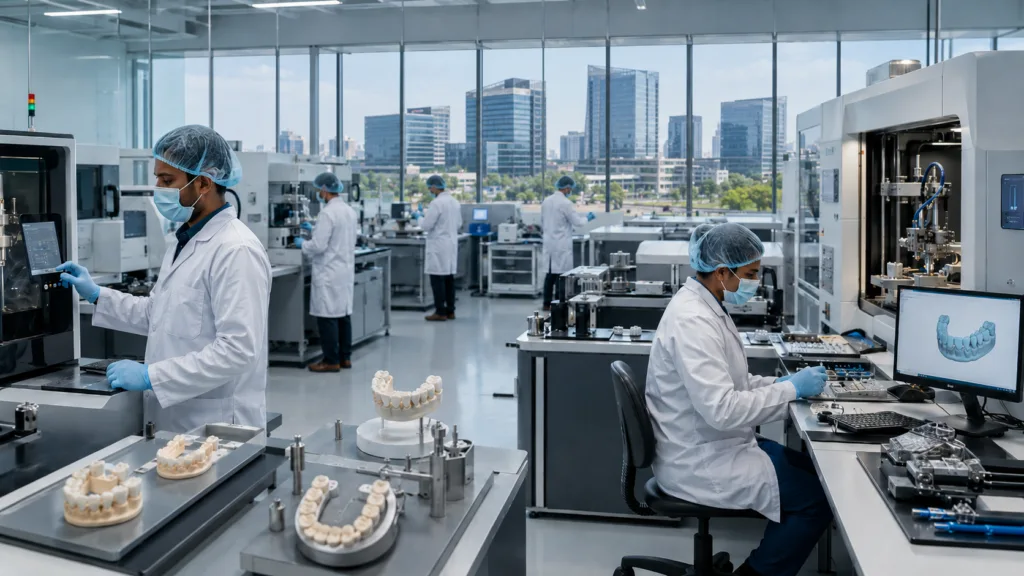
Hyderabad gives Align Technology a base in a market where the U.S.-based medical device manufacturer already has an operational presence through its Global Capability Center and the Align Innovation Center. The planned facility therefore does not appear to be a standalone factory dropped into a new geography. It looks more like the next layer in an integrated digital dentistry stack, combining talent, treatment planning infrastructure, and eventual regional manufacturing in one city.
That matters for Asia-Pacific because the region is not a single homogeneous dental market. It includes mature, premium orthodontic markets, fast-growing urban healthcare systems, cost-sensitive emerging markets, and countries where dentist-led digital workflows are still expanding. A regional manufacturing node in India could help Align Technology serve demand with more localised support, although the real test will be whether operational execution keeps pace with doctor adoption and case volume growth.
The risk is that local manufacturing does not automatically create local demand. Invisalign adoption still depends on trained doctors, patient affordability, consumer awareness, practice economics, and competition from lower-cost clear aligner alternatives. India may be a strategic location, but Align Technology will still need to prove that the country can support both manufacturing scale and sustained commercial growth.
What the $200 million India investment reveals about Align Technology’s margin strategy
The company’s disclosure that the Hyderabad investment was contemplated within its 2026 capital equipment guidance is important. Align Technology had earlier guided for fiscal 2026 capital expenditures of $125 million to $150 million, primarily linked to technology upgrades, additional manufacturing capacity, and maintenance.
That makes the Hyderabad plan strategically useful but financially sensitive. Align Technology is not operating in a carefree demand environment. The clear aligner market has faced pressure from uneven consumer spending, a sluggish dental backdrop in key regions, and investor concern over growth durability. In 2025, the company’s shares came under heavy pressure after weaker results and a restructuring plan sharpened concerns about demand and profitability.
Against that backdrop, a factory expected to be margin accretive in its first year carries a clear message. Align Technology is trying to frame India manufacturing not as a drag on near-term economics, but as part of a broader efficiency reset. If Hyderabad improves logistics, reduces regional friction, expands service capacity, and supports case turnaround, it could help the company protect margins while positioning for demand recovery.
However, the margin case will depend on utilisation. Manufacturing facilities create operating leverage only when volume follows. If regional case growth underwhelms, fixed costs could weigh on returns. If demand accelerates, the Hyderabad facility could become a powerful asset. That is why the plant should be viewed less as a simple India expansion and more as a bet on long-term Asia-Pacific case flow.
Why India is becoming more attractive for global dental technology manufacturing
India’s appeal to global medtech manufacturers is increasingly tied to the combination of engineering talent, digital health capability, policy support, and cost-efficient scale. Align Technology’s Hyderabad expansion also follows a broader pattern of global healthcare, technology, and precision manufacturing companies treating Telangana as a serious operating base.
Local media reports said the investment was formalised through a memorandum of understanding with the Telangana government and valued the project at about ₹1,800 crore. The planned facility is expected to use advanced 3D printing technologies, digital manufacturing systems, and precision engineering capabilities, all of which are central to clear aligner production.
For Align Technology, that ecosystem fit matters. Clear aligner manufacturing is not just about physical output. It is linked to digital case intake, treatment modelling, materials science, quality systems, and repeatable mass customisation. Hyderabad’s advantage is that it can support both software-heavy and manufacturing-heavy operations, which is increasingly valuable as medtech companies digitise more of the treatment pathway.
The unresolved question is whether India can move from being an attractive support and manufacturing base to becoming a deeper innovation and export hub for advanced dental devices. Align Technology’s presence could help strengthen that pathway, but regulatory, talent retention, vendor ecosystem depth, and quality consistency will remain critical watchpoints.
How the Hyderabad plant fits into Align Technology’s global Invisalign supply chain
Align Technology has described the Hyderabad site as its first manufacturing facility in India and its fourth globally. That positioning matters because clear aligner demand requires distributed resilience. A more geographically balanced manufacturing network can reduce dependence on any single production region, improve responsiveness, and limit disruption risk from trade, logistics, geopolitical, or demand shocks.
The company’s broader product ecosystem also gives the Hyderabad decision more weight. Align Technology is not only a clear aligner producer. Its business includes the Invisalign system, iTero intraoral scanners and services, and exocad dental computer-aided design and manufacturing software. That makes the facility part of a larger digital orthodontics and restorative dentistry platform rather than a narrow production line.
This distinction is important for clinicians and dental practices. A platform-based supplier can potentially improve workflow integration, from scanning to planning to treatment execution. If Hyderabad helps Align Technology localise manufacturing while its existing innovation and capability infrastructure supports digital planning, doctors in the region could see better service levels over time.
Still, manufacturing localisation does not solve all adoption barriers. In several markets, premium clear aligner treatment remains discretionary and price-sensitive. Orthodontic practices must also decide whether the workflow, cost, and clinical support justify wider use. Align Technology’s India investment improves the supply side of the equation, but demand-side conversion remains a separate commercial challenge.
What investors may read into Align Technology’s India expansion and ALGN stock sentiment
For investors, Align Technology’s Hyderabad plan is likely to be read through two lenses: growth optionality and margin discipline. The company is investing in a high-growth geography, but doing so after a period when Wall Street became more cautious about clear aligner demand and execution risk.
Align Technology shares recently traded around $163.61, giving the company a market capitalisation of about $11.7 billion. The stock was marginally higher in the latest available trading data, with an intraday range between $161.14 and $165.40. That suggests the India manufacturing announcement may be strategically meaningful, but not yet a decisive sentiment reset on its own.
The stock narrative still depends on evidence that case volumes, international demand, and operating margins can improve together. In late 2025, investor sentiment had recovered somewhat after better-than-feared results, with international markets including Asia-Pacific, Latin America, and EMEA helping ease concerns over clear aligner demand.
The Hyderabad facility supports that recovery narrative because it shows Align Technology is investing behind international scale rather than retreating after a tougher cycle. However, investors are unlikely to reward capacity alone. They will watch whether the facility opens on schedule in 2027, whether it is margin accretive as indicated, and whether Asia-Pacific volumes justify the added infrastructure.
What clinicians and industry observers will watch after the Hyderabad announcement
Clinicians tracking the clear aligner market are likely to focus less on the headline investment figure and more on service quality. In orthodontics and restorative dentistry, digital platforms succeed when they reduce friction for doctors and improve predictability for patients. That means faster planning, reliable manufacturing, strong case support, and consistent product quality matter as much as geographic expansion.
The Hyderabad facility could help Align Technology deepen relationships with Invisalign-trained doctors across India and nearby markets. More localised support may also help the medical device manufacturer compete against regional and lower-cost aligner providers that often position themselves around accessibility and affordability.
The competitive risk is that India’s medtech and dental markets are not waiting for one global leader. Local and regional players can move quickly on price, digital engagement, and dentist acquisition. Align Technology retains strong brand equity, but brand strength alone may not determine future share in emerging markets. The company will need to pair premium positioning with operational efficiency and doctor-level value.
Regulatory watchers will also monitor how the facility fits into India’s medtech policy environment. Manufacturing medical devices at scale requires rigorous quality control, documentation, validation, and compliance infrastructure. A successful launch could reinforce India’s credibility in advanced dental device manufacturing. A delayed or underutilised launch would weaken the strategic signal.
Why this is more than a factory announcement for digital dentistry
The strongest reading of Align Technology’s Hyderabad announcement is that the medical device manufacturer is building a more regionally distributed digital dentistry operating model. The company already has a large global doctor customer base and has treated millions of patients through Invisalign. The next phase is about making that platform faster, closer to demand, and more resilient across markets.
That is where Hyderabad becomes strategically interesting. It combines India’s healthcare market potential with a manufacturing and digital capability base that can support Asia-Pacific expansion. The facility could also give Align Technology a stronger long-term position if clear aligner adoption broadens beyond affluent urban patients and specialist orthodontic practices.
The weaker reading is that the investment remains incremental unless demand improves. A manufacturing site can enhance efficiency, but it cannot by itself fix affordability concerns, consumer caution, or uneven dental market growth. Align Technology’s challenge is therefore not simply to build in India. It must show that India can become a meaningful operating engine for its next phase of global dental technology growth.
For now, the Hyderabad project looks like a calculated capacity and localisation move rather than a dramatic strategic pivot. But in a market where speed, precision, doctor support, and regional cost structures increasingly shape competitiveness, that calculation could become more important than the headline investment suggests.