DexCom, Inc. has released results from the CONNECT randomized controlled trial showing that Dexcom G7 continuous glucose monitoring improved glycemic control in adults with type 2 diabetes who were not using insulin, compared with routine self-monitoring of blood glucose. The 26-week study, presented at the American Diabetes Association Scientific Sessions, gives the medical device manufacturer a stronger clinical evidence base as it seeks broader adoption of continuous glucose monitoring beyond insulin-treated diabetes.
Why does the CONNECT study matter for the next phase of continuous glucose monitoring adoption?
The CONNECT study matters because it targets one of the most commercially important and clinically underpenetrated segments in diabetes technology: adults with type 2 diabetes who are not using insulin. Continuous glucose monitoring has already become deeply embedded in type 1 diabetes and insulin-treated type 2 diabetes, where the clinical rationale is clearer because insulin dosing and hypoglycemia risk demand more frequent glucose visibility. The harder question has been whether continuous glucose monitoring can materially improve outcomes for people managed with oral medicines, GLP-1 receptor agonists, SGLT2 inhibitors, lifestyle changes, or combinations of these approaches.
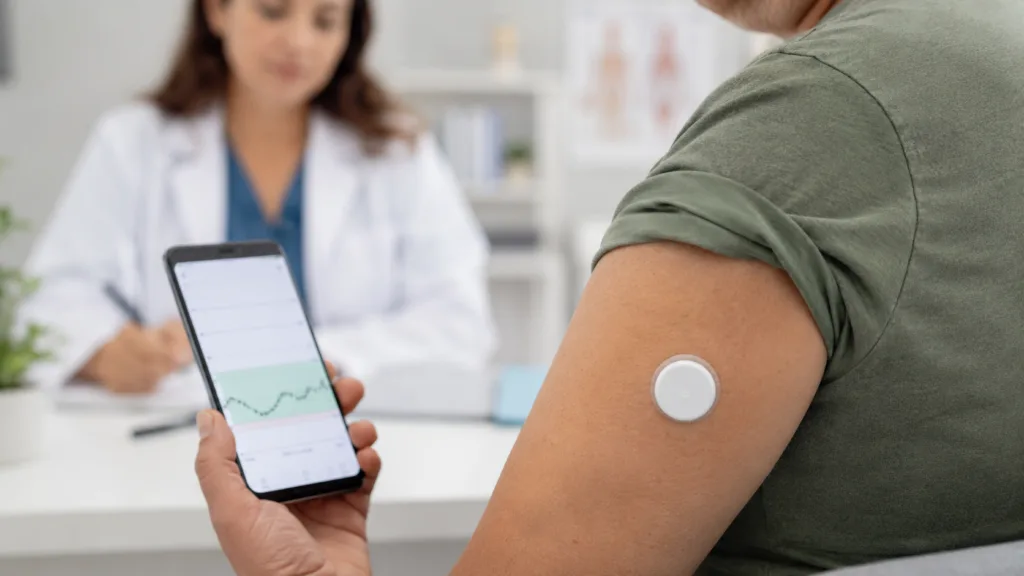
That is where CONNECT gives Dexcom a more serious argument. The study showed a clinically and statistically significant A1C reduction for Dexcom G7 users against a control group using self-monitoring of blood glucose, with reported improvements in time in range and reductions in hyperglycemia. The average A1C reduction of 1.6 percentage points from a baseline mean of 8.8 percent, including a 0.9 percentage point advantage over control, is not a small behavioral signal. In diabetes studies, that scale of A1C movement can influence how clinicians, payers, and guideline committees think about the intervention.
The unresolved question is whether a 26-week randomized trial can translate into durable real-world behavior change. Continuous glucose monitoring can provide patients and clinicians with dense glucose data, but the data only matters if it leads to sustained changes in diet, activity, medication adherence, prescribing decisions, or clinical follow-up. Dexcom is already running a six-month extension phase, and that longer readout may become critical for payers who want proof that early glycemic gains do not fade once novelty, coaching intensity, or study participation effects weaken.
How could Dexcom G7 change clinical decision-making for type 2 diabetes patients not using insulin?
Dexcom G7 could change clinical decision-making by turning glucose management in non-insulin type 2 diabetes from periodic measurement into continuous feedback. Traditional A1C testing gives clinicians a backward-looking average, while fingerstick testing often captures isolated readings that may miss post-meal spikes, overnight patterns, and behavior-linked variability. Continuous glucose monitoring fills that gap by showing when glucose rises, how long it stays elevated, and whether therapy or lifestyle changes are actually flattening daily excursions.
This matters because many adults with type 2 diabetes not using insulin are treated in primary care settings, where clinicians may have limited time and limited visibility into day-to-day glycemic patterns. A patient with an elevated A1C may need intensification, but A1C alone does not explain whether the issue is fasting glucose, post-meal spikes, inconsistent medication use, or dietary timing. Dexcom G7 could therefore become less of a monitoring device and more of a decision-support layer, particularly when used alongside metformin, GLP-1 receptor agonists, and SGLT2 inhibitors.
The limitation is that more data can create more complexity. Primary care physicians may not have the bandwidth to interpret continuous glucose traces at scale, and patients may vary widely in how they respond to alarms, trend arrows, and daily feedback. Some may use the information constructively. Others may experience anxiety, overcorrection, or device fatigue. For Dexcom, the clinical opportunity is large, but adoption will depend on whether the device ecosystem can simplify interpretation rather than merely add another dashboard to an already busy care pathway.
What does the study reveal about CGM use alongside GLP-1 drugs, SGLT2 inhibitors, and metformin?
One of the most strategically important aspects of CONNECT is that Dexcom G7 showed additional A1C improvement across different medication groups, including patients using metformin, GLP-1 receptor agonists, and SGLT2 inhibitors. That is commercially relevant because type 2 diabetes care is already being reshaped by GLP-1 drugs and SGLT2 inhibitors, which are no longer viewed only through a glucose-lowering lens but also through weight, cardiovascular, renal, and metabolic-risk frameworks.
For Dexcom, the evidence supports a complementary rather than competitive positioning. CGM does not replace GLP-1 therapy, SGLT2 inhibition, or metformin. Instead, it can potentially help clinicians and patients understand how those therapies are performing in daily life. A patient on a GLP-1 drug may lose weight and improve A1C, but CGM can reveal whether post-meal patterns are improving, whether dietary behavior is changing, or whether further medication adjustment is needed. This makes Dexcom G7 part of a broader metabolic management stack rather than a standalone diabetes gadget.
The risk is that payers may still question whether the incremental benefit justifies broad reimbursement for non-insulin users. GLP-1 drugs are already expensive. SGLT2 inhibitors add another cost layer. Adding CGM for millions of additional patients could face scrutiny unless Dexcom and the broader diabetes technology sector can show that improved control reduces downstream spending on complications, escalated therapy, emergency care, or unmanaged disease progression. Clinical benefit is necessary, but economic proof may determine the speed of coverage expansion.
Why could payer coverage become the biggest commercial catalyst for Dexcom after CONNECT?
Payer coverage is likely to become the central commercial battleground because the non-insulin type 2 diabetes population is far larger than the traditional insulin-intensive CGM base. Dexcom already has products such as Dexcom G7 and Stelo that address different segments of the diabetes and metabolic health market, but broad clinical adoption is unlikely to scale fully without reimbursement support. For many patients, especially in the United States, device access is shaped less by interest and more by payer policy.
CONNECT gives Dexcom a stronger evidence package for payer discussions because randomized controlled data carries more weight than observational evidence alone. The study was conducted across 22 primary care practices in the United States and included 283 randomized participants, with 265 completing the 26-week study and included in key outcomes. That design strengthens the argument that the result is relevant to mainstream type 2 diabetes care rather than a narrow specialist clinic population.
The commercial challenge is that payers may ask for more than A1C movement. Coverage bodies may want longer-term data, subgroup analysis, real-world adherence evidence, and health economic modeling. They may also ask whether all non-insulin users should receive CGM or whether coverage should be targeted to patients above certain A1C thresholds, those with medication intensification needs, or those failing standard care. The study supports expansion, but it does not automatically settle where the reimbursement line should be drawn.
How does CONNECT strengthen Dexcom’s position against Abbott Laboratories and other diabetes device rivals?
CONNECT strengthens Dexcom’s competitive positioning because diabetes technology competition is moving from hardware specifications toward evidence, workflow integration, payer access, and category expansion. Abbott Laboratories remains a formidable rival in continuous glucose monitoring, while Medtronic and other players continue to compete in insulin-linked diabetes technology. In the non-insulin type 2 market, however, the winning platform may be the one that convinces payers, primary care physicians, and patients that CGM is not only useful but necessary.
Dexcom G7 already competes on device usability, wearability, data transmission, and ecosystem integration. CONNECT adds a clinical story that can be used in payer discussions, physician education, and market development. The reported median daily usage of 97 percent across the 26-week study is especially important because adherence is one of the main concerns in wearable health technology. A device can generate excellent trial results only if patients actually wear it consistently.
The competitive risk is that evidence advantages can narrow quickly. If rival CGM manufacturers produce comparable data in similar populations, payer decisions may become more price-sensitive. In that scenario, Dexcom’s challenge will be to differentiate not only on glycemic outcomes but also on sensor duration, accuracy, patient experience, data tools, provider workflow, and total cost of care. CONNECT gives Dexcom momentum, but it does not end the competitive race. It may intensify it.
What limitations should clinicians and industry observers watch before treating CGM as standard care for this population?
The main limitation is that CONNECT is still a 26-week study, even though the ongoing extension should help answer the durability question. Diabetes is a lifelong condition, and payers tend to be cautious when a device intervention produces strong short-term outcomes but lacks longer-term evidence on persistence, adherence, and cost impact. The 12-month data may therefore carry disproportionate importance for coverage strategy and guideline influence.
Another limitation is implementation. The study gave all participants diabetes education on diet and exercise at the start, and both groups continued pre-study glucose-lowering medications. That is appropriate trial design, but it also raises the real-world question of how much support is needed to replicate results. If CGM works best when paired with structured education, digital coaching, or clinician review, healthcare systems will need to decide who provides that support and how it is reimbursed.
A further question is patient selection. CONNECT showed benefits across demographic and clinical subgroups, including age, gender, ethnicity, baseline A1C, body mass index, education level, income, and insurance coverage. That broad signal is encouraging, but health systems may still prioritize patients with higher A1C, medication escalation needs, or documented difficulty achieving targets. Universal access may be the long-term vision, but targeted adoption may be the more realistic near-term pathway.
What does the latest market reaction suggest about investor sentiment toward DexCom, Inc.?
DexCom, Inc. shares recently traded at about $72.86, with a market capitalization near $28.68 billion. The stock was largely flat in the latest quoted session, after opening at $73.47 and trading between $71.55 and $75.39. That muted reaction suggests investors may view CONNECT as strategically important but not yet sufficient to reprice the stock meaningfully without clearer evidence of payer coverage expansion, revenue acceleration, or margin leverage.
The investor debate around Dexcom is becoming more nuanced. On one hand, the medical device manufacturer has reported continued demand for continuous glucose monitors, expanded its G7 15 Day sensor rollout, and maintained a full-year revenue forecast in the range of $5.16 billion to $5.25 billion after stronger quarterly results. On the other hand, expectations are already high in diabetes technology, and growth in the non-insulin type 2 segment depends heavily on coverage, primary care adoption, and execution.
This makes CONNECT a strategic proof point rather than an immediate financial inflection. The data can support a larger total addressable market narrative, especially if Medicare and commercial payers expand access. However, investors are likely to watch whether trial evidence converts into reimbursed prescriptions, repeat usage, and durable sensor volume. For now, sentiment appears constructive but cautious. The big opportunity is visible. The commercial unlock still needs to arrive.
Could CONNECT mark the shift from glucose monitoring to metabolic behavior infrastructure?
The broader implication of CONNECT is that continuous glucose monitoring may be evolving from a diabetes safety tool into a metabolic behavior infrastructure layer. In insulin-treated diabetes, CGM is often framed around risk management, alerts, and therapy adjustment. In non-insulin type 2 diabetes, the value proposition is different. It is about feedback, behavior, medication optimization, and earlier intervention before disease progression requires more intensive treatment.
That shift could open a much larger healthcare technology category. If CGM data becomes routine in type 2 diabetes care, device companies may increasingly compete on analytics, patient engagement, food response insights, medication response tracking, and integration with digital care platforms. Dexcom’s Stelo platform already signals movement toward broader metabolic monitoring, while Dexcom G7 remains anchored in clinical diabetes management.
The danger is that category expansion can blur clinical boundaries. Wellness positioning, consumer curiosity, and clinical diabetes management are not the same thing. Dexcom will need to keep evidence-based messaging clear, especially as CGM enters populations with lower immediate risk than insulin users. CONNECT strengthens the case for non-insulin type 2 diabetes, but responsible adoption will still require careful clinician oversight, patient education, and payer discipline.
What should regulators, payers, and clinicians watch next after Dexcom’s CONNECT results?
The next key watchpoint is the six-month extension phase, which should provide data up to 12 months. If the A1C and time-in-range benefits remain durable, Dexcom will have a stronger case that CGM produces sustained behavioral and clinical value in non-insulin type 2 diabetes. If the effect weakens, payers may push for narrower coverage or more structured support requirements.
Clinicians will also watch how the data is interpreted in guidelines and real-world protocols. The most practical question is not whether CGM can help some non-insulin users. CONNECT suggests it can. The question is which patients should receive it first, how frequently data should be reviewed, whether primary care practices can absorb the workflow, and what level of education is needed to turn glucose trends into better decisions.
For Dexcom, CONNECT may be one of the most important studies in its attempt to expand continuous glucose monitoring from an insulin-linked standard into a broader type 2 diabetes management tool. The data gives the medical device manufacturer a stronger clinical platform. The next phase will decide whether that platform becomes a reimbursement-supported standard of care or remains a powerful but unevenly accessed technology.