IceCure Medical Ltd. has reported a 70% increase in the active United States commercial installation base for its ProSense cryoablation system since receiving Food and Drug Administration marketing authorisation for selected low-risk breast cancer patients. The Nasdaq-listed medical device company is attempting to convert physician interest in minimally invasive tumour freezing into system placements, recurring probe sales and wider clinical adoption, while a new $5.5 million private placement introduces substantial dilution risk.
Why 70% installation growth is commercially encouraging but still lacks the numbers investors need
The reported increase is an important early sign that Food and Drug Administration authorisation is changing commercial conversations. Hospitals and breast-care practices can now evaluate ProSense as an authorised local treatment rather than an investigational or off-label technology, making procurement, physician training and patient discussions more straightforward.
IceCure Medical said breast cancer cryoablation procedures using ProSense have been performed across major metropolitan areas including New York, Los Angeles, Atlanta, Dallas, Detroit, Philadelphia, Phoenix and Memphis. The geographic spread suggests that adoption is not limited to one academic centre or regional clinical champion.
The company also reported a substantial rise in sales leads generated at the Society of Breast Imaging symposium and the American Society of Breast Surgeons annual meeting compared with the same events before authorisation. This matters because medical device adoption frequently begins with specialist education, peer discussion and local physician advocacy rather than broad consumer advertising.
The limitation is that IceCure Medical did not disclose the current absolute number of active installations in its June update. The company had reported 19 active United States accounts at the end of the first quarter, representing 46% growth compared with the period before authorisation. A percentage increase without an updated numerical base makes it difficult to estimate current procedure capacity, system revenue or recurring disposable demand.
For a micro-cap company, growth from a small baseline can generate an impressive percentage while producing limited near-term revenue. Investors therefore need to distinguish proof that hospitals are interested from proof that each installed system is being used frequently enough to create a sustainable business.
The next commercially meaningful disclosures should include the number of new systems sold or placed, procedure volumes per account, disposable probe utilisation and the proportion of leads converting into active customers. Installation growth opens the door. Procedure throughput determines whether the door leads to recurring revenue.
How ProSense attempts to replace surgery for a narrowly selected breast cancer population
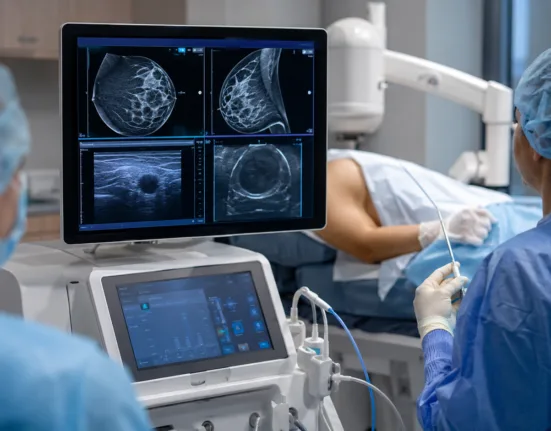
ProSense uses liquid nitrogen to freeze a breast tumour and a margin of surrounding tissue. A physician inserts a cryoprobe into the tumour under imaging guidance, creating an ice ball intended to destroy malignant cells without surgically removing breast tissue.
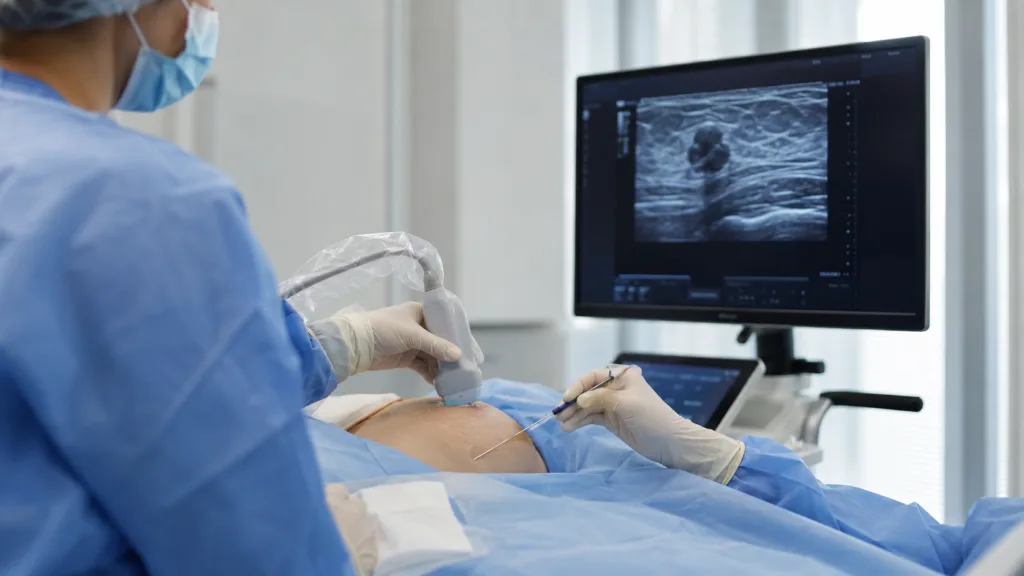
The procedure can potentially be performed without general anaesthesia, operating-room surgery or a conventional lumpectomy incision. This may reduce pain, recovery time, scarring and perioperative risk, particularly in older patients with medical conditions that make surgery more burdensome.
The authorised indication is narrow. ProSense is intended for patients aged 70 years or older with a single biologically low-risk breast tumour measuring no more than 1.5 centimetres. The authorised population includes hormone receptor-positive, HER2-negative invasive ductal cancer with clinically negative lymph nodes and other features associated with lower recurrence risk.
Patients must also receive adjuvant endocrine therapy. ProSense is therefore a local treatment strategy rather than a replacement for every component of breast cancer care.
The system is not authorised broadly for younger women, larger tumours, lobular cancers, inflammatory breast cancer, lymph-node-positive disease or biologically aggressive tumours requiring chemotherapy or targeted systemic treatment. It should not be described as a general alternative to breast cancer surgery.
This restricted label reduces the immediate addressable population but strengthens the clinical logic. Older patients with small, low-risk tumours may gain less absolute benefit from conventional surgery than younger patients with more aggressive disease, while facing greater anaesthesia, wound-healing and recovery risks.
The commercial opportunity will depend on how many eligible women are identified, how many prefer cryoablation and how comfortable clinicians become recommending a procedure that leaves the destroyed tumour tissue inside the breast rather than removing it for complete pathological examination.
Why eliminating an operation does not eliminate the oncological evidence burden
Lumpectomy provides both treatment and tissue. Surgeons remove the tumour, and pathologists can examine the specimen to assess tumour size, margins, histological features and whether residual cancer reaches the edge of the resection.
Cryoablation destroys the tumour in place. Imaging is used to position the probe and monitor the ice ball, but imaging cannot provide the same direct pathological confirmation that the entire tumour and an adequate margin have been destroyed.
This difference creates one of the central uncertainties around replacing surgery. A technically successful ice ball may appear to cover the intended area, yet microscopic disease could remain outside the treated zone or survive at the margin.
The Food and Drug Administration’s special controls specifically recognise incomplete ablation, recurrence and the need for additional treatment as material risks. The device’s labelling must explain the limitations of using imaging to confirm complete tumour destruction and the absence of direct comparative evidence against surgical resection.
That does not mean cryoablation is ineffective. It means clinical confidence must come from long-term recurrence outcomes rather than immediate examination of a surgical specimen.
IceCure Medical must therefore prove that carefully selected patients remain free from cancer returning in the treated breast at rates considered acceptable for this low-risk population. Commercial enthusiasm may increase quickly, but the strongest oncological evidence will accumulate slowly.
What the 400-patient ChoICE study must prove after commercial use has already begun
The Food and Drug Administration required IceCure Medical to conduct a postmarket surveillance programme after authorisation. The ChoICE study is expected to enrol approximately 400 patients across 30 United States sites and follow recurrence outcomes for as long as five years.
The co-primary outcomes will examine confirmed recurrence in the treated breast and a broader measure including confirmed and suspected recurrence. The programme will also collect information involving additional breast surgery, disease-free survival, overall survival and serious adverse events.
This structure creates a hybrid clinical and commercial model. Participating hospitals will treat study patients while also functioning as commercial ProSense sites capable of offering the procedure to other eligible patients.
For IceCure Medical, the arrangement could accelerate installation growth because the study requires trained physicians, available systems and recurring cryoprobe purchases across 30 centres. It effectively uses a regulatory obligation to help create a national clinical network.
For regulators and clinicians, the programme provides evidence under real-world conditions rather than relying only on a highly controlled premarket cohort. It should reveal how consistently different physicians select patients, create adequate treatment margins and manage follow-up.
The risk is execution. Enrolling 400 narrowly eligible older patients across multiple centres requires sustained physician participation, patient awareness and careful data collection. Delayed enrolment could increase costs and leave the company carrying a long evidence obligation before the recurrence profile becomes mature.
Unfavourable recurrence findings could lead to revised labelling, stronger warnings, additional studies or reduced clinical enthusiasm. Commercial adoption before mature postmarket evidence therefore creates opportunity and exposure at the same time.
Can clinical guidelines and reimbursement turn physician curiosity into routine adoption?
Food and Drug Administration authorisation removes one barrier, but clinicians also look to professional guidance before changing established practice. The American Society of Breast Surgeons has updated its resource material to recognise cryoablation as a local treatment option for appropriately selected low-risk patients.
This recognition is commercially important because breast surgeons influence treatment recommendations, multidisciplinary tumour-board decisions and referrals to interventional radiologists. A technology remains difficult to scale when every physician must defend its use as an unusual exception.
The company also has access to a Category III Current Procedural Terminology code that may support approximately $4,000 in facility reimbursement for study-related procedures. This gives participating sites a mechanism for submitting claims while additional reimbursement evidence develops.
A Category III code is not equivalent to a mature national coverage framework. Payment can vary across insurers, regions and care settings, while claims may face additional review. Hospitals will still examine whether reimbursement covers the equipment, cryoprobe, imaging, physician time, facility use and follow-up.
Economic adoption will depend on the total care pathway. ProSense could create value if it avoids operating-room time, general anaesthesia, surgical pathology, postoperative care and complications associated with conventional breast surgery.
A previous cost analysis associated with the platform suggested that cryoablation could reduce treatment costs substantially compared with lumpectomy. The result is supportive, but payers will require broader evidence across different hospitals and patient populations before concluding that the savings are reproducible.
Commercial success therefore requires three things to move together: physicians must recommend the procedure, patients must accept it and payers must reimburse it predictably. A strong installation count without reliable payment may produce systems that generate limited recurring use.
Why recurring cryoprobe utilisation matters more than the number of systems on hospital floors
Medical device companies frequently use systems and disposable components to build recurring revenue. The capital equipment creates an installed base, while each procedure requires a new probe or other single-use component.
IceCure Medical’s long-term economics should therefore depend increasingly on the number of cryoablation procedures rather than only the number of ProSense systems placed. A hospital that performs several procedures every month can produce a more valuable revenue stream than several sites using their systems only occasionally.
The ChoICE study should help create baseline utilisation because enrolled patients require treatment using IceCure Medical’s probes. Clinical sites may also treat eligible patients outside the study, increasing disposable demand if physicians develop confidence in the workflow.
Procedure frequency will reveal whether ProSense is becoming part of routine breast-care practice or remaining a specialist option for occasional cases. Investors should watch for probe revenue, average usage per account and repeat ordering rather than celebrating every installation equally.
System-placement terms will also matter. A unit sold outright produces immediate revenue. A system placed at little or no upfront cost may support future disposable sales but requires IceCure Medical to fund manufacturing and working capital before procedure volume is proven.
The company has not provided enough detail to determine the revenue quality behind the 70% installation increase. Future reporting should separate system sales, placements, probe sales and service revenue so investors can judge whether commercial adoption is deepening.
What first-quarter revenue and cash figures reveal about the scale of the challenge
IceCure Medical generated first-quarter 2026 revenue of $911,000, increasing approximately 26% from the prior-year period. Gross profit rose to $295,000, while gross margin improved to 32%.
Those figures show improving demand but also demonstrate how early the commercial business remains. Annualised revenue based on one quarter would still be modest compared with the operating infrastructure required for a public medical device company conducting postmarket research and building a United States sales network.
The company recorded a first-quarter net loss of approximately $4.3 million. Cash and cash equivalents stood at about $8.1 million at the end of March, providing limited runway if losses continue at a similar pace.
Research and development spending increased as IceCure Medical prepared the ChoICE study, while sales and marketing expenditure is expected to rise as the company expands physician education and United States penetration.
The FDA-authorised indication creates an opportunity that requires additional spending before it produces meaningful scale. IceCure Medical needs inventory, clinical support, training teams, sales personnel, regulatory resources and data-management capability across numerous study and commercial sites.
This financing need helps explain the company’s latest private placement. Commercial momentum may be genuine, but the transition from authorisation to sustainable revenue is capital intensive.
Why the $5.5 million financing may support growth while heavily diluting existing shareholders
IceCure Medical agreed to sell approximately 1.83 million ordinary shares or equivalents to one healthcare-focused institutional investor at a combined purchase price of $3 per share with accompanying warrants.
The transaction is expected to provide approximately $5.5 million in gross proceeds before expenses. This strengthens working capital and should help support the ChoICE programme, manufacturing and commercial expansion.
The capital structure is the uncomfortable part of the story. The investor also received Series D and Series E warrants, each covering approximately 1.83 million shares and carrying a $3 exercise price.
The new shares and warrants together represent potential issuance of roughly 5.5 million shares. That is extremely large compared with the company’s post-reverse-split outstanding share base before the financing.
IceCure Medical also agreed, subject to shareholder approval, to reduce the exercise price of previously issued warrants covering approximately 266,666 shares from $16.50 to $3. The repricing increases the probability that those warrants become economically relevant.
Calling the placement a premium financing is technically accurate because the $3 transaction price exceeded the previous closing price before the commercial update triggered the stock surge. It does not remove dilution. Investors must consider both the immediate cash benefit and the substantial increase in potential share supply.
The one-year Series E warrants could create near-term selling pressure if exercised and the resulting shares become registered for resale. The five-year Series D warrants may remain an overhang for much longer.
The financing gives IceCure Medical additional time to commercialise ProSense. It also means future revenue and valuation gains may be divided across a materially larger fully diluted share count.
Why ICCM stock surged more than 200% and then surrendered part of the rally
IceCure Medical shares closed at $6.40 on June 17 after rising approximately 200% in one session. Trading volume exceeded 150 million shares, an extraordinary increase from the stock’s normal activity.
The shares then fell about 16% to $5.40 during the following session, despite remaining far above the $2.13 closing price recorded before the commercial installation announcement.
Across five trading sessions, the stock gained approximately 126%. Over the preceding month, however, the split-adjusted share price remained down roughly 21%, illustrating how strongly the latest catalyst interrupted an otherwise weak trend.
The 52-week range of approximately $2.12 to $42 is unusually wide and reflects a highly volatile security. IceCure Medical also completed a one-for-30 reverse share split in June to support Nasdaq minimum-bid compliance.
Reverse splits do not change the underlying value of a company, but they can reduce the number of freely traded shares and amplify price movements when a catalyst attracts sudden retail interest. The 70% installation headline, low apparent float, FDA-authorised cancer technology and heavy social-media attention created conditions for a sharp momentum move.
The following decline reflects the other side of that structure. Traders may take profits quickly, while financing shares and warrants raise concerns about future supply.
ICCM currently carries the characteristics that frequently attract Stocktwits-style attention: a small valuation, cancer-treatment narrative, FDA catalyst, large percentage growth figure and extreme daily volatility. Those characteristics can generate traffic and trading activity without resolving the underlying commercial questions.
Can ProSense become a wider tumour-ablation platform rather than a single narrow product?
IceCure Medical is developing cryoablation across breast, kidney, lung, bone and other tumour indications. The liquid-nitrogen system is intended to offer portable, controlled freezing through relatively thin probes.
A broader oncology platform would improve the business model because hospitals could use one system across several departments and tumour types. Higher equipment utilisation could increase capital-purchase interest and recurring probe sales.
The company has reported encouraging long-term kidney cancer results, with recurrence-free rates approaching 90% in a recent analysis. These data support the broader biological capability of tumour freezing but do not substitute for indication-specific regulatory and comparative evidence.
Each tumour type has different imaging requirements, anatomical risks, competing treatments and reimbursement pathways. Success in low-risk breast cancer does not guarantee adoption in kidney, lung or liver disease.
The near-term investment case therefore remains concentrated on breast cancer commercialisation. Additional indications provide optionality, but ProSense must first show that an FDA-authorised use can generate consistent United States revenue.
What clinicians and ICCM investors should watch after the installation surge
The most important commercial measure will be procedure volume. A rising installed base becomes meaningful when hospitals repeatedly order probes and treat patients rather than keeping systems available for occasional use.
ChoICE enrolment will provide another signal. Reaching the expected first-year recruitment target would indicate that clinicians can identify eligible patients and that the 30-site network is functioning effectively.
Reimbursement development will determine whether use expands beyond motivated study centres. Broader and more predictable coverage could accelerate adoption, while inconsistent payment may limit the procedure to selected institutions.
Long-term recurrence data remain the decisive clinical test. ProSense must show that avoiding surgery does not compromise local cancer control in the carefully selected authorised population.
Financially, investors should monitor quarterly cash use, additional capital raises and the effect of warrants on the outstanding share count. The company’s technology may gain adoption while shareholder value is diluted if commercial growth does not outpace financing needs.
IceCure Medical has achieved something many micro-cap medical device companies never reach: an FDA-authorised cancer indication and measurable United States commercial expansion. The 70% installation increase suggests that physicians and hospitals are responding.
The unresolved question is whether installations become recurring procedures quickly enough to support the company’s spending and enlarged capital structure. ProSense has moved beyond the regulatory story. It must now prove that minimally invasive breast cancer treatment can become a repeatable commercial business.